

In This Blog Post
Share This Article
- Last Updated: Aug 11, 2026
- 🔊 Listen
TL;DR
- The accounts payable process helps US businesses verify, approve, record and pay vendor invoices correctly.
- Strong AP controls reduce duplicate payments, fraud risks, late fees, and vendor disputes.
- Three-way matching helps confirm that invoices align with purchase orders and received goods or services.
- AP automation improves invoice capture, approval routing, payment scheduling, and reporting accuracy.
- Regular AP reconciliation keeps financial records clean, audit-ready, and useful for cash flow planning.
The accounts payable process is the system a business uses to receive, verify, approve, record, and pay supplier invoices. This process directly affects vendor relationships, cash flow, tax records, audit readiness, and overall financial control.
A weak AP setup can lead to late payments, duplicate invoices, missed discounts, poor expense visibility, and compliance issues. On the other hand, a structured accounts payable process helps businesses stay organized, control spending, and keep accurate records for reporting and tax purposes.
For growing US companies, AP becomes even more important as supplier volume increases, approval layers expand, and payment methods become more complex. That is why understanding the right AP process steps for US businesses can help finance teams reduce errors and build stronger financial discipline.

Accounts Payable Without the Chaos
Manage invoices, approvals, records, and payments with fewer errors and stronger controls.
What Are the Main Steps in the Accounts Payable Process?
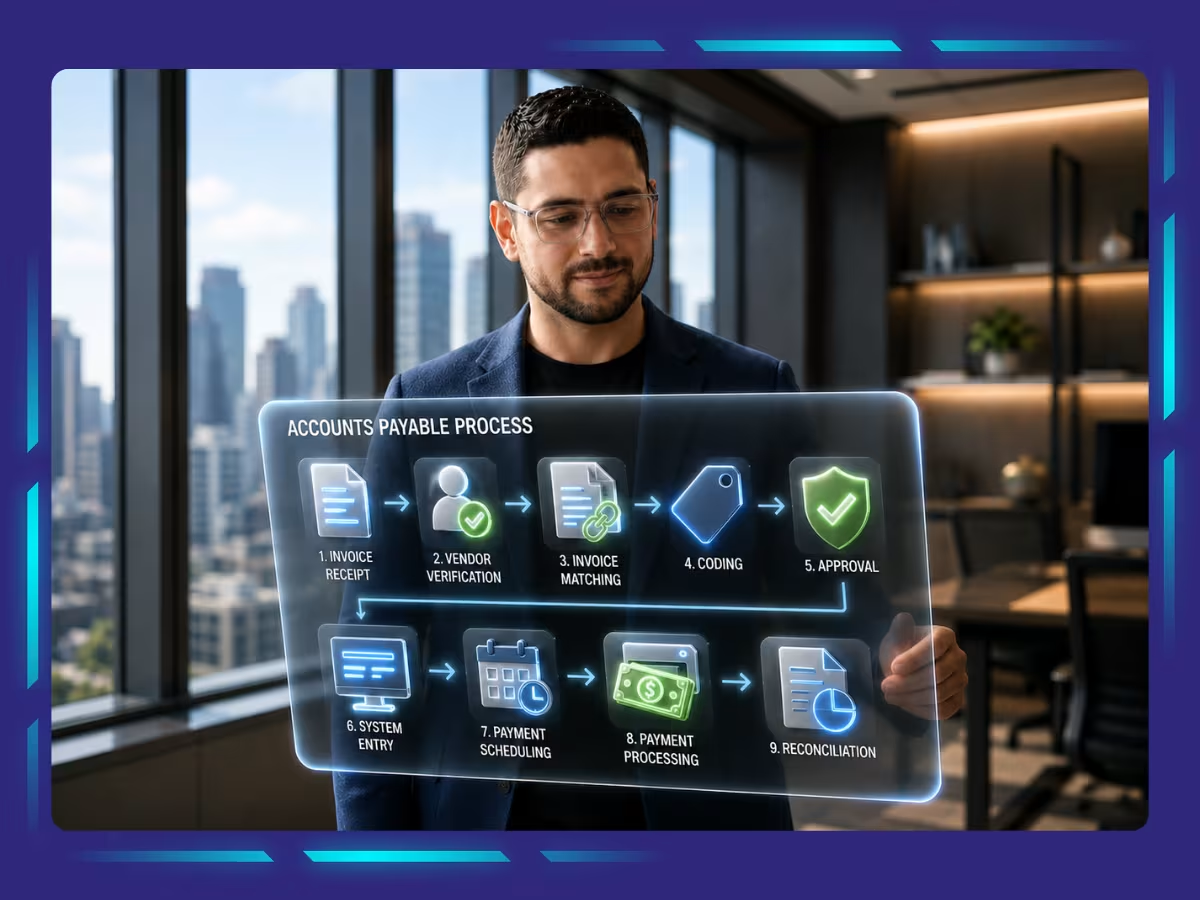
The accounts payable process includes invoice receipt, vendor verification, invoice matching, coding, approval, system entry, payment scheduling, payment processing, and reconciliation.
These invoice processing steps help US businesses pay vendors accurately while reducing duplicate payments, approval delays, fraud risks, and reporting errors. Businesses using structured accounts payable services can also improve workflow consistency, financial visibility, and AP control as invoice volumes grow.
1. Receive the Vendor Invoice
The process starts when a supplier sends an invoice for goods or services provided. US businesses usually receive invoices through email, vendor portals, accounting software, or paper mail.
At this stage, the finance team should check whether the invoice includes key details such as:
- Vendor name and contact details
- Invoice number
- Invoice date
- Payment due date
- Description of goods or services
- Amount due
- Tax or shipping details, where applicable
- Purchase order number, if used
Missing or unclear invoice details can delay approvals and create payment disputes later.
2. Verify Vendor Information
Before processing payment, the business should confirm that the vendor is valid and already set up in the accounting system. This is especially important for US businesses that collect W-9 forms from vendors for tax reporting purposes.
Vendor verification helps reduce fraud risk and supports cleaner year-end reporting. It also ensures that payments are made to the correct bank account, mailing address, or payment method.
3. Match the Invoice with Supporting Documents
Invoice matching is one of the most important parts of the accounts payable management. It helps confirm that the business is only paying for authorized purchases.
The most common approach is three-way matching, which compares:
- Purchase order
- Goods receipt or service confirmation
- Vendor invoice
For smaller businesses, two-way matching may be used when only the purchase order and invoice are compared. Either way, matching helps catch price differences, quantity errors, duplicate charges, or unauthorized purchases before payment is made.
4. Code the Invoice to the Correct Account
Once the invoice is verified, it should be coded to the correct general ledger account, department, project, location, or cost center.
For example, software subscriptions, rent, utilities, contractor payments, and office supplies should not all be recorded under the same expense category. Accurate coding gives business owners and finance teams a clearer view of spending.
This step also supports better budgeting, financial reporting, and tax preparation.
5. Route the Invoice for Approval
After coding, the invoice should go to the right person for approval. Approval may depend on department, dollar amount, vendor type, or business unit.
For example, a marketing invoice may go to the marketing manager, while a large equipment invoice may require approval from senior management. Clear approval rules prevent unauthorized payments and reduce bottlenecks.
This is where a defined accounts payable workflow becomes useful. It helps teams know who reviews each invoice, what approval limits apply, and when the invoice should move to payment.
6. Record the Invoice in the Accounting System
Once approved, the invoice should be entered into the accounting system as payable. This creates a record of the amount owed and helps the business track upcoming payment obligations.
Common accounting systems used by US businesses include QuickBooks, Xero, NetSuite, Sage Intacct, Microsoft Dynamics, and Zoho Books.
Recording invoices correctly helps maintain accurate financial statements and gives the business a clear view of liabilities.
7. Schedule the Payment
The next step is to schedule the payment based on vendor terms and available cash flow. Common payment terms include Net 15, Net 30, Net 45, or due on receipt.
US businesses should avoid paying too early without a reason, as it may affect working capital. At the same time, late payments can damage vendor relationships and may result in fees.
A good AP team reviews due dates, cash availability, early payment discounts, and vendor priorities before releasing payments.
8. Process the Payment
Payments can be made through ACH, wire transfer, check, credit card, or digital payment platforms. ACH is commonly used by US businesses because it is usually cost-effective and easier to track.
Before payment is released, the team should confirm:
- The invoice has been approved
- Vendor banking details are correct
- Payment amount matches the invoice
- No duplicate payment has already been made
- The payment method is authorized
Strong controls at this stage help reduce fraud and payment errors.
9. Reconcile Payments and Vendor Statements
After payment, the transaction should be reconciled against bank records and vendor statements. This confirms that the payment has been cleared and recorded correctly.
Vendor statement reconciliation also helps identify missing invoices, unapplied credits, duplicate entries, or payment allocation issues.
This final step keeps the accounts payable process clean and supports accurate month-end close.
How Does the Accounts Payable Process Work from Invoice to Payment?
The accounts payable process starts when a vendor invoice is received and ends when the payment is recorded and reconciled. These invoice processing steps ensure that every invoice is valid, approved, correctly coded, paid on time, and supported by proper documentation for audit and tax purposes.
Efficient invoice processing helps US businesses move invoices through verification, approval, payment scheduling, and reconciliation without delays, duplicate entries, or missed payment terms.
1. Standardize Invoice Collection
Invoices should come through a centralized channel instead of being scattered across multiple inboxes, departments, or employee desks.
A dedicated AP email address or vendor portal makes it easier to track invoices from the start. It also reduces the risk of missed due dates and duplicate submissions.
2. Maintain an Updated Vendor Master File
The vendor master file should be reviewed regularly. Outdated vendor records, duplicate vendors, inactive suppliers, and incorrect payment details can create serious AP issues.
For US businesses, vendor records should also support tax documentation needs, including W-9 collection and 1099 reporting where applicable.
3. Use Approval Limits
Not every invoice needs the same approval process. A $200 office supplies invoice should not follow the same review path as a $50,000 equipment purchase.
Set approval limits based on invoice value, department, and risk level. This keeps the process efficient while still maintaining control over larger payments.
4. Automate Repetitive AP Tasks
Automation can reduce manual data entry, speed up approvals, and improve visibility. AP automation tools such as Bill.com, Melios, and Ramp can help with invoice capture, coding, approval routing, payment scheduling, and reporting.
Automation is especially helpful for businesses that handle high invoice volumes or operate across multiple locations.
5. Check for Duplicate Invoices
Duplicate invoices are a common AP problem. They may happen when vendors resend invoices, employees upload the same bill twice, or invoice numbers are entered incorrectly.
Finance teams should use system checks to flag duplicate invoice numbers, vendor names, amounts, and dates before payment is processed.
6. Reconcile AP Regularly
AP should not be reviewed only at year-end. Regular vendor reconciliation in AP helps identify problems early and keeps financial records accurate.
Monthly AP reconciliation supports better cash flow planning, cleaner financial statements, and smoother audits.
7. Track Key AP Metrics
US businesses should monitor AP performance to understand where delays or errors are happening. Useful AP metrics include:
- Invoice processing time
- Cost per invoice
- Number of late payments
- Duplicate payment rate
- Approval cycle time
- Early payment discounts captured
- Vendor dispute frequency
These metrics help finance teams improve the accounts payable process with real data instead of guesswork.
8. Strengthen Internal Controls
Strong AP controls protect the business from fraud, unauthorized purchases, and payment errors. At minimum, the person approving an invoice should not be the same person releasing the payment.
Segregation of duties, approval logs, audit trails, and vendor verification procedures all help create a safer AP environment.
9. Keep Documentation Audit-Ready
Every invoice should have a clear record of approval, coding, payment, and supporting documents. This is important for audits, tax preparation, lender reviews, and internal reporting.
Well-organized AP records also make it easier to answer vendor questions and resolve disputes quickly.
10. Review the AP Process as the Business Grows
The AP process steps for US businesses may change as the company expands. A process that works for 50 invoices a month may fail when volume reaches 500.
This is why businesses need to review their AP setup regularly and adjust approval rules, software, reporting, and staffing based on current needs.
Build a Smooth Accounts Payable Process with the Right Expertise
A reliable accounts payable process protects cash flow, controls spending, and improves vendor relationships while giving management clear visibility into liabilities. However, growing invoice volumes and manual workflows often trigger delayed approvals, coding errors, and weak reconciliation that ultimately hurt financial accuracy and stall smart business decisions.
That is why many US businesses choose to work with experienced AP professionals who can manage invoice processing, vendor records, approvals, payment scheduling, reconciliations, and reporting with better structure.
Whiz Consulting provides US businesses with the financial expertise they need to thrive. We help your business move from reactive bill handling to a controlled, transparent, and scalable AP function. Because a well-managed accounts payable process does more than just pay bills, it strengthens financial control, improves cash planning, and gives your business a cleaner foundation for growth. Connect with us today to get started.

Get customized plan that supports your growth

Have questions in mind? Find answers here...
Accounts payable helps businesses maintain healthy vendor relationships, manage short-term liabilities, improve cash flow, and ensure timely payments to suppliers and service providers.
Automation reduces manual data entry, speeds invoice approvals, minimizes errors, strengthens compliance, and improves payment accuracy through digital workflows and automated matching systems.
Three-way matching compares purchase orders, invoices, and goods receipt documents to verify transaction accuracy before approving vendor payments.
Outsourcing accounts payable reduces operational costs, improves accuracy, enhances compliance, accelerates invoice processing, and allows businesses to focus on core activities.
Businesses can improve AP processes by automating workflows, training staff, conducting regular audits, strengthening controls, and improving vendor communication.
Thousands of business owners trust Whiz to manage their account
Let us take care of your books and make this financial year a good one.