

In This Blog Post
Share This Article
- Last Updated: Sep 14, 2026
- 🔊 Listen
TL;DR
- Accounts payable outsourcing helps businesses manage invoice processing, vendor payments, reconciliation, and AP communication through a third-party provider.
- It improves invoice accuracy through structured receipt, verification, matching, approvals, and error checks.
- Timely payment processing helps protect cash flow, avoid delays, and maintain stronger vendor relationships.
- Outsourced AP reduces internal finance workload and supports a more flexible cost model.
- It also improves vendor management through faster processing, better tracking, and self-service tools.
- The right AP outsourcing provider should offer industry experience, automation, scalability, data security, compliance support, and clear communication.
A streamlined and efficient accounts payable process is essential for stronger cash flow, cleaner vendor records, and better financial control. Yet, invoice approvals, payment tracking, reconciliations, and compliance checks can drain internal teams when handled manually. That is where accounts payable outsourcing services in the US helps businesses improve accuracy, reduce delays, and create a more controlled AP process. By outsourcing AP tasks to experienced professionals, companies can streamline invoice processing, strengthen vendor relationships, and gain clearer visibility into outgoing payments. This blog explains what to expect from outsourced accounts payable, the best practices for a smooth transition, and the key benefits for growing businesses.

Stress-Free AP Starts Here
Streamline Invoice Processing and Strengthen Cash Flow
What is Accounts Payable Outsourcing?
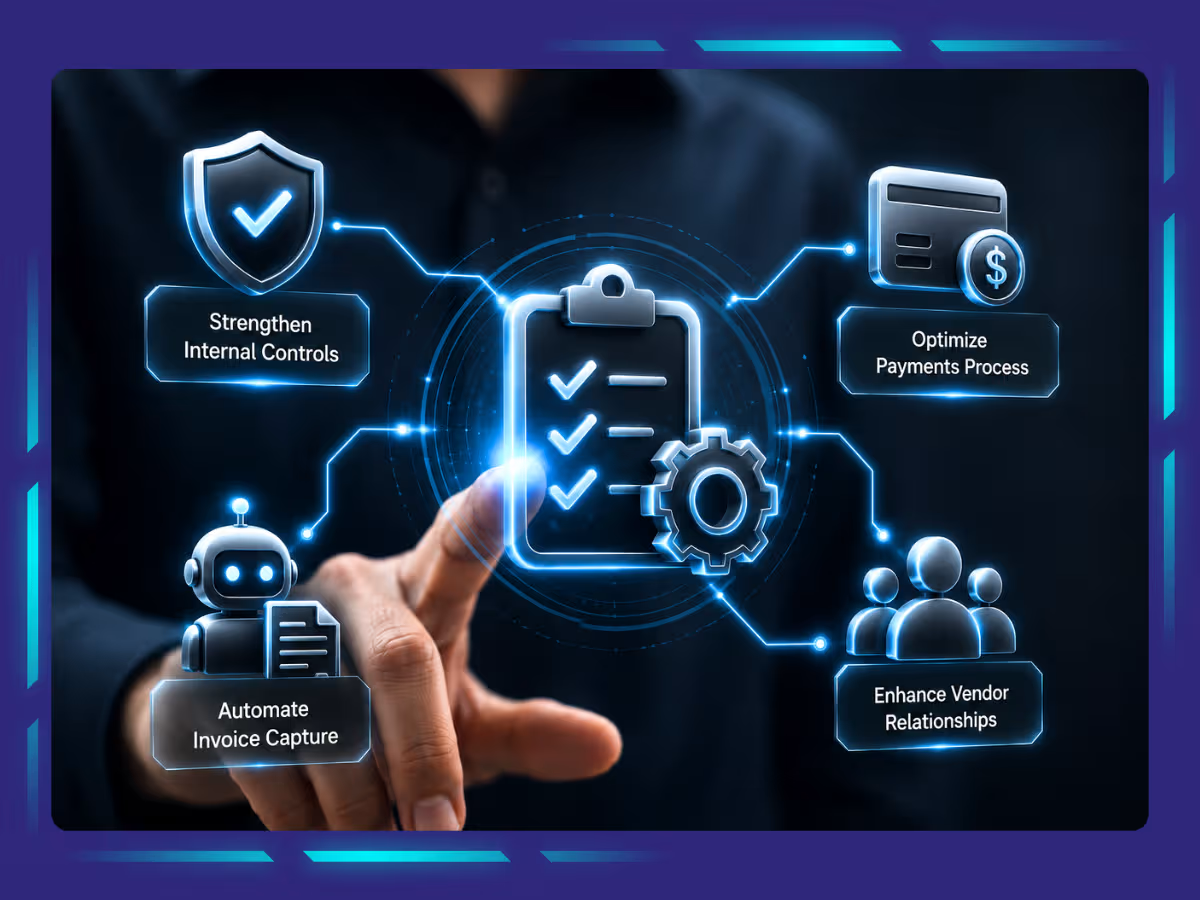
Accounts payable outsourcing is the practice of hiring an external finance team to manage supplier invoices, payment processing, vendor records, reconciliations, and reporting. For US businesses, outsourced accounts payable services help reduce manual workload, improve payment accuracy, strengthen internal controls, and keep AP processes organized as transaction volumes grow.
Instead of managing every invoice in-house, companies can rely on trai ned AP professionals who use accounting software, approval workflows, and compliance-focused processes to maintain clear financial visibility. Many businesses choose accounts payable outsourcing US to control costs, prevent late payments, and build a more reliable finance function.
How Does Accounts Payable Outsourcing US Work?
When you outsource your accounts payable processes, each step is handled with care, accuracy, and proper financial control. These steps include vendor invoice receipt, invoice verification, data entry, approval workflow, payment processing, reconciliation, reporting, and compliance review. For US businesses, this process must also support GAAP-aligned reporting, IRS vendor documentation, 1099-NEC readiness, and strong audit trails.
Vendor Invoice Receipt
For US businesses, the AP outsourcing process begins when vendors submit invoices through a designated email, portal, accounting system, or directly to the provider. The team sorts invoices by vendor, date, amount, entity, and payment priority. For LLCs, S-Corps, and C-Corps, accurate classification supports tax records, expense reporting, audits, and cash flow visibility.
Invoice Verification
The accounts payable outsourcing provider checks invoices against purchase orders, contracts, goods receipt notes, and vendor records. Vendor bill processing errors such as duplicate invoices, incorrect amounts, missing approvals, incomplete vendor details, or purchase term mismatches are flagged early. This step strengthens internal controls and supports SOX-aligned documentation for larger US companies.
Data Entry and Recording
Once verified, invoice details are entered into the accounting system manually or through AP automation software. Invoices are coded, scanned, and archived for easy retrieval. This supports GAAP-aligned reporting by recording expenses in the correct period and assigning them to the right entity, department, project, or cost center.
Approval Workflow
When approval is required, invoices are routed to the right manager, department, or business owner. Clear approval workflows reduce payment delays, prevent unauthorized payments, and support audit readiness. Approval limits should be defined before handover, especially for high-value contracts, contractor payments, operating expenses, and capital expenses.
Payment Processing
After approval, the provider processes payments through ACH, wire transfer, check, or online platforms. Payments are scheduled based on vendor terms, cash flow needs, and internal policies. The team also maintains payment evidence to support tax reporting, audits, year-end reviews, and stronger vendor relationships.
Reconciliation and Reporting
After payment, the outsourcing team reconciles bank transactions, vendor statements, and general ledger entries. Regular AP reports may cover ageing summaries, outstanding payments, accruals, payment schedules, cash flow impact, and exceptions. Key metrics include DPO, invoice processing time, payment accuracy, duplicate invoice rate, approval cycle time, and cost per invoice.
Compliance and Auditing
Skilled virtual accountants help align AP processes with US tax, accounting, and internal control requirements, including GAAP reporting, IRS 1099-NEC documentation, W-9 records, audit trails, and payment evidence. Strong controls also reduce fraud, duplicate payments, unauthorized approvals, and documentation gaps.
Essential Services Provided by Accounts Payable Outsourcing Companies
Accounts payable outsourcing companies offer services that help US businesses manage vendor payments, invoice processing, employee reimbursements, compliance documentation, and reporting with better control. These services are often supported by accounting software and automation tools to improve accuracy, reduce manual errors, and keep AP workflows audit ready.
Invoice Processing
Invoice processing includes managing the full invoice cycle, from receipt and verification to data entry, coding, approval routing, and archiving. Invoices are matched with purchase orders, contracts, delivery receipts, or service confirmations to prevent duplicate payments, missed approvals, incorrect coding, and overpayments.
Payment Processing
Outsourcing teams help schedule and process vendor payments through ACH, wire transfers, checks, or approved digital payment methods. Payments are managed based on vendor terms, approval rules, and cash flow needs, reducing late fees, and improving working capital control.
Vendor Management
Providers maintain vendor records, onboarding details, W-9 forms, payment terms, bank details, and vendor classifications. For US businesses, this also supports IRS 1099-NEC readiness and helps reduce errors in contractor payment records.
Employee Expenses Reimbursement
AP outsourcing firms verify employee claims, receipts, mileage, travel costs, subscriptions, meals, and corporate card expenses before approval and reimbursement. This improves policy compliance, reduces duplicate claims, and keeps employee-related spending properly documented.
Reconciliation and Reporting
Outsourcing providers reconcile payables data with bank transactions, vendor statements, and general ledger records. They also prepare AP ageing reports, accrual summaries, vendor balances, payment schedules, exception reports, and cash flow forecasts for better decision-making.
Compliance Support
AP providers help maintain GAAP-aligned expense records, IRS 1099 documentation, approval trails, vendor tax records, and payment evidence. Larger C-Corps and public companies may also need SOX-aligned AP controls, access permissions, and reporting discipline.
Discrepancy Resolution
Outsourcing teams investigate duplicate invoices, pricing mismatches, missing purchase orders, incorrect vendor details, and incomplete documentation. This prevents vendor disputes, payment delays, and month-end close issues.
Automation and Digitization
Reputable outsourced accounting services providers use automation for invoice capture, three-way matching, approval routing, payment tracking, and document storage. This helps US businesses process higher invoice volumes without increasing internal workload.
Why Outsource Your Accounts Payable?
Accounts payable outsourcing services offer more than cost reduction. It gives US businesses access to trained AP professionals, better workflows, automation support, stronger reporting, and compliance-ready documentation. For growing LLCs, S-Corps, and C-Corps, outsourcing can also reduce pressure on internal finance teams while improving payment accuracy and vendor control.

Cost saving
Managing accounts payable in-house involves salaries, benefits, training, software, supervision, and backup coverage. As invoice volumes grow, these costs can quickly become difficult to control.
A practical way to measure AP savings is through cost per invoice. Manual processing usually costs more because it depends on staff time, approvals, data entry, follow-ups, and reconciliations. With outsourcing and automation, businesses can reduce manual effort and lower the cost per invoice.
For example, if a business processes 1,000 invoices monthly at $10 per invoice, AP costs $10,000. If outsourcing reduces this to $5 per invoice, the monthly cost drops to $5,000.
Improved Accuracy
Accuracy is critical in accounts payable management. Errors can cause duplicate payments, missed discounts, vendor disputes, delayed approvals, and inaccurate reports.
Outsourced accounts payable providers use structured workflows to verify invoices, match purchase orders, code expenses, and reconcile payments. Automated three-way matching also reduces overpayment and fraud risks.
Focus on Core Business Activity
In-house AP can take time away from higher-value finance work. Teams often spend hours chasing approvals, entering invoices, answering vendor queries, and fixing payment issues.
By outsourcing AP, finance teams can focus on cash flow planning, vendor negotiations, budgeting, reporting, and strategic decision-making.
Scalability and Flexibility
As businesses grow or face seasonal demand, AP workloads can change quickly. Hiring internal staff for every increase in invoice volume is not always practical.
Outsourced AP services allow businesses to scale support based on invoice volume, reporting needs, and payment complexity. This works well for ecommerce, construction, healthcare, professional services, and multi-location businesses.
Enhanced Compliance and Security
US businesses need accurate vendor records, tax documents, approval trails, and payment records. AP outsourcing providers help organize these records and reduce documentation gaps.
Reliable providers also use access controls, role-based permissions, encrypted systems, and review workflows to reduce fraud and protect financial data.
Access to Advanced Tools
Outsourced AP teams often work with QuickBooks, Xero, Microsoft Dynamics 365 Business Central, NetSuite, and other accounting platforms. They help manage workflows, approvals, reporting, and software-based AP processes efficiently.
Better Vendor Management
Efficient AP processes help businesses pay vendors on time, resolve queries faster, reconcile statements, and avoid disputes. Some providers also support vendor portals for invoice uploads, payment tracking, and dispute management.
Access to Global AP Talent
US businesses often outsource AP to countries like India and Philippines. The right location depends on invoice volume, software stack, reporting needs, communication style, and business-hour overlap.
How to Transition to Accounts Payable Outsourcing Effectively
A successful AP outsourcing transition depends on how well your business manages the first few weeks of handover. Instead of repeating general AP best practices, this stage should focus on data migration, system access, approval rules, vendor communication, and early performance checks.
Map Your Current AP Workflow
Start by documenting how invoices are received, reviewed, approved, paid, and reconciled. Identify who approves invoices, where vendor records are stored, which software is used, and what reports your team needs.
This gives the outsourcing provider a clear view of your process before they take over daily AP tasks.
Clean Vendor and Invoice Data
Before migration, review vendor names, payment terms, tax details, W-9 records, bank information, email addresses, and open invoices. Remove duplicate vendors, inactive accounts, and outdated payment details.
Clean data reduces transition errors and helps the outsourcing team manage invoices, payments, and 1099-related documentation more accurately.
Create a 30-Day Handoff Plan
The first 30 days should cover system access, invoice backlog review, approval workflow setup, vendor master data review, sample invoice testing, and reporting expectations.
During this period, your internal team and outsourcing provider should work together closely before the AP process fully shifts. This reduces disruption and helps both teams understand responsibilities.
Run Parallel Reviews Before Full Transfer
For the first few payment cycles, your internal finance team should review selected invoices, approval logs, and payment batches before release.
This gives the provider time to learn about your business rules while reducing the risk of missed approvals, incorrect payments, or coding errors.
Define Controls and Approval Limits
Approval limits, payment release rules, access permissions, and exception-handling processes should be finalized early. This is especially important for C-Corps, audit-focused companies, and businesses with multiple departments or locations.
Clear controls help prevent unauthorized payments and make AP records easier to review during audits.
Set Transition KPIs
During the transition, track practical KPIs such as invoice backlog cleared, approval delays, duplicate invoice exceptions, vendor query response time, payment accuracy, and unresolved discrepancies.
Once the process stabilizes, you can track broader AP metrics such as DPO, cost per invoice, invoice cycle time, and first-time match rate.
How to Choose the Right AP Outsourcing Service Provider?
Choosing the right accounts payable outsourcing service provider is crucial for maintaining accuracy, compliance, security, and operational efficiency. US businesses should look beyond cost and assess whether the provider can support their industry, accounting system, approval workflows, reporting needs, and compliance requirements.

- Expertise and Experience: Choose a provider with proven AP experience in your industry. They should manage your invoice volume, vendor base, payment complexity, and reporting needs with accuracy.
- US Compliance Knowledge: For US businesses, the provider should understand GAAP-aligned reporting, IRS 1099-NEC support, vendor documentation, and audit-ready recordkeeping.
- Technology and Automation: Look for expertise in cloud accounting software and AP automation tools. They should support invoice capture, approval workflows, payment tracking, reporting, and system integration.
- Scalability: The provider should scale with your business as invoice volumes grow, entities expand, or seasonal workload changes.
- Security and Controls: Check for secure platforms, role-based access, approval controls, encrypted file sharing, and clear audit trails.
- Communication and Support: Ensure they offer timely support, regular reporting, escalation channels, and suitable time zone overlap for your business needs.
Hire the Right Outsourced Accounts Payable for a Smooth AP Process
Outsourcing accounts payable streamlines operations, improves financial accuracy, and reduces administrative burdens. By partnering with experienced accounts payable services providers, businesses enhance cash flow management and ensure compliance with evolving regulations.
With Whiz Consulting as your partner, you gain access to a team of 150+ professionals to manage your accounts payable smoothly and on time. We handle invoice processing, vendor follow-ups, payment scheduling, and reconciliations so you avoid delays, errors, and missed payments. Our team works across time zones, protects your data, and keeps communication clear and quick.

Get customized plan that supports your growth

Have questions in mind? Find answers here...
The cost of outsourcing accounts payable services depends on invoice volume, transaction complexity, approval workflows, reporting needs, and system integration requirements. Most providers offer customized pricing based on your business size and AP workload.
Yes, outsourcing can reduce invoice processing time and costs by improving workflows, minimizing manual errors, and speeding up approvals. It can also help prevent late fees, improve vendor payments, and support better cash flow management.
Outsourced AP accountants manage invoice processing, payment scheduling, vendor questions, reconciliations, reporting, and record maintenance. They help keep payments accurate, timely, and properly documented while reducing your internal administrative workload.
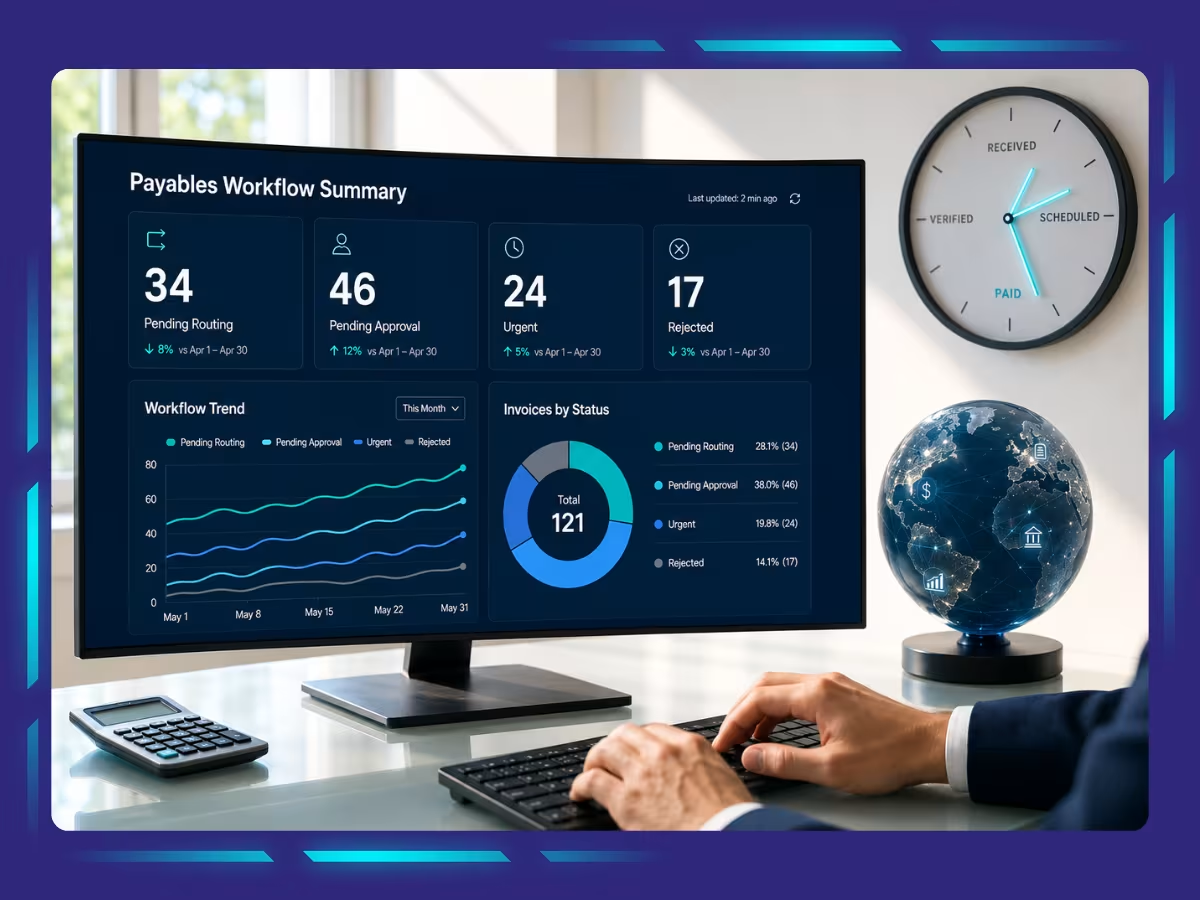
Yes, many AP outsourcing providers offer real-time reports and dashboards to track invoice status, payments, approvals, aging, and cash flow visibility. This helps businesses monitor AP performance and make informed financial decisions.
Yes, you can have a dedicated AP professional or account manager handling your tasks and questions. This ensures consistent communication, better process understanding, and faster resolution of invoice or vendor-related issues.
Yes, outsourced AP services can be customized to match your workflows, approval controls, compliance requirements, software systems, and reporting formats. This helps maintain process consistency while improving efficiency through external support.
Thousands of business owners trust Whiz to manage their account
Let us take care of your books and make this financial year a good one.