


In This Blog Post
Share This Article
- Last Updated: Aug 10, 2026
- 🔊 Listen
TL;DR
- Separating vendor setup, invoice processing, approvals, payments, and reconciliation helps reduce opportunities for fraud.
- Independent vendor verification can prevent fraudulent bank detail changes and payment diversion.
- Three-way matching and structured approvals help identify duplicate, altered, or unsupported invoices before payment.
- Digital audit trails improve accountability by recording invoice changes, approvals, system access, and payment activity.
- A reliable outsourced AP provider should offer strong internal controls, secure access, documented workflows, and clear reporting.
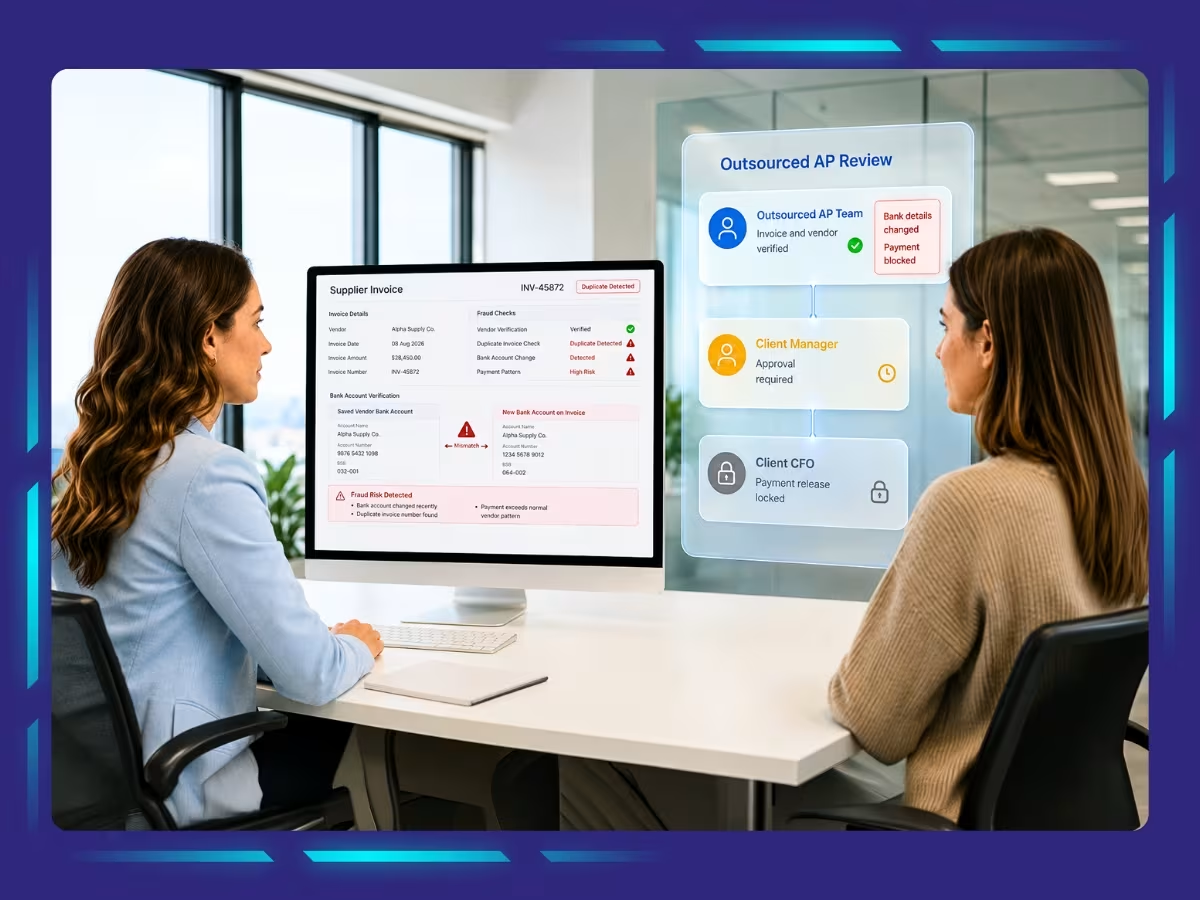
Outsourced accounts payable helps prevent invoice fraud by separating vendor verification, invoice review, payment approval, and payment release across different people. This segregation of duties reduces the risk of one individual controlling the entire payment process and makes fraudulent or unauthorized transactions easier to detect.
Effective accounts payable fraud prevention depends on clear segregation of duties, independent reviews, and secure approval workflows. In this blog, we explain why invoice fraud occurs, how outsourced accounts payable strengthens segregation of duties, the common fraud schemes these controls can prevent, and what businesses should evaluate when choosing an outsourced AP provider.

Build a Safer Accounts Payable Process!
Strengthen Controls, Reduce Fraud Risk, and Keep Payments Secure.
Why Invoice Fraud Thrives in AP Processes
Accounts payable teams often process hundreds of invoices each month, making it difficult to review every transaction with the same level of attention. When approvals are rushed or manual tasks take up too much time, fraudulent invoices and payment errors can go unnoticed. Building stronger internal controls is an important part of accounts payable fraud prevention, especially as businesses grow and vendor activity increases.
Some of the most common weaknesses that allow invoice fraud to occur include:
- Manual invoice processing: Hand-entered data increases the chance of missed errors and fraudulent entries.
- High invoice volumes: Busy AP teams may not have enough time to thoroughly verify every invoice.
- Urgent payment requests: Fraudsters often create a sense of urgency to push invoices through without proper review.
- Poor segregation of duties: When one person controls vendor setup and payment approvals, the risk of fraud rises.
- Weak exception handling: Invoices without purchase orders or supporting documents may bypass standard checks.
- Unverified vendor updates: Changes to supplier banking details without proper validation can result in payments being redirected to fraudulent accounts.
Why is Segregation of Duties Important in AP Process?
Segregation of duties in accounts payables is critical because it prevents any single employee from controlling an entire transaction, such as creating a vendor, approving an invoice, and issuing payment, from start to finish.
By dividing these responsibilities among different people, companies prevent any one individual from having unchecked control over funds or financial records, making accounts payable fraud prevention a natural outcome of the process design rather than an added step. This is especially important for US companies, where regulatory frameworks place direct accountability on leadership for invoice fraud controls.
Key reasons SoD matters:
- Prevents single-point fraud risk by ensuring no one person handles an entire transaction alone
- Strengthens accounts payable fraud prevention through built-in checks and balances at every stage
- Reduces errors and duplicate payments through independent review at each step
- Protects vendor master file integrity by restricting who can add or edit vendor data
- Improves audit trails with clear accountability for every action, supporting IRS and financial reporting requirements
- Ensures compliance with SOX (Sarbanes-Oxley Act), which legally requires publicly traded US companies to maintain documented internal controls over financial reporting
- Limits collusion risk by requiring multiple people to coordinate for fraud to occur
How Outsourced Accounts Payable Builds Segregation of Duties
Outsourced accounts payable services include splitting workflow stages, independent vendor management, client-side authorization, role-based access controls, three-way matching, independent reconciliation, and digital audit trails. Together, these measures support accounts payable fraud prevention and reduce the risk of fraud, duplicate payments, and unauthorized transactions.
Splitting Workflow Stages
The outsourced team records and reviews invoices, while the client approves purchases and releases payments. Separating data entry, approval, and payment prevents one person from controlling the full transaction. This is one of the best practices for accounts payable fraud preventions.
Independent Vendor Management
Vendor creation and bank-detail changes should be handled outside routine invoice processing. A separate reviewer confirms requests through a known vendor contact. This reduces exposure to fake vendors and payment-diversion fraud.
Client-Side Authorization
Final payment approval and bank release rights remain with the client’s finance team. The provider prepares payment batches, but internal managers retain control over cash movement. This division strengthens accounts payable fraud prevention.
Role-Based Access Controls
System permissions limit who can add vendors, change payment details, approve exceptions, or override transaction limits. These access restrictions keep processors within assigned responsibilities.
Three-Way Matching
The outsourced team matches the purchase order, receiving report, and vendor invoice before adding a payment to the queue. This accounts payable fraud prevention step helps catch quantity, pricing, and delivery discrepancies.
Independent Reconciliation
Employees who process or approve payments should not reconcile bank accounts. A separate reviewer compares bank activity, payment reports, and general ledger entries to identify irregularities.
Digital Audit Trails
Accounting systems record invoice edits, approval timestamps, access changes, and payment activity. These logs support accounts payable fraud prevention by creating a clear record for audits, management review, and fraud investigations.
Key Invoicing Frauds Outsourced AP Teams Can Prevent
Common invoicing schemes include vendor impersonation, ghost vendors, duplicate invoices, inflated billing, and employee-vendor collusion. Outsourced teams strengthen accounts payable fraud prevention by applying independent verification, structured approval workflows, invoice-matching controls, and clear separation of financial duties before funds leave the company.
Vendor Impersonation and Business Email Compromise
Fraudsters may pose as trusted suppliers and request urgent changes to ACH or wire instructions. Outsourced AP teams support accounts payable fraud prevention by confirming banking updates through established vendor contacts, secure portals, secondary approvals, and callback numbers stored in the vendor master file.
Ghost Vendor and Fictitious Supplier Fraud
Fake vendors can be added to accounting systems to collect payments for goods or services never provided. Strong accounts payable fraud prevention includes reviewing Form W-9 information, validating eligible name and taxpayer identification number combinations, checking business details, and restricting vendor-master access.
Duplicate and Altered Invoice Fraud
Vendors or fraudsters may resubmit an invoice after changing its number, date, amount, or formatting. Outsourced teams improve accounts payable fraud prevention with duplicate-detection software that compares invoice data, payment history, purchase orders, and similar submissions before bills enter the payment run.
Inflated, Unmatched, or Unsupported Billing
Some invoices include inflated quantities, unauthorized rates, or charges for items the company never received. As part of invoice fraud prevention, outsourced teams compare the supplier invoice with the approved purchase order and receiving record, then route material exceptions back to authorized staff.
Employee and Vendor Collusion
An employee may cooperate with a supplier to approve false bills, inflated charges, or payments to a related entity. Outsourced teams reinforce accounts payable invoice prevention by separating vendor setup, invoice entry, approval, payment release, and accounts reconciliation across different authorized individuals.
How to Evaluate the Outsourced Accounts Payable Team’s Internal Controls?
Evaluating an outsourced accounts payable team’s internal controls means checking how well the provider protects your financial data and prevents errors or fraud, not just their cost savings or turnaround time.
A proper evaluation of invoice processing services looks at segregation of duties, secure technology, documented workflows, and compliance certifications, all of which support strong accounts payable fraud prevention and give you confidence in how your AP function is managed.
Key factors to evaluate in an outsourced AP team’s internal controls:
- Segregation of duties – Confirm that invoice entry, approval, and payment execution are handled by different individuals, not a single point of contact, to reduce fraud risk.
- Role-based access control – Check that only authorized personnel can view or modify sensitive data like vendor bank details, invoice amounts, or payment schedules.
- Security certifications – Look for providers certified under standards like SOC 2 and ISO/IEC 27001, which validate that data security and process controls meet recognized benchmarks.
- Encrypted platforms and secure data sharing – Ensure invoices, approvals, and communications flow through encrypted, cloud-based systems rather than unsecured email or spreadsheets.
- Multi-factor authentication (MFA) – Verify that access to financial systems requires more than a single password, adding a layer of protection against unauthorized access.
- Documented approval workflows – Ask for a clear, written process showing how invoices move from receipt to approval to payment, including escalation steps for exceptions.
- Audit trail visibility – Make sure every transaction is time-stamped and traceable, so you can review who approved what and when, supporting accounts payable fraud prevention and simplifying audits.
- Duplicate and error detection controls – Check whether the team uses automated tools or standardized processes to catch duplicate invoices, incorrect amounts, or data-entry mistakes before payment.
- NDA and confidentiality agreements – Confirm that signed non-disclosure agreements are in place to protect your financial and vendor information.
- Regular reporting and communication – Look for scheduled reporting, escalation channels, and time zone overlap that keep you informed and in control despite the AP process being outsourced.
- Compliance with US regulations – Ensure the provider’s controls align with GAAP and, where applicable, SOX requirements for companies with public reporting obligations.
Strengthen Your Accounts Payable Workflow with Trusted Accountants
Strong accounts payable controls do more than reduce payment errors. They create clear accountability across vendor management, invoice review, approvals, payment release, reconciliation, and audit trails. By separating these responsibilities to a reliable accounting services provider, businesses can reduce chances for invoice fraud, strengthen internal controls, and maintain better visibility over every transaction.
Whiz Consulting helps businesses build a more secure, efficient AP function with experienced professionals, structured workflows, and reliable financial controls. Our accounts payable services support invoice processing, vendor verification, approval coordination, reconciliations, and reporting while helping your team retain control over critical payment decisions. Partner with Whiz Consulting to improve AP accuracy, reduce fraud risk, and create a stronger finance operation for growth.

Get customized plan that supports your growth

Have questions in mind? Find answers here...
Businesses can reduce AP fraud by separating invoice entry, vendor management, approvals, payment release, and reconciliation while using verification procedures, access controls, and clear audit trails.
Segregation of duties means assigning key AP responsibilities to different people so no single employee controls an entire transaction from vendor setup through payment.
Outsourced AP teams introduce independent invoice reviews, vendor verification, structured approval workflows, three-way matching, and reconciliation controls before payments are processed.
Common schemes include vendor impersonation, ghost vendors, duplicate invoices, altered invoices, inflated billing, unauthorized bank-detail changes, and employee-vendor collusion.
Evaluate the provider’s segregation of duties, role-based access, security certifications, approval workflows, audit trails, fraud detection controls, data security, and reporting processes.
Thousands of business owners trust Whiz to manage their account
Let us take care of your books and make this financial year a good one.