


In This Blog Post
Share This Article
- Last Updated: Sep 3, 2026
- 🔊 Listen
TL;DR
- AI can manage repetitive accounting tasks such as transaction posting, bank reconciliation, invoice matching, payroll entries, and anomaly detection.
- Virtual accountants review exceptions, apply business context, resolve complex transactions, and make the final decisions where judgment is required.
- Human oversight remains essential because AI should not independently finalize unclear, unusual, or high-risk financial transactions.
- Combining AI with a virtual accountant helps SMBs maintain updated books, improve cash flow visibility, and reduce month-end pressure.
- With routine accounting work automated, accountants can focus more on forecasting, tax planning, financial strategy, and business growth.
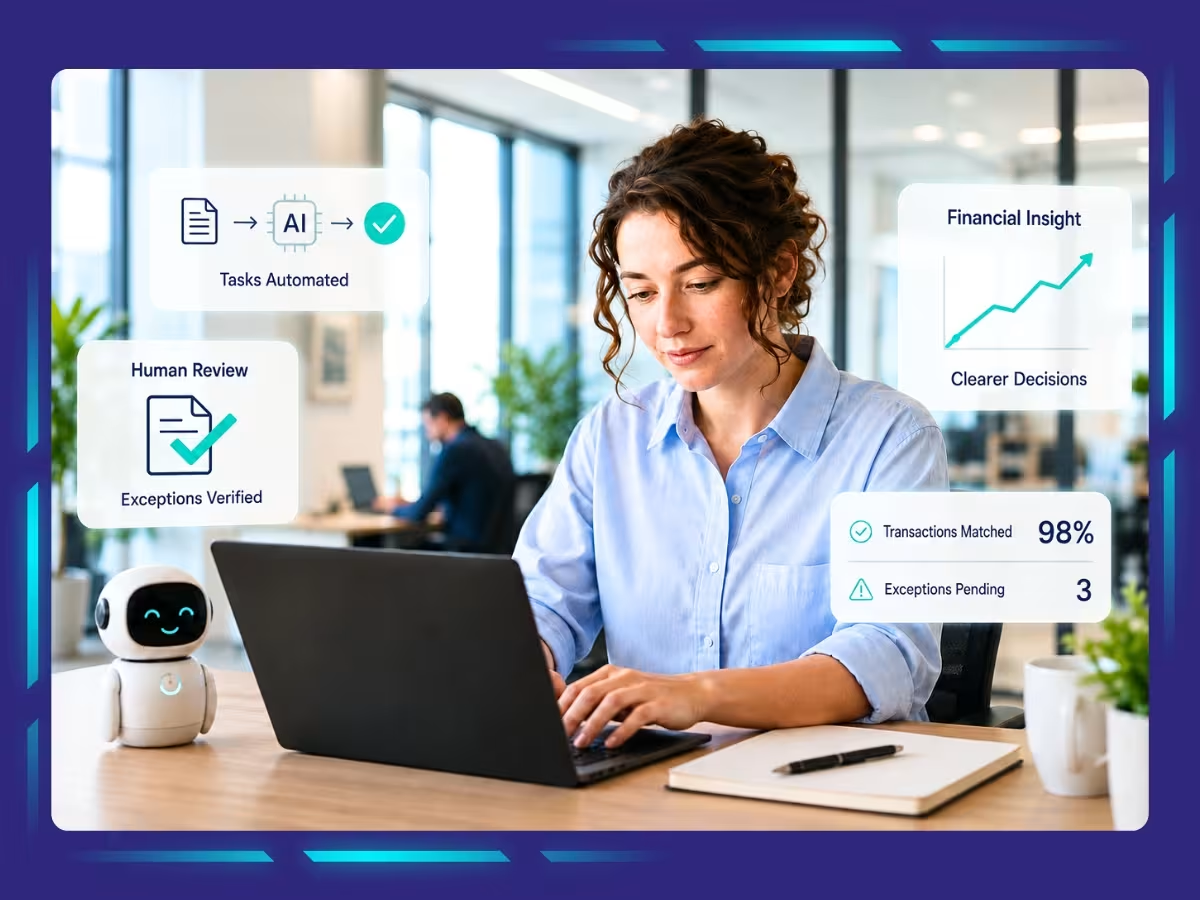
AI and a virtual accountant work together because they combine speed, accounting automation, and human judgment. AI handles repetitive accounting tasks such as data entry, transaction categorisation, invoice processing, reconciliations, and reporting. A virtual accountant reviews the results, corrects exceptions, applies business context, and supports financial decisions.
For small and medium-sized businesses, this model reduces manual work, improves accuracy, and provides faster access to financial insights without losing human oversight. This blog explains how responsibilities are divided, which tasks can be automated, how secure AI accounting is, what problems the model solves, and which decisions should always remain with an accountant.

Modernize Your Accounting!
Combine AI Powered Automation with Virtual Accountant Support.
What Accounting Tasks Can Be Automated with AI?
AI in accounting is changing how small businesses handle everyday financial work. From invoice processing to bank reconciliation, expense categorization, and financial reporting, AI tools now handle tasks that once took hours of manual effort. Here is a closer look at each one.
Invoice Processing and Data Entry
Manually entering invoice details is slow and prone to typos. AI in accounting software can scan invoices, pull out the relevant data, and enter it directly into your books within seconds. This cuts down on human error and frees up staff to focus on higher value work instead of repetitive data entry.
Bank Reconciliation
Matching transactions across bank statements and internal records used to be a tedious monthly chore. With AI in accounting tools, this process happens automatically, flagging mismatches in real time so discrepancies get caught early instead of piling up.
Expense Categorization
AI can learn spending patterns and sort expenses into the right categories without someone sitting down and doing it by hand. Over time, the system gets smarter, which means fewer corrections and more consistent books.
Financial Reporting
Generating profit and loss statements, cash flow summaries, and balance sheets can now be done in minutes rather than days. AI in accounting platforms pull data from multiple sources automatically, giving business owners reports they can actually use to make decisions.
Can You Really Trust AI with Your Financials?
Trust is a fair concern when handing over financial data to software. Before relying on AI in accounting fully, it helps to understand three things: accuracy and error reduction, data security and compliance, and why human oversight still matters even with automation in place.
Accuracy and Error Reduction
AI systems are generally more consistent than manual processes because they do not get tired or distracted. That said, accuracy depends heavily on the quality of the data going in, so clean bookkeeping practices still matter even when AI in accounting is doing the heavy lifting.
Data Security and Compliance
Reputable AI accounting platforms use encryption and follow strict compliance standards to protect sensitive financial data. Still, it is worth checking that any tool you choose meets US regulatory requirements, since not all providers are held to the same standard.
Human Oversight Still Matters
Even the best AI in accounting tools benefit from a human checking the output. AI is excellent at handling repetitive, rules based tasks, but judgment calls, unusual transactions, and strategic decisions still need a person in the loop. Think of AI as a highly capable assistant rather than a replacement for professional review.
How AI and Virtual Accountants Solve Problems for US SMBs
Small and mid sized businesses across the US often struggle with limited budgets and thin accounting teams. Combining AI in accounting with virtual accountants addresses this gap in a few practical ways, including reducing overhead costs, improving real-time financial visibility, and allowing businesses to scale without hiring more staff.
Reducing Overhead Costs
Hiring a full in-house accounting team is expensive, especially for smaller businesses. Pairing AI in accounting tools with a virtual accountant gives SMBs access to expert support without the overhead of full-time salaries and benefits.
Real-Time Financial Visibility
Waiting until month end to understand your cash position puts business owners at a disadvantage. AI-powered dashboards update continuously, so owners can see exactly where their business stands at any given moment and make quicker, better informed decisions.
Scaling Without Hiring More Staff
As a business grows, transaction volume grows with it. Rather than adding headcount every time workload increases, AI in accounting systems can absorb the extra volume, while virtual accountants step in for the parts that genuinely need human expertise. This combination lets US SMBs scale efficiently without stretching their teams too thin.
Hire Experts Equipped with Expertise and the Power of AI
AI-powered accounting automation handles speed, monitoring, and repetitive tasks every day. Your virtual accountant brings strategy, judgment, and trusted guidance, supported by better data than a traditional firm can typically provide on its own. As a business owner, you get both sides of the equation: speed and accuracy from technology, along with confidence and strategic insight from the human expert behind it. That combination is what modern accounting looks like today.
At Whiz Consulting, we bring you exactly this blend, skilled virtual accountants supported by smart AI powered accounting tools. If you are ready to stop worrying about your books and start focusing on growing your business, reach out to our team today and see the difference the right accounting partner can make.

Get customized plan that supports your growth

Have questions in mind? Find answers here...
No. AI in accounting handles repetitive tasks like data entry and reconciliation, but accountants are still needed for judgment calls, compliance decisions, tax strategy, and interpreting complex financial situations.
Yes, reputable platforms use encryption and follow compliance standards to protect financial data. Still, businesses should verify that any tool meets US regulatory requirements before fully relying on it.
AI reduces human error by consistently processing transactions, matching invoices, and flagging discrepancies in real time. However, accuracy still depends on clean, well-organized data being fed into the system.
Absolutely. AI handles routine tasks like categorization and reconciliation, while the virtual accountant reviews exceptions, applies business context, and provides strategic guidance that automation alone cannot deliver.
Yes. As transaction volume increases, AI absorbs the extra workload without requiring additional hires, letting SMBs scale efficiently while virtual accountants handle the parts needing human expertise.
Thousands of business owners trust Whiz to manage their account
Let us take care of your books and make this financial year a good one.