

In This Blog Post
Share This Article
- Last Updated: Sep 22, 2026
- 🔊 Listen
TL;DR
- Vendor bill processing errors can cause overpayments, delayed supplier relationships, and compliance risks.
- Common errors include duplicate invoices, PO mismatches, manual entry mistakes, missing approvals, and invoice discrepancies.
- Accounts payable automation and three-way matching reduce errors while improving cash flow visibility.
- Outsourcing AP to expert providers ensures compliance, reduces fraud risk, and allows finance teams to focus on strategic initiatives.
Effective vendor billing is at the heart of healthy cash flow and accurate financial reporting for US businesses. Despite robust accounting systems, many organizations struggle with errors in accounts payable, leading to overpayments, delayed supplier relationships, and compliance risks.
Businesses operating across multiple states, with complex ERP systems, face heightened risk from duplicate invoices, PO mismatches, and manual data entry mistakes. Implementing structured processes, adopting AP automation, and leveraging outsourcing expertise can dramatically reduce these errors. This blog delves into the key vendor billing process errors, and how US businesses can improve operational efficiency and financial control while mitigating risk.

Streamline Your Vendor Payments
Reduce Errors and Improve Cash Flow with Expert AP Solutions
What is Vendor Billing Process?
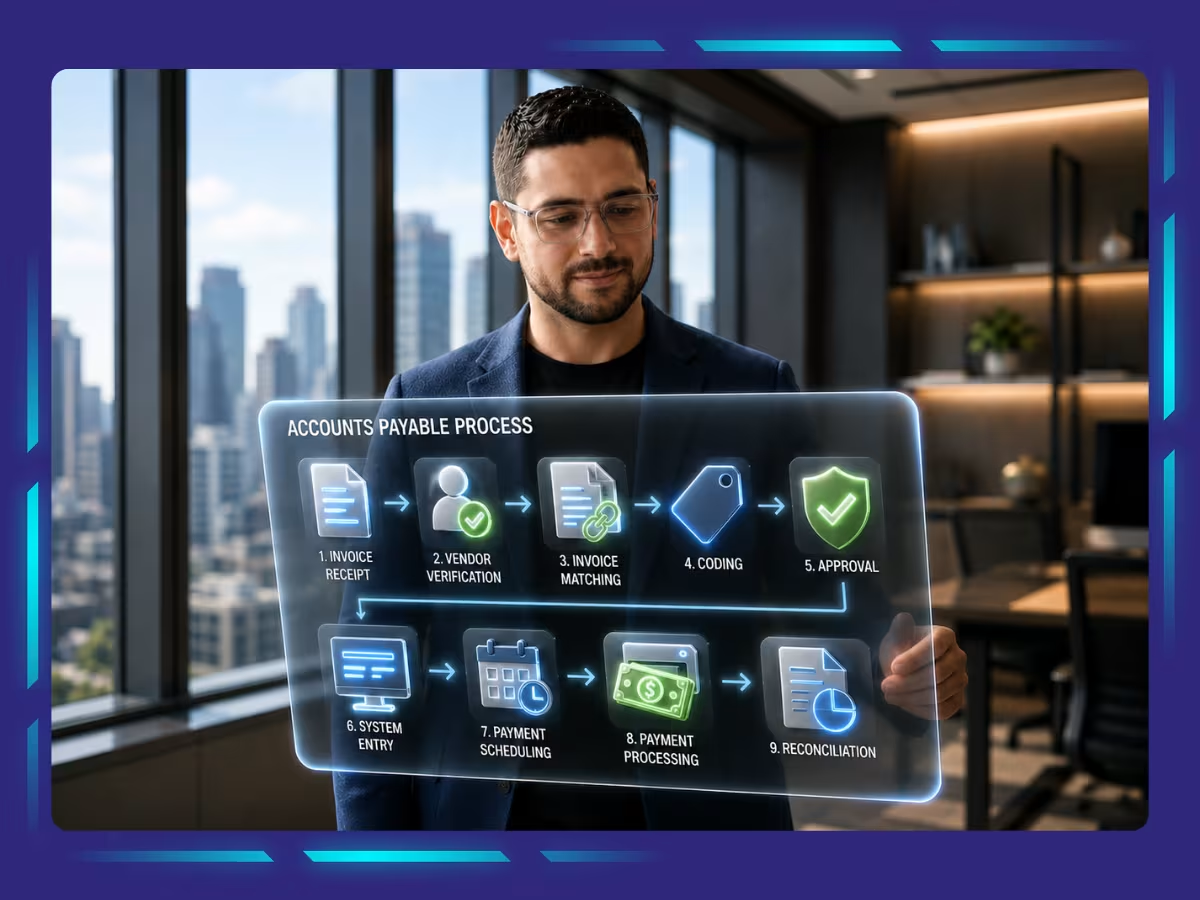
Vendor bill processing, or accounts payable processing, is the series of steps a company takes to record, verify, and pay invoices from suppliers. It begins with receiving the vendor invoice, verifying details against purchase orders (POs) and goods received, and recording the transaction in an accounting system. Once approved, payment is scheduled according to agreed terms.
Key entities in vendor billing include:
- Purchase Orders (POs): Official authorization of supplier goods or services
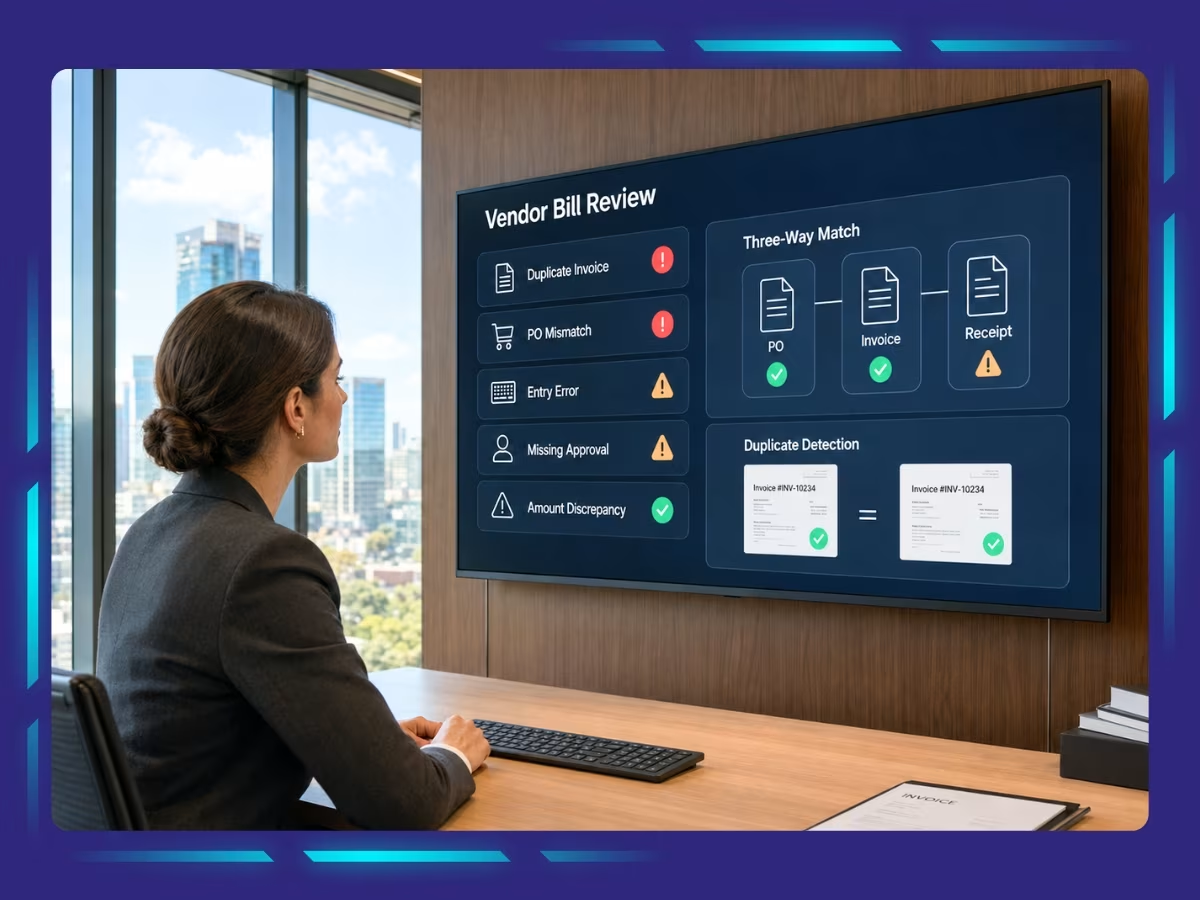
- Three-Way Matching: Verification process comparing the PO, the vendor invoice, and the receipt of goods to ensure consistency
- Accounts Payable (AP): The accounting function responsible for managing outgoing payments to vendors
- Vendor Invoice: Document sent by suppliers requesting payment
In the US, compliance with GAAP and timely payments is critical to maintain supplier trust and avoid late fees. Errors in this process can disrupt operations, misstate financial records, and trigger audit risks. Organizations increasingly rely on ERP systems, OCR technology, and AP automation to streamline the workflow, reduce manual touchpoints, and improve accuracy.
What are Common Errors in Vendor Bill Processing?
Vendor bill processing errors are a significant challenge in accounts payable process for US businesses, often resulting in overpayments, delayed supplier relationships, and compliance risks. Understanding the types of errors and their causes is critical to improving accounts payable efficiency.

1. Duplicate Invoices
Duplicate invoices occur when the same invoice is submitted multiple times by a vendor or accidentally entered twice in the accounting system. For example, a vendor might email an invoice twice due to miscommunication, or manual entry errors may lead to the same invoice being recorded multiple times. Duplicate payments inflate expenses and require time-consuming reconciliations to recover funds.
2. Purchase Order Mismatches
Invoice details that do not match the approved purchase order (PO) create PO mismatches. Differences in quantity, unit price, or billing terms are common. In industries like construction, healthcare, and manufacturing, multiple departments managing the same vendor often increase this risk. Without three-way matching, discrepancies may go unnoticed until payment, risking overpayment or disputes with suppliers.
3. Manual Data Entry Mistakes
Human error is a major source of problems. Mistyped invoice numbers, incorrect amounts, or misallocated account codes can trigger significant reconciliation delays. Even a small typo in ERP systems can cascade into mismatched ledger entries, affecting month-end reporting and audit readiness.
4. Missing Approvals or Authorization Errors
Invoices processed without proper approvals create compliance and audit risks. A department may approve a payment without verifying receipt of goods or services, violating internal controls and potentially enabling duplicate or fraudulent payments. Strong workflow enforcement and automated approval chains are critical in US organizations, particularly those subject to Sarbanes-Oxley compliance.
5. Late or Early Payments
Payment timing errors can damage vendor relationships or result in missed early payment discounts. Paying too late may incur fees, while paying too early could disrupt cash flow or violate contractual terms. Companies managing multiple vendors across different states often struggle to maintain accurate payment schedules without centralized systems.
6. Invoice Discrepancies
Discrepancies occur when the invoiced amount differs from the goods or services delivered. Examples include partial shipments, damaged products, or misapplied tax codes. Discrepancies can lead to disputes and delayed reconciliations, especially in industries like healthcare or manufacturing, where invoices often include multiple line items.
7. Compliance and Tax Errors
Invoices that fail to comply with US sales tax regulations, internal company policies, or contractual requirements create risk. Misclassified tax codes or missing exemptions may trigger audit red flags, particularly for multi-state operations.
8. Lack of Vendor Master Data Accuracy
Incorrect vendor information, such as outdated bank accounts or mailing addresses, can cause payment failures or increase fraud exposure. Accurate vendor master data management is critical for smooth AP processing and safeguarding financial transactions.
How Can You Reduce Errors in Vendor Billing?
Reducing vendor bill processing errors requires a combination of process standardization, technology adoption, and proactive monitoring. Key strategies include:
- Centralized Invoice Management: Consolidating invoice receipt and approval into a single platform reduces duplication and improves visibility
- Three-Way Matching: Enforcing three-way matching ensures every invoice aligns with the PO and goods received before payment
- Automated Data Capture: OCR technology or ERP-integrated systems reduce manual entry errors
- Regular Vendor Statement Reconciliation: Periodically comparing vendor statements against internal records identifies discrepancies early
- Approval Workflows: Structured digital workflows prevent payments from bypassing necessary authorizations
- AP Reporting & KPIs: Monitoring metrics such as invoice processing cycle time, exceptions, and discrepancies help identify recurring issues
- Early Payment Discounts: Incentivizing timely approvals encourages accurate invoice processing and strengthens vendor relationships
What Causes Vendor Invoice Discrepancies?
Discrepancies can create inefficiencies, delay reconciliations, and strain vendor relationships. Implementing best AP practices such as robust controls, enforcing three-way matching, and leveraging automated reconciliation tools help identify discrepancies quickly and reduce errors. Regular training of AP staff and standardized vendor communication further minimizes human error. Common causes include:
- PO Misalignment: Differences in quantity, price, or service details not updated in the ERP system
- Delivery Issues: Partial shipments, damaged goods, or services not rendered as invoiced
- Manual Errors: Mistyped invoice numbers, amounts, or vendor codes
- Policy Misunderstandings: Misapplied discounts, taxes, or payment terms
- Timing Differences: Cutoff dates causing invoices to fall in different accounting periods
Discrepancies can create inefficiencies, delay reconciliations, and strain vendor relationships. Implementing robust AP controls, enforcing three-way matching, and leveraging automated reconciliation tools help identify discrepancies quickly and reduce errors. Regular training of AP staff and standardized vendor communication further minimizes human error.
How Does AP Automation Reduce Billing Errors?
AP automation tools help businesses digitize invoice capture, approval workflows, and payment processing. Benefits for US businesses include:
- Reduced Manual Data Entry: OCR and AI-powered extraction capture invoice data accurately
- Enforced Three-Way Matching: Automated systems validate invoices against POs and goods receipts before approval
- Duplicate Invoice Detection: Alerts flag potential duplicates before payment is processed
- Workflow Tracking & Notifications: Automated approval chains prevent missed or unauthorized payments
- Improved Reporting & Analytics: Dashboards monitor exceptions, cycle times, and vendor performance
Integration with ERP systems like QuickBooks, NetSuite, or Microsoft Dynamics ensures seamless posting of transactions and GAAP compliance. AP automation improves cash flow management, enables early payment discounts, and strengthens vendor relationships while reducing operational errors.
Avoid Errors in the Vendor Billing Process Using AP Expertise
Accurate vendor bill processing is crucial for US businesses aiming to protect cash flow, maintain compliance, and foster strong vendor relationships. Errors such as duplicate invoices, PO mismatches, and manual data entry mistakes are costly and can compromise operational efficiency. Implementing standardized processes, enforcing three-way matching, and leveraging AP automation significantly reduce these risks. Regular reconciliations, structured approval workflows, and clear vendor communication further strengthen controls. Businesses that proactively address AP errors can save money, avoid penalties, and enhance overall financial visibility.
For organizations seeking comprehensive support, partnering with Whiz Consulting can deliver tangible benefits. Their AP experts combine technology-driven automation with US GAAP compliance knowledge to streamline invoice processing, detect discrepancies, and reduce manual workloads. By outsourcing accounts payable services, businesses free internal finance teams to focus on strategic initiatives while maintaining strong cash flow, vendor trust, and audit readiness. Connect with us to see how we can transform your vendor billing process and improve financial accuracy across your US operations.

Get customized plan that supports your growth

Have questions in mind? Find answers here...
Common errors include incorrect data entry, mismatched invoice amounts to purchase orders, missing or extra items, miscalculated discounts or taxes, and late or missed payments.
Automation captures invoice data accurately, matches invoices to purchase orders, flags duplicates, and speeds up approvals, reducing manual mistakes and ensuring payments are only made for verified transactions.
Vendor bill errors can cause overpayments, distorted financial reporting, compliance risks, strained vendor relationships, and operational inefficiencies that increase overall business costs.
Three-way matching compares the vendor invoice with the purchase order and goods receipt, ensuring billed items and amounts align with orders and deliveries, preventing overpayment and errors.
Vendor accounts should be reconciled regularly, ideally monthly, to catch discrepancies early, maintain accurate records, and ensure payments match invoices and vendor statements.
Outsourcing can improve accuracy and efficiency by leveraging experienced teams and automation tools, reducing errors, saving internal resources, and ensuring timely, compliant payments.
Thousands of business owners trust Whiz to manage their account
Let us take care of your books and make this financial year a good one.