


In This Blog Post
Share This Article
- Last Updated: Jun 30, 2026
- 🔊 Listen
TL;DR
- Automation reduces manual accounting work and improves efficiency.
- Cloud accounting enables real-time collaboration and access to financial data.
- AI helps predict trends, detect risks, and improve decision-making.
- Blockchain increases transparency and strengthens audit reliability.
- Data analytics turns financial data into actionable business insights.
The accounting profession has never been static. From the invention of double-entry bookkeeping in the 15th century to the spreadsheet revolution of the 1980s, accountants have always adapted to new tools. But the pace of change happening right now is unlike anything the industry has seen before.
Across the United States, accounting firms, from Big Four giants to solo practitioners in small-town offices, are grappling with a seismic shift driven by technology. Artificial intelligence, cloud computing, blockchain, and automation are no longer buzzwords reserved for Silicon Valley; they are reshaping how financial data is captured, analyzed, and reported every single day.
For accounting professionals, this transformation cuts both ways. On one hand, routine and time-consuming tasks are being automated at speed. On the other, the role of the accountant is turning into something more strategic, more analytical, and frankly, more valuable. Understanding these technological forces isn’t optional anymore. It is essential for staying relevant in an increasingly competitive field.
In this blog, we will cover five of the most significant ways technology is changing accounting scenario in the United States today.

Future-Ready Accounting Solutions
Modernize accounting processes and unlock smarter growth.
5 Ways Technology Is Changing the Accounting Scenario
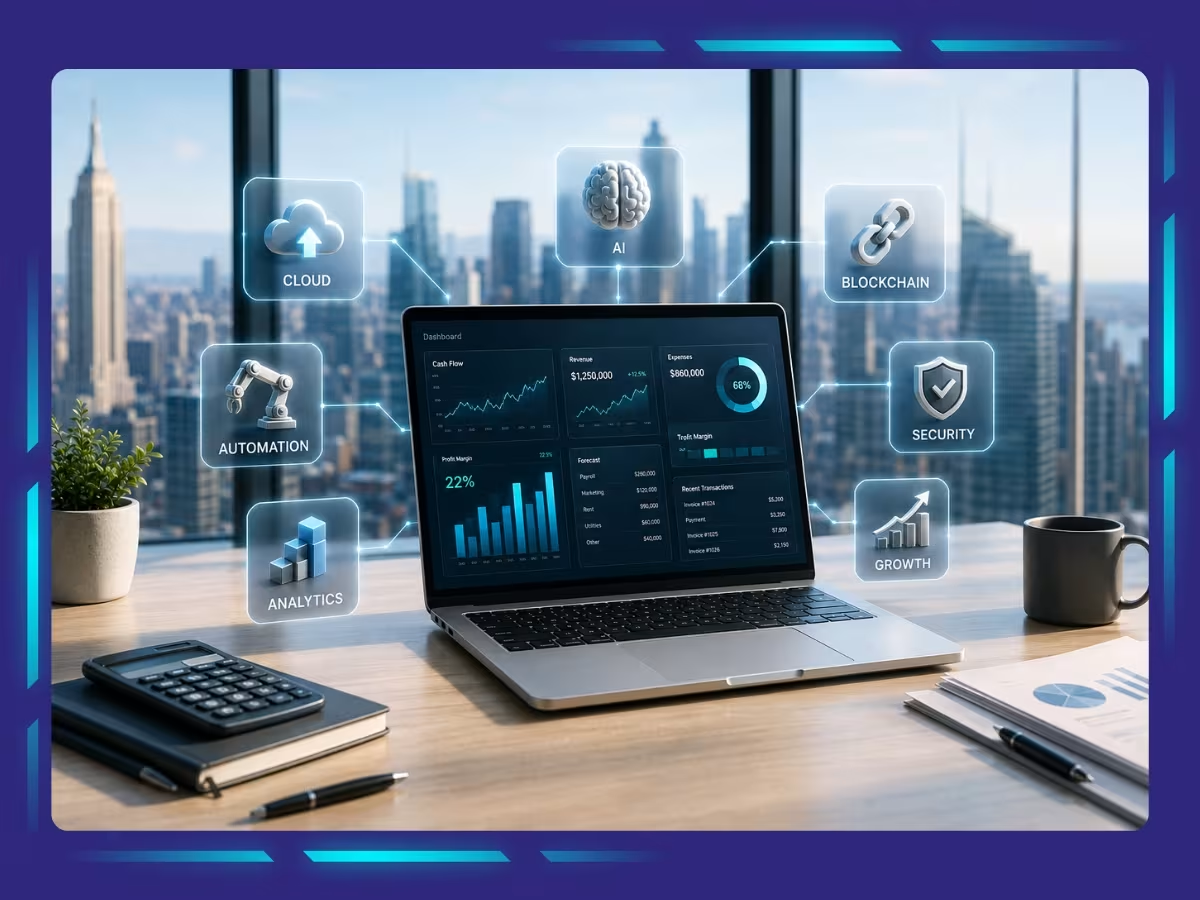
Technology is changing accounting by making routine work faster, financial analysis smarter, and client collaboration more real-time. The biggest shifts are coming from automation, AI and machine learning, cloud computing, blockchain, and data analytics, each helping accountants move from manual processing to more strategic decision-making.
1. Automation Is Eliminating Repetitive Tasks
For decades, accountants spent enormous amounts of time on data entry, invoice processing, bank reconciliations, and payroll calculations. These tasks were not intellectually demanding, but they were necessary, and they consumed hours that could have been spent on higher-value work.
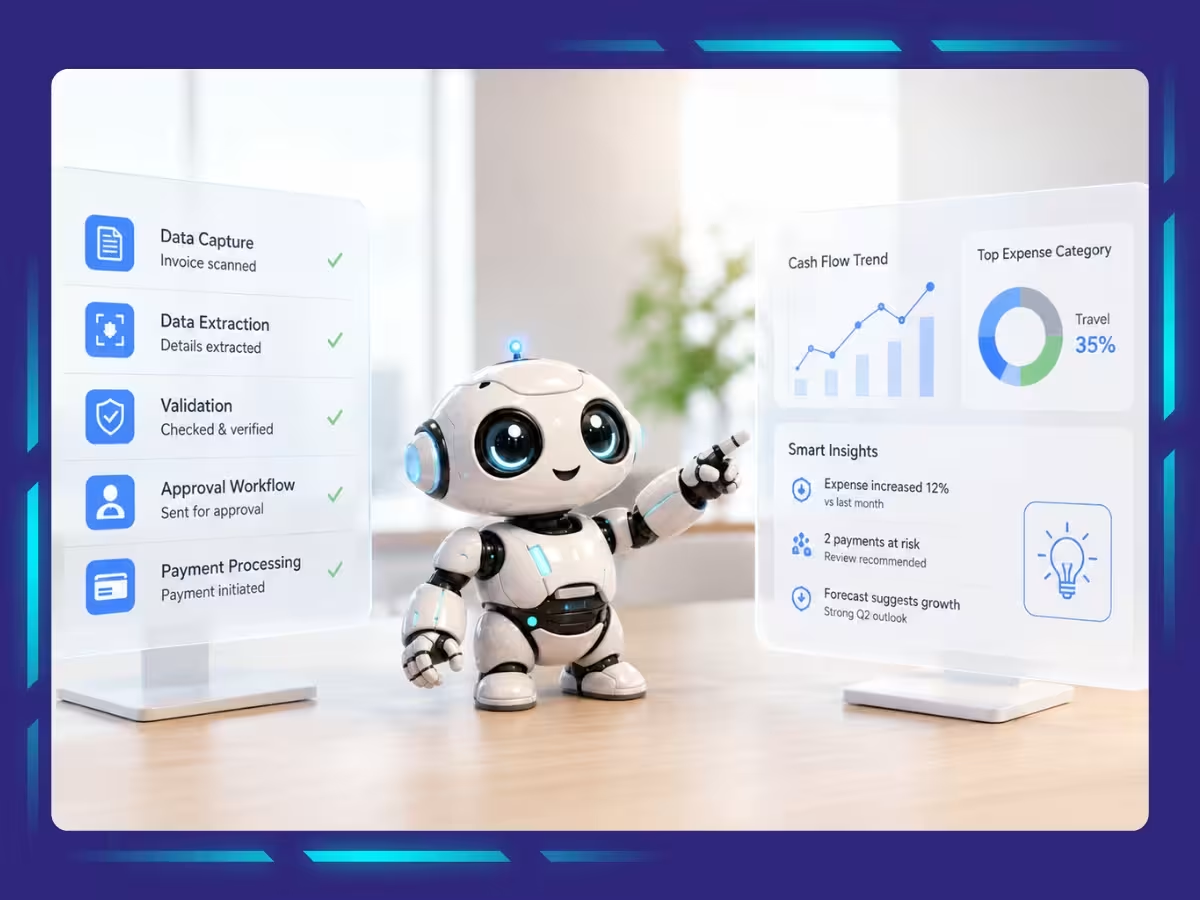
Robotic Process Automation (RPA) is changing that reality. Software bots can now process thousands of transactions in minutes, match invoices against purchase orders, flag discrepancies, and generate reports with near-zero error rates.
Firms that have adopted accounting automation have reported a huge reduction in time spent on transactional work. This doesn’t mean fewer accountants. It means accountants doing more meaningful work: advising clients, identifying business risks, and building financial strategies.
2. Cloud Computing Is Making Real-Time Collaboration the Norm
The image of an accountant hunched over stacks of paper files or waiting weeks for a client to mail in tax documents feels increasingly dated. Cloud-based accounting platforms have fundamentally changed how financial data is stored, accessed, and shared.
With cloud solutions like NetSuite, FreshBooks, and QuickBooks Online, both online accountants and their clients can access financial records simultaneously, in real time, from anywhere. This has accelerated the monthly close process, improved the accuracy of financial reporting, and made collaboration across offices or across the country seamless.
Firms that had already migrated to cloud-based systems weathered the remote-work transition far more smoothly than those still relying on legacy, server-based software. Today, cloud adoption is no longer a competitive advantage. It’s the baseline expectation for any modern accounting practice.
3. AI and Machine Learning Are Powering Smarter Analysis
AI in accounting is doing something even more profound than automation: it’s making accounting predictive rather than purely historical. Traditional accounting told you what happened last quarter. AI-powered accounting tools are increasingly telling you what’s likely to happen next quarter, and why.
Machine learning algorithms can analyze years of financial data to identify spending anomalies, forecast cash flow shortfalls, detect potential fraud, and flag compliance risks before they become costly problems. Platforms like Sage Intacct, QuickBooks Advanced, and Xero are integrating AI-driven insights directly into their dashboards.
For U.S.-based accounting firms, this shift is redefining the client relationship. Accountants are no longer just number-crunchers, they are trusted financial advisors who can offer forward-looking guidance backed by data. That’s a more compelling value proposition and a more rewarding professional identity.
4. Blockchain Is Redefining Audit and Transaction Transparency
Blockchain technology may still be associated in the public mind with cryptocurrency, but its implications for accounting and auditing are far more substantial. At its core, blockchain is a distributed ledger, a system for recording transactions in a way that is transparent, tamper-proof, and permanently verifiable.
For auditors, this is transformative. Today, audits involve substantial time spent verifying that financial records accurately reflect the transactions that occurred. With blockchain-based records, every transaction is timestamped, encrypted, and immutable. Auditors can verify large volumes of transactions in a fraction of the time it currently takes.
5. Data Analytics Is Unlocking Deeper Business Insights
Modern accounting is drowning in data: transaction records, payroll data, tax filings, expense reports, and industry benchmarks. The challenge is no longer collecting this data; it’s making sense of it.
Advanced data analytics tools are helping accountants turn raw numbers into actionable business intelligence. Platforms like Microsoft Power BI, Tableau, and specialized accounting analytics solutions allow professionals to visualize financial trends, compare performance against industry peers, and identify inefficiencies that would be invisible in a traditional spreadsheet view.
For clients, this means accounting firms can offer a level of strategic insight that was previously only available to large companies with in-house finance teams. A small business owner in Ohio or a mid-sized manufacturer in Texas can now receive the kind of detailed financial analysis that helps them make smarter decisions about growth, investment, and risk management.
Hire Experts to Build a Business Ready for Tomorrow
Technology is not replacing accountants. It is reshaping their role into something more strategic, analytical, and future-ready. Firms that embrace AI, automation, cloud tools, blockchain, and data analytics can improve efficiency, strengthen decision-making, and deliver deeper advisory value to clients across the United States.
For accounting firms ready to move with this shift, Whiz Consulting can help turn digital change into measurable opportunity. With skilled accounting professionals, AI and automation-led processes, and real-time financial support, we help firms modernize their accounting operations without losing accuracy, control, or expertise. The ledger has gone digital. Now is the time to make it work smarter for your firm.

Get customized plan that supports your growth

Have questions in mind? Find answers here...
Technology is changing accounting by automating repetitive tasks, improving reporting accuracy, enabling real-time collaboration, and providing deeper financial insights through AI and analytics tools.
AI helps accountants analyze large datasets, forecast cash flow, identify unusual transactions, detect fraud risks, and provide more strategic financial advice to clients.
Cloud accounting allows businesses and accountants to access financial data anytime, collaborate in real time, improve reporting speed, and reduce dependence on physical records.
Blockchain creates secure and tamper-resistant transaction records. This improves transparency, reduces verification efforts, and helps auditors validate financial information more efficiently.
Yes. Many businesses outsource accounting services to access skilled professionals, advanced accounting software, automation tools, and real-time reporting without the cost of building an in-house finance team. Outsourcing can improve efficiency, scalability, and financial visibility while reducing operational expenses.
Thousands of business owners trust Whiz to manage their account
Let us take care of your books and make this financial year a good one.