

In This Blog Post
Share This Article
- Published: Jan 9, 2026
- Last Updated: Jan 15, 2026
- 🔊 Listen
Quick Reads
- January 31 is a fixed compliance deadline, not a soft target. Payroll filings, contractor reporting, and multiple tax obligations converge here. Missing alignment leads directly to penalties and notices.
- W-2s, W-3s, Forms 941 and 940, and 1099-NEC filings must reconcile perfectly with payroll systems and books before submission.
- Sales tax compliance extends beyond filing returns. Businesses must validate nexus exposure, remit all liabilities, maintain exemption certificates, and self-assess use tax where vendors failed to charge sales tax.
- Income tax readiness starts before return filing. Reconciling book income to taxable income, validating deductions, and confirming estimated payments early prevents rework during tax season.
- Entity renewals, annual reports, reconciliations, internal controls, and documentation hygiene all need review before the books are locked.
As a new year begins, most businesses set fresh goals, new plans, and bigger targets. But some things don’t change, and financial compliance is one of them.
Unlike planning or strategy, financial compliance is tied to statutory deadlines, and January 31st is one of the most critical cut-off points for small and medium businesses.
It’s often overlooked, and that’s exactly where problems start. Missed filings, reporting mismatches, or overlooked registrations often result in penalties, notices, or unnecessary follow-ups from tax authorities.
Getting ahead of these requirements before January 31st helps businesses avoid last-minute pressure and start the year on stable financial ground.
Key Financial Compliances SMBs Must Review Before January 31st
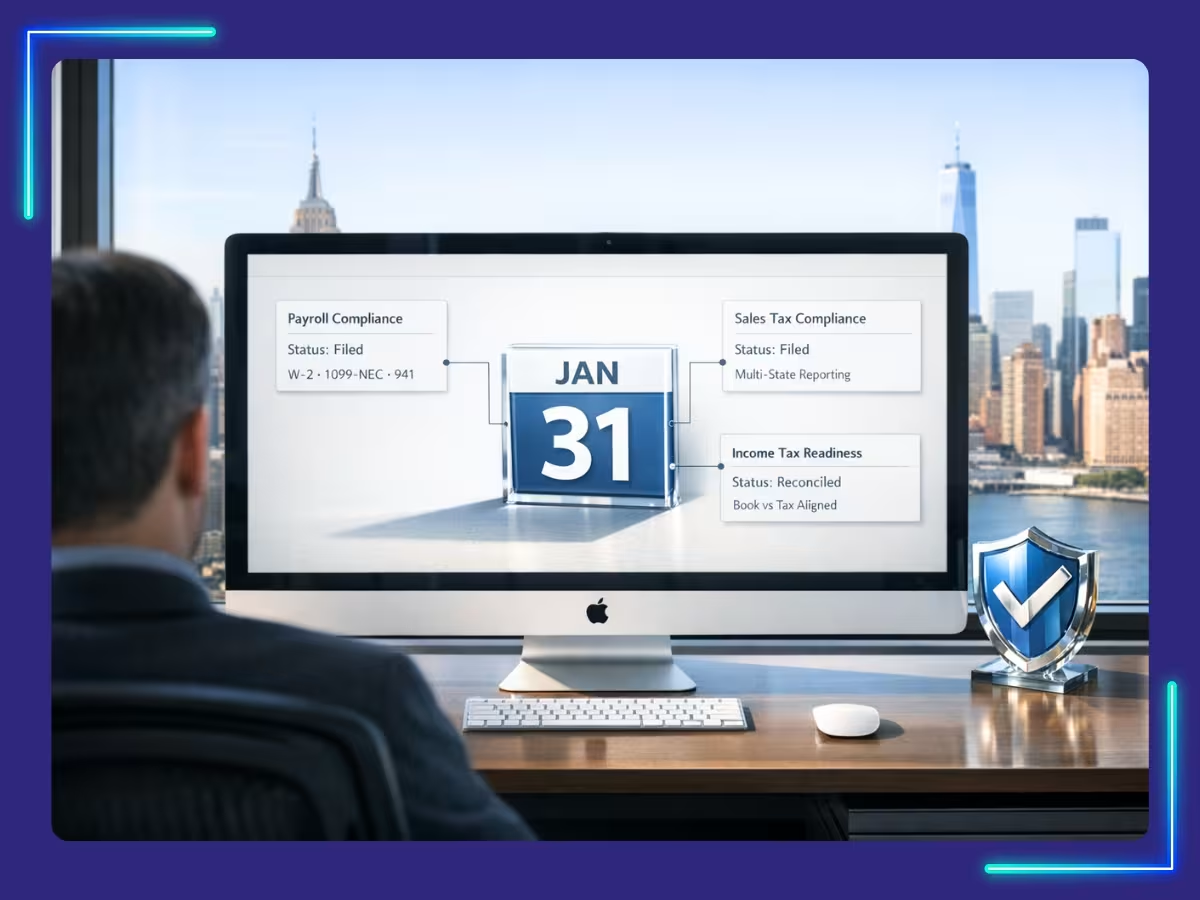
As the year begins, compliance moves ahead of planning. January 31st is a fixed deadline where payroll compliances, sales tax compliance, federal and state income tax readiness, and other compliances come together. Missing alignment here often leads to penalties and rework. Here’s to reviewing every requirement early and entering the year organised, accurate, and fully compliant.
Payroll Compliances
We’ll start with payroll, because January 31st is a hard deadline for multiple federal payroll filings, and errors here tend to trigger the fastest penalties.
- First, review your annual payroll numbers; gross wages, federal and sales taxes withheld, and net pay and ensure they are same across your payroll system, tax reports, and accounting records.
- Second, by January 31st, every employee must receive a Form W-2, and Form W-3 must be filed with the Social Security Administration.
- You’ll also need to file Payroll Taxes Form 941 for Q4 (employers quarterly federal tax return) and Form 940 for FUTA by January end.
- Now, if you paid a contractor $600 or more during the year, you must issue a Form 1099-NEC showing what they earned and file it with the IRS again, by January 31st.
- Confirm contractor totals, payment classifications, and taxpayer details before filing, as corrections after submission often attract scrutiny.
- Finally, check for state and wage tax filing compliance obligations as rules vary state by state.
Once payroll compliance is done, business owners must ensure they meet the transactions-based compliance requirement.
Sales Tax Compliance
Sales tax gets trickier as your business grows, especially when you are selling across state lines. A compliance check helps keep things clean and stress-free.
- Start by reviewing total sales, taxable and exempt sales, and the tax you have collected. Make sure everything lines up between your books and your sales platforms.
- Remit all the outstanding sales tax liabilities to the appropriate state authorities.
- Next, file your December or Q4 sales tax returns. Since filing frequencies and deadlines vary by state, double-check that you are filing on time everywhere you are registered.
- Then reassess the economic nexus thresholds. Higher sales or transactions volumes may mean you now need to register in new states.
- Take a moment to review resale and exemption certificates as well. Ensuring they are current, complete and audit ready.
- Finally, look over vendor purchases missing sales tax. If tax wasn’t charged where it should have been, you may owe Use tax and it’s common with out-of-state vendors or online purchases. The businesses must self-assess and pay use tax to their home state.
After checking your state tax obligations now it’s time to preparation for Federal and State Income Tax.
Federal and State Income Tax Readiness
Though your income tax return filing is not due yet. The goal is to ensure your numbers are accurate and reconciled before formal tax preparation begins.
- Begin by reconciling book income and taxable income to understand the correlation. It’s normal for them to be different, but what matters is knowing why, whether it’s depreciation, accruals, non-deductible expenses, or timing differences.
- Next, review key deductions and credits like depreciation, R&D, meals, and state taxes, and make sure they’re recorded correctly and supported by documentation. Revisit depreciation methods and bonus depreciation methods and bonus depreciation elections where applicable.
- Take a moment to confirm your estimated tax payments were made and applied to the right periods.
- Once that’s done, you’re set up to prepare for your federal return, whether it’s Form 1120, 1120-S, or 1065, along with any required state income tax filings.
- Completing these steps early reduces last-minute adjustments, amendments, and back-and-forth during tax filing season.
Other Compliances
- Beyond payroll, sales tax, and income tax, January is also the right time to review broader compliance and financial controls.
- Confirm business registrations, licences, and entity renewals remain active and aligned with year-end data. Review annual reporting requirements such as state annual reports or franchise tax filings.
- Ensure year-end accounting close activities are complete. Bank accounts, credit cards, loans, and balance sheet accounts should be fully reconciled before the books are locked.
- Review internal controls around payment approvals, access rights, and segregation of duties to reduce operational risk.
- Lastly, confirm that payroll records, tax filings, exemption certificates, and supporting documents are properly stored and easily retrievable. Strong documentation reduces exposure during audits and future reviews.
- Taking care of these items before January 31ST ensures your business enters the year compliant, organized, and focused on growth rather than corrections.
Partner with Professionals Accounting Outsourcing Before Deadlines Catch Up
When accounting is reactive, deadlines turn into fire drills. The right accounting outsourcing partner brings structure, consistency, and accountability, turning reconciliations, compliance, and reporting into routine checkpoints, not last-minute scrambles. The payoff is cleaner books, fewer surprises, and leadership focused on growth, not calendars.
At Whiz Consulting, our expert-led tax service providers work ahead of deadlines with clear processes and fixed timelines. Our professionals manage tax compliance, filings, reconciliations, and reporting with clear processes and fixed timelines, so nothing slips through the cracks. With hands-on oversight, deep regulatory knowledge, and a proactive approach to planning, we help businesses stay compliant, reduce risk, and move into every reporting period fully prepared.

Get customized plan that supports your growth

Have questions in mind? Find answers here...
Consistent bookkeeping, timely reconciliations, and documented payroll and vendor processes make January predictable instead of chaotic.
Profit and loss statements, payroll summaries, vendor payment reports, and bank reconciliations.
Yes, if total payments meet IRS reporting thresholds and the contractors is not exempt.
Late filing can lead to penalties ranging from $60 to $330 per form, depending on how late they are. Intentional disregard penalties can be much higher.
Absolutely. Payroll totals must match bank payments, payroll registers, and tax filings. Mismatches often lead to IRS notices and delayed refunds.
Yes. Outsourced accounting teams often manage payroll reconciliation, 1099 preparation, and filing timelines, helping SMBs stay compliant without internal overload.
Thousands of business owners trust Whiz to manage their account
Let us take care of your books and make this financial year a good one.