


In This Blog Post
Share This Article
- Last Updated: Jul 17, 2026
- 🔊 Listen
TL;DR
- Specialised accounting for doctors supports compliance, reimbursement accuracy, and smarter financial decisions.
- Regular financial reports and dashboards give doctors clear visibility into performance and cash flow.
- Healthcare KPIs connect clinical outcomes, operations, and revenue into measurable insights.
- Medical accountants work closely with billing teams and EHR data to improve accuracy and collections.
- The right accounting software and expertise help practices stay organised, compliant, and decision-ready.
When it comes to accounting and financial outcomes, healthcare professionals rely on accurate insights to make informed decisions. From selecting the right accounting software to reviewing financial reports, every aspect plays a critical role in accounting for doctors and medical practices.
Doctors often have questions about compliance, bookkeeping responsibilities, financial reporting, and the value of specialised healthcare accountants. To simplify these topics, we have compiled the most frequently asked questions about accounting for doctors and answered them clearly in this blog.

Heal Finances, Not Just People
Get support from top doctor accounting experts.
Why do doctors need a specialized accountant instead of a general CPA?
Doctors deal with income structures and compliance rules that differ sharply from other professions. A medical accountant provides more than just healthcare accounting basics; they possess a deep understanding of U.S. healthcare payment models, IRS regulations for physicians, Medicare reporting, and practice ownership structures. This expertise reduces tax mistakes, improves cash flow, and supports smarter long-term financial decisions beyond basic return filing.
- Handles physician-specific income, including W-2, 1099, and practice distributions
- Applies IRS deductions tied to CME, licensing, malpractice, and equipment
- Plans taxes around Medicare reimbursements and quarterly estimated payments
- Advises on practice growth, buy-ins, and other strategies for doctors
What financial records should a doctor or clinic maintain regularly?
Doctors and clinics need a clear, reliable set of financial records to keep operations steady, cash flow predictable, and decisions grounded in facts. Proper accounting for doctors helps healthcare providers track revenue, manage expenses, maintain compliance, and improve financial visibility across the practice. These records form the foundation of effective accounting for doctors by showing where money comes from, where it goes, and how efficiently the practice runs day to day. Key financial records to maintain and review regularly include:
- Accounts Receivable Aging Report: Shows unpaid patient and insurance balances by time outstanding to manage collections
- Accounts Payable Report: Tracks bills owed to vendors and suppliers to manage cash outflows
- Daily or Weekly Practice Dashboard: Overview of charges, deposits, and collections by provider for short-term monitoring
- Monthly Financial Overview: Summary of revenue, expenses, receivables, and collections to spot trends.
- Physician Summary Report: Breaks down charges, collections, and compensation by physician.
- Referral Dashboard: Tracks referral sources to identify changes in patient flow.
- Payment Posting and Reconciliation Report: Confirms payments are posted correctly and match claims data.
- Financial Statements: Income statement, balance sheet, and cash flow statement for overall financial position.
- Key Financial Ratios: Measures liquidity, profitability, and operational efficiency.
- Tax and Supporting Records: Bank statements, invoices, W-2s, and 1099s kept for at least three years after filing.
- Patient Financial Records: Secure billing and payment records kept separate from clinical charts.
- Pro-Forma and Compensation vs. Production Reports: Used for planning and physician compensation analysis.
What financial KPIs are important to track for healthcare practices?
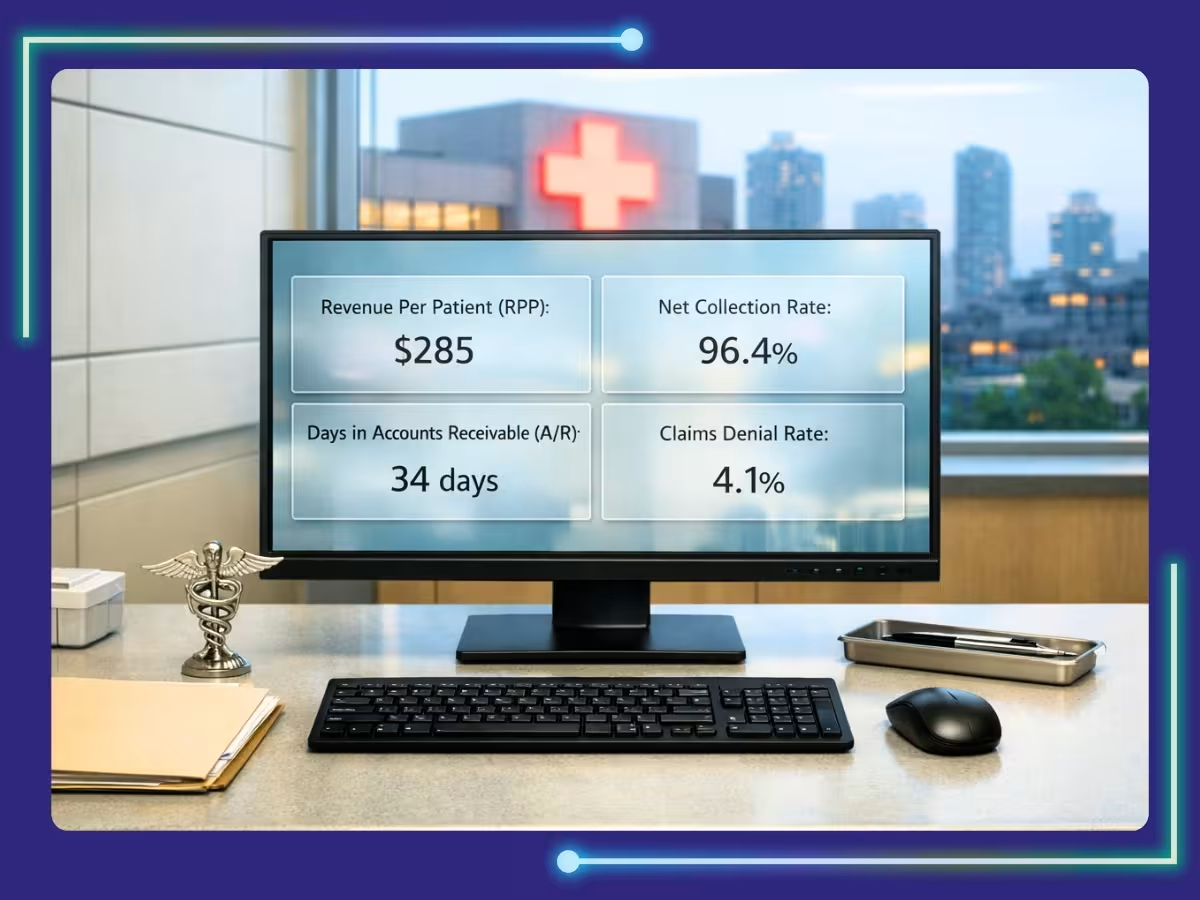
Financial KPIs in healthcare accounting help medical practices measure financial performance, improve operational efficiency, and maintain revenue stability. Tracking the right metrics is also essential for accurate accounting for doctors, as it allows hospitals and clinics to monitor cash flow, control costs, strengthen financial reporting, and support better decision-making. Below are some of the most important financial KPIs healthcare practices should track regularly.
- Revenue Per Patient (RPP): Measures the average revenue earned per patient visit, helping evaluate pricing strength and revenue growth opportunities.
- Net Collection Rate: Shows how much of the expected revenue is actually collected, reflecting the effectiveness of billing and collections.
- Days in Accounts Receivable (A/R): Indicates the average number of days taken to collect payments, directly impacting cash flow stability.
- Claims Denial Rate: Tracks the percentage of claims denied by insurers, revealing gaps in coding, billing accuracy, or documentation.
- Operating Profit Margin: Measures how much revenue remains after operating expenses, reflecting overall financial health and sustainability.
- Cost Per Visit (CPV): Calculates the average cost of delivering care per visit, helping identify efficiency and cost-control opportunities.
- Clean Claim Rate (CCR): Measures the percentage of claims accepted on first submission, indicating the strength of revenue cycle accuracy and efficiency.
What does a healthcare accountant do on a daily basis?
A healthcare accountant handles the day-to-day financial work of healthcare practices, from recording transactions and managing billing to tracking insurance payments and patient collections. These responsibilities form a critical part of accounting for doctors, helping practices maintain financial accuracy and operational stability. Below are the core accounting functions they provide daily:
- Recording financial transactions
- Managing accounts receivable and payable
- Handling patient and insurance billing
- Preparing and analyzing financial statements
- Budgeting and financial forecasting
- Ensuring regulatory compliance (HIPAA, Medicare, GAAP)
- Monitoring the revenue cycle and resolving billing issues
- Supporting tax filings and compliance
How does specialized accounting help doctors stay compliant with healthcare regulations?
Healthcare accountants help practices stay compliant by aligning finances with medical regulations. Accounting for doctors understands and supports HIPAA-safe workflows, accurate insurance billing, audit-ready records, and correct tax treatment. Medical accounting also connects billing systems with EHR data to reduce errors and compliance gaps.
- Tracks healthcare regulation updates
- Maintains HIPAA-compliant financial processes
- Protects patient financial data securely
- Improves claims accuracy and reimbursement flow
- Supports compliant tax filings for clinicians
- Keeps records audit-ready
Can a doctor accountant work with my billing team or EHR data?
Yes, a healthcare accounting expert can work with your billing team and EHR data to improve financial accuracy and revenue management. This collaboration helps healthcare practices maintain organised records, reduce billing issues, and strengthen compliance.
Key benefits include:
- Payment and billing reconciliation
- Claim denial tracking and reporting
- Improved cash flow management
- Accurate financial reporting
- HIPAA-compliant financial workflows
- Better audit readiness and compliance support
What accounting software is commonly used by doctors in the USA?
Doctors in the U.S. rely on accounting software that supports healthcare billing workflows, compliance, and accounting automation. Tools like QuickBooks, Sage Intacct, NetSuite, Microsoft Dynamics, Xero, and FreshBooks are widely used to automate reconciliations, track reimbursements, integrate with practice management systems, and generate real-time financial reports. These platforms reduce manual effort while improving accuracy, visibility, and financial control across medical practices.
Can accounting systems integrate with EHR or billing software?
Yes. Modern accounting systems can integrate with EHR and billing software to connect clinical activity with financial records. These integrations reduce manual entry, align billing and payments, speed up collections, and improve reporting accuracy. Platforms like Epic, BILL, and accounting tools such as QuickBooks Online or NetSuite often sync through built-in connectors or APIs.
What are the main accounting functions in medical practice?
Medical practices rely on structured accounting functions to keep operations financially stable while supporting patient care. These functions track money coming in and going out, manage billing and payroll, control costs, support planning, and meet strict healthcare and tax rules. Together, they give practice owners clear visibility into performance, cash flow, and compliance without disrupting clinical workflows.

Main accounting functions in medical practices
- Accounts Receivable and Accounts Payable
- Revenue Cycle Management (RCM)
- Medical Billing and Coding
- Payroll and Benefits Accounting
- Cost Accounting
- Financial Reporting and Budgeting
- Compliance and Regulatory Management
- Accrual Accounting
Get a Healthcare Accountant with the Expertise Your Accounting Demands
Healthcare accounting helps medical practices improve billing accuracy, maintain compliance, manage revenue cycles, and make better financial decisions. With the right approach to accounting for doctors, healthcare providers can reduce financial stress, improve operational visibility, and focus more on patient care.
Whiz Consulting provides specialised healthcare accounting and accounting for doctors services tailored to healthcare practices across the US. Our experts also support platforms like QuickBooks, Xero, NetSuite, and Microsoft Dynamics 365 Business Central. Connect with us to streamline your healthcare financial operations.

Get customized plan that supports your growth

Have questions in mind? Find answers here...
Doctor accounting is a specialised form of healthcare accounting focused on managing a medical practice’s finances, including patient billing, insurance reimbursements, payroll, tax planning, bookkeeping, and compliance with HIPAA, IRS, and US GAAP standards.
Accounting for doctors involves handling insurance claims, Medicare and Medicaid reimbursements, physician compensation structures, payer mix tracking, and HIPAA-compliant financial processes, making it more complex than standard small-business accounting.
Doctors often need both. A CPA manages tax filing and financial compliance, while a healthcare accountant handles bookkeeping, revenue cycle management, financial reporting, and day-to-day healthcare accounting operations.
Healthcare accounting services for small medical practices in the US generally start from around $650 per month for outsourced support, while hiring an in-house accountant can cost between $65,000 and $95,000 annually, excluding additional overhead costs.
Doctors should regularly track KPIs such as Days in Accounts Receivable, Net Collection Rate, Clean Claim Rate, Claims Denial Rate, Revenue per Patient, Cost per Visit, and Operating Profit Margin to monitor financial performance and cash flow health.
Thousands of business owners trust Whiz to manage their account
Let us take care of your books and make this financial year a good one.