


In This Blog Post
Share This Article
- Last Updated: Sep 14, 2026
- 🔊 Listen
TL;DR
- Consistent accounts reconciliation protects financial accuracy, reduces error risk, and keeps your business aligned with IRS requirements.
- Common types include bank, vendor, customer, payroll, intercompany, and general ledger reconciliations.
- Preparing properly means collecting documentation, confirming balances, and organizing transactions before you start.
- A reliable reconciliation process involves matching entries, tracking down discrepancies, recording corrections, and documenting each step along the way.
Account reconciliation is the process of ensuring that your financial records align with actual transactions, giving you a clear and accurate view of your cash flow, expenses, and revenues. It prevents errors, detects discrepancies, and lays the groundwork for reliable reporting.
This beginner’s roadmap guides you through the essentials of account reconciliation, covering types of reconciliations, common challenges, step-by-step procedures, best practices, and software tools. By applying these strategies, business owners can streamline bookkeeping, simplify tax reporting, improve audit readiness, and make informed financial decisions with confidence, ensuring operational accuracy and financial clarity.

Accurate Reconciliation Starts Here!
Keep Your Financial Records Error-Free and Audit-Ready
What Is Accounts Reconciliation?
Accounts reconciliation is the process of comparing two sets of financial records side by side to confirm they tell the same story about a company’s transactions. In practice, that usually means checking your internal ledger against outside records, bank statements, most commonly, to catch things like missing entries, duplicate transactions, or simple timing differences. Businesses that do accounts reconciliation regularly catch errors sooner, reduce fraud exposure, and keep their books in a state that holds up to IRS scrutiny.
Why Accurate Accounts Reconciliation Matters for US Businesses?
For business owners, reconciliation is really about keeping the numbers honest. It checks every transaction, lines bank statements up against the ledger, tracks payments coming and going, and surfaces anything that looks off. The payoff is better cash flow visibility, an easier tax season, stronger fraud protection, and budgeting you can actually trust.
Aligning Bank Statements With the Ledger
Reconciliation confirms that everything showing up on your bank statement is also reflected correctly in your books. That alignment closes the door on discrepancies, gives you a true read on your cash position, and sets the foundation for financial reporting you can stand behind.
Catching Missing or Duplicate Transactions Early
Reviewing accounts on a set schedule helps surface transactions that got skipped or accidentally entered twice. Finding these early stops account balances from looking inflated, or worse, money appearing to be missing, and saves you from expensive corrections later, especially heading into an audit.
Keeping Vendor and Customer Payments on Track
Reconciliation keeps an eye on both what you owe and what’s owed to you, making sure invoices get paid and payments come in when they’re supposed to. That keeps cash flow steady, keeps vendor and client relationships solid, and stops late payments from derailing day-to-day operations.
Making Tax Season Less Painful
Reconciled books give you the accurate numbers you need for federal income tax returns, state sales tax filings, and quarterly estimated payments. Clean records mean fewer errors on what you report to the IRS, a lower chance of penalties, and a much smoother process if you ever get audited.
Sharpening Your Budgets and Forecasts
Once your data is reconciled, you get a true picture of what’s coming in versus what’s going out. That clarity supports more realistic budgets, helps you plan for upcoming cash needs, and informs smarter decisions on spending, hiring, and investment.
Flagging Fraud Before It Grows
Reconciling regularly makes it much easier to notice a transaction that doesn’t look right or wasn’t authorized in the first place. Catching it early protects company assets and keeps you in line with internal controls and broader compliance expectations.
Making Month-End and Year-End Close Faster
When accounts stay reconciled throughout the period, month-end and year-end close stop being a scramble. Every transaction is already accounted for, your statements hold up, and you’re far less likely to miss a filing deadline with the IRS or your state.
Giving Stakeholders a Reason to Trust Your Numbers
Reconciled, accurate accounts send a clear signal of transparency. Investors, lenders, and your leadership team are far more likely to trust how the business is being run, which matters when you’re raising capital, seeking financing, or pursuing new partnerships.
The Main Types of Accounts Reconciliation Businesses Rely On
There isn’t just one version of accounts reconciliation, different types cover different parts of the business. Bank, vendor, customer, payroll, and intercompany reconciliations all play a role in catching errors, managing fraud risk, and keeping your records dependable for decision-making.
Bank Reconciliation
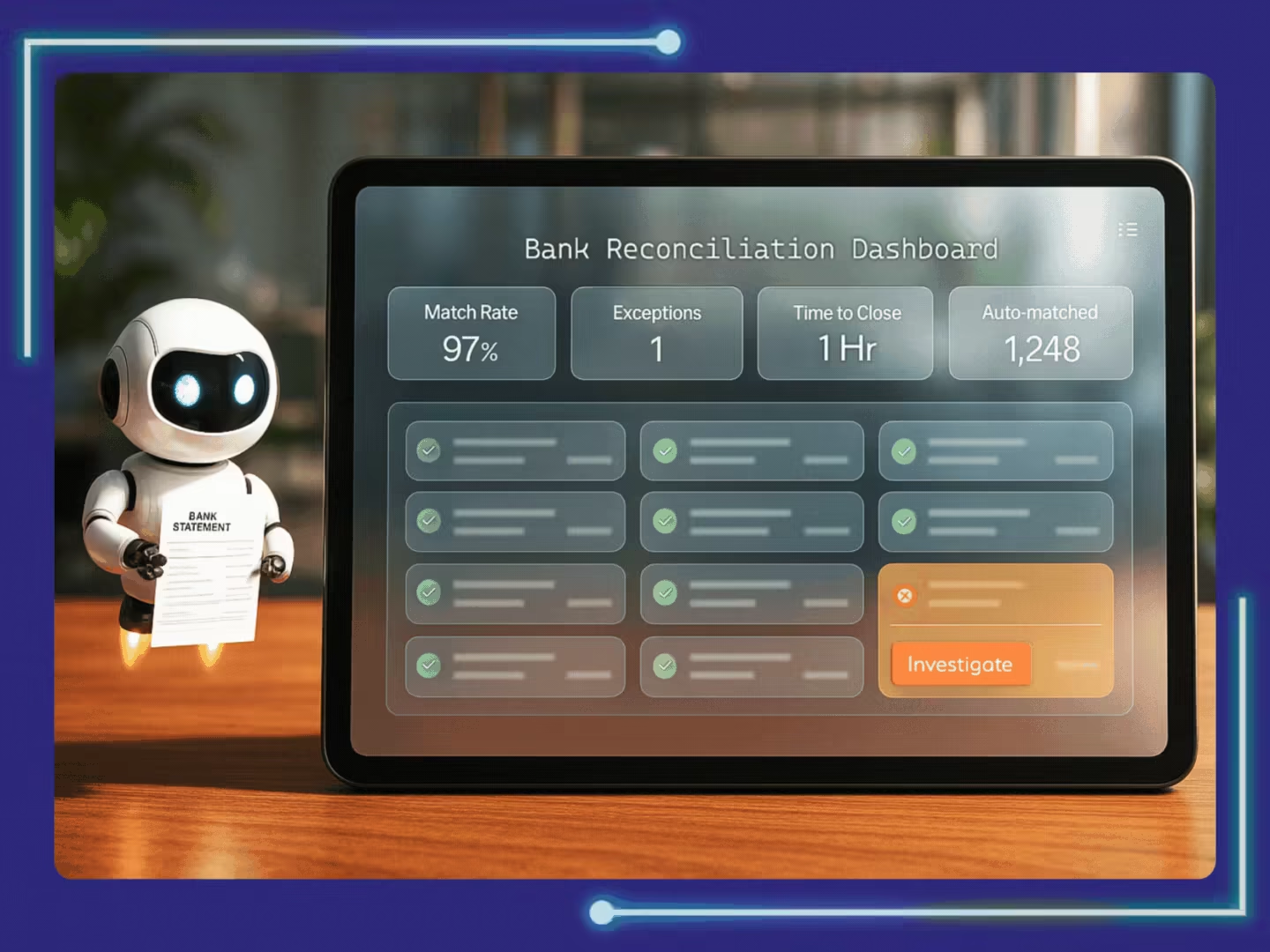
Bank reconciliation is the process of matching every entry in your accounting ledger against your bank statement, deposits, withdrawals, fees, all of it. It keeps your cash reporting accurate, helps surface errors or anything suspicious, and gives you a reliable starting point for broader financial decisions.
Vendor Reconciliation
Vendor reconciliation lines up your accounts payable records against supplier statements, purchase orders, and invoices. It confirms you’re paying the right amount, prevents over- or underpayment, clears up mismatches, and helps maintain solid vendor relationships, especially useful if you’re working with multiple suppliers or a more complex supply chain.
Customer Reconciliation
This checks that your accounts receivable records match invoices, payments received, and any credit notes issued. It helps catch late or missed payments, keeps cash flow reporting honest, supports stronger client relationships, and makes sure your revenue numbers tie back accurately to your financial statements and tax filings.
Intercompany Reconciliation
Intercompany reconciliation reviews transactions moving between subsidiaries, branches, or divisions within the same organization. It confirms internal balances are accurate, clears discrepancies in shared accounts, supports consolidated reporting at the group level, and helps with compliance around corporate governance and audit standards.
Credit Card Reconciliation
This compares company credit card statements against internal expense records. It’s how you catch unauthorized charges, validate employee spending, make sure expenses are categorized correctly, and keep your ledger matching what was actually spent.
Payroll Reconciliation
Payroll reconciliation confirms that wages, salaries, bonuses, benefits, and payroll tax withholdings, including federal income tax, Social Security, and Medicare (FICA), match your payroll records. This keeps compensation accurate, supports IRS compliance, prevents over- or underpayment, and keeps your records audit-ready.
General Ledger Reconciliation
This involves reviewing every ledger account, accruals, prepayments, journal entries, to confirm everything’s accurate. It makes sure financial statements reflect true performance, supports internal and external audits, and gives management reliable numbers to base decisions on, in line with US GAAP.
Getting Ready to Reconcile: A Pre-Reconciliation Checklist
Preparation is what separates a smooth reconciliation from a messy one. Pulling together statements, double-checking transactions, and organizing your supporting documents ahead of time helps you avoid errors and keeps your financial picture reliable for both daily operations and bigger strategic calls.
Here’s a checklist to help you get organized before you dive in.
- Pull Together Your Financial Statements: Gather bank statements, credit card statements, and any other account summaries for the period you’re reconciling.
- Round Up Supporting Documents: Collect invoices, receipts, payment confirmations, and purchase orders so every transaction can be backed up.
- Cross-Check Transaction Entries: Compare each ledger entry against your statements to catch anything missing or duplicated.
- Group Accounts by Category: Separate out payables, receivables, and general ledger items so reconciliation is easier to manage.
- Update Your Accounting Software: Make sure all digital records, including anything pulled in automatically, are current and correct.
- Review Outstanding Items: Check for pending payments, uncashed checks, and journal entries that haven’t posted yet.
- Note Any Expected Adjustments: Write down anything you’re expecting to adjust, like accruals, depreciation, or corrections from a prior period.
- Assign Clear Ownership: Decide who’s responsible for reviewing, verifying, and signing off on each account category.
- Build a Reconciliation Timeline: Map out when reconciliation needs to be done, including any interim checks for month-end or year-end.
- Stay Ready for an Audit: Keep your supporting files organized in case of an internal review or an IRS audit.
A Step-by-Step Walkthrough of the Reconciliation Process
Reconciling accounts accurately is what keeps your records clean and trustworthy. Working through it step by step helps you verify transactions, track down discrepancies, and make sure your ledgers, statements, and sub-accounts are fully aligned for reliable reporting and compliance.

Step 1: Collect Every Record You’ll Need
Gather all the relevant financial records for the period, bank statements, credit card statements, ledger reports, and receipts. Make sure your accounting software is current so nothing slips through during reconciliation.
Step 2: Confirm Your Opening Balances
Check that your ledger’s opening balance matches the prior period’s closing balance. Resolve any mismatch before moving forward, a wrong opening balance throws off everything that follows.
Step 3: Match Transactions Line by Line
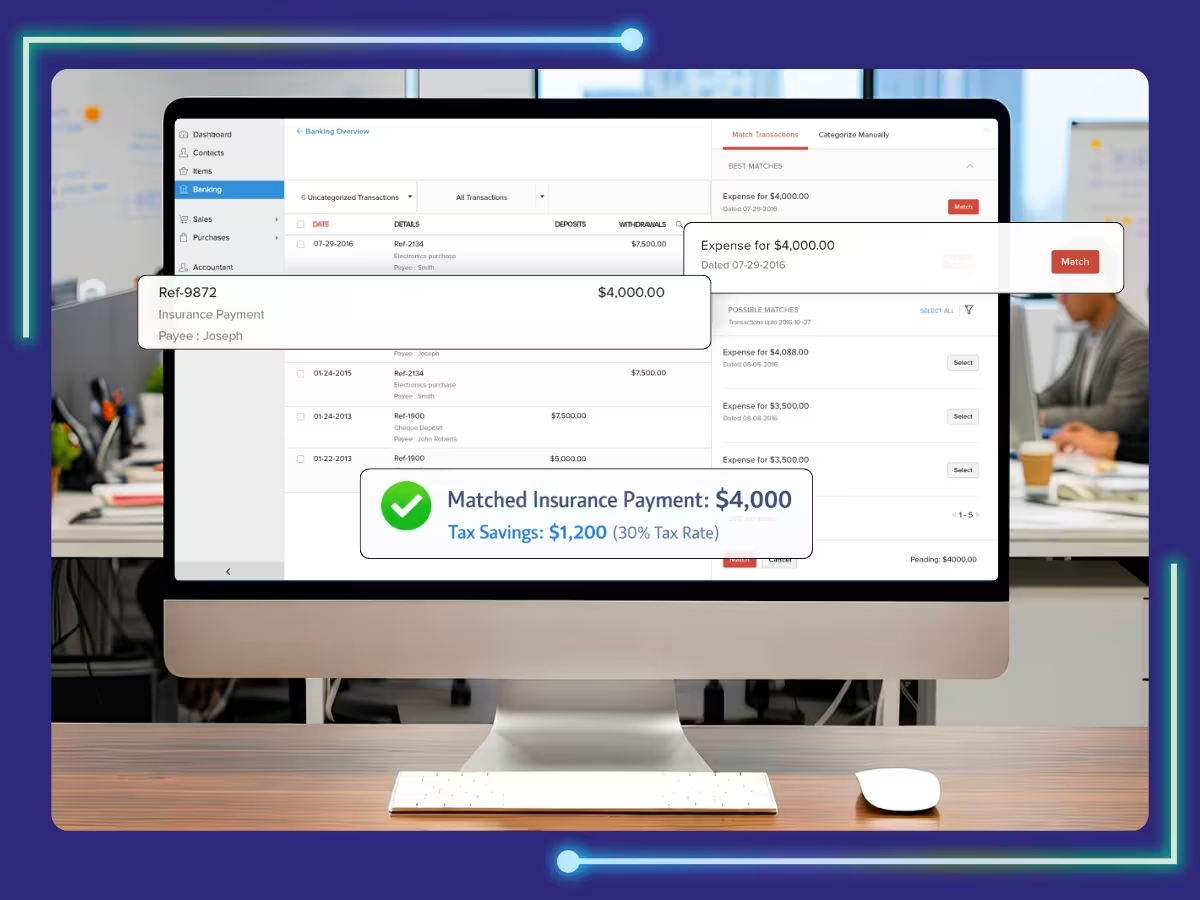
Go through your bank or credit card statements against the corresponding ledger entries. Flag anything missing, duplicated, or mismatched for a closer look.
Step 4: Identify Outstanding Items
Look for anything that hasn’t cleared yet, outstanding checks, pending payments, or deposits still in transit. These create temporary gaps between your bank statement and ledger, so noting them keeps your reconciliation realistic.
Step 5: Investigate Any Discrepancies
For transactions that don’t match, dig into invoices, receipts, and journal entries to understand why. Figure out if it’s a genuine error, a timing difference, or a missing entry, then decide on the right correction.
Step 6: Record the Necessary Adjustments
Post adjustments for bank fees, interest earned, or corrections to the ledger. Make sure every journal entry is properly documented and justified, in keeping with accounting standards and audit expectations.
Step 7: Reconcile Sub-Accounts Individually
Work through sub-ledgers, accounts payable, accounts receivable, petty cash, one at a time. This keeps things internally consistent and helps catch errors before they make their way into your broader financial statements.
Step 8: Verify Your Closing Balances
Confirm that your reconciled ledger balance matches your bank or credit account balance once outstanding items are factored in. This final check confirms your accounts give an accurate picture of where the business stands.
Step 9: Document Everything
Keep a detailed reconciliation report covering every adjustment, discrepancy, and resolution. Solid documentation gives you a clear audit trail and makes life easier for internal reviews, tax filings, or an IRS audit.
Step 10: Get It Reviewed and Signed Off
Have a manager, accountant, or finance lead review and approve each reconciliation. Formal sign-off builds accountability, confirms accuracy, and gives stakeholders and auditors confidence in the numbers.
What Are the Common Challenges in Accounts Reconciliation?
Maintaining accurate financial records through account reconciliation is critical for U.S. businesses. However, several challenges can slow the process or introduce errors, including incomplete documentation, human mistakes, complex transactions, software integration gaps, and high transaction volumes. Addressing these proactively ensures reliable reporting and regulatory compliance.
Missing or Delayed Documentation
Invoices, receipts, and bank statements often arrive late or get misplaced, making transaction matching difficult. Timely collection and organisation of all financial records prevent discrepancies, reduce reconciliation delays, and ensure ledgers reflect actual balances.
Human Errors in Recording Transactions
Manual bookkeeping errors, duplicate entries, or misclassified transactions can quickly create larger inconsistencies. Even small mistakes may require extensive correction, impacting financial statements, internal reporting, and audit readiness under GAAP.
Managing Complex Transactions
Transactions involving multiple currencies, intercompany transfers, or recurring journal entries add layers of complexity. Reconciling these accurately requires knowledge of accounting standards, exchange rate effects, timing differences, and proper allocation across departments or entities.
Timing Variances Between Bank and Ledger
Outstanding checks, pending deposits, or delayed vendor payments often cause temporary mismatches. Identifying and documenting these timing differences ensures reconciliations reflect true cash positions and avoids misinterpreting delays as errors.
Software and System Integration Issues
Disconnected accounting systems, missing bank feeds, or incompatible platforms can produce incomplete or inconsistent data. Proper integration ensures real-time accuracy, minimizes manual corrections, and reduces reconciliation bottlenecks.
High Transaction Volumes
Businesses such as e-commerce or retail handle hundreds or thousands of daily transactions, making reconciliation labor-intensive. Without automation and structured workflows, errors and omissions become more likely.
Fraud or Unauthorized Activity
Unauthorized or fraudulent transactions can distort financial records. Regular reconciliations help detect unusual patterns early, safeguarding assets and maintaining compliance with internal controls and federal regulations.
Lack of Supporting Documentation for Adjustments
Unclear backup for corrections, journal entries, or adjustments complicates audits and internal reviews. Maintaining detailed records ensures accountability, transparency, and easier verification during audits or discrepancy investigations.
Key Best Practices for Effective Accounts Reconciliation
Accurate account reconciliation is critical for US businesses to maintain reliable financial records and prevent costly mistakes. Implementing structured workflows, utilising automated accounting tools, and keeping well-organized documentation allows companies to detect discrepancies early, stay compliant, streamline audits, and make confident financial decisions.

Maintain Regular Reconciliation Schedules
Set up a consistent schedule for reconciling accounts, daily, weekly, or monthly. Frequent reviews help uncover discrepancies quickly, prevent backlog, and ensure your financial statements reflect true cash positions, avoiding compounded errors and facilitating accurate reporting.
Use Trusted Accounting Software
Choose software that integrates seamlessly with US bank accounts and payment platforms. Automated systems reduce manual entry mistakes, speed up transaction matching, and provide real-time visibility, making reconciliations efficient, precise, and audit-ready.
Keep Comprehensive and Organized Records
Maintain complete documentation for all financial transactions, including invoices, receipts, bank and credit card statements. Proper record-keeping supports precise reconciliations, simplifies audits, and ensures a clear trail for internal controls and IRS compliance.
Train Your Finance Team on Proper Procedures
Ensure accounting staff understand reconciliation protocols, including transaction coding, matching procedures, and error handling. Trained employees can detect anomalies early, maintain consistency, and enhance the accuracy of financial reporting.
Reconcile Sub-Ledgers and Accounts Separately
Individually reconcile accounts such as accounts payable, receivable, payroll, and petty cash. Separating sub-ledgers helps quickly spot errors, ensures internal consistency, and prevents overlooked discrepancies from affecting the general ledger.
Investigate and Resolve Discrepancies Promptly
Analyze unmatched transactions immediately, identifying causes such as timing differences, missing invoices, or misentries. Make necessary adjustments to maintain accurate, audit-ready financial statements and prevent errors from accumulating.
Document Reconciliation Procedures Clearly
Keep detailed records of all reconciliation steps, including corrections and resolutions. Proper documentation ensures accountability, simplifies internal and external audits, and provides a reference for future reconciliations to prevent repeated mistakes.
Review and Approve Reconciliations
Implement a formal review and approval process, with supervisors or accounting managers validating reconciled accounts. This process ensures accuracy, accountability, and confidence for stakeholders in the reliability of financial data.
Consider Outsourcing for Efficiency
Engage professional outsourced accounting services to manage reconciliations. Outsourcing delivers timely, precise reconciliations, expert oversight, and reduces internal workload, enabling your team to focus on strategic financial management and business growth.
Take the Guesswork Out: Expert Accounts Reconciliation Services for Accurate Financials
Keeping your financial records precise and up to date can be challenging, especially for US businesses managing high volumes of transactions. Expert accounts reconciliation services ensure every transaction is verified, balances are accurate, and discrepancies are resolved efficiently.
At Whiz Consulting, we help US businesses manage end-to-end accounts reconciliation, from matching transactions and verifying balances to investigating anomalies and strengthening reporting workflows. Our team ensures compliance with IRS regulations, provides accurate financial insights, and frees you to focus on strategic growth rather than manual reconciliations.
Contact us today to transform your reconciliation process into a streamlined, reliable, and strategic part of your business operations.

Get customized plan that supports your growth

Have questions in mind? Find answers here...
The right reconciliation frequency depends on the size and complexity of your business. Many small businesses reconcile accounts monthly, while companies with significant daily transactions often perform weekly or even daily reconciliations to maintain accurate financial records and stronger cash flow visibility.
Account reconciliation helps ensure that income, expenses, payroll records, and other financial transactions are recorded correctly before filing federal and state tax returns. Accurate reconciliations reduce reporting errors, support tax compliance, and provide documentation if questions arise during an IRS review or audit.
Businesses often consider outsourcing when they experience frequent accounting discrepancies, growing transaction volumes, limited internal resources, or challenges meeting reporting deadlines. An experienced accounting partner can improve accuracy, strengthen controls, and free up internal teams to focus on core operations.
Each account should be reviewed individually to verify balances, transfers, deposits, fees, and outstanding transactions. Using cloud-based accounting software with automated bank feeds can simplify the process and provide a centralized view of the company’s overall cash position.
The IRS generally recommends keeping supporting financial records for at least three years, although many businesses retain reconciliation reports, bank statements, and related documentation for seven years or longer to support audits, tax matters, and financial reporting requirements.
Thousands of business owners trust Whiz to manage their account
Let us take care of your books and make this financial year a good one.