

In This Blog Post
Share This Article
- Last Updated: Aug 18, 2026
- 🔊 Listen
TL;DR
- The month-end close is a critical strategic tool rather than a routine task, providing the high-quality data necessary for leadership to make informed, forward-looking decisions.
- Regularly validating the trial balance allows controllers to spot abnormal fluctuations, negative balances, or missing postings before they distort final financial statements.
- Maintaining integrity across the system requires rigorous reconciliation between the general ledger and subledgers for bank accounts, accounts receivable, and accounts payable.
- Beyond simple accuracy, analyzing revenue trends and expense variances transforms raw accounting data into actionable insights regarding profitability and margin movements.
- Proactive reviews of tax calculations, fixed asset depreciation, and manual journal entries ensure your business remains compliant and stays prepared for smooth external audits.
- Partnering with Business Central experts can streamline workflows and automate routine tasks, allowing your finance team to close the books faster while building a stronger foundation for growth.
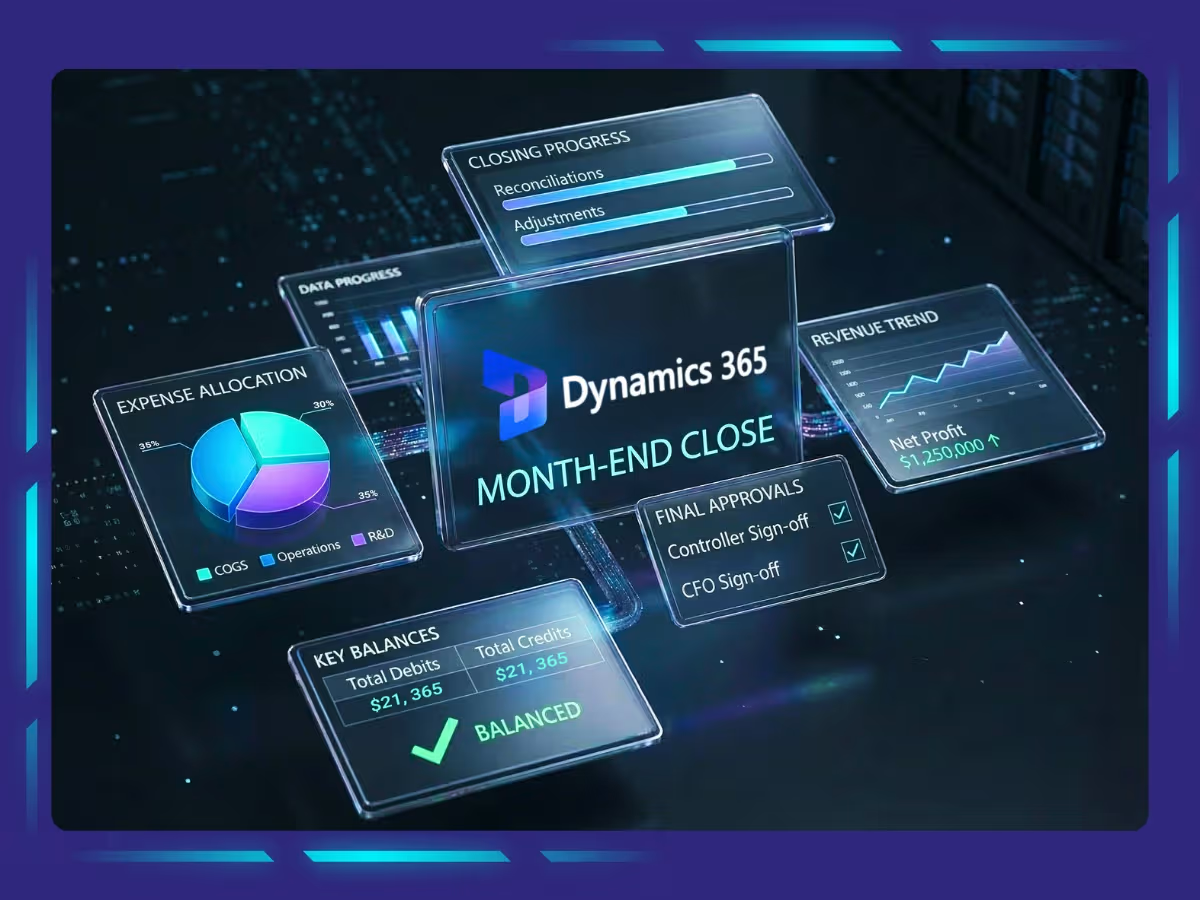
The month-end close is more than just a box to check, it’s the foundation of your company’s strategic decision-making. In Microsoft Dynamics 365 Business Central, the difference between a chaotic close and a seamless one lies in preparation and system mastery. This guide provides controllers with a field-tested roadmap to streamline reconciliations, automate recurring entries, and enhance data integrity. By mastering these practical techniques, you’ll ensure your financials are not only delivered faster but provide the deep insights your leadership team demands.

MS Dynamics, Refined
Automation Aligned With Your Accounting Strategy
Why a Structured Month-End Review Matters?
Even with automated ERP systems, financial accuracy still depends on disciplined financial review. While accounting automation process transactions, but it does not fully replace human validation. A structured month-end review helps finance teams verify data, detect inconsistences, and ensure financial records accurately reflect the organization’s position. A systematic review process helps organizations.
- Identify posting errors and unusual transactions: Spot incorrect journal entries, duplicate postings, or transactions that do not align with normal activity.
- Ensure subledgers reconcile with the general ledger: Confirm that bank accounts, accounts receivable, and accounts payables balances match the general ledger.
- Validate tax and statutory compliance: Check that tax calculations, regulatory obligations, and statutory reporting entries are recorded correctly.
- Detect operational trends affecting profitability: Review revenue movements, cost patterns, and expense fluctuations that may impact margins.
- Maintain audit-ready financial records: Keep reconciliations and documentation organized, supporting smoother audits and stronger financial governance.
- Prevent last-minute surprise before closing: Address discrepancies early so the closing process remains smooth and predictable.
What are the 10 core areas to review in Business Central?
Before closing the books in MS Dynamics 365 Business Central, finance teams must confirm that balances, reconciliations, receivables, payables, taxes, assets, inventory, journal entries, and financial statements all align with actual business activity. To keep this MS Dynamics accounting review structured and reliable, here are the 10 core areas to review, let’s take a look.
Trial Balance Validation
The trial balance is the first checkpoint in evaluating the accuracy of financial data before the books are closed. It provides a consolidated view of all account balances and helps identify unusual movements or errors that may affect financial reporting.
Navigation in Business Central:
Global Search (Alt + Q) – Trial Balance

Key review points:
- Unexpected balances or abnormal fluctuations in accounts that do not align with the company’s typical financial activity or operational trends.
- Negative balances in accounts where they should not occur, such as expense or asset accounts, which may indicate posting errors.
- Significant month-over-month variances that cannot be explained by operational changes or seasonal trends.
- Missing revenue or expense postings, which may signal incomplete transaction recording during the period.
- Comparison with prior periods or budgets to quickly identify anomalies or unusual financial movements.
- A properly reviewed Trial Balance helps detect errors early, preventing incorrect financial statements and improving decision-making accuracy
Bank Reconciliation Review
Bank reconciliation ensures that the organization’s cash records in the accounting system align with the bank’s records. Completing this review confirms that all receipts and payments have been properly recorded and accounted for.
Navigation:
Cash Management → Bank Reconciliation

Verify that:
- All bank transactions have been recorded, including deposits, withdrawals, and transfers reflected in the bank statement.
- Confirmation that EFT or electronic payment batches are correctly posted and reflected in the accounting records.
- Identification and explanation of outstanding reconciling items, such as deposits in transit or uncleared payments.
- Matching the bank GL balance with the bank statement balance to ensure there are no unexplained discrepancies.
Common risk factors to monitor:
- Old unreconciled items which may indicate missing or incorrectly posted transactions.
- Frequent manual reconciliation adjustments, which may suggest process weaknesses or posting inconsistencies.
- Mismatch between the general ledger bank balance and the actual bank statement balance, which requires immediate investigation.
Accounts Receivable Review
Accounts receivable review provides insights into customer payment behaviour and overall cash flow health. It also highlights potential collection issues and ensures receivable balances are accurately recorded.
Navigation:
Global Search (Alt + Q) → Aged Accounts Receivable/ Customer Ledger Entries

Key review points:
- Overdue customer balances that may indicate delayed payments or potential collection challenges.
- Unapplied receipts, where payments have been received but not properly matched with invoices.
- Customer credit balances, which may arise from overpayments or incorrect invoice allocations.
- Large or unusual invoices that require verification to confirm accuracy and proper approval.
- Reconciliation of Customer Ledger Entries with the accounts receivable control account in the GL, ensuring subledger and general ledger consistency.
Accounts Payable Review
The accounts payable review confirm that vendor obligations are accurately recorded and properly reconciled. It also helps detect duplicate payments, outstanding liabilities, or posting inconsistencies.
Navigation:
Global Search (Alt + Q) → Aged Accounts Payable/ Vendor Ledger Entries

Key review points:
- Unapplied vendor payments, where payments have been recorded but not matched to the corresponding vendor invoices.
- Duplicate vendor invoices, which may lead to overpayments if not identified in time.
- Long-outstanding vendor balances, which could indicate unresolved disputes or missing payment records.
- Reconciliation of vendor ledger balances with the GL control account, ensuring accurate representation of liabilities.
Tax and GST Validation
Tax review ensures that all tax-related transactions are correctly recorded and compliant with regulatory requirements. Accurate tax reporting is essential for maintaining compliance and avoiding penalties.
Key review points:
- Verification of sales tax reports to confirm that tax calculations align with recorded sales and purchases.
- Review of tax entries linked to sales and purchase transactions, ensuring taxes are correctly applied.
- Reconciliation of output tax with revenue accounts, verifying that tax collected from customers is accurately recorded.
- Reconciliation of input tax with expense transactions, confirming recoverable tax amounts are properly captured.
- Review of any unusual adjustments or manual corrections, ensuring they are justified and well documented.
Intercompany and Clearing Accounts
Clearing accounts and intercompany balances are often temporary accounts used during transaction processing. These accounts should typically carry minimal balances at month-end.
Typical accounts to review:
- Intercompany clearing accounts, used for transactions between related entities.
- Payment clearing accounts, which temporarily hold transactions during payment processing.
- Suspense accounts, where unidentified or temporary transactions may be recorded.
Key review points:
- Identification of remaining balances at month-end, which should normally be cleared after transactions are finalized.
- Verification that transactions are posted to their correct final accounts, rather than remaining in clearing accounts.
- Investigation of recurring balances, which may indicate posting errors or incomplete reconciliation processes.
Fixed Asset Review
Fixed asset review ensures that capital assets are properly recorded, depreciated, and reflected accurately in financial statements. This step is important for both financial reporting and regulatory compliance.
Navigation:
Global Search (Alt + Q) → FA Ledger Entries

Key review points:
- Confirmation that depreciation runs have been completed for the period, ensuring expenses are properly recognised.
- Review of new asset additions, confirming they are classified correctly and capitalized appropriately.
- Reconciliation between the fixed asset subledger and the general ledger, ensuring balances remain consistent.
- Verification of asset disposals, transfers, or write-offs, confirming that they are accurately recorded.
Inventory Validation (If Applicable)
Inventory validation ensures that stock balances and valuations are accurate. Inventory errors can directly impact both the balance sheet and cost of goods sold.
Navigation:
Inventory → Item Ledger Entries
Key review points:
- Identification of negative inventory balances, which may indicate timing or posting errors.
- Review of large inventory adjustments or revaluations, confirming they are properly authorized and documented.
- Reconciliation between the inventory subledger and the general ledger, ensuring inventory values match across records.
- Verification of item quantities and valuation accuracy, especially for high-value or fast-moving inventory items.
- Verify the Inventory Balance with the Physical Verification Report submitted by internal auditor from time to time.
Manual Journal Entry Review
Manual journal entries require additional scrutiny because they can bypass automated accounting controls. Reviewing these entries helps ensure that adjustments are appropriate and accurately recorded.
Navigation:
Global Search (Alt + Q) → General Ledger Entries
Key review points:
- Entries posted through general journals, which may represent adjustments or corrections.
- High-value adjustments, which could significantly impact financial statements if incorrect.
- Entries posted late in the accounting period, which may indicate last-minute corrections or reclassifications.
- Unusual account combinations or classifications, which may suggest errors or misallocations.
Financial Statement Analysis
The final review step involves analysing financial statements to confirm that the results are reasonable and aligned with operational performance. This review helps convert accounting data into actionable financial insights through financial reporting with MS Dynamics 365 Business Central.
Navigation:
Financial Reports / Account Schedules
Key review points:
- Revenue trends and margin movements, identifying whether profitability aligns with operational performance.
- Unexpected increases in expenses, which may indicate cost overruns or misclassifications.
- Balance sheet fluctuations, including significant movements in assets, liabilities, or equity accounts.
- Variance analysis against prior periods or budgets, highlighting deviations that require explanation.
Simplify Your Month-end Close with a MS Dynamics Accounting Expert
A structured month-end close process brings discipline and clarity to financial management. With Microsoft Dynamics 365 Business Central, finance teams can streamline reconciliations, organize financial data, and produce accurate reports faster. A well-managed close improves reporting reliability, strengthens financial visibility, and gives leadership greater confidence in the numbers.
At Whiz Consulting, our expert MS Dynamics accounting services providers help businesses optimize their close process within Business Central. By refining workflows, automating routine tasks, and structuring financial reporting, we help finance teams close faster, maintain accuracy, and build a stronger financial foundation for growth.

Get customized plan that supports your growth

Have questions in mind? Find answers here...
For most mid-sized organizations using Microsoft Dynamics 365 Business Central, the month-end close typically takes 3 to 5 business days. Companies with strong automation, clean data workflows, and clear review processes can complete the close faster. Delays usually occur due to reconciliation gaps, manual entries, or incomplete transaction postings.
Automation can significantly improve the month-end close process by reducing manual entries and repetitive tasks. Businesses can automate journal postings, recurring accruals, bank reconciliations, and financial report generation. This reduces errors and allows finance teams to focus on financial analysis rather than administrative tasks.
Yes, many organizations outsource month-end close processes to accounting specialists familiar with Microsoft Dynamics 365 Business Central. Outsourcing can help ensure timely reconciliations, accurate reporting, and consistent financial controls, especially for businesses without a large in-house finance team.
Accuracy during the close process depends on maintaining disciplined financial workflows. Businesses should ensure all transactions are posted on time, reconciliations are performed regularly, review checkpoints are established, and financial reports are validated before finalizing the accounting period.
Many businesses rely on external outsourced accounting services with Business Central expertise. These specialists help manage reconciliations, ensure compliance, and maintain accurate financial reporting while allowing internal teams to focus on strategic activities.
A month-end close checklist is a structured list of accounting tasks that must be completed before finalizing financial reports. It ensures that all reconciliations, adjustments, and validations are completed consistently, reducing the risk of reporting errors.
Thousands of business owners trust Whiz to manage their account
Let us take care of your books and make this financial year a good one.