


In This Blog Post
Share This Article
- Last Updated: Aug 25, 2026
- 🔊 Listen
TL;DR
- Virtual accountants help U.S. businesses reduce overhead costs while improving financial flexibility and scalability.
- Managing multi-state sales tax, 1099 filings, payroll compliance, and IRS reporting becomes easier with virtual accounting support.
- Virtual accounting services provide access to broader expertise across bookkeeping, payroll, forecasting, automation, and financial reporting.
- Cloud accounting platforms like QuickBooks Online, NetSuite, Xero, and Sage Intacct improve real-time financial visibility and reporting accuracy.
- Outsourced accounting models scale more efficiently for growing businesses without increasing internal hiring or office infrastructure costs.
Choosing between an in-house accountant and a virtual accountant in the US directly impacts cost control, compliance management, scalability, and financial efficiency. As businesses deal with multi-state sales tax, 1099 reporting, payroll obligations, and cloud-based financial operations, the demand for flexible accounting support continues to grow.
Many businesses are now turning to a virtual accountant in the US to reduce overheads, improve financial visibility, and access broader accounting expertise without expanding internal teams. While some companies still prefer traditional office-based accounting, others are shifting toward virtual accounting models for real-time reporting, automation, and scalable financial management. In this blog, we’ll compare both models and help you determine which accounting structure best fits your business needs.

Right Accountant for Your US Business
Cost, expertise, and IRS compliance compared, then decide.
In-House Accountants vs Virtual Accountants in the USA: Key Differences
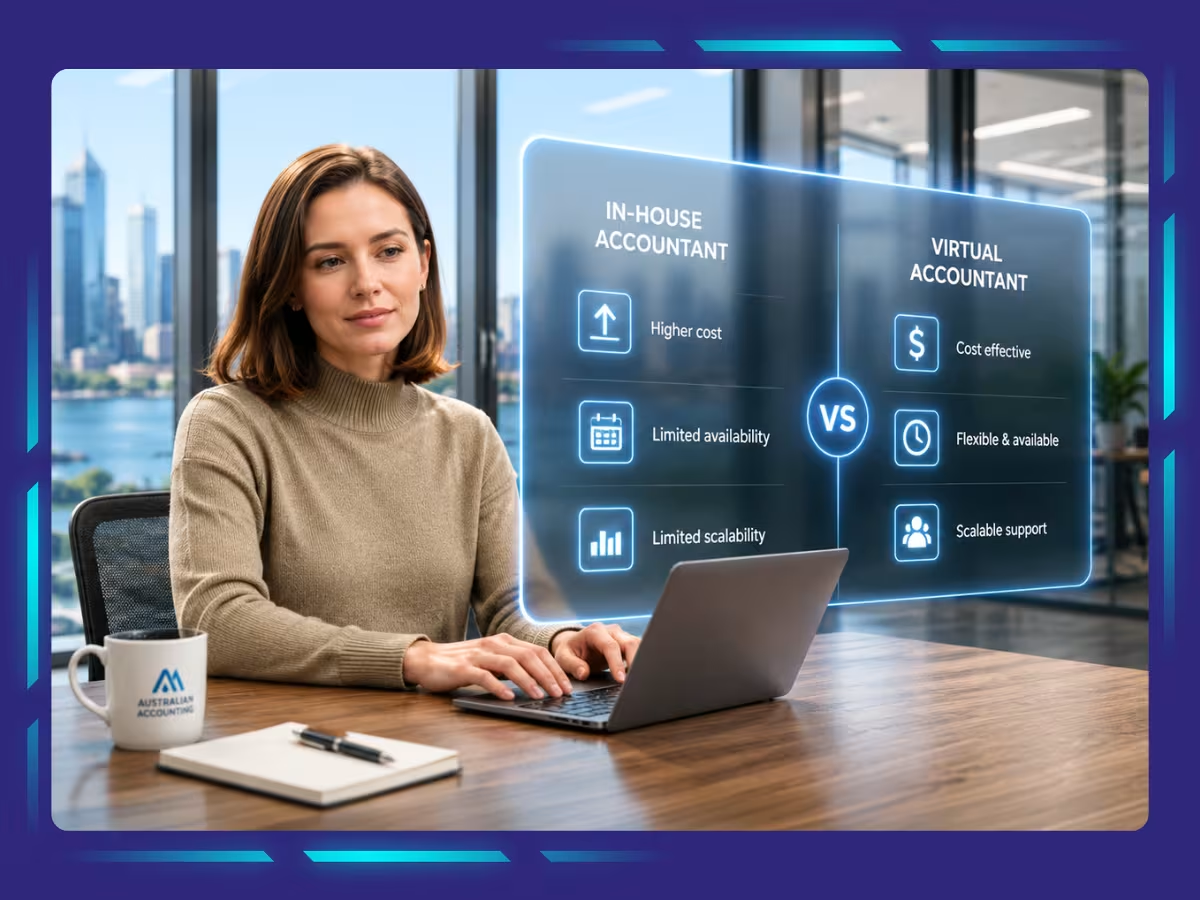
The comparison between in-house accountant vs virtual accountant in the US becomes clearer when businesses evaluate factors such as cost, flexibility, scalability, expertise, technology, and operational efficiency.
| Factor | In-House Accountant | Virtual Accountant |
|---|---|---|
| Work Setup | Works from your office location | Works remotely using cloud systems |
| Cost Structure | Fixed salary, benefits, taxes, office expenses | Flexible monthly or project-based pricing |
| Scalability | Requires additional hiring as workload grows | Easily scales based on business needs |
| Technology | Often relies on the company’s existing accounting systems and internally managed software tools | Commonly works with cloud accounting software like Xero, QuickBooks, and Sage for streamlined collaboration and reporting. |
| Expertise | Limited to individual experience | Access to broader accounting specialists |
| Flexibility | Fixed office schedule | Remote access and flexible support |
| Reporting Access | Often periodic reporting cycles | Real-time dashboards and reporting |
What Are the Benefits of Hiring a Virtual Accountants for U.S. Businesses?
Virtual accountants help U.S. businesses reduce overhead costs, manage multi-state sales tax and 1099 compliance, improve financial visibility, and scale accounting support more efficiently. With cloud-based automation, real-time reporting, and broader financial expertise, virtual accounting services simplify complex financial operations while supporting long-term business growth.
Lower Operational Costs
Hiring a virtual accountant helps businesses reduce expenses tied to salaries, healthcare benefits, payroll taxes, office infrastructure, software subscriptions, and employee onboarding.
For small and mid-sized U.S. businesses, virtual accounting services provide professional financial support at a much lower cost than building a full internal accounting department.
Expertise in Sales Tax and IRS Compliance
Managing multi-state sales tax obligations, economic nexus thresholds, 1099-NEC filings, payroll taxes, and IRS compliance requirements can quickly become overwhelming for growing businesses.
Virtual accountants help businesses stay compliant by managing sales tax tracking, contractor reporting, payroll filings, and financial documentation more accurately throughout the year.
Access to Broader Financial Expertise
Businesses often require support beyond general bookkeeping, including payroll management, budgeting, forecasting, financial reporting, automation, inventory accounting, and cash flow analysis.
Reputable virtual accounting firms provide access to specialists across multiple financial functions, helping businesses solve complex accounting challenges more efficiently.
Better Scalability for Growing Businesses
As transaction volume, contractor payments, payroll, and reporting obligations increase, virtual accounting services can scale quickly without requiring additional hiring or office expansion.
This flexibility is especially useful for e-commerce businesses, multi-state operations, startups, and rapidly growing companies.
Real-Time Financial Visibility
Modern virtual accountants use cloud accounting platforms such as QuickBooks Online, MS Dynamics NetSuite, Xero, and Sage Intacct to provide live dashboards, automated reconciliations, and real-time financial reporting.
This gives business owners better visibility into cash flow, profitability, sales tax liabilities, payroll expenses, and overall business performance.
Stronger Technology Integration
Skilled virtual accountants are experienced with cloud-based accounting tools, automation platforms, payment integrations, and workflow optimisation systems.
Businesses already using QuickBooks Online, Xero, NetSuite, Sage Intacct, Stripe, Shopify, or PayPal can usually integrate smoothly with virtual accounting services.
In-House Accounting vs Outsourced Accounting: Which One Works for US Businesses?
Choosing between in-house accounting vs outsourced accounting depends on your financial workload, compliance requirements, business goals, and how much flexibility your operations need. U.S. businesses managing sales tax filings, 1099 reporting, payroll compliance, and rapid growth often evaluate both models differently based on scalability and operational efficiency.
Review the Complexity of Your Financial Operations
Businesses handling multi-state sales tax, contractor payments, payroll filings, inventory tracking, or complex reporting requirements often benefit from broader support available through outsourced accounting services.
Evaluate Your Overall Accounting Costs
An in-house accounting team comes with salaries, payroll taxes, healthcare benefits, software licences, training, and office-related expenses. Outsourced accounting usually operates on a fixed monthly or flexible pricing model, helping businesses manage overhead more efficiently.
Identify the Expertise Your Business Needs
If your business requires support across bookkeeping, payroll, tax preparation, sales tax compliance, automation, forecasting, and financial reporting, outsourced accounting gives access to specialised professionals across multiple financial areas instead of relying on a single internal hire.
Assess Your Technology and Automation Readiness
Businesses already using cloud accounting systems like QuickBooks Online, Xero, NetSuite, or Sage Intacct often transition more smoothly into outsourced accounting models with automated workflows and real-time financial reporting.
Consider Your Growth and Scalability Plans
Businesses planning to expand into new states, hire more contractors, increase transaction volume, or scale operations quickly often choose outsourced accounting because support can grow without adding internal hiring pressure or increasing office infrastructure costs.
The most important factor is choosing an accounting model that improves financial visibility, strengthens compliance, and supports long-term business growth.
Strengthen Business Growth with Expert Virtual Accounting Services
As financial management becomes more technology-driven, many U.S. businesses are moving toward virtual accounting models that offer greater flexibility, lower overheads, and scalable expertise. The shift from traditional in-house accounting teams to remote accounting support is helping businesses improve efficiency while maintaining stronger financial control.
At Whiz Consulting, we help businesses streamline accounting operations through reliable accounting services tailored to their industry, workflow, and growth goals. From bookkeeping and payroll to financial reporting and compliance management, our team supports businesses with accurate, scalable, and technology-driven accounting solutions.

Get customized plan that supports your growth

Have questions in mind? Find answers here...
Virtual accountants are often more cost-effective for small businesses because they reduce overhead costs while providing flexible access to bookkeeping, payroll, tax preparation, and financial reporting expertise.
Yes. Virtual accountants can manage multi-state sales tax tracking, economic nexus monitoring, sales tax filings, and marketplace reconciliation for businesses operating across different U.S. states.
Yes. Virtual accountants help businesses track contractor payments, prepare 1099-NEC and 1099-MISC forms, maintain IRS compliance, and reduce filing errors during tax season.
Yes. Virtual accountants can process payroll, manage tax withholdings, handle payroll filings, and maintain compliance with federal and state payroll regulations.
The decision depends on your budget, financial complexity, growth plans, compliance needs, technology readiness, and preferred working style. Businesses seeking flexibility, automation, and scalable expertise often prefer virtual accounting services.
Thousands of business owners trust Whiz to manage their account
Let us take care of your books and make this financial year a good one.