

In This Blog Post
Share This Article
- Last Updated: Jun 4, 2026
- 🔊 Listen
TL;DR
- Virtual accountants provide remote accounting support through cloud-based accounting platforms and digital collaboration tools.
- Virtual accountants help improve financial visibility, accuracy, compliance, and operational efficiency.
- Cloud accounting software like QuickBooks, Xero, Zoho Books, and NetSuite enables real-time financial management and collaboration.
- Virtual accountants offer scalable support that adapts to changing business and reporting requirements.
- Hiring the right virtual accountant requires evaluating qualifications, software expertise, communication skills, security practices, and industry experience.
Gone are the days of in-house accountants buried under the piles of paperwork. Modern businesses need accuracy, agility and cost-efficiency; and this virtual accountant guide is here to show you exactly how virtual accountants deliver all three. From real-time financial insights to streamlined bookkeeping, a virtual accountant provides expert level support without overheads. But if you are still relying on traditional methods, you may be leaving money on the table. Let’s delve deep into why your business needs a virtual account more than ever!

Your Complete Virtual Accountant Guide
Services, costs, and hiring tips everything your business needs to know in one place.
Who is a Virtual Accountant?
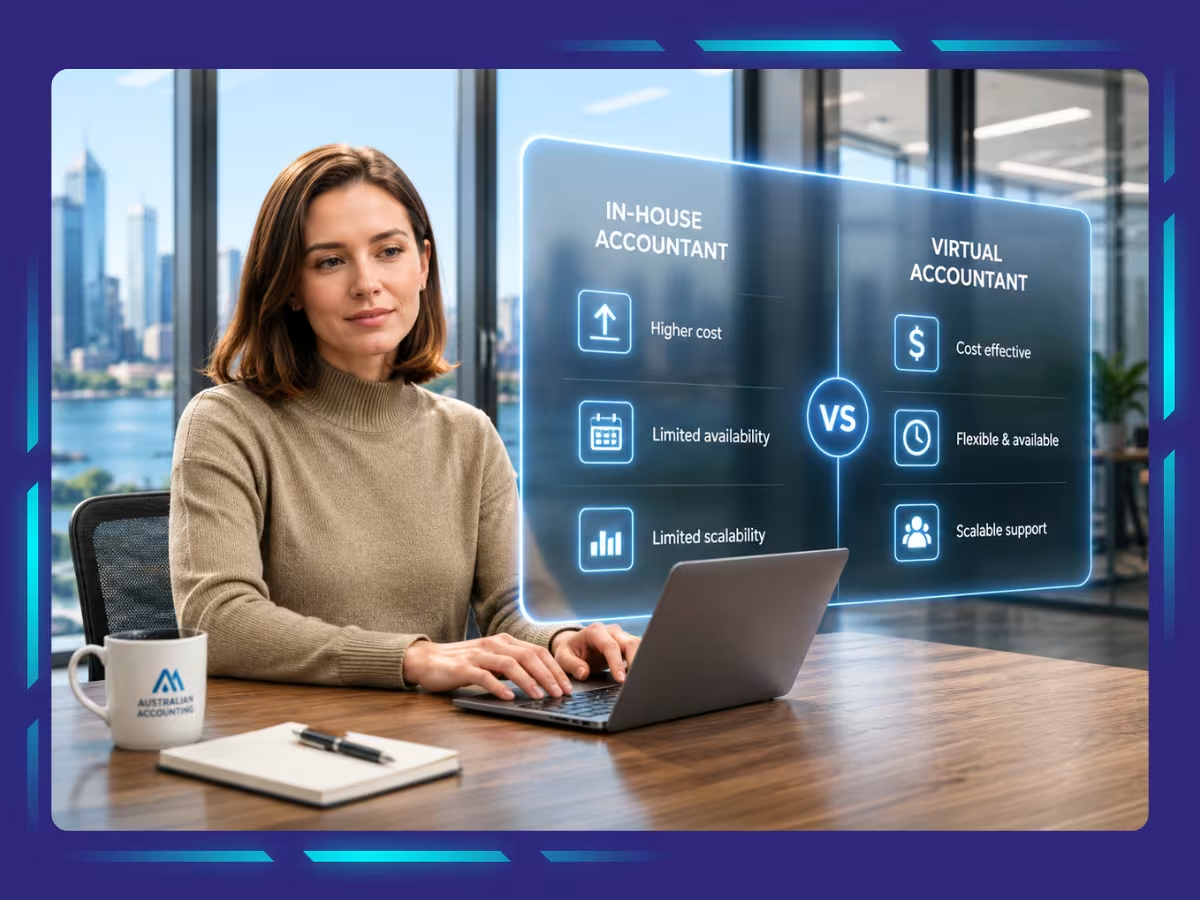
A virtual accountant is a qualified accounting professional who provides a range of accounting services virtually from a remote location. Also known as online accountants, they offer a flexible and often cost-effective alternative to traditional in-house accounting departments or larger accounting firms. Using this virtual accountant guide, businesses of all sizes can understand exactly what to expect from this modern financial role.
Virtual accountants use cloud-based accounting software such as QuickBooks, Xero, and NetSuite to manage financial data in real-time. Also, they use various digital communication tools to connect with their clients and share reports. Typically, these professional help companies manage tasks including:
- Bookkeeping and transaction categorization: Records and categorizes all business transactions in accordance with U.S. accounting standards, ensuring your books are accurate, current, and audit-ready.
- Accounts payable management: Manages vendor bills, schedules payments, and tracks due dates to help maintain strong vendor relationships and avoid late fees.
- Accounts receivable and invoicing: Issues invoices, tracks customer payments, and follows up on outstanding balances to support healthy cash flow.
- Payroll processing and compliance: Processes payroll, calculates federal and state withholdings, and helps ensure compliance with IRS and state payroll tax requirements.
- Bank and credit card reconciliations: Performs reconciliations to match financial records with bank and credit card statements, identifying discrepancies early.
- Financial reporting: Prepares monthly and quarterly financial statements, including profit and loss, balance sheets, and cash flow reports tailored to U.S. businesses.
- Tax preparation support and coordination: Maintains clean books, organizes documentation, and coordinates with CPAs to support federal, state, and local tax filings.
- Budgeting and cash flow forecasting: Helps build budgets and forecasts that reflect U.S. operating costs, tax obligations, and growth plans.
What Does a Virtual Accountant Do?
A virtual accountant manages day-to-day financial operations remotely, including bookkeeping, payroll, bank reconciliations, financial reporting, tax preparation, and compliance support. They also help businesses improve financial visibility, maintain accurate records, and make more informed financial decisions. Here is a closer look at how virtual accountants support different areas of business finance.
- Manages daily financial records: Maintaining records includes recording transactions, managing invoices, and reconciling bank accounts on a regular basis.
- Prepares key financial reports: They generate income statements, balance sheets, and cash flow statements, giving you a clear picture of your finances.
- Handles payroll processing: From calculating wages to filing payroll taxes, they ensure your employees are paid correctly and on time.
- Provides tax preparation and filing services: They help businesses navigate the complexities of tax laws and ensure compliance.
- Offers financial consulting and advice: Virtual accountants can provide valuable insights into budgeting, forecasting, and financial planning to help your business grow.
What Process Does a Virtual Accountant Follow?
A virtual accountant follows a structured process that includes onboarding, secure system access, communication setup, document collection, bookkeeping, financial reporting, and compliance management. This workflow helps businesses maintain accurate financial records, streamline accounting operations, improve reporting visibility, and stay compliant with tax and regulatory requirements. Here is how the process typically works step by step.
Onboarding
The virtual accountant starts by conducting an initial consultation with the client. This meeting serves to understand the client’s business, their specific accounting needs, and how the virtual accountant can best support them.
Gaining Access to Systems
Once onboarded, the virtual accountant securely accesses financial systems using cloud-based accounting software. They ensure compliance with data security protocols, set up user permissions, and integrate necessary accounting tools.
Establishing Communication Channel
To maintain seamless collaboration, a virtual accountant sets up regular communication channels via email, video calls, or messaging platforms. They schedule updates, clarify queries, and ensure transparency in financial management.
Document Collection
The next step is to collect relevant financial documents through a secure cloud-based system i.e Google Drive, Dropbox One Drive. These documents include invoices, receipts, bank statements, purchase orders etc.
Data Entry & Bookkeeping
The virtual accountant takes over the bookkeeping tasks. Using professional accounting software, they meticulously record the client’s financial transactions, categorize expenses and income appropriately, and perform regular bank reconciliations to ensure accuracy.
Financial Reporting & Analysis
Based on the organized data, these professionals generate customized financial reports such as income statements, balance sheets, and cash flow statements. Moreover, they also analyze this data and offer valuable insights into the client’s business’s financial health.
Compliance Management
Virtual accountants take care of nitty-gritties related to relevant tax laws. They stay on top of deadlines and ensure proper tax compliance to avoid any penalties.
What Are the Benefits of Hiring a Virtual Accountant for Your US Business?

A virtual accountant helps businesses reduce operational costs, save time, improve financial accuracy, and gain flexible access to accounting expertise without maintaining a large in-house team. With scalable support, timely reporting, and cloud-based accounting technology, businesses can streamline financial management, improve decision-making, and adapt more efficiently as their operational needs grow.
Cost-Effectiveness
One of the biggest advantages of hiring a virtual accountant is the significant cost savings. With the average in-house accountant costing over $81,680 annually in salary alone, before benefits, payroll taxes, and office space, virtual accountants offer the same expertise on a flexible contract basis at a far more manageable cost.
Time Savings
Outsourcing accounting tasks to a virtual accountant frees up valuable time for business owners and their teams. This allows them to focus on core business activities, such as product development, sales, marketing, and customer service. By offloading the burden to virtual bookkeeping firms, businesses can improve efficiency and productivity.
Accessibility & Flexibility
Virtual accountants provide superior accessibility and flexibility compared to traditional firms. They often offer services beyond typical business hours and are more readily available for inquiries and concerns. Having on-demand financial expertise enables businesses to make timely decisions, giving them a competitive edge.
Accuracy & Timely Reporting
Virtual accountants are experienced professionals who are skilled in providing accurate and timely financial reports. They use the best accounting practices and software to ensure data integrity and generate reliable financial statements. Moreover, businesses can access these reports whenever they need them, enabling them to monitor performance and make informed decisions.
Scalability & Expertise
Many virtual accounting firms offer scalability, allowing businesses to adjust the level of service as their needs change. They also provide access to a team of specialized professionals who can handle various accounting tasks, from basic bookkeeping to complex financial analysis. This breadth of expertise can be particularly beneficial for growing businesses.
Technology-Driven Solutions
Virtual accountants leverage advanced accounting software and cloud-based technologies and the latest advancements in AI in accounting to streamline processes and enhance efficiency. This ensures that financial data is securely stored and readily accessible. It also allows for seamless collaboration and communication between the business and the virtual accounting team.
What Software Do Virtual Accountants Commonly Use?

Virtual accountants use cloud-based accounting software to manage bookkeeping, payroll, invoicing, reporting, bank reconciliations, and financial collaboration more efficiently. Platforms like QuickBooks, Zoho Books, Xero, and NetSuite help businesses automate accounting workflows, improve real-time financial visibility, and streamline communication between business owners and accounting professionals.
QuickBooks
Many virtual accountants rely on QuickBooks, a strong accounting software that offers a range of features, from invoicing and expense tracking to financial reporting and payroll. It’s a versatile tool that can be tailored to meet the specific needs of different businesses.
Speciality: Comprehensive accounting for SMBs.
Zoho Books
Zoho Books is a cloud-based accounting solution that’s gaining popularity among virtual accountants. Its user-friendly interface and focus on automation make it a good choice for small businesses. It simplifies tasks like invoicing, expense management, and bank reconciliation.
Speciality: User-friendly interface for cloud accounting.
Xero
Xero is another cloud-based accounting platform that virtual accountants often use. It’s known for its clean interface, real-time bank feeds, and collaboration features. Xero makes it easy for businesses to manage their finances and share information with their online accountant.
Speciality: Seamless bank feeds and collaboration.
NetSuite
For larger businesses with more complex needs, virtual accountants might use NetSuite. This comprehensive suite of cloud applications includes accounting, enterprise resource planning (ERP), and customer relationship management (CRM) functionalities. It provides a unified platform for managing various aspects of a business.
Speciality: Unified cloud ERP solution.
How to Hire a Virtual Accountant: What to Look For
Hiring the right virtual accountant involves evaluating accounting qualifications, industry experience, software expertise, communication practices, data security standards, client reputation, service flexibility, and responsiveness. Businesses should also ensure the virtual accountant understands relevant tax regulations, uses secure cloud-based tools, and can provide accounting support aligned with their operational and financial goals.
Credentials and Certifications
Certifications like CPA (Certified Public Accountant) and graduates in accounting and finance demonstrate a professional’s expertise and commitment to ethical practices. While not always mandatory, they can provide assurance of the accountant’s qualifications.
Industry-Specific Experience
A virtual accountant with experience in your specific industry will understand the unique financial challenges and opportunities your business faces. This specialized knowledge can be invaluable.
Tech Proficiency
Virtual accountants have proficiency in numerous accounting software that an in-house accountant might be lacking in. Make sure that the one you are choosing is proficient in using cloud-based accounting software, financial management tools, and secure data transfer methods.
Communication Skills
Clear and consistent communication is something that will be valuable for the future as well. Your virtual accountant should be responsive to your inquiries, explain complex financial matters in an understandable way, and proactively keep you informed.
Security Measures
Protecting your financial data is very important. Inquire about the security protocols they have in place, including data encryption, access controls, and disaster recovery plans.
Client Reviews and Reputation
Reviews and ratings are quite insightful. Online reviews and testimonials can offer valuable insights into a virtual accountant’s reliability, professionalism, and client satisfaction.
Service Alignment and Pricing
Clearly define your accounting needs and budget. Furthermore, find a virtual accountant whose services align with those needs and whose pricing is transparent and affordable.
Availability and Responsiveness
Choose a virtual accountant who is readily available to answer your questions and provide timely support. Consider their communication style and how quickly they typically respond.
US Tax Expertise (if applicable)
For businesses operating in the U.S., a thorough understanding of federal and state tax laws is essential. Ensure the virtual accountant has the necessary expertise to handle your tax filings and compliance requirements.
Part-Time vs Full-Time Virtual Accountant: Which Do You Need?
Virtual accounting firms offer both part-time and full-time services. So, which one do you need? The decision will depend on what your business requirements. Whether you choose part-time or virtual accountant, they become a core part of your team. So, it is important to know the differences before hiring one:
| Feature | Part-Time Virtual Accountant | Full-Time Virtual Accountant |
|---|---|---|
| Cost | May be budget friendly, pay for specific hours/projects. | Slightly higher costing than hiring a part-time but offers dedicated support. |
| Availability | Flexible hours, often project-based or set weekly hours as decided by the accountant. | Regular business hours, dedicated to your company. |
| Scope | Only suitable for specific tasks like virtual bookkeeping, scalable. | Comprehensive virtual accounting services, in-depth analysis. |
| Integration | May require more coordination, suitable for focused needs. | Seamless integration, proactive financial planning from this online accountant offering online accounting solutions. |
Improve Financial Clarity with Expert Virtual Accounting Support
A virtual accountant gives businesses access to professional accounting expertise, real-time financial visibility, and scalable support without the challenges of traditional hiring. As highlighted throughout this virtual accounting guide, virtual accounting services help businesses stay organised, compliant, and growth-focused through streamlined bookkeeping, reporting, and financial management support.
At Whiz Consulting, we deliver customised virtual accounting services designed around your business needs. Our team supports businesses with cloud accounting, payroll, reporting, reconciliations, and financial management solutions that improve efficiency and reduce operational pressure.
Connect with us today to build a more efficient and growth-ready finance function for your business.

Get customized plan that supports your growth

Have questions in mind? Find answers here...
Virtual accountants hired from a reputable firm use the same security measures as any reputable online bank or financial service. They encrypt your data, often use secure portals, and have strict privacy policies. But yes, you should always do your own research and choose a provider with a solid reputation.
First, you’ll have to gather all your current financial documents and records. Then, your virtual accountant will guide you through setting up access to your accounting software or their secure platform. They’ll work with you to understand your business and get everything organized.
Many virtual accountants offer flexible arrangements. You can hire them for a specific number of hours per week, for a project, or even just for occasional support.
The cost of hiring a virtual accountant varies quite a bit. It depends on things like the accountant’s experience, the complexity of your finances, and the services you need. Some charge a flat monthly fee, others charge hourly, and some might have packages.
The charges for services provided by a virtual accountant depend on the accountant’s qualifications and where they’re located. More experienced accountants or those with specialized knowledge will typically charge more. When you’re comparing, make sure you understand what’s included in their hourly rate.
Thousands of business owners trust Whiz to manage their account
Let us take care of your books and make this financial year a good one.