


In This Blog Post
Share This Article
- Published: Mar 27, 2026
- Last Updated: Mar 27, 2026
- 🔊 Listen
Quick Reads
- Offshore accounting helps U.S. businesses improve efficiency by shifting routine financial tasks away from internal finance teams.
- Companies gain access to skilled accounting professionals familiar with U.S. GAAP, financial reporting standards, and widely used platforms like QuickBooks, NetSuite, and Xero.
- Identifying repetitive finance tasks is the first step in building an effective offshore accounting model.
- Commonly outsourced functions include bookkeeping, AP/AR management, reconciliations, and financial reporting support.
- Choosing the right offshore partner is critical, as structured onboarding, clear communication, and process alignment determine long-term success.
Businesses are under constant pressure to manage finances efficiently while staying focused on growth. One practical solution many companies are adopting is offshore accounting. By working with a dedicated offshore accounting team, businesses can shift selected financial tasks to skilled professionals overseas, reducing operational burden, improving turnaround times, and maintaining accuracy in financial processes. However, successful offshoring begins with making thoughtful decisions about which tasks to move first.

Offshore Accounting Simplified
Explore How Global Accounting Talent Transforms Bottom Line.
How to Identify the Right Accounting Tasks to Offshore First
Before offshoring accounting work, businesses should select tasks that can be handled remotely without affecting financial control. The best starting point is structured, operational work that follows clear processes. Key considerations include:
- Focus on routine, rule-based tasks: Repetitive accounting activities such as invoicing, transaction recording, and reconciliations follow clear workflows and rules, making them easier to manage remotely.
- Start with time-consuming operational work: Tasks that take significant internal time but involve limited strategic decisions are ideal candidates.
- Choose tasks with clear documentation: Well-documented processes transfer more smoothly to offshore teams.
- Evaluate data sensitivity and compliance needs: Consider whether tasks involve sensitive financial data requiring closer oversight.
- Consider turnaround expectations: Work with predictable timelines is easier to coordinate across locations.


Accounting Functions That Are Commonly Offshored
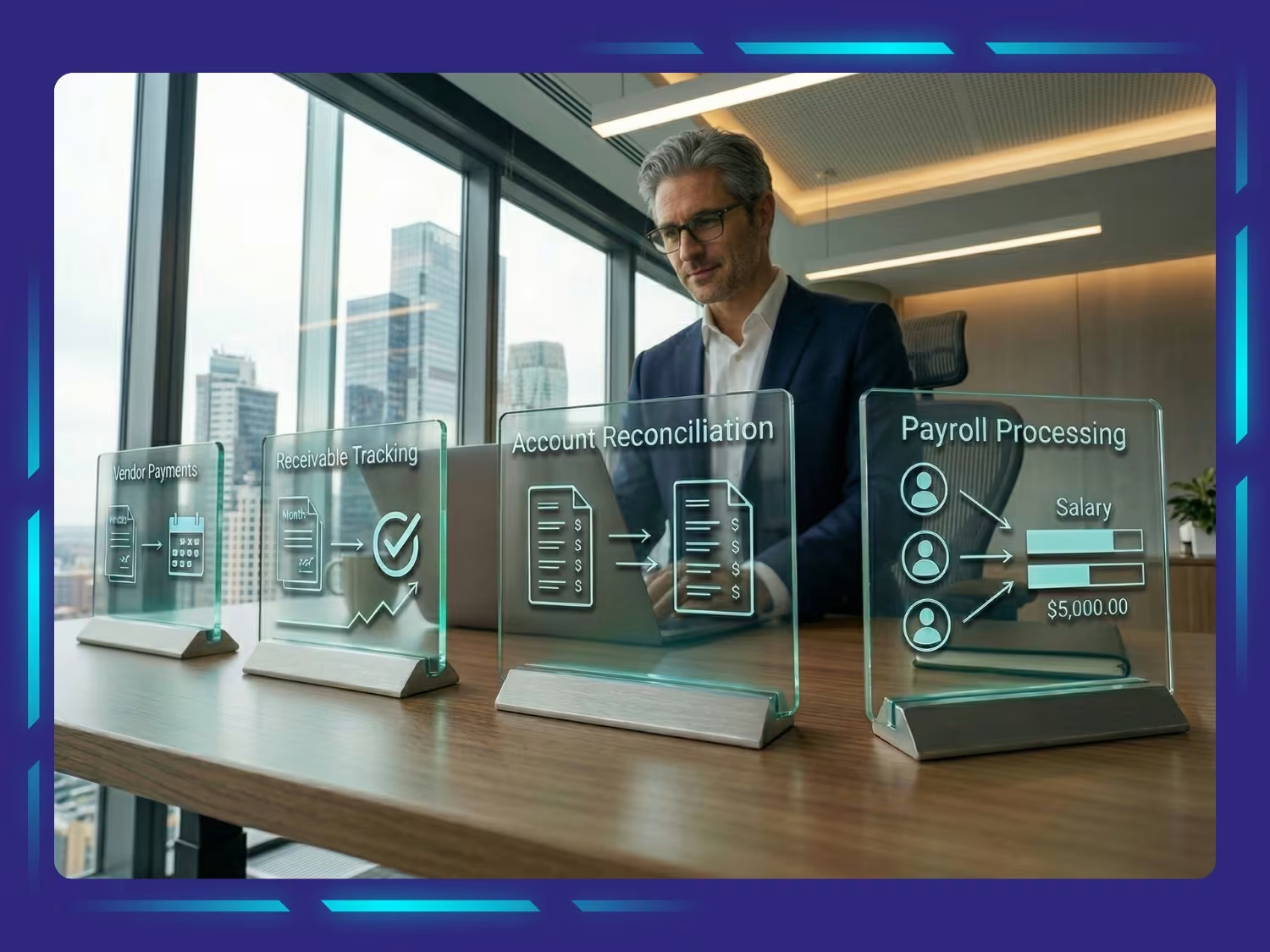
Over the years, several accounting functions have proven to transition well to offshore teams. These tasks are usually process-driven and can be managed effectively using cloud-based accounting systems. Commonly offshored accounting functions include:
- Bookkeeping and transaction categorisation: Recording daily financial transactions and maintaining organised accounting records.
- Accounts payable management: Processing vendor invoices, managing payment schedules, and maintaining payable records.
- Accounts receivable management: Creating invoices, tracking payments, and following up on outstanding balances.
- Bank and credit card reconciliations: Matching financial transactions with bank statements to ensure accurate books.
- Payroll processing support: Assisting with payroll calculations, documentation, and payroll-related record management.
- Financial report preparation: Preparing standard reports such as profit and loss statements, balance sheets, and cash flow summaries.
- Management reporting support: Compiling financial data to help businesses monitor performance and trends.
How the Right Offshore Partner Makes Outsourcing Work
Successful offshore accounting goes beyond shifting tasks overseas. It requires structured processes, clear communication, and a partner who understands U.S. accounting standards and systems.
At Whiz Consulting, we deliver structured offshore accounting support to help businesses streamline bookkeeping, reporting, and finance operations. With 11+ years of experience and a team of 150+ accountants, we integrate with your workflows to improve accuracy, financial visibility, and operational efficiency as your business grows.

Get customized plan that supports your growth

Have questions in mind? Find answers here...
Hiring an offshore accountant helps businesses reduce operational costs, improve efficiency, and access skilled accounting professionals without expanding internal teams.
Offshore accountants align their work schedules with U.S. time zones, use shared project tools, and follow structured reporting timelines to ensure smooth collaboration.
Yes. Businesses retain full oversight through regular reporting, shared accounting software access, and clearly defined workflows with the offshore team.
Companies outsource accounting to reduce workload, access specialized expertise, improve process efficiency, and allow internal teams to focus on strategic financial decisions.
Strategic activities such as financial planning, executive decision-making, and sensitive compliance oversight typically remain within the internal finance leadership.
Offshore teams collaborate through regular meetings, shared accounting platforms, and communication tools like Slack, Teams, or email to ensure transparency and alignment.
Thousands of business owners trust Whiz to manage their account
Let us take care of your books and make this financial year a good one.