


In This Blog Post
Share This Article
- Published: Feb 26, 2026
- Last Updated: Feb 26, 2026
- 🔊 Listen
Quick Reads
- Ensures that all eligible business expenses, such as bank fees and interest, are recorded, helping to maximize tax deductions.
- By matching bank deposits with recorded income, businesses avoid reporting income that hasn't been received, preventing overpayment of taxes.
- Regular reconciliation ensures that financial records are accurate, reducing the risk of IRS penalties and audit notices due to discrepancies in tax filings.
- A detailed process for performing bank reconciliation, including collecting statements, verifying expenses, adjusting for outstanding checks, and recording corrections.
- A checklist to ensure all discrepancies are addressed and tax-deductible expenses are properly recorded before filing taxes. Effective reconciliation helps lower taxable income by ensuring that all expenses are accounted for and revenue is correctly reported.
- Working with professionals who offer bank reconciliation services can help streamline the process, ensuring accurate financial records and tax optimization.
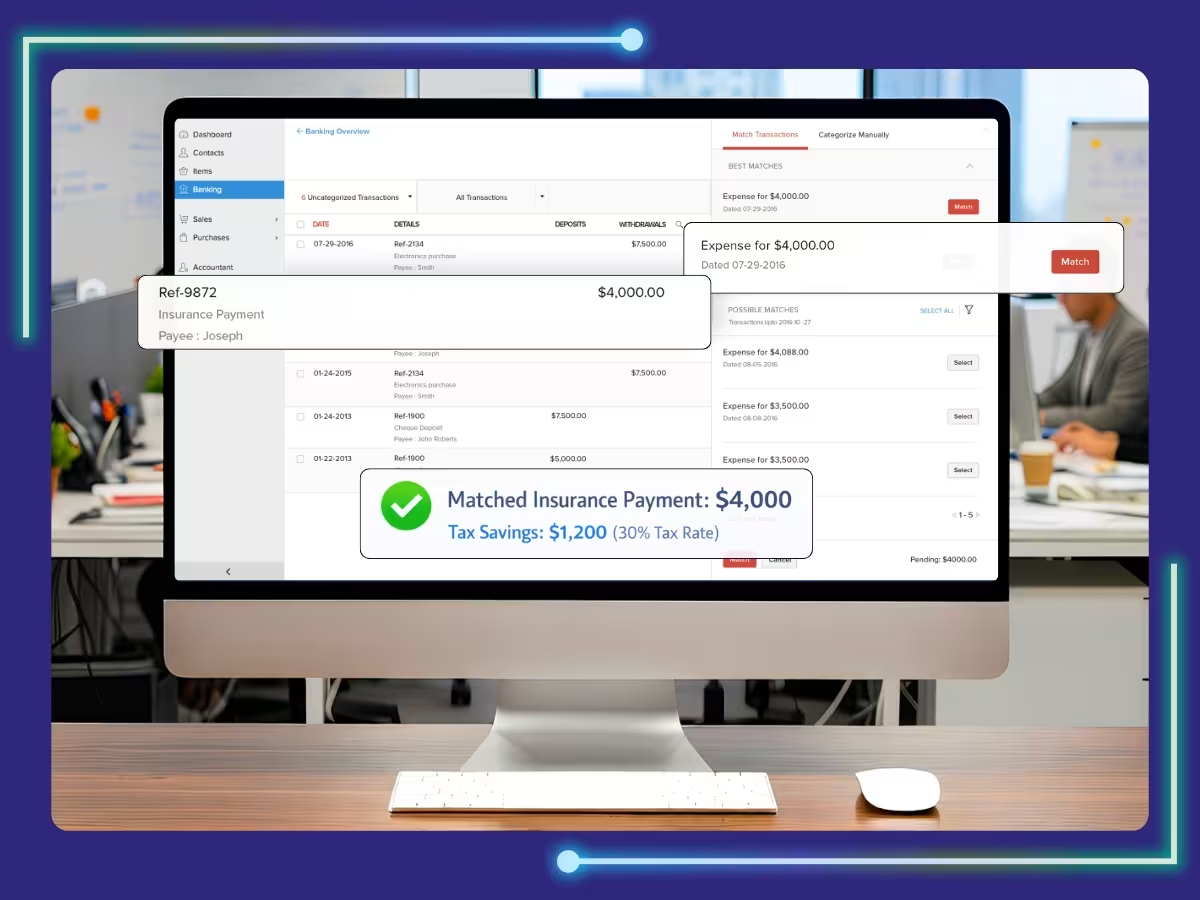
Bank reconciliation accounting is more than just a process of matching numbers; it’s a powerful tool that can help U.S. businesses reduce their tax liabilities. By ensuring that your internal financial records match the bank’s, you can uncover missed deductions, prevent overstated income, and avoid penalties from the IRS.
This routine task can save your business significant amounts of money by optimizing your tax filing process. In this detailed guide, we’ll take a deep dive into how to use bank reconciliation services to your advantage and explain how you can incorporate this process to reduce your tax burden.

Seamless Reconciliations Starts Here!
Identify Discrepancies On-Time for Accurate Financial Records
How Bank Reconciliation Helps Reduce Your U.S. Tax Liability
Bank reconciliation does much more than maintain accurate cash records. As a key component of the broader accounts reconciliation process, it plays a crucial role in minimizing tax liability by ensuring your business deductions are maximized, income is correctly reported, and discrepancies that could lead to IRS penalties are avoided. Here’s how:
Identifying Missed Business Deductions
Many U.S. businesses overlook certain tax-deductible expenses simply because they fail to track them properly in their books. Through accounting reconciliation, you have the opportunity to ensure that all eligible business expenses are recorded, which can directly reduce your taxable income.
Here are some common tax deductions that can often be missed during the reconciliation process:
- Bank fees: Charges like monthly maintenance fees, overdraft fees, and returned check fees are generally tax-deductible.
- Interest expenses: Interest payments on business loans, lines of credit, or credit cards are usually deductible but often get missed unless specifically tracked.
- Vendor payments: Payments made to contractors, suppliers, or service providers should be classified as business expenses, reducing your taxable income.
By performing a thorough bank reconciliation accounting process, you ensure these deductions are accurately recorded, helping you lower your tax liability when filing.
Preventing Overstated Income
An accurate bank reconciliation is essential to avoid overstating your income. It’s not uncommon for businesses to record income before it has actually been received, which can lead to paying taxes on money that hasn’t yet cleared the bank. For example, a payment might be recorded as income when the deposit has not yet been processed or might be duplicated.
When you reconcile your bank statement with your accounting records, you ensure that income is only reported once it has been properly deposited and cleared by the bank. This helps to:
- Accurately report revenue and avoid tax overpayment
- Prevent errors in revenue recognition
- Avoid paying taxes on funds that haven’t been received
Avoiding Penalties and IRS Notices
The IRS is highly focused on accurate reporting. Discrepancies in your financial records can lead to audits, additional taxes, penalties, or even interest charges. One of the easiest ways to ensure compliance with IRS requirements is to perform regular accounting reconciliation. By reconciling your bank accounts on a monthly or quarterly basis, you ensure that all records are aligned and that there are no discrepancies that might trigger an audit or penalty.
For example:
- If your bank records show a $10,000 deposit but your books reflect $12,000, the IRS might flag this as an error.
- Similarly, failing to report bank fees or interest income could lead to penalties.
Timely and accurate bank reconciliation services ensure that such discrepancies are caught before they affect your tax filings, thus minimizing the chances of receiving IRS notices or facing penalties.
Step-by-Step Process to Perform Bank Reconciliation for Tax Optimization
Now that we’ve covered the main benefits of bank reconciliation accounting for tax purposes, let’s walk through the step-by-step process to help you maximize your tax savings.
Step 1 – Collect Bank Statements and Accounting Records
The first step in the reconciliation process is gathering all necessary documents. This includes:
- Bank statements: You’ll need the bank statement for the specific period you’re reconciling.
- Accounting records: This includes your general ledger, transaction history, or any other document that tracks deposits, withdrawals, and payments in your business.
- Invoices: Make sure you have access to any invoices and receipts that were issued or received during the period.
Ensure that you have access to both physical and electronic copies of these documents for comparison.
Step 2 – Match Deposits with Recorded Income
Once you have all the relevant documents, begin by matching deposits on the bank statement with the income you have recorded in your books. Look for:
- The exact amounts deposited
- The correct dates on which deposits were made
- The proper income accounts used
For instance, if you have a large deposit in your business checking account from a client, verify that it matches the recorded revenue in your books. If there are discrepancies, such as the deposit amount not matching or missing information, you’ll need to investigate the source of the discrepancy.
Step 3 – Verify Expenses and Categorize Tax-Deductible Items
Next, examine your business expenses listed on the bank statement and compare them to what’s recorded in your accounting books. Pay particular attention to any business-related expenses that may have tax implications. These may include:
- Utilities
- Office supplies
- Employee benefits
- Travel expenses
Accurately categorizing these expenses ensures that you’re claiming all eligible deductions, ultimately reducing your taxable income.
Step 4 – Adjust for Outstanding Checks and Deposits in Transit
One of the most common challenges in the bank reconciliation process is dealing with outstanding checks and deposits in transit. These are transactions that your business has recorded but that haven’t yet cleared the bank by the time the bank statement was generated.
For example, if you issued a check to a vendor in December but the check isn’t cashed until January, the check is considered outstanding. Likewise, deposits made towards the end of the month may not show up in your bank statement until the following month. Be sure to:
- Subtract outstanding checks from your bank balance
- Add any deposits in transit to your bank balance
By adjusting for these timing differences, you’ll ensure that the balances in your accounting records and bank statement match.
Step 5: Record Bank Fees, Interest, and Corrections
Finally, don’t forget to account for bank fees, interest, and any other necessary corrections. Common items to review include:
- Bank service fees (e.g., monthly maintenance charges, transaction fees)
- Interest income earned from your business accounts
- NSF (non-sufficient funds) fees or returned items
For example, if your bank charges a $15 monthly fee, that fee should be recorded as an expense in your accounting books. Similarly, if the bank pays $50 in interest on your business account, that interest should be added as income.
These adjustments ensure that your financial records are accurate and up-to-date, preventing overreporting or underreporting of income and expenses.

Year-End Bank Reconciliation Checklist for U.S. Small Businesses
At year-end, bank reconciliation becomes a critical part of your year-end accounting process. Reviewing monthly reconciliations, matching transactions, clearing discrepancies, verifying balances, and capturing deductions ensures accurate financial statements and compliance. Here’s the checklist to follow.
1. Review All Monthly Reconciliations
Review each month individually and confirm every bank account has been fully reconciled.
Clear any outstanding reconciling items carried forward from prior months before finalising December.
2. Match Every Transaction
Compare every transaction listed on your bank statement with entries in your accounting software. Avoid bulk approvals and carefully review for missing entries, duplicate postings, or incorrect amounts.
3. Adjust for Timing Differences
• Identify and document legitimate timing differences such as:
• Outstanding checks (issued but not yet cleared)
• Deposits in transit (recorded but not yet processed by the bank)
• Ensure these items clear properly in the following month.
4. Verify December 31 Account Balances
Confirm that the reconciled book balance as of December 31 matches the ending balance on your bank statement.
Resolve any variance before closing the year.
5. Record All Tax-Deductible Expenses
Review your accounts for any deductible expenses that were missed during the year, including:
- Software subscriptions
- Business services
- Mileage and travel
- Contractor payments
- Equipment purchases
- Ensure all eligible expenses are recorded before year-end cut-off.
6. Reconcile Credit Card Accounts
Match each business credit card statement to your books to ensure all charges, payments, and fees are properly recorded. Uncaptured expenses can distort year-end financial statements.
7. Reconcile Loans and Lines of Credit
Verify that loan balances and interest payments align with lender statements.
Confirm proper separation between principal repayment and interest expense. A clean year-end reconciliation sets a solid foundation for preparing your tax return and helps prevent errors or missed deductions.
8. Adjust for Year-End Discrepancies
Record necessary correcting entries for:
- Bank errors
- Unrecorded transactions
- Incorrect classifications
- Required accrual adjustments
- Addressing discrepancies now prevents tax filing complications later.
Turn Reconciliation into a Tax-Saving Strategy with Expert F&A Support
Performing accurate and timely bank reconciliation accounting not only ensures precise financial reporting but also reduces your U.S. tax liability. If you’re unsure about managing this process on your own, working with expert accounting reconciliation professionals can streamline the process and ensure no tax-saving opportunities are missed.
At Whiz Consulting, we specialize in providing comprehensive bank reconciliation services to optimize your tax strategy. Our team of virtual accountants, well-versed in U.S. tax compliance and financial accuracy, ensures your financial records are up-to-date, stress-free, and fully optimized for tax season. Let us help you maximize your tax savings and maintain the integrity of your business’s finances.
Contact us today to learn how our expert support can transform your reconciliation process into a powerful tax-saving tool for your business!

Get customized plan that supports your growth

Have questions in mind? Find answers here...
Yes, regular bank reconciliation ensures your financial records are accurate, reducing discrepancies that could trigger an IRS audit or penalties.
Discrepancies can lead to inaccurate income and expenses, increasing tax liability and potentially triggering IRS penalties or audits.
Yes, reconciling business credit cards ensures all deductible expenses, such as travel and office supplies, are accurately recorded for tax reporting.
It’s recommended to reconcile at least the last three years of bank statements for IRS compliance, though keeping records for up to seven years is ideal.
Outsourcing is often more efficient and accurate, especially if your team lacks the time or expertise to handle complex reconciliations before tax season.
Thousands of business owners trust Whiz to manage their account
Let us take care of your books and make this financial year a good one.