

In This Blog Post
Share This Article
- Last Updated: Feb 21, 2026
- 🔊 Listen
TL;DR
- You get professional-grade accounting support without the cost, risk, or rigidity of hiring full-time staff.
- Virtual accountants turn salaries and overhead into scalable service fees that grow with your business.
- Experienced accountants who stay current with U.S. GAAP and IRS rules reduce errors, rework, and compliance risk.
- Add payroll, reporting, forecasting, or advisory support without delays, hiring cycles, or retraining.
- Cloud platforms, automation, and secure systems are handled for you, delivering real-time financial visibility.
- With day-to-day accounting handled, teams can concentrate on strategy, customers, and execution.
As a business grows, its financial needs grow with it. What used to be manageable with a small internal team can quickly require deeper expertise, better systems, and more consistent oversight. At the same time, hiring additional full-time staff isn’t always practical, whether it is due to cost, timing, or flexibility.
This is where virtual accounting comes in. A virtual accountant expands your financial capabilities without expanding your headcount. You gain access to experienced professionals, modern cloud-based tools, and ongoing support that scales with your business. It’s a smart way to strengthen your financial foundation while staying agile.

Experience Seamless Accounting
Enhance Accuracy and Efficiency with a Virtual Accountant
Key Task You Can Outsource to a Virtual Accountant
A virtual accountant can take ownership of essential financial functions that support compliance, cash flow, and informed decision-making for U.S. businesses. From bookkeeping, AP/AR management, payroll processing to bank and credit card reconciliation, financial reporting and tax support, they do it all. By outsourcing these tasks, companies gain consistent execution, accurate records, and timely insight without the cost or complexity of expanding an internal team. Key tasks you can outsource to a virtual accountant include:
- Bookkeeping and transaction categorization: Records and categorizes all business transactions in accordance with U.S. accounting standards, ensuring your books are accurate, current, and audit-ready.
- Accounts payable management: Manages vendor bills, schedules payments, and tracks due dates to help maintain strong vendor relationships and avoid late fees.
- Accounts receivable and invoicing: Issues invoices, tracks customer payments, and follows up on outstanding balances to support healthy cash flow.
- Payroll processing and compliance: Processes payroll, calculates federal and state withholdings, and helps ensure compliance with IRS and state payroll tax requirements.
- Bank and credit card reconciliations: Performs reconciliations to match financial records with bank and credit card statements, identifying discrepancies early.
- Financial reporting: Prepares monthly and quarterly financial statements, including profit and loss, balance sheets, and cash flow reports tailored to U.S. businesses.
- Tax preparation support and coordination: Maintains clean books, organizes documentation, and coordinates with CPAs to support federal, state, and local tax filings.
- Budgeting and cash flow forecasting: Helps build budgets and forecasts that reflect U.S. operating costs, tax obligations, and growth plans.
Top 5 Benefits of Hiring a Virtual Accountant for Your US Business
Hiring a virtual accountant gives U.S. businesses access to professional financial support that scales as they grow. Instead of adding fixed overhead, companies gain flexible expertise, modern systems, and real-time visibility into their numbers.
Virtual accounting blends technology with experienced professionals, helping businesses operate more efficiently, stay compliant, and make better decisions. Below are five reasons why more businesses are choosing to partner with virtual accountants today.
1. Significant Cost Savings and Efficiency Gains
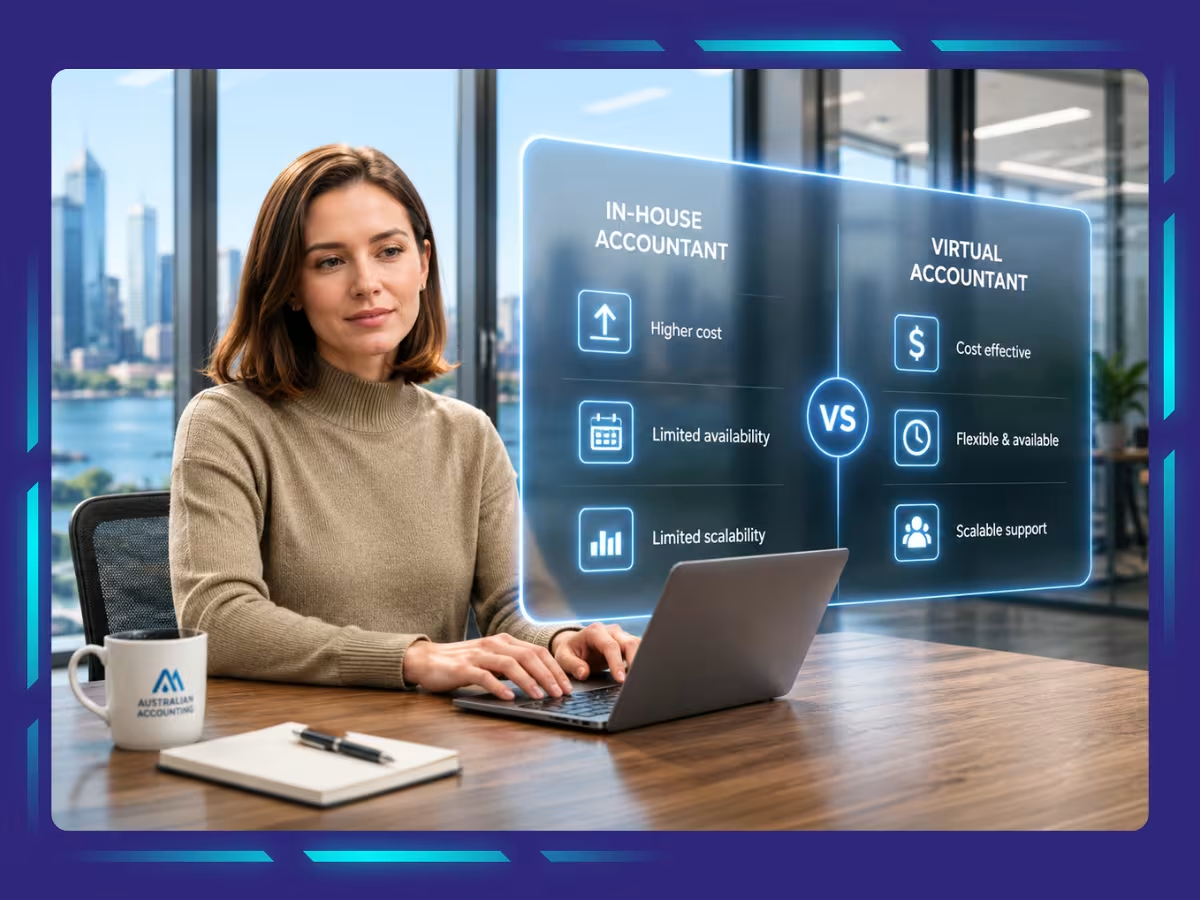
One of the most compelling reasons to choose accounting outsourcing is the cost savings. Hiring a full-time, in-house accountant means paying a salary, benefits, payroll taxes, and providing office space and equipment. These overhead expenses add up quickly.
By contrast, outsourcing to a virtual accounting service can significantly reduce these costs. You typically pay only for the accounting services you need, when you need them, instead of a fixed salary. This converts a high fixed cost into a flexible expense, which is especially helpful for small businesses and growing companies.
2. Access to Expert Financial Talent and Accuracy
When you partner with a skilled virtual accountant, you gain on-demand access to highly skilled financial professionals without having to hire them full-time. Many virtual accountants are certified experts (CPAs, experienced bookkeepers, or even fractional CFOs) with specialized knowledge across various industries.
This means you can tap into expertise tailored to your business domain, whether it’s e-commerce, manufacturing, healthcare, or any other field and get guidance from someone who understands the unique financial challenges in your industry.
Partnering with a virtual accountant can also improve the accuracy of your financial records and help ensure compliance with laws and regulations. Professional virtual accountants stay up-to-date on the latest accounting standards and tax codes.
3. Flexibility and Scalability for Your Business
Every business experiences change, whether it’s rapid growth, seasonal cycles, or shifts in the market and virtual accounting services are built for flexibility. When you partner with a virtual accountant, you aren’t locked into the limitations of one person’s capacity or a rigid 9-to-5 schedule.
Instead, you have a scalable solution where you can seamlessly increase the scope of work (for instance, add payroll services or more frequent financial reporting) without the delay of hiring and training new staff.
4. Cutting-Edge Technology and Robust Data Security
Top virtual accounting firms have a team of experts proficient in popular platforms like QuickBooks, Xero, Zoho Books, NetSuite, and MS Dynamics, along with automation tools that simplify routine tasks. This gives businesses real-time access to accurate financial data without managing the technology themselves. Transactions are automated, reports are instantly available, and systems integrate smoothly with invoicing or inventory tools.
Moreover, these firms use encrypted data transfer, secure client portals, multi-factor authentication, and regular backups. In many cases, these protections exceed what smaller businesses can implement internally, ensuring financial data remains secure and accessible.
5. More Time to Focus on Your Core Business
One of the biggest advantages of working with a virtual accountant is reclaiming time. Tasks like bookkeeping, payroll, and tax preparation demand focus and consistency, and they quietly pull attention away from higher-value work. Outsourcing these responsibilities to a virtual accounting team removes that burden without sacrificing visibility or control.
You still get timely reports, clear financial insights, and on-demand access to your numbers. The difference is that your internal team is no longer tied up managing transactions or chasing deadlines. With accounting handled by dedicated professionals, businesses can stay focused on operations, customers, and strategic decisions that actually move the business forward.

Build a Lasting Finance and Accounting Support with the Right Virtual Accountant
A virtual accountant can be a valuable partner in efficiency and growth. From cutting costs to accessing expert advice, from leveraging the best technology to maintaining compliance and security, the advantages are clear and increasingly recognized in the business community.
That’s where Whiz Consulting comes in as a trusted virtual accounting firm, Whiz Consulting supports businesses with a strong team of 150+ experienced online accountants who understand the realities of modern finance. The firm combines deep accounting expertise with a versatile, cloud-based tech stack, allowing seamless integration with tools businesses already use while staying adaptable to new platforms as they scale.
From day-to-day bookkeeping to complex financial advisory, the team delivers tailored solutions that match each client’s size, industry, and growth stage, making them a dependable long-term accounting partner rather than just a service provider.

Get customized plan that supports your growth

Have questions in mind? Find answers here...
A virtual accountant provides the same core accounting functions as an in-house accountant but works remotely using cloud-based systems. Instead of hiring a full-time employee, businesses gain access to a team or dedicated professional without paying for salaries, benefits, office space, or equipment. Virtual accountants also offer more flexibility, allowing services to scale as business needs change.
Not necessarily. A virtual accountant may be a CPA, an experienced accountant, or part of a firm that includes CPAs. While CPAs focus heavily on tax filings, audits, and compliance, virtual accountants typically handle ongoing bookkeeping, payroll, reporting, and financial operations. Many businesses use a virtual accountant for day-to-day work and a CPA for tax filing and advisory, often in coordination.
In many cases, yes, especially for small and mid-sized U.S. businesses. A virtual accountant can fully manage bookkeeping, payroll, reporting, and compliance tasks. For larger organizations, virtual accounting often complements internal teams by filling skill gaps, handling overflow work, or providing specialized expertise without expanding headcount.
Virtual accounting works well for startups, small and mid-sized businesses, professional services firms, e-commerce companies, and multi-entity or multi-state businesses. Companies that are growing quickly, operating remotely, or looking to control overhead often see the most value from virtual accounting services.
Yes, reputable virtual accountants follow U.S. GAAP standards and comply with requirements set by the Internal Revenue Service and state tax agencies. They stay current on tax laws, payroll regulations, and reporting requirements to ensure accurate, compliant financial records. Many also work closely with CPAs to support filings and audits.
Costs vary based on services, business size, and complexity, but virtual accounting is typically more affordable than hiring a full-time in-house accountant. Most firms offer monthly packages or customized pricing, allowing businesses to pay only for the services they need rather than a fixed salary.
Yes. One of the biggest advantages of virtual accounting is scalability. Services can be expanded during growth periods, such as adding payroll, reporting, or advisory support or reduced during slower periods without the challenges of hiring or layoffs.
Virtual accountants commonly work with cloud-based platforms such as QuickBooks, Xero, NetSuite, Zoho Books, and Microsoft Dynamics. They can usually adapt to your existing system or recommend tools that integrate with payroll, invoicing, inventory, and tax software.
Communication typically happens through email, video calls, phone meetings, and secure client portals. Many firms also provide regular check-ins and scheduled reporting so business owners always know where their finances stand without constant back-and-forth.
Yes. Virtual accountants often collaborate with CPAs and tax advisors by maintaining clean, up-to-date books and providing organized documentation. This coordination helps streamline tax filings, reduce errors, and improve overall financial accuracy.
Thousands of business owners trust Whiz to manage their account
Let us take care of your books and make this financial year a good one.