


In This Blog Post
Share This Article
- Last Updated: Sep 1, 2026
- 🔊 Listen
TL;DR
- Construction accounting helps contractors track project costs, cash flow, revenue, and profitability more accurately.
- Core principles include job costing, ASC 606 revenue recognition, progress billing, WIP reporting, retainage accounting, and tax compliance.
- Contractors should regularly review job cost reports, WIP reports, cash flow statements, and budget vs. actual reports.
- Outsourcing construction accounting can help improve reporting accuracy, compliance, and financial control as projects grow.
Construction accounting principles help contractors accurately track project costs, recognize revenue, manage cash flow, and measure profitability across multiple jobs. Unlike traditional accounting, construction accounting focuses on project-based financial management, making it essential for maintaining accurate records, controlling budgets, and staying compliant.
This blog explains the core principles of construction accounting, why they matter, the challenges contractors commonly face, best practices to improve financial management, and how choosing the right accounting partner can help your construction business operate more efficiently and profitably.

Master Your Contracting Business Finances
No More Missed Retainage, Progress Billing Confusion & Tax Surprises
What is Construction Accounting?
Construction accounting is a specialized branch of accounting designed for construction businesses and contractors. It focuses on tracking project-specific costs, managing job profitability, recognizing revenue, allocating labor and material expenses, and monitoring cash flow throughout each project.
Unlike traditional accounting, construction accounting accounts for long project timelines, multiple job sites, progress billing, and contract-based revenue, helping contractors make informed financial decisions and maintain accurate, compliant financial records.
What Are the Essential Construction Accounting Principles for Contractors?
The essential construction accounting principles help contractors accurately manage project costs, recognize revenue, control cash flow, and maintain compliance throughout every stage of a project. Applying these principles improves financial visibility, protects profit margins, and supports better business decisions.
The following principles form the foundation of effective construction accounting for contractors.
Job Costing
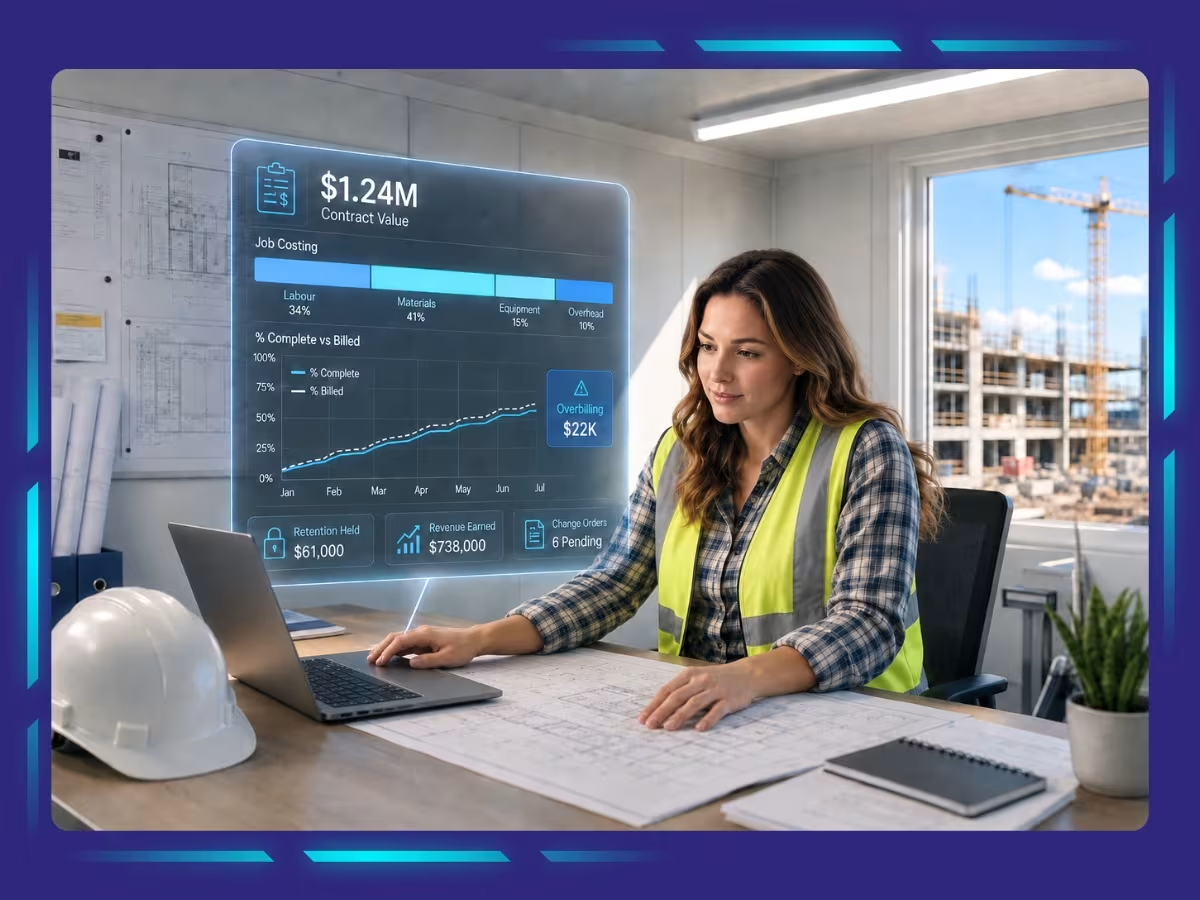
Job costing is one of the most important construction accounting principles for US contractors. It involves tracking labor, materials, equipment, subcontractor costs, and overhead for each project separately. Accurate job costing helps measure profitability, control project budgets, prepare competitive bids, and identify cost overruns before they affect the project’s financial performance.
Revenue Recognition (ASC 606)
US construction companies must recognize revenue in accordance with ASC 606 – Revenue from Contracts with Customers. Revenue is typically recognized as performance obligations are satisfied rather than when payments are received. Applying this standard ensures financial statements accurately reflect project progress and comply with US GAAP reporting requirements.
Progress Billing
Progress billing enables US contractors to invoice clients as work reaches agreed project milestones instead of waiting until completion. Many construction companies use AIA G702 Application and Certificate for Payment and AIA G703 Continuation Sheet to support payment applications, improve cash flow, and maintain transparent communication with project owners.
Cost Allocation
Proper cost allocation ensures all direct and indirect project expenses are assigned correctly. US contractors should allocate labor, materials, equipment, insurance, supervision, and overhead to individual projects to produce accurate financial statements, evaluate project profitability, and comply with US GAAP accounting practices.
Change Order Management
Construction projects frequently experience scope changes that affect project costs, schedules, and contract values. US contractors should document, price, approve, and record every change order before additional work begins. Effective change order management protects profit margins, reduces payment disputes, and maintains accurate financial records throughout the project.
Work-in-Progress (WIP) Reporting
A Work-in-Progress (WIP) report compares project costs incurred, revenue recognized, billings, and estimated costs to complete. This report helps US contractors identify overbilling, underbilling, declining profit margins, and projects at financial risk, enabling management to make timely operational and financial decisions.
Retainage Accounting
Retainage is common in US construction contracts, where project owners withhold a percentage of each payment until substantial or final completion. Contractors should accurately record retainage receivable and payable to improve cash flow forecasting, maintain accurate financial statements, and monitor outstanding project collections.
Cash Flow Management
Strong cash flow management is one of the most practical construction accounting principles because US contractors often pay employees, subcontractors, and suppliers before receiving customer payments. Regular cash flow forecasting helps businesses maintain working capital, avoid project delays, and meet payroll and vendor obligations on time.
Financial Reporting and Job Profitability Analysis
US contractors should regularly review project profitability reports, income statements, balance sheets, and cash flow statements to evaluate business performance. These reports provide valuable insights into project margins, operating expenses, and overall financial health, helping management make informed decisions and improve future project planning.
Tax and Regulatory Compliance
Following construction accounting principles also helps US contractors comply with federal and state tax regulations, payroll reporting requirements, sales and use tax obligations, and licensing rules. Maintaining organized financial records simplifies tax preparation, supports audits, and reduces the risk of penalties or compliance issues.
Construction Accounting Vs. Regular Accounting: What are the Key Differences?
Construction accounting differs from regular accounting because it is designed to manage project-based finances, long-term contracts, and job-specific profitability. Regular accounting focuses on overall business transactions and financial performance across standard accounting periods.
The table below highlights the key differences between construction accounting and regular accounting.
| Aspect | Construction Accounting | Regular Accounting |
|---|---|---|
| Focus | Tracks financial performance for individual construction projects | Tracks overall business finances |
| Revenue Recognition | Often follows ASC 606 based on project progress | Typically recognizes revenue when goods or services are delivered |
| Cost Tracking | Uses detailed job costing for each project | Records expenses at the business level |
| Billing Method | Progress billing based on milestones or completed work | Standard invoicing after products or services are delivered |
| Project Duration | Designed for long-term, contract-based projects | Primarily supports ongoing business operations |
| Financial Reporting | Includes WIP reports, job profitability reports, and project cost analysis | Includes standard income statements, balance sheets, and cash flow statements |
| Cash Flow | Must manage project-specific cash inflows and outflows | Focuses on overall business cash flow |
| Industry Use | Construction contractors, builders, and developers | Most businesses across industries |
Key Financial Reports Every Contractor Should Track
Construction contractors need regular financial reports to understand project performance, cash flow, and profitability. Since construction work involves multiple jobs, delayed payments, and changing costs, these reports help contractors identify risks early and make better financial decisions. Key financial reports every contractor should track include:
- Profit and Loss Statement: Shows revenue, project costs, operating expenses, and net profit over a specific period.
- Balance Sheet: Summarizes assets, liabilities, and equity to assess the company’s financial position.
- Cash Flow Statement: Tracks cash coming in and going out, helping contractors manage payroll, suppliers, and project expenses.
- Work-in-Progress Report: Compares costs incurred, revenue recognized, billings, and estimated costs to complete.
- Job Cost Report: Tracks labor, materials, equipment, subcontractors, and overhead for each project.
- Accounts Receivable Aging Report: Shows unpaid customer invoices and helps improve collections.
- Accounts Payable Aging Report: Lists outstanding vendor and subcontractor bills by due date.
- Budget vs. Actual Report: Compares planned costs and revenue with actual project performance.
Best Practices for Effective Construction Accounting for Contractors
Effective construction accounting goes beyond recording transactions. Following consistent accounting practices helps contractors improve job profitability, strengthen cash flow, maintain accurate financial records, and comply with US accounting and tax requirements.
Maintain Separate Job Cost Records
Track labor, materials, equipment, subcontractor costs, and overhead for each construction project separately. Maintaining project-specific cost records enables contractors to monitor budgets, identify cost overruns early, evaluate profitability, and prepare more accurate estimates for future bids.
Reconcile Accounts Regularly
Reconcile bank accounts, credit cards, vendor statements, and payroll records every month. Regular reconciliations help identify discrepancies, prevent duplicate or missing transactions, improve reporting accuracy, and ensure financial records remain up to date throughout the project lifecycle.
Track Change Orders Promptly
Construction projects frequently experience scope changes that affect project costs and revenue. Record and approve every change order as soon as it occurs to ensure additional work is billed correctly, project budgets remain accurate, and profit margins are protected.
Monitor Work-in-Progress (WIP) Reports
Review Work-in-Progress (WIP) reports regularly to compare project costs incurred, revenue recognized, billings issued, and estimated costs to complete. Monitoring WIP reports helps contractors identify underbilling, overbilling, declining margins, and projects requiring immediate financial attention.
Manage Cash Flow Proactively
Prepare regular cash flow forecasts to monitor expected customer payments and upcoming project expenses. Proactive cash flow management helps contractors maintain working capital, meet payroll obligations, pay suppliers on time, and avoid project delays caused by cash shortages.
Use Construction Accounting Software
Invest in construction-specific accounting software that supports job costing, progress billing, payroll, document management, and financial reporting. Cloud-based platforms improve data accuracy, automate repetitive tasks, and provide real-time visibility into project financial performance.
Review Financial Reports Frequently
Review financial reports such as the profit and loss statement, balance sheet, cash flow statement, job cost reports, and WIP reports every month. Regular reporting helps contractors measure business performance, identify financial risks, and make informed operational decisions.
Stay Compliant with Tax and Accounting Standards
Maintain compliance with US GAAP, ASC 606 revenue recognition requirements, payroll regulations, and federal and state tax laws. Keeping accurate accounting records and meeting reporting obligations reduces compliance risks, simplifies audits, and supports timely tax filing.
When Should You Outsource Construction Accounting for Contractors?
Contractors should consider outsourcing construction accounting when financial tasks become too complex, time-consuming, or inconsistent to manage in-house. As projects grow, accurate job costing, cash flow tracking, tax compliance, and reporting become essential for protecting profit margins. Key signs it may be time to outsource include:
- Your Projects Are Growing in Size and Complexity: Multiple jobs, larger contracts, subcontractor payments, and progress billing can become difficult to manage without specialised accounting support.
- You Struggle to Maintain Accurate Job Costing: If project costs are not tracked correctly, it becomes harder to measure profitability, control budgets, and prepare reliable future bids.
- Cash Flow Has Become Difficult to Manage: Outsourced accountants can help monitor receivables, payables, and project expenses so contractors can maintain working capital.
- Tax Compliance Is Becoming More Challenging: Professional support helps contractors stay aligned with payroll tax, sales and use tax, revenue recognition, and federal or state reporting requirements.
- Your Team Spends Too Much Time on Accounting: Outsourcing frees business owners and project managers to focus on site operations, project delivery, and client relationships.
- You Need Better Financial Reporting: An outsourced team can provide timely job cost reports, WIP reports, cash flow statements, and profitability insights for better decision-making.
How to Choose the Right Real Estate Accounting Partner?
Choosing the right real estate accounting partner is essential for maintaining accurate financial records, maximizing property profitability, and staying compliant with tax regulations. A provider with real estate expertise can help streamline financial operations and support long-term business growth.
Real Estate Industry Experience
Choose an accounting partner with proven experience serving real estate developers, property management companies, real estate investors, brokers, or construction firms. Industry knowledge ensures they understand property-specific accounting requirements, reporting standards, and operational challenges.
Expertise in Real Estate Accounting
Look for a provider with experience handling lease accounting, rental income, CAM reconciliations, escrow accounting, property-level bookkeeping, fixed asset management, depreciation, and project cost tracking. Specialized expertise improves reporting accuracy and financial decision-making.
Qualified Accounting Professionals
Ensure the firm employs qualified accountants and experienced bookkeepers with strong knowledge of US GAAP, real estate accounting practices, and federal and state tax requirements. Their expertise helps minimize errors and maintain reliable financial records.
Technology and Software Expertise
Your accounting partner should be proficient in leading real estate accounting software such as QuickBooks, Sage Intacct, AppFolio, Buildium, Yardi, MRI Software, or NetSuite. Strong software expertise improves automation, reporting, and collaboration.
Data Security and Confidentiality
Since real estate businesses manage sensitive financial and tenant information, choose a provider that follows strict security practices, including encrypted data transfer, role-based access controls, multi-factor authentication, and compliance with standards such as SOC 2 or ISO 27001.
Communication and Dedicated Support
Look for an accounting partner that provides a dedicated account manager, regular financial reporting, responsive communication, and proactive guidance. Clear communication ensures financial issues are resolved quickly and projects remain on track.
Scalability and Flexible Services
As your property portfolio or real estate business expands, your accounting needs will become more complex. Choose a partner that can scale its services to support additional properties, entities, investors, construction projects, payroll, and advanced financial reporting without disrupting your operations.
Strengthen Your Finances with Expert Real Estate Accounting Services
Applying the right construction accounting principles is essential for controlling project costs, improving cash flow, and maintaining profitability across every job. By implementing effective job costing, accurate financial reporting, and compliant accounting practices, contractors can make better business decisions and reduce financial risks.
At Whiz Consulting, our real estate accounting services help contractors streamline bookkeeping, manage project finances, and maintain accurate, tax-ready financial records. Contact us today to discover how our tailored accounting services can support the growth and success of your construction business.

Get customized plan that supports your growth

Have questions in mind? Find answers here...
The main purpose of construction accounting is to help contractors accurately track project costs, manage cash flow, recognize revenue, and measure job profitability. It provides project-specific financial insights that support better budgeting, informed decision-making, regulatory compliance, and long-term business growth.
Construction businesses commonly use the percentage-of-completion method for long-term contracts, as required under ASC 606 – Revenue from Contracts with Customers when revenue is recognized over time. Some smaller contractors may use the completed contract method where permitted for tax purposes or specific reporting requirements.
Job costing is essential because it tracks labor, materials, equipment, subcontractor costs, and overhead for each project individually. Accurate job costing helps contractors monitor project profitability, identify cost overruns, prepare competitive bids, and make informed financial decisions throughout the project lifecycle.
Contractors should regularly review their profit and loss statement, balance sheet, cash flow statement, Work-in-Progress (WIP) report, job cost report, accounts receivable aging report, accounts payable aging report, and budget versus actual report. These reports help monitor financial performance, cash flow, and project profitability.
Yes. Small construction businesses can outsource accounting to gain access to experienced professionals without hiring a full-time accounting team. Outsourcing helps improve job costing, bookkeeping, payroll, financial reporting, tax compliance, and cash flow management while allowing contractors to focus on completing projects and growing their business.
Thousands of business owners trust Whiz to manage their account
Let us take care of your books and make this financial year a good one.