


In This Blog Post
Share This Article
- Last Updated: Mar 6, 2026
- 🔊 Listen
TL;DR
- Accounting receivable outsourcing strengthens cash flow control. It improves collection discipline, reduces DSO, and enhances liquidity for U.S. businesses.
- In-house AR often struggles under operational pressure. Talent shortages, rising costs, credit-heavy terms, and fragmented systems create delays and reporting gaps.
- Outsourcing converts fixed overhead into predictable costs. Businesses reduce payroll and infrastructure expenses while maintaining structured AR performance.
- Improved visibility drives better decisions. Real-time dashboards, aging reports, and performance metrics allow leadership to act proactively.
- Compliance and audit readiness improve with structured processes. Documented workflows and clear audit trails reduce financial risk.
- Scalability supports business growth. Outsourced AR teams adapt quickly to higher transaction volumes without internal hiring disruptions.
- Internal finance teams gain strategic focus. With collections handled externally, leadership can prioritize forecasting, profitability, and long-term planning.
US businesses are under growing pressure to maintain steady cash flow while managing rising operational complexity. From an ongoing shortage of qualified accountants to evolving accounting standards and compliance requirements, internal finance teams are being stretched thin. For many organisations, especially small and mid-sized businesses, maintaining an efficient accounts receivable function has become increasingly challenging.
This is where accounting receivable outsourcing is gaining momentum. Instead of overburdening in-house teams, businesses are choosing specialised external partners who can manage invoicing, collections, reconciliations, and reporting with consistency and accuracy. The shift is not just about cost control; it is about reliability, scalability, and better financial visibility.
In this blog, we will explore what accounting receivable outsourcing involves and how it delivers measurable benefits to US businesses looking to strengthen their cash flow and operational efficiency.

AR Services That Deliver
Improve your receivables with our experts
What Is Accounts Receivable Outsourcing?
Accounts receivable outsourcing is the practice of delegating your receivables function to an external accounting partner who manages the end-to-end process of tracking, collecting, and reporting incoming payments.
Instead of handling invoicing, payment follow-ups, reconciliations, and customer account management in-house, businesses rely on a specialised team that works as an extension of their finance department. The outsourced team typically manages:
- Invoice generation and dispatch.
- Payment tracking and application.
- Customer communication and follow-ups.
- Aging reports and collection status monitoring.
- Dispute resolution coordination.
- Reconciliations with bank feeds and accounting systems.
What are the Common Challenges of Managing Accounts Receivables In-House
Accounts receivable directly impacts working capital, borrowing capacity, and reporting accuracy. With rising labor costs, tighter audit scrutiny, and higher transaction volumes, Accounts receivable management has become complex. These pressures often appear as delayed collections, cash flow strain, system gaps, limited visibility, and growing compliance demands. Let’s examine the
key challenges US businesses commonly face:
1. Delayed Collections in a Credit-Driven Market
The US operates heavily on credit terms. Net 30, Net 45, and even Net 60 arrangements are common across industries. Without disciplined follow-ups, customers often prioritise other payments first. When internal teams fail to send timely reminders or escalate overdue invoices, receivables age quickly. Higher DSO directly impacts liquidity and may increase reliance on credit lines or short-term borrowing.
2. Cash Flow Pressure Amid Rising Costs
With inflationary pressures, wage growth, and higher interest rates, US businesses cannot afford unpredictable cash inflows. Even a modest delay in collections can disrupt payroll cycles, vendor payments, or inventory planning. Inconsistent AR processes reduce forecasting accuracy, making it harder for leadership to plan capital investments or manage debt obligations confidently.
3. System Fragmentation and Process Gaps
Many US businesses operate across multiple platforms; ERP systems, CRM tools, payment gateways, and banking portals. When these systems are not fully integrated, payment application errors and missed invoices become common. Manual intervention increases the risk of disputes, delayed cash posting, and inaccurate financial reporting.
4. Limited Real-Time Visibility for Leadership
In today’s data-driven environment, CFOs and business owners expect immediate insight into AR performance. However, many in-house teams rely on static reports generated at month-end. Without live dashboards tracking aging buckets, DSO trends, and collection efficiency, leadership reacts after problems surface instead of preventing them early.
5. Heightened Audit and Compliance Expectations
US businesses face strong audit scrutiny, especially those seeking funding, preparing for acquisition, or operating in regulated sectors. Proper documentation of customer communications, payment records, and reconciliations is critical. Inconsistent AR processes can create gaps in audit trails, increasing compliance risks and slowing due diligence processes.

What Are the Benefits of Outsourcing Accounts Receivable
For US businesses, accounts receivable outsourcing involves transferring invoicing, collections, and reconciliations to a specialised external team. This improves cash flow, reduces DSO, strengthens liquidity, and lowers reliance on credit while providing access to skilled professionals, advanced automation tools, scalable support, and stronger reporting controls.
1. Improved Cash Flow and Lower DSO
Reliable outsourced AR teams follow structured collection cycles with consistent reminders, escalation protocols, and dispute tracking. This discipline reduces aging balances and shortens Days Sales Outstanding. Faster collections mean stronger liquidity. Businesses rely less on credit lines and reduce interest expenses, especially in a higher interest rate environment.
2. Access to Skilled AR Professionals
Finding the right talent has become challenging in the already diminishing talent market of the US. Partnering with the right outsourced accounting firms allows businesses to access a team of virtual accountants to manage their AR process. This especially becomes a boon for small and growing businesses that struggle to find the right talent and struggle with inefficiencies in their cash flow management.
3. Cost Efficiency Without Compromising Quality
Maintaining an in-house AR department involves salaries, benefits, software licenses, training, and overhead. Accounting receivable outsourcing converts these fixed costs into predictable service-based expenses. Companies control costs while maintaining performance standards, which is especially beneficial for growing SMBs and mid-sized firms.
4. Scalability as the Business Grows
As transaction volumes increase, in-house teams often struggle to keep pace. Outsourced AR services scale up quickly without the need to hire, train, or restructure internal teams. Whether seasonal spikes or expansion into new markets, outsourcing provides operational flexibility.
5. Better Reporting and Real-Time Visibility
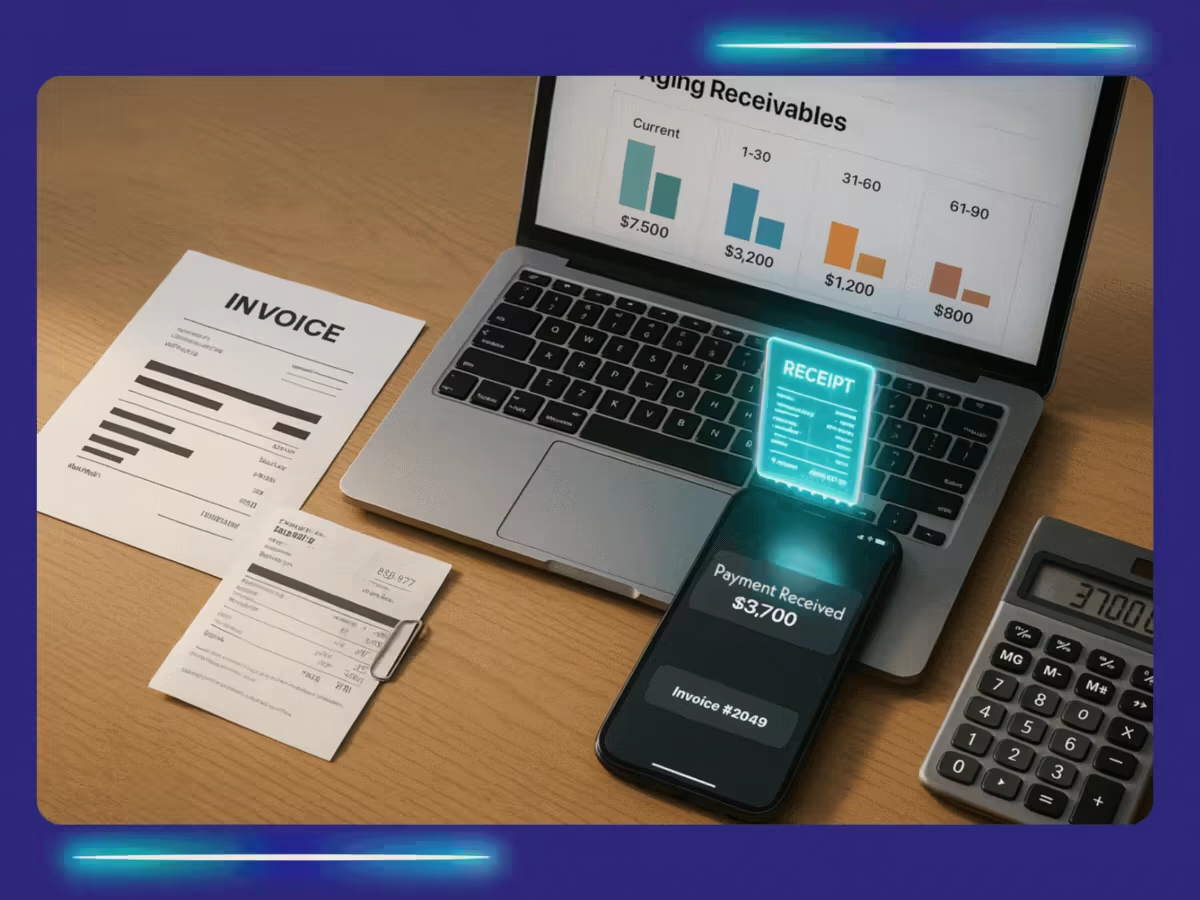
Outsourcing partners typically provide structured dashboards and detailed aging reports that give leadership clear, real-time visibility into receivables performance. Businesses gain access to accurate aging summaries, collection efficiency metrics, customer payment trends, and dispute resolution status. This level of transparency enables proactive decision-making and stronger control over cash flow.
6. Stronger Internal Controls and Audit Readiness
Structured workflows, documented communication trails, and systematic reconciliations improve compliance and audit readiness. For US companies preparing for funding rounds, acquisitions, or external audits, clean AR records reduce risk and build financial credibility.
7. Allows Internal Teams to Focus on Strategy
When AR follow-ups and reconciliations move to an outsourced team, internal finance leaders can focus on forecasting, cost optimisation, and growth planning. Instead of chasing overdue invoices, your finance department works on improving profitability and long-term strategy.
8. Access to Advanced AR Software and Automation Tools
Reputed virtual accounting firms have a team of experts that can work on leading US accounting software such as QuickBooks, NetSuite, Sage Intacct, Billtrust, Versapay, Upflow and Microsoft Dynamics 365.
These experts use these automation tools to streamline invoicing, reminders, payment matching, and reporting. By outsourcing accounts receivable, businesses gain advanced software expertise without the cost of setup, upgrades, or maintenance.
How to Choose the Right AR Outsourcing Partner for US Businesses
When selecting accounting services for AR outsourcing, US businesses should evaluate whether the provider delivers GAAP-compliant processes, robust data security, seamless system integration, measurable KPIs, clearly defined SLAs, and scalable support to maintain cash flow stability and audit readiness.
1. Proven experience with US GAAP and audit-ready documentation
Your partner must understand US accounting standards and maintain structured records that support external audits, lender reviews, and due diligence processes.
2. Strong data security frameworks
Look for providers with SOC 2 compliance, encrypted data transmission, secure cloud environments, and role-based access controls to safeguard financial and customer data.
3. Seamless technology integration
The outsourcing firm should integrate smoothly with your ERP, CRM, billing systems, and payment gateways to minimise manual errors and ensure accurate payment posting.
4. Clear performance metrics
Reliable partners track measurable KPIs such as DSO, aging buckets, collection effectiveness, and dispute resolution timelines to demonstrate performance improvements.
5. Defined SLAs and communication protocols
Service-level agreements should outline response times, escalation procedures, and reporting frequency to ensure accountability and transparency.
6. Scalability and operational continuity
The provider should handle transaction volume growth, seasonal spikes, and staff backup without disrupting collections or reporting cycles.
Accelerate Cash Flow with Professional AR Outsourcing Support
Selecting the right accounts receivable outsourcing partner is about performance, not just price. US businesses should seek proven accounts receivable expertise, disciplined collection processes, transparent reporting, and alignment with domestic credit practices. A strong partner improves cash application accuracy, reduces payment delays, and delivers measurable gains in liquidity and receivables control.
With over a decade of experience supporting US firms, Whiz Consulting delivers structured AR processes, secure systems, and real-time visibility tailored to your business needs. Ready to strengthen your cash flow? Partner with us to build a disciplined and scalable receivables function.

Get customized plan that supports your growth

Have questions in mind? Find answers here...
US companies can typically reduce AR operating costs up to 60% compared to maintaining an in-house team. Savings come from lower payroll, benefits, training, infrastructure, and software overhead while maintaining consistent performance levels.
Yes. Structured follow-up cycles, automated reminders, and dedicated collection teams often reduce DSO and accelerate cash inflows. Improved discipline in invoicing and dispute resolution directly strengthens working capital.
Reputable outsourcing firms use secure cloud platforms, encrypted data transfer, role-based access controls, and compliance frameworks such as SOC 2 and ISO standards. With proper due diligence, data security risks can be effectively managed.
No. Businesses retain oversight through defined workflows, approval controls, performance metrics, and regular reporting dashboards. Outsourcing shifts execution, not decision-making authority.
Commonly outsourced tasks include invoice generation and dispatch, payment posting, collections follow-ups, aging report management, customer communication, dispute tracking, reconciliations, and AR reporting.
AR outsourcing is suitable for both SMBs and large enterprises. Small and mid-sized businesses benefit from cost efficiency and access to expertise, while larger organisations gain scalability and process standardisation.
Thousands of business owners trust Whiz to manage their account
Let us take care of your books and make this financial year a good one.