


Table of Content
Share This Article
- Last Updated: Jul 4, 2026
- 🔊 Listen
TL;DR
- The five essential monthly financial reports UK businesses should review are the P&L statement, balance sheet, cash flow statement, accounts receivable ageing report, and budget vs. actual variance report.
- Monthly financial reports help UK businesses track profitability, manage cash flow, monitor unpaid invoices, control costs, and prepare for HMRC and Companies House obligations.
- A cash flow statement is critical because a profitable business can still struggle to pay suppliers, staff, VAT, PAYE, or loan commitments.
- Accounts receivable ageing reports help identify late-paying customers, reduce bad debt risk, and improve cash collection.
- Tools like Xero, Sage, QuickBooks UK, and reporting dashboards can make monthly financial reviews faster, clearer, and more accurate.
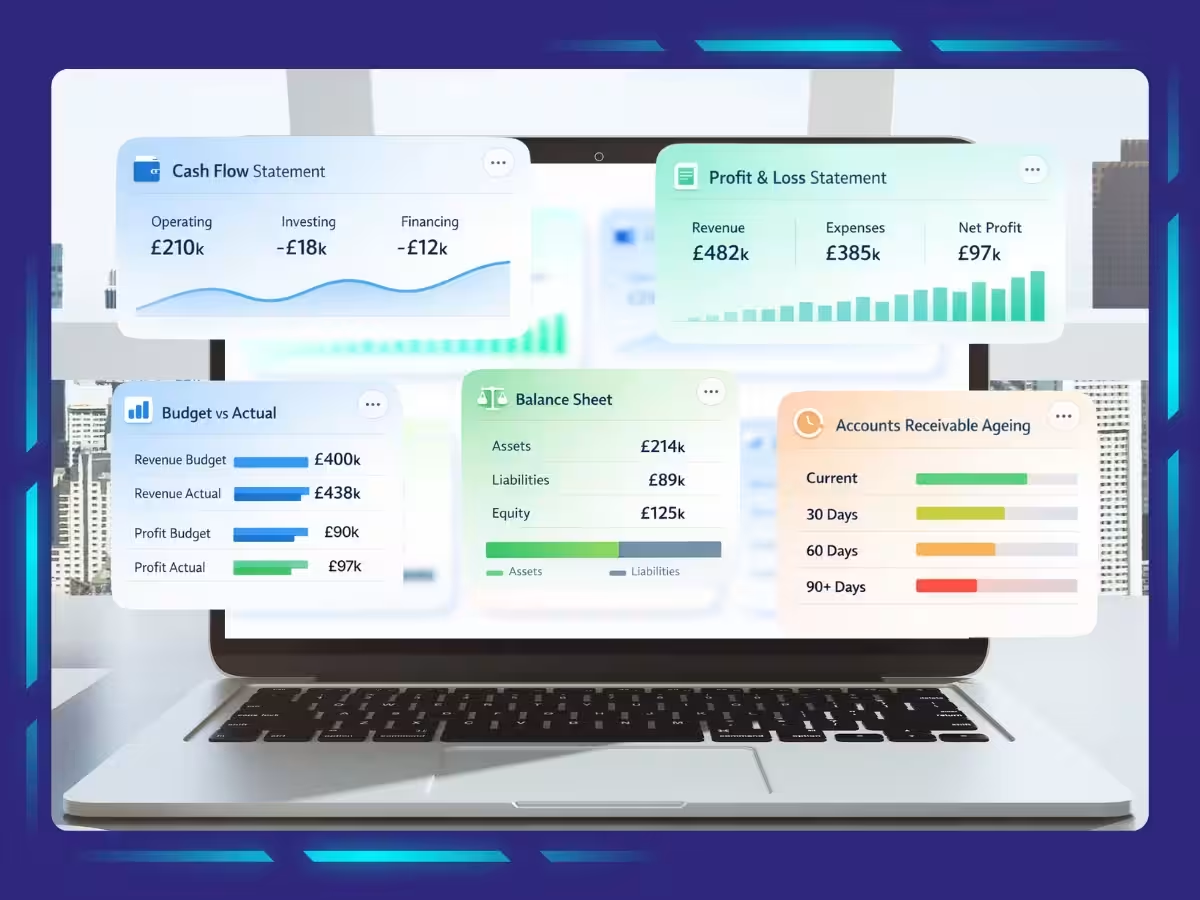
UK businesses should review five key monthly financial reports: the Profit & Loss statement, balance sheet, cash flow statement, accounts receivable ageing report, and budget vs. actual variance report. These are the core financial reports to review every month UK businesses need to track profitability, cash position, unpaid invoices, spending patterns, and performance against targets.
Monthly financial reports UK businesses rely on should do more than record numbers. They should help business owners make timely decisions, prepare for HMRC and Companies House obligations, manage cash flow, and identify financial risks before they affect growth.

Get Monthly Reporting Help
Stay in control with accurate monthly reports for smarter decisions
Why Monthly Financial Report Reviews Are Critical for UK Businesses
Monthly financial reports UK businesses prepare give owners, directors, and finance teams a clear view of how the business is performing before year-end. They help identify falling margins, rising costs, delayed customer payments, cash flow pressure, and budget gaps while there is still time to act.
For UK limited companies, annual accounts and tax filings are compliance requirements, but monthly management accounts are decision-making tools. Reviewing the right financial reports every month helps businesses stay ready for VAT, PAYE, Corporation Tax, Companies House filing deadlines, funding discussions, and growth planning.
A strong monthly review process helps UK businesses answer practical questions such as:
- Are we making enough profit after direct costs and overheads?
- Do we have enough cash to cover wages, rent, VAT, PAYE, suppliers, and loan repayments?
- Which customers are delaying payments?
- Are expenses increasing faster than revenue?
- Are we performing better or worse than budget?
- Do we need to adjust pricing, spending, hiring, or stock levels?
The 5 Essential Financial Reports to Review Every Month
These are the five essential financial reports to review every month UK businesses should include in their management accounts. Each report shows a different part of financial performance, from profitability and cash movement to unpaid invoices and budget control.
1. Profit & Loss (P&L) Statement
Profit & Loss Statement: A Profit & Loss statement shows your income, direct costs, expenses, and net profit over a specific period. Review it monthly to understand whether your UK business is growing profitably or simply increasing revenue without protecting margins.
The P&L report is one of the most important monthly financial reports UK businesses should review because it shows whether the company is generating profit from its core operations. It breaks down sales, cost of sales, gross profit, operating expenses, and net profit.
2. Balance Sheet
A balance sheet shows what your business owns, what it owes, and the owner’s equity at a specific point in time. Review it monthly to assess financial stability, working capital, debt levels, and whether the business has enough short-term assets to meet short-term obligations.
The balance sheet gives UK businesses a snapshot of financial health at month-end. While the P&L shows performance over time, the balance sheet shows whether the business has assets, reserves, and working capital to support operations.
3. Cash Flow Statement
A cash flow statement shows how money moves in and out of your business through operating, investing, and financing activities. Review it monthly to confirm whether your business has enough cash to pay suppliers, staff, HMRC, lenders, and operating costs on time.
Cash flow is one of the most critical monthly financial reports UK businesses should monitor because profit does not always mean available cash. A company may look profitable on paper but still face pressure if customers pay late, tax liabilities are not planned, or supplier payments fall due before customer receipts arrive.
4. Accounts Receivable Ageing Report
An accounts receivable ageing report shows unpaid customer invoices grouped by how long they have been outstanding. Review it monthly to identify late-paying customers, reduce bad debt risk, and improve cash collection.
This is one of the most practical financial reports to review every month UK businesses use credit terms or invoice customers after delivery. It helps finance teams see which invoices are current, overdue, disputed, or at risk of becoming bad debt.
5. Budget vs. Actual Variance Report
A budget vs. actual variance report compares your planned income and expenses with actual financial results. Review it monthly to understand where the business is overperforming, underperforming, overspending, or missing financial targets.
This report is essential for UK businesses that want stronger financial control. It helps owners compare real performance against the plan, rather than reviewing monthly financial reports in isolation.
Quick Reference Monthly Checklist
| Report | Review Frequency | Key Metric to Check | Red Flag to Watch |
|---|---|---|---|
| Profit & Loss Statement | Monthly | Gross profit margin and net profit margin | Sales are rising but profit is falling |
| Balance Sheet | Monthly | Working capital and current liabilities | VAT, PAYE, supplier, or loan balances are building up |
| Cash Flow Statement | Monthly, with weekly cash checks where needed | Net operating cash flow and closing cash balance | Profit is positive but cash is reducing |
| Accounts Receivable Ageing Report | Monthly, with weekly follow-up for overdue invoices | 30+, 60+, and 90+ day overdue invoices | Too much cash is locked in unpaid customer invoices |
| Budget vs. Actual Variance Report | Monthly | Revenue, cost, and EBITDA variance | Variances are not explained or acted on |
| Accounts Payable Ageing Report | Monthly | Supplier balances due now and next month | Key suppliers are overdue or payment runs are unplanned |
| VAT/PAYE Liability Report | Monthly or before each filing/payment cycle | VAT, PAYE, and NIC due | Tax liabilities are not reserved in cash flow planning |
| KPI Dashboard | Monthly | Industry-specific operational and financial KPIs | Management reviews numbers without linking them to action |
| Rolling Cash Flow Forecast | Weekly or monthly | 13-week cash position | Upcoming shortfalls are spotted too late |
How to Conduct a Monthly Financial Review: Step-by-Step Process
A monthly financial review should be structured, repeatable, and action-focused. The aim is not just to prepare monthly financial reports UK businesses can file away, but to understand what the numbers mean and what decisions need to follow.
Step 1: Close the Books for the Month
Start by reconciling bank accounts, credit cards, sales platforms, payment gateways, supplier bills, payroll entries, and tax-related accounts. Make sure all income and expenses are recorded in the correct month.
Step 2: Review the Profit & Loss Statement
Check revenue, gross profit, operating expenses, and net profit. Compare the current month with the previous month, the same month last year, and the budget.
Step 3: Review the Balance Sheet
Check cash, debtors, creditors, VAT, PAYE, loans, stock, fixed assets, and director’s loan accounts. Look for unusual movements or balances that do not reconcile.
Step 4: Review Cash Flow
Compare cash inflows and outflows. Check whether the business has enough cash for wages, suppliers, VAT, PAYE, rent, finance repayments, and planned investment.
Step 5: Review Customer Payments
Use the accounts receivable ageing report to identify overdue invoices. Prioritise high-value overdue accounts, repeat late payers, disputed invoices, and invoices over 60 or 90 days.
Step 6: Compare Budget vs. Actual Results
Review income and expense variances. Focus on the reasons behind the numbers, not just the size of the variance.
Step 7: Document Key Insights and Actions
Summarise what changed, why it changed, and what needs to happen next. Assign clear owners and deadlines for actions such as chasing invoices, reducing costs, updating forecasts, or reviewing pricing.
Step 8: Update Forecasts
Update the cash flow forecast, revenue forecast, hiring plan, and expense assumptions based on actual results and expected changes.
Make Every Monthly Report Work Harder for Your UK Business
With a structured month-end reporting process, UK businesses can move from reactive bookkeeping to proactive financial management. Instead of waiting until year-end, business owners can use monthly financial reports to understand performance, manage cash flow, control costs, improve margins, and plan growth.
Whiz Consulting helps UK businesses prepare accurate, timely, and decision-ready monthly financial reports. Our team supports bookkeeping, reconciliations, management accounts, cash flow reporting, debtor tracking, variance analysis, and month-end reporting using cloud accounting platforms such as Xero, Sage, and QuickBooks UK. With our expert financial reporting services, UK businesses gain more than organised books; they gain the financial clarity needed to make confident decisions every month.

Get customized plan that supports your growth

Have questions in mind? Find answers here...
The essential monthly financial reports UK businesses should review are the Profit & Loss statement, balance sheet, cash flow statement, accounts receivable ageing report, and budget vs. actual variance report. Growing businesses should also review accounts payable ageing, VAT/PAYE liabilities, KPI dashboards, and cash flow forecasts.
The key financial reports to review every month UK businesses need include P&L, balance sheet, cash flow, AR ageing, and budget vs. actual variance reports. These reports help track profitability, cash flow, customer payments, liabilities, and performance against budget.
UK businesses should review monthly financial reports to manage profitability, cash flow, tax liabilities, unpaid invoices, and business performance. Monthly reviews help owners make decisions before issues become serious.
Management accounts are internal reports prepared regularly to help business owners make decisions. Financial statements are usually formal reports prepared for statutory, tax, lending, or shareholder purposes.
UK businesses should review cash flow monthly at a minimum. Businesses with seasonal income, late-paying customers, or tight margins should review cash flow weekly.
Yes, Whiz Consulting supports UK businesses with monthly bookkeeping, reconciliations, management accounts, cash flow reports, AR ageing, AP ageing, variance analysis, and reporting dashboards using cloud accounting tools.
Thousands of business owners trust Whiz to manage their account
Let us take care of your books and make this financial year a good one.




This website uses cookies to improve your experience. You can accept all or reject non-essential cookies.