


Table of Content
Share This Article
- Last Updated: Aug 3, 2026
- 🔊 Listen
TL;DR
- CFOs rely on reports to understand profitability, cash flow, compliance risk, funding needs, and the financial impact of strategic decisions.
- A P&L, Balance Sheet, Cash Flow Statement, Management Accounts, Budget vs. Actual Report, Board Pack, and Rolling Forecast give CFOs a complete view of business health.
- Financial reports should support FRS 102, Companies House filing preparation, HMRC obligations, VAT records, Corporation Tax planning, and payroll reporting.
- These reports help CFOs explain performance clearly, highlight risks, and guide leadership on what action needs to be taken next.
- Monthly reports help track performance, quarterly reports support board and forecast reviews, and annual reports prepare the business for year-end and statutory requirements.
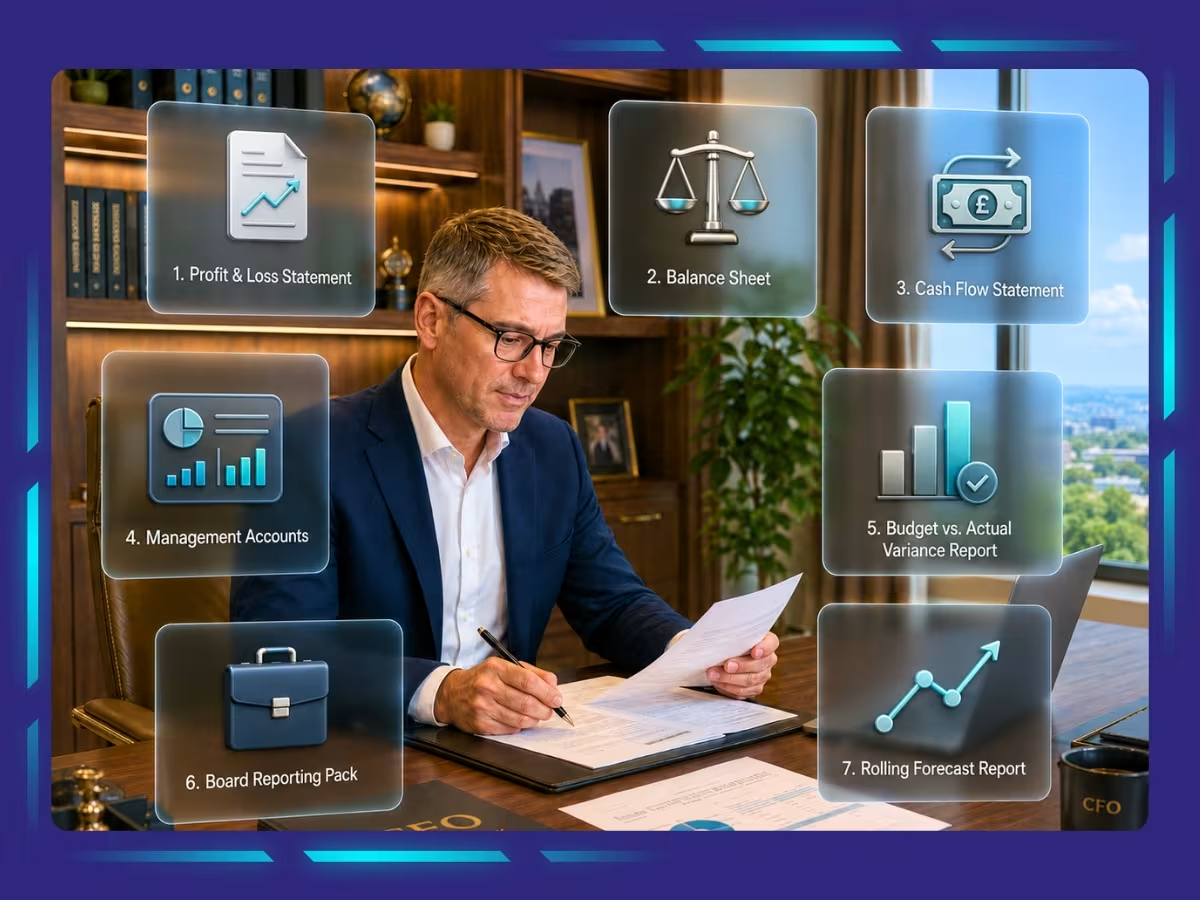
The key financial reports every CFO should review are the Profit & Loss Statement, Balance Sheet, Cash Flow Statement, Management Accounts, Budget vs. Actual Variance Report, Board Reporting Pack, and Rolling Forecast Report.
For UK CFOs, these reports do more than track performance. They support strategic decisions, cash flow control, board communication, Companies House filing readiness, HMRC reporting, and compliance with UK accounting standards such as FRS 102.

Make Every Report Decision-Ready
Strengthen your reporting process with timely and accurate financial reports
Why CFOs Need a Different View of Financial Reports
CFOs do not review financial reports only to see what happened last month. They use them to understand risk, liquidity, profitability, compliance exposure, and whether the business is financially ready for its next decision.
For UK businesses, this view becomes even more important because financial reporting must connect internal performance with external requirements. Reports should help CFOs prepare for board meetings, tax planning, Companies House accounts, HMRC obligations, lender reviews, investor updates, and FRS 102-aligned reporting.
A finance manager may focus on accuracy. A CFO must focus on accuracy, timing, interpretation, and action.
The 7 Financial Reports Every UK CFO Must Monitor
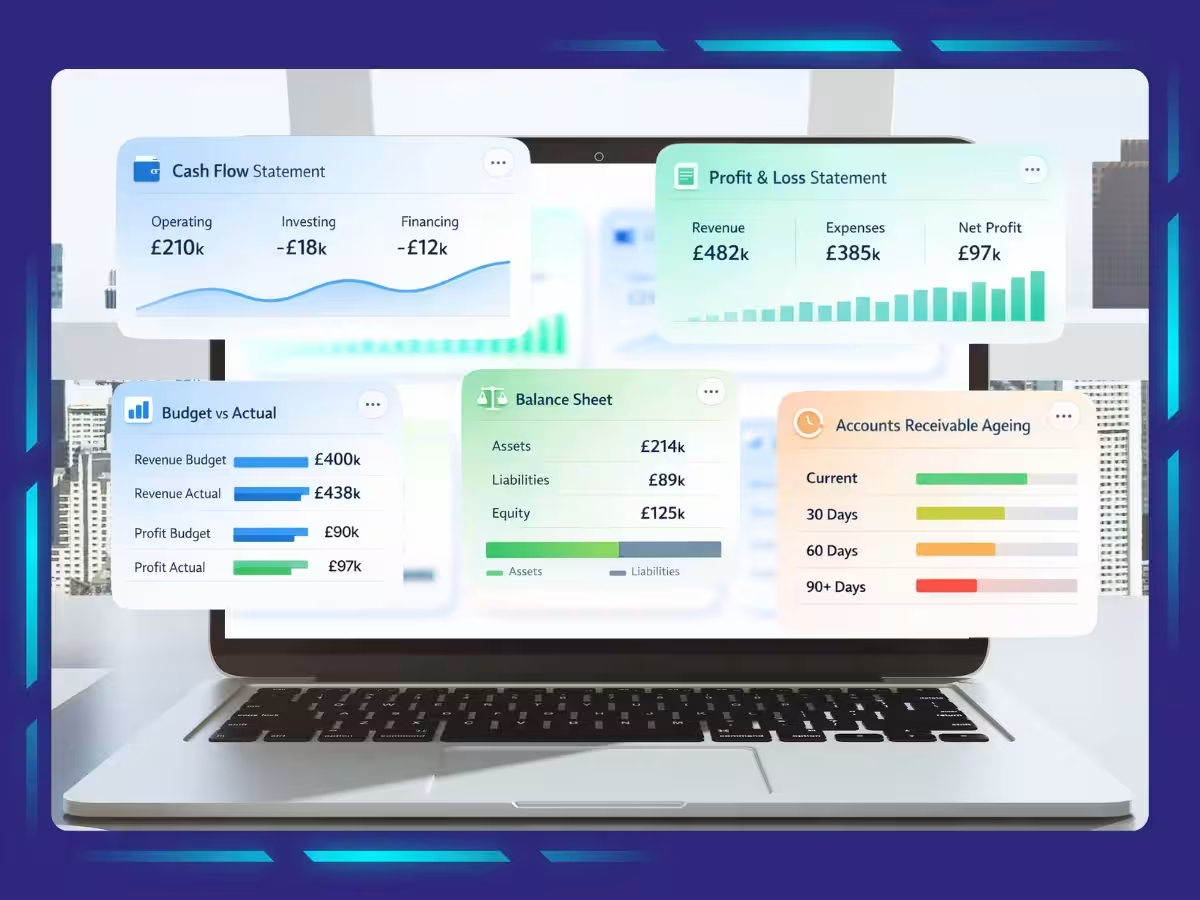
The 7 financial reports every UK CFO must monitor are the Profit & Loss Statement, Balance Sheet, Cash Flow Statement, Management Accounts, Budget vs. Actual Variance Report, Board Reporting Pack, and Rolling Forecast Report. Together, these reports help CFOs track performance, manage cash, support board decisions, and stay prepared for UK reporting obligations.
| Financial Report | Primary Purpose | Review Frequency | UK Regulatory Relevance |
|---|---|---|---|
| Profit & Loss Statement | Tracks revenue, costs, and profitability | Monthly | Supports statutory accounts, tax planning, and FRS 102 reporting |
| Balance Sheet | Shows assets, liabilities, and equity | Monthly or quarterly | Important for Companies House accounts and solvency review |
| Cash Flow Statement | Tracks cash movement across operations, investing, and financing | Weekly to monthly | Helps monitor liquidity, going concern, and funding risk |
| Management Accounts | Gives internal performance insight beyond statutory reporting | Monthly | Supports CFO decision-making, but not a statutory filing by itself |
| Budget vs. Actual Variance Report | Compares planned vs. actual performance | Monthly | Supports financial control and board-level accountability |
| Board Reporting Pack | Summarises financial and strategic performance for directors | Monthly or quarterly | Helps directors meet governance and oversight responsibilities |
| Rolling Forecast Report | Updates future financial expectations using latest data | Monthly or quarterly | Supports cash planning, tax forecasting, and scenario modelling |
1. Profit & Loss Statement or Income Statement
A Profit & Loss Statement shows a company’s revenue, direct costs, operating expenses, and profit over a specific period. CFOs use it to assess profitability, margin movement, cost control, and whether the business model is performing as expected.
For UK CFOs, the P&L should not be treated as a basic income summary. It should show whether revenue growth is actually converting into profit, whether overheads are rising faster than sales, and whether margins are being affected by payroll, supplier pricing, tax, rent, or finance costs.
A CFO should review:
- Revenue by product, service, region, or business unit
- Gross profit margin
- Operating expenses
- EBITDA or operating profit
- Net profit before and after tax
- Month-on-month and year-on-year movement
- Unusual cost spikes
2. Balance Sheet
A Balance Sheet shows what a business owns, what it owes, and the value left for shareholders at a specific date. CFOs use it to assess financial stability, working capital, debt exposure, liquidity, and long-term solvency.
For UK CFOs, the balance sheet is critical because it connects internal financial health with external reporting. It supports statutory account preparation, lender reporting, investor due diligence, and Companies House filing readiness.
A CFO should monitor:
- Cash and bank balances
- Trade debtors
- Trade creditors
- Stock or inventory
- Fixed assets
- Loans and finance leases
- VAT, PAYE, Corporation Tax, and other tax liabilities
- Retained earnings
- Director loans, if applicable
3. Cash Flow Statement
A Cash Flow Statement shows how cash moves in and out of the business through operating, investing, and financing activities. CFOs use it to understand liquidity, funding needs, debt capacity, and whether reported profits are converting into real cash.
This is one of the most important financial reports for CFOs because cash determines how confidently a business can pay staff, suppliers, tax liabilities, loan repayments, and growth investments.
A CFO should review:
- Operating cash flow
- Free cash flow
- Customer receipts
- Supplier payments
- Payroll and tax payments
- Capital expenditure
- Loan repayments
- Cash runway
- Short-term funding gaps
4. Management Accounts
Management Accounts are internal financial reports prepared regularly to show business performance in greater detail than statutory accounts. CFOs use them to guide decisions on profitability, cash flow, operations, pricing, hiring, and growth.
Unlike statutory accounts, management accounts are not mainly prepared for Companies House or HMRC. They are designed for internal decision-making.
A strong UK management accounts pack may include:
- Profit & Loss Statement
- Balance Sheet
- Cash Flow Summary
- Aged debtors
- Aged creditors
- Budget vs. actual analysis
- KPI dashboard
- Departmental or project-level reporting
- Commentary on key movements
5. Budget vs. Actual Variance Report
A Budget vs. Actual Variance Report compares planned financial performance with actual results. CFOs use it to identify overspending, revenue shortfalls, margin pressure, and areas where the business is drifting away from its financial plan.
This report is essential because a budget is only useful if performance is measured against it regularly.
A CFO should review:
- Actual revenue vs. budgeted revenue
- Actual cost of sales vs. budget
- Payroll variance
- Marketing spend variance
- Operating expense variance
- Profit variance
- Cash flow variance
- Department-level variance
For example, a 12% overspend on payroll may be acceptable if it supports revenue growth. But the same overspend becomes a red flag if revenue is flat or margins are falling.
6. Board Reporting Pack
A Board Reporting Pack is a structured set of financial and operational reports prepared for directors, board members, investors, or senior leadership. CFOs use it to communicate performance, risks, decisions required, and the financial direction of the business.
A good board pack should not overwhelm directors with raw data. It should turn financial information into clear decisions.
A UK CFO board pack may include:
- Executive financial summary
- Profit & Loss Statement
- Balance Sheet
- Cash Flow Statement
- KPI dashboard
- Budget vs. actual report
- Rolling forecast
- Working capital summary
- Risk register
- Compliance and tax update
- Commentary from the CFO
- Decisions required from the board
7. Rolling Forecast Report
A Rolling Forecast Report updates future financial projections using the latest actual performance and assumptions. CFOs use it to forecast revenue, costs, profit, cash flow, and funding needs beyond the fixed annual budget.
Unlike a static annual budget, a rolling forecast keeps changing as business conditions change.
A CFO should use it to review:
- Next 3, 6, 12, or 18 months of revenue
- Expected cash flow
- Hiring plans
- Tax payment timing
- Supplier cost increases
- Funding requirements
- Best-case, base-case, and worst-case scenarios
- Seasonal revenue movement
- Pipeline conversion assumptions
How UK Regulatory Requirements Shape CFO Financial Reporting
UK regulatory requirements shape CFO financial reporting by linking internal financial records with FRS 102, Companies House filing rules, and HMRC tax obligations. CFOs need reports that support accurate statutory accounts, Corporation Tax filings, VAT records, PAYE reporting, and audit-ready documentation.
FRS 102
FRS 102 is a key UK accounting standard used by many entities preparing financial statements under UK GAAP. CFOs need to ensure that internal reporting policies align with recognition, measurement, and disclosure requirements where relevant.
This matters for areas such as:
- Revenue recognition
- Leases
- Financial instruments
- Fixed assets
- Provisions
- Related party transactions
- Disclosure requirements
- Going concern assessment
With 2026 amendments affecting accounting periods beginning on or after 1 January 2026, CFOs should review whether reporting templates, accounting policies, and management accounts need updates.
Companies House
Companies House reporting requires companies to file annual accounts. CFOs should make sure internal records are accurate, complete, and ready well before the statutory filing deadline.
This means internal reports should support:
- Director review
- Year-end accounts preparation
- Balance sheet reconciliations
- Fixed asset schedules
- Debtor and creditor accuracy
- Share capital records
- Filing readiness
Late or inaccurate accounts can create compliance risk, reputational issues, and avoidable pressure on the finance team.
HMRC
HM Revenue & Customs reporting obligations make accurate financial reporting essential. CFOs need reliable accounts, tax computations, Corporation Tax information, VAT records, payroll data, and supporting documentation.
Internal reports should help CFOs monitor:
- Corporation Tax exposure
- VAT liabilities
- PAYE and National Insurance
- Deductible and non-deductible expenses
- Tax payment deadlines
- Payroll compliance
- Digital recordkeeping
- Supporting evidence for tax filings
Building a CFO Financial Reporting Cadence: Monthly, Quarterly, Annual
Financial reports are only useful when they are reviewed at the right time. CFOs should build a reporting cadence that matches the pace of business decisions.
Monthly Reporting
Monthly reports should focus on performance, cash flow, and operational control.
Include:
- Profit & Loss Statement
- Balance Sheet
- Cash Flow Statement
- Management Accounts
- Budget vs. actual report
- Aged debtors
- Aged creditors
- KPI dashboard
Quarterly Reporting
Quarterly reports should focus on strategy, board communication, and forward planning.
Include:
- Board reporting pack
- Rolling forecast
- Risk review
- Tax position summary
- Funding and working capital update
- Departmental performance analysis
- Scenario planning
Annual Reporting
Annual reports should focus on statutory readiness, tax planning, and year-end accuracy.
Include:
- Final trial balance
- Year-end management accounts
- Statutory accounts preparation file
- Corporation Tax support
- Fixed asset register
- Accruals and prepayments
- Debtor and creditor schedules
- Director and shareholder information
A strong cadence prevents CFO reporting from becoming reactive. It gives leadership a reliable rhythm for decisions.
Common Risk Factors CFOs Should Spot in Financial Reports
CFOs should watch for red flags such as rising profit but falling cash, shrinking margins, growing aged debtors, repeated budget variances, late supplier payments, and unpaid tax liabilities. These signs can point to cash flow pressure, weak controls, inaccurate reporting, or compliance risk. Key red flags include:
- Profit is rising, but cash is falling
- Revenue is growing, but gross margin is shrinking
- Debtors are increasing faster than sales
- Aged debtors are moving beyond agreed payment terms
- Supplier payments are being delayed frequently
- Payroll costs are rising without matching revenue growth
- VAT, PAYE, or Corporation Tax liabilities are building up
- Inventory is increasing without matching sales demand
- Budget variances are repeated without explanation
- Balance sheet reconciliations are not completed monthly
- Forecasts are not updated after major business changes
- Board packs show data but no clear financial interpretation
These red flags can indicate cash pressure, weak controls, poor forecasting, compliance risk, or reporting gaps.
Turning CFO Financial Reports into Better Business Decisions
Financial reports are only valuable when they help CFOs see what needs attention, what needs correction, and what decision should come next. A profit & loss statement may show margin pressure; a cash flow statement may reveal liquidity risk, and a rolling forecast may show whether the business is financially ready for growth.
Whiz Consulting helps UK CFOs build accurate, timely, and decision-ready financial reporting systems. Our team supports businesses with monthly management accounts, financial statements, cash flow reporting, board packs, variance analysis, reconciliations, and reporting process improvement.
We work with UK businesses using tools such as Xero UK, Sage, QuickBooks UK, and cloud-based reporting systems. Our financial reporting services helps CFOs reduce manual reporting pressure, improve visibility, and keep financial data ready for board review, tax planning, and compliance deadlines.

Get customized plan that supports your growth

Have questions in mind? Find answers here...
A CFO should review the Profit & Loss Statement, Balance Sheet, Cash Flow Statement, Management Accounts, Budget vs. Actual Variance Report, Board Reporting Pack, and Rolling Forecast Report. These reports help CFOs monitor profitability, liquidity, compliance, risk, and future performance.
A board reporting pack usually includes an executive financial summary, Profit & Loss Statement, Balance Sheet, Cash Flow Statement, KPI dashboard, budget vs. actual report, rolling forecast, working capital update, risk summary, and CFO commentary. It should highlight performance, risks, and decisions required by the board.
Management accounts are internal reports prepared regularly to help business leaders make decisions. Statutory accounts are formal annual financial statements prepared for external reporting, including Companies House filing and tax-related requirements.
A CFO should review core financial reports monthly, cash flow reports weekly or monthly depending on business pressure, board packs quarterly or monthly, and rolling forecasts monthly or quarterly. The right cadence depends on the size, risk, and complexity of the business.
Financial reports help UK CFOs monitor performance, manage cash flow, support board decisions, prepare for Companies House filing, meet HMRC obligations, and align reporting with UK accounting standards such as FRS 102.
UK CFOs commonly use Xero UK, Sage, QuickBooks UK, Excel, Power BI, and other cloud reporting tools. The best option depends on business size, reporting complexity, integrations, and the level of automation required.
Thousands of business owners trust Whiz to manage their account
Let us take care of your books and make this financial year a good one.




This website uses cookies to improve your experience. You can accept all or reject non-essential cookies.