


Table of Content
Share This Article
- Last Updated: Aug 6, 2026
- 🔊 Listen
TL;DR
- Accounting automation helps UK businesses reduce manual work and improve financial accuracy.
- Bookkeeping, AP/AR, invoice processing, and expense management are among the easiest processes to automate.
- Automating repetitive accounting tasks speeds up month-end close and financial reporting.
- Payroll, VAT preparation, and cash forecasting become more efficient with integrated accounting software.
- Modern accounting platforms provide real-time financial visibility and stronger internal controls.
- Businesses that automate routine finance processes can focus more on strategy and growth.
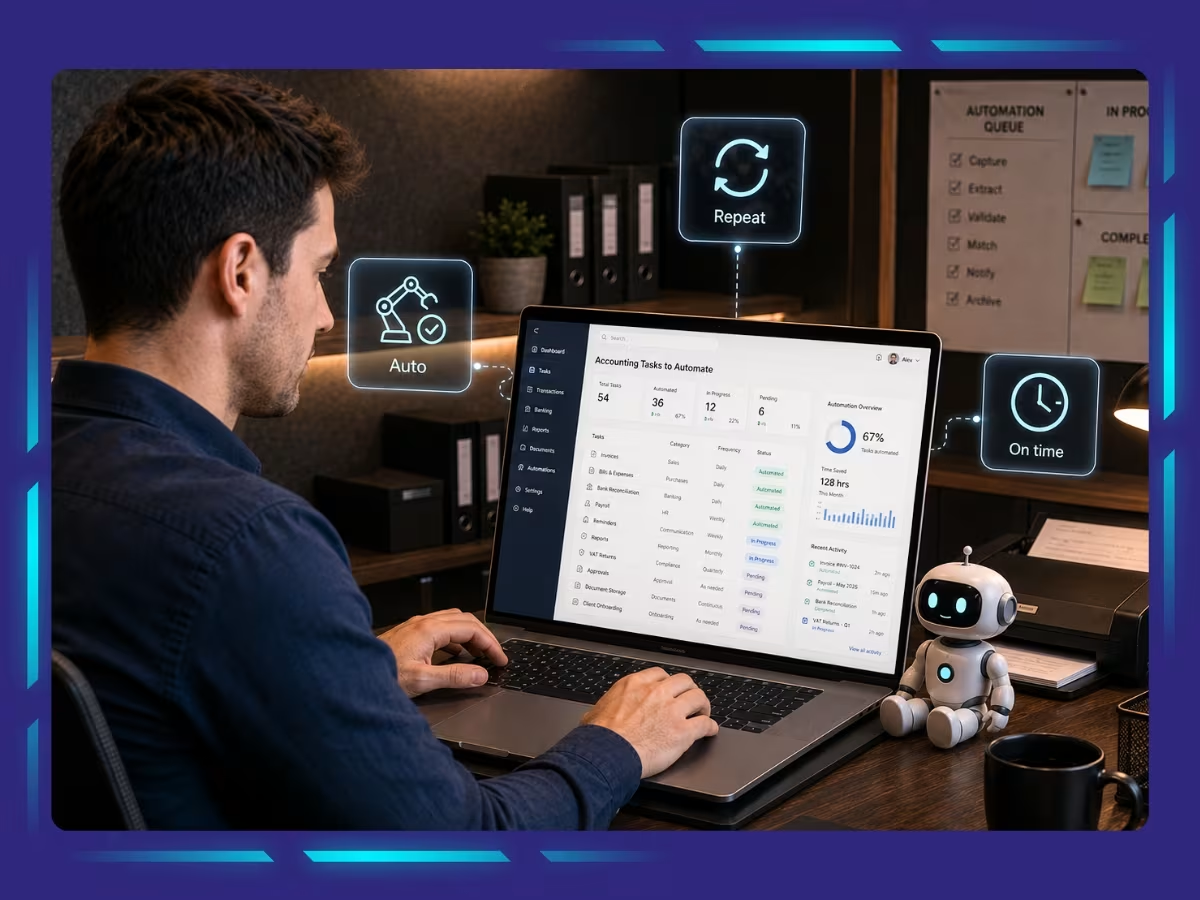
Accounting tasks to automate UK businesses are increasingly adopting help reduce manual workloads while improving speed, consistency, and financial accuracy. Instead of spending hours processing transactions and reconciling accounts, businesses can use automation to manage repetitive accounting activities more efficiently.
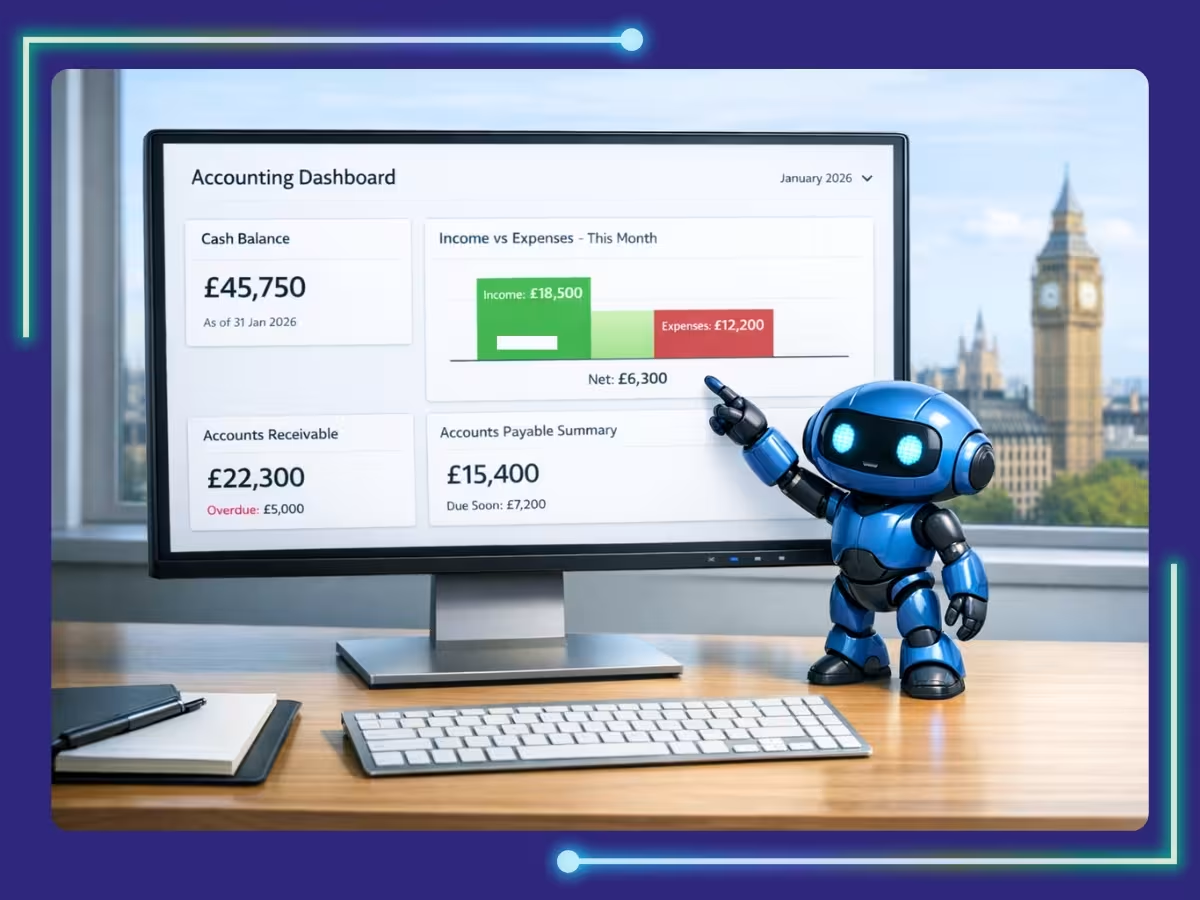
Modern accounting software combines automation with real-time reporting, giving business owners better visibility into financial performance while helping finance teams focus on analysis and decision-making rather than administrative work.

Automate Your Accounting Tasks
Save time and improve accuracy by automating everyday accounting processes.
Why Should UK Businesses Automate Accounting Tasks?
Accounting automation helps businesses process transactions faster, reduce human error, and improve financial visibility. By automating routine tasks, finance teams can spend more time supporting strategic decisions and less time performing repetitive manual work. Some of the biggest benefits include:
| Benefit | Business Impact |
|---|---|
| Faster Processing | Reduces time spent on manual accounting tasks. |
| Improved Accuracy | Minimises data entry and reconciliation errors. |
| Better Compliance | Helps maintain accurate records for HMRC reporting. |
| Real-Time Visibility | Provides up-to-date financial information. |
| Lower Administrative Costs | Reduces repetitive workloads for finance teams. |
Top 10 Accounting Tasks You Should Automate Today
The main accounting tasks to automate UK businesses should focus on include bookkeeping, data entry, AP/AR, invoice processing, expense management, month-end closing, payroll management, client onboarding, financial reporting, cash forecasting, and tax preparation.
Below is a closer look at each area.

1. Bookkeeping and Data Entry
Bookkeeping is one of the first areas where accounting automation delivers measurable value.
Modern systems automatically:
- Import bank feeds
- Categorise transactions
- Update ledgers
- Sync payment platforms
Many businesses use automated accounting software that connects directly with bank accounts and POS systems, allowing finance teams to maintain accurate books while focusing on financial oversight instead of repetitive data entry.
2. Accounts Payable and Accounts Receivable (AP/AR)
AP and AR processes often involve repetitive invoice matching, payment tracking, and supplier management. With accounting automation:
- Purchase orders can be matched automatically
- Payment schedules can be generated
- Outstanding invoices can be monitored
- Collection reminders can be automated
This improves working capital management while reducing payment delays and manual intervention.
3. Invoice Processing
Manual invoice processing increases administrative costs and often creates delays. By replacing manual workflows with vendor invoice automation, businesses can:
- Capture invoices digitally
- Validate invoice data
- Route approvals automatically
- Post transactions directly into accounting systems
Optical Character Recognition (OCR) and AI-powered tools help reduce manual verification while maintaining accurate records.
4. Expense Management
Expense tracking becomes significantly easier through automation. Employees can upload receipts through mobile applications while automated systems:
- Categorise expenses
- Apply company policies
- Route approvals
- Update accounting records automatically
This improves audit readiness while reducing reconciliation workloads.
5. Month-End Closing
Manual month-end close processes often delay reporting. Automation speeds up the process by:
- Synchronising bank feeds
- Reconciling transactions
- Identifying discrepancies
- Updating balances automatically
Many UK businesses now use automated accounting platforms to shorten their financial close cycle and gain faster insight into profitability.
6. Payroll Management
Payroll involves calculations, tax deductions, payslip generation, and regulatory reporting. Accounting automation helps process:
- Employee salaries
- Pension contributions
- HMRC payroll submissions
- Payslip generation
Integrated payroll systems also ensure payroll costs flow directly into financial statements.
7. Client Onboarding
Finance teams often spend considerable time setting up new clients and suppliers.
Automation simplifies onboarding by:
- Collecting documentation
- Verifying information
- Creating financial records
- Standardising approval workflows
This reduces administrative effort while ensuring records are accurate from day one.
8. Financial Reporting
Accounting automation allows businesses to consolidate information from multiple systems and generate reports automatically. Modern platforms can produce:
- Balance Sheets
- Profit and Loss Statements
- Cash Flow Reports
- Management dashboards
Real-time reporting helps finance leaders make faster and better-informed decisions.
9. Cash Forecasting
Cash flow visibility is essential for planning future growth. Automated systems analyse:
- Historical transactions
- Outstanding receivables
- Supplier payments
- Future cash obligations
This enables businesses to forecast liquidity needs more accurately and maintain stronger cash control.
10. Tax Preparation
Tax preparation involves gathering records, verifying transactions, and maintaining compliance. Accounting automation simplifies this process by:
- Organising financial records
- Categorising transactions
- Generating tax-ready reports
- Maintaining digital audit trails
Many businesses use platforms such as QuickBooks, NetSuite, Zoho Books, and Sage to streamline tax preparation and support HMRC compliance.
What Accounting Software Automates the Most Tasks?
The best accounting software automates tasks such as bookkeeping, invoicing, payroll, reconciliations, VAT reporting, and financial reporting. The level of automation varies depending on the platform and business needs.
| Software | Key Automation Features |
|---|---|
| QuickBooks | Bank feeds, invoicing, expense tracking, reporting. |
| Xero | Payroll, reconciliations, invoicing, cash flow management. |
| Sage | VAT reporting, payroll, bookkeeping automation. |
| Zoho Books | Workflow automation, expense management, invoicing. |
| NetSuite | Enterprise accounting, financial reporting, forecasting. |
Selecting the right platform depends on your transaction volume, business complexity, and reporting requirements.
Turn Your Financial Struggles into Streamlined Success through Expert Automation
When routine processes run automatically, businesses gain faster insights, stronger control over cash flow, and more time to focus on strategy. Accounting automation ultimately transforms finance from a reactive function into a reliable system that supports smarter, faster business decisions.
At Whiz Consulting, we help businesses simplify their finance operations through expert accounting automation and expert accounting services. Our experienced team of 150+ virtual accountants manage bookkeeping, AP and AR processes, reporting, and compliance using modern accounting technology.

Get customized plan that supports your growth

Have questions in mind? Find answers here...
Many routine finance activities can be automated, including bookkeeping, invoice processing, accounts payable and receivable, expense management, payroll, financial reporting, and tax preparation.
UK businesses can automate VAT returns by using Making Tax Digital (MTD)-compatible accounting software that records transactions, calculates VAT, and submits returns directly to HMRC.
Bookkeeping and bank reconciliations are often the easiest accounting tasks to automate, as modern software can import bank feeds and categorise transactions automatically.
Most payroll processes can be automated, including salary calculations, tax deductions, pension contributions, payslip generation, and HMRC submissions, although periodic reviews are still recommended.
Popular platforms such as QuickBooks, Xero, Sage, Zoho Books, and NetSuite automate a wide range of accounting functions, including bookkeeping, invoicing, payroll, VAT reporting, reconciliations, and financial reporting.
We aim to allow you to focus on growth while maintaining accurate and efficient financial management. Connect with us today to see how our finance and accounting experts can help you build a frictionless and scalable finance function.
Thousands of business owners trust Whiz to manage their account
Let us take care of your books and make this financial year a good one.




This website uses cookies to improve your experience. You can accept all or reject non-essential cookies.