

Table of Content
Share This Article
- Last Updated: Jun 4, 2026
- 🔊 Listen
TL;DR
- Choosing between in-house and virtual accountants comes down to understanding how your business actually works day-to-day.
- Virtual accountants offer flexible, scalable support that adapts to your growth without the overhead of hiring full-time staff.
- In-house accountants give you physical presence and internal familiarity, but at a significantly higher cost and cannot guarantee the latest expertise.
- Your digital readiness plays a big role, and cloud-based systems make remote accounting faster, cleaner, and more efficient.
- If you need broader expertise, lower costs, and quick scalability, virtual accounting usually delivers the strongest long-term value.
The debate around in-house accountants vs virtual accountants has become increasingly important as businesses look for more flexible, cost-effective, and scalable ways to manage finances. Choosing the right accounting support can directly impact financial efficiency, reporting accuracy, compliance, and long-term business growth.
As financial operations become more complex, businesses must evaluate factors such as operational costs, access to expertise, scalability, technology integration, and workflow flexibility. While some businesses prefer traditional accounting structures, others are turning to virtual accounting models for real-time support and lower overheads. Understanding the differences between in-house accountants vs virtual accountants can help businesses choose the right solution for their operational and financial needs.

Experience Seamless Accounting
Enhance Accuracy and Efficiency with a Virtual Accountant
Difference between an in house and a virtual accountant
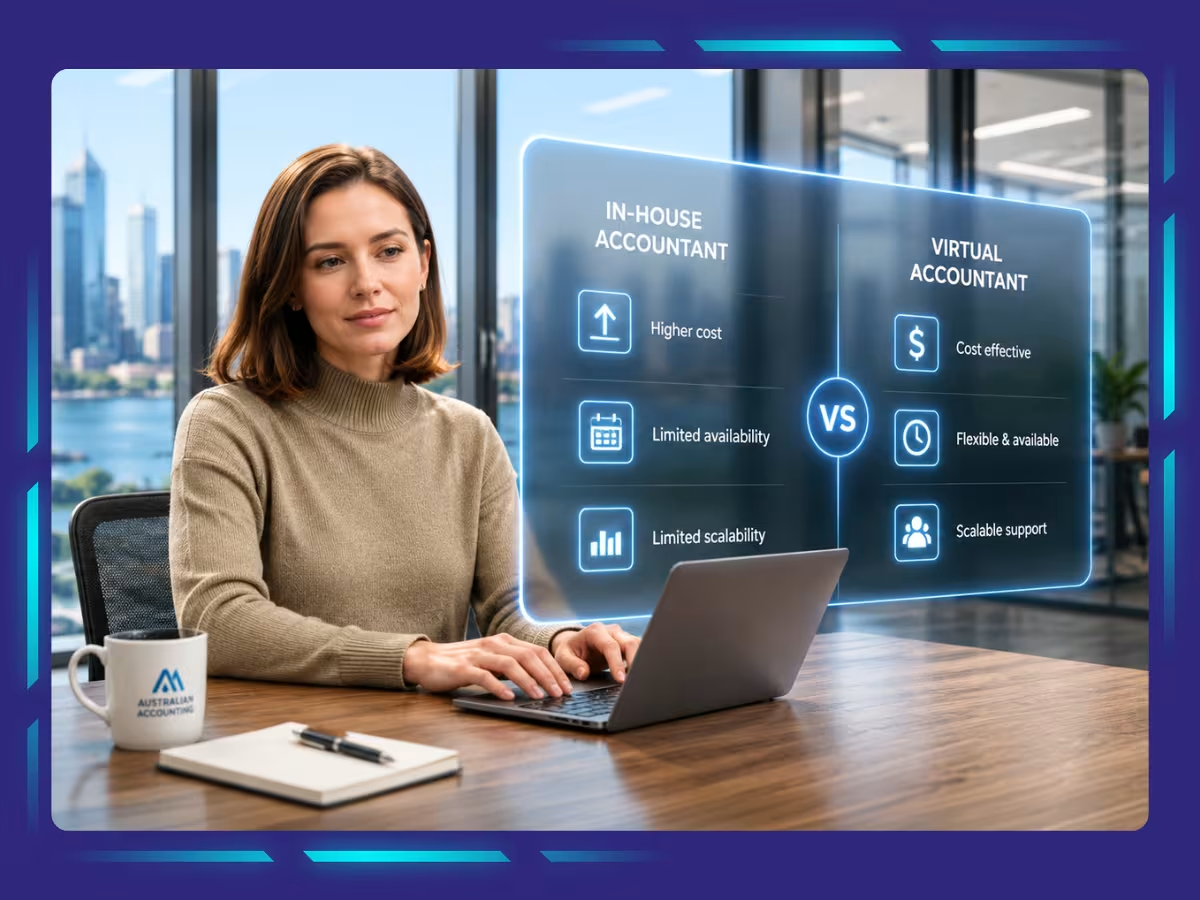
The comparison in-house accountants vs. virtual accountants become clearer when you break it down by practical factors. These include location, cost structure, work hours, cost efficiency, technology, scalability, overheads, compliance, expertise, integration, data security, employee engagement, flexibility, and overall responsiveness.
Use the table below to see how both options differ across these areas.
| Aspect | In-house Accountant | Virtual Accountant |
|---|---|---|
| Location | Typically based in-house at the company premises | Operates remotely, often from a different city, state, or country. |
| Cost Structure | Full-time salary with additional expenses (superannuation, benefits, insurance, etc.) | Pay-as-you-go or fixed monthly fee, no additional office-related costs. |
| Work Hours & Availability | Fixed working hours, typically 9 AM to 5 PM, with occasional overtime | Flexible working hours, with availability even on key Australian public holidays |
| Cost Efficiency | High cost due to salary, benefits, training, and equipment | Cost-effective due to no overheads, office costs, or employee benefits |
| Technology & Tools | Businesses may rely on their existing internal accounting infrastructure and software capabilities | They are generally proficient in using cloud-based accounting tools like Xero, QuickBooks, Zoho Books and Business Central for streamlined collaboration and reporting. |
| Scalability | Fixed capacity; additional staff needed as the business grows | Highly scalable; can adjust quickly to business growth or fluctuations in workload |
| Overhead Costs | Office space, equipment, utilities, employee benefits, etc. | No office space, equipment, or utilities costs; lower overall overhead |
| Compliance & Local Expertise | Deep knowledge of local (Australian) regulations, taxes, and laws (e.g., GST, BAS, ATO compliance) | Experts in Australian tax laws and compliance, with experience in multiple regions and industries |
| Access to Expertise | Limited to the skills and experience of the hired accountant | Access to a diverse pool of accountants with specialized skills (taxation, auditing, bookkeeping, etc.) |
| Data Security & Confidentiality | Full control over the physical security of data and privacy | High-level data encryption and security protocols through cloud platforms |
| Employee Engagement | Direct interaction with the team, ability to attend meetings and engage with other departments | Primarily digital communication; may miss out on face-to-face interactions, though video calls and chats are common. |
| Flexibility | Fixed location and schedule; limited flexibility during peak business times. | Flexible working hours and location; can scale up or down depending on needs. |
| Support & Responsiveness | Immediate response for in-person requests and concerns. | Generally fast response times via email, phone, or video calls; availability depends on time zone. |
How to Decide Which One is Good for Your Business
Choosing the right accounting services depends on your business goals, financial complexity, software readiness, growth plans, and communication preferences. Businesses looking for flexible support, cloud-based workflows, automation, specialised expertise, and scalable financial management often benefit from modern remote accounting services tailored to evolving operational needs.
Review the nature of your financial workload
Daily, hands-on tasks often align with an in-house accountant. If your work volume changes or you only need support during peak periods, a remote accountant offers better flexibility.
Check your overall budget
In-house roles come with salary, benefits, workspace and equipment costs. Remote accountants usually work on a monthly or project-based fee structure, which helps reduce overheads.
Identify the expertise your business actually needs
If you need broad skills in multiple areas such as financial reporting, payroll, automation or compliance, remote accountants provide access to a wider talent pool. In-house accountants may offer deeper knowledge of your internal operations, but are limited to their individual skill set.
Assess your digital readiness
Businesses already using cloud platforms like Xero, QuickBooks Online, or MYOB can get started quickly with a remote accountant. Traditional or paper-heavy operations may still prefer in-house support until processes are updated.
Consider how fast your business is growing
When hired carefully, virtual accountants for Australian businesses can scale up or down quickly based on workload. In-house teams require recruitment, training, and additional infrastructure when the business expands.
Think about your preferred communication style
If your workflow depends on in-person meetings and physical collaboration, in-house is more natural. If you are comfortable with structured online communication and regular video check-ins, a remote accountant will be easy to work with.
Review your security expectations
In-house accounting gives you full control over your files and physical records but is often open to internal fraud. Virtual accounting services rely on encrypted cloud systems that offer strong protection but require comfort with digital workflows.
Consider your long-term strategy
Companies planning to expand into new regions, automate more tasks or adopt global tools usually benefit more from virtual accountants who are trained in modern systems and scalable workflows.
Bring Clarity and Control to Your Books with a Skilled Virtual Accountant
Deciding who should handle your finances is an important step that can take your business up or down. While an in-house accountant is physically available in your office, it incurs a high cost that you can redirect to other priorities by hiring a virtual accountant. It’s not just about cost, but also the expertise they bring through tech-driven virtual accounting services. To experience the true advantages of having a virtual accountant, you need a firm capable of transforming your finances.
Whiz Consulting supports Australian businesses with practical, reliable virtual accounting services built on more than a decade of hands-on experience. Our team works as an extension of your business, combining accounting expertise with modern, AI-enabled tools to keep your books accurate, compliant, and up to date. The focus is simple – clear reporting, timely insights, and financial processes that stay under control as your business grows.
Connect with us to start giving your business the transformation that moves it forward.

Get customized plan that supports your growth

Have questions in mind? Find answers here...
Costs vary by business size, transaction volume, reporting needs, and add-on services. Most firms offer flexible monthly packages, letting you pay only for what your business requires.
Virtual accountants serving Australian businesses stay updated with ATO rules, BAS requirements, payroll laws, and GST changes. They ensure accurate lodgements, maintain clean records, and help you avoid penalties.
Most work with leading cloud tools like QuickBooks, Xero, MYOB, Zoho Books, and NetSuite. They tailor the setup to your workflows so everything stays consistent and efficient.
Choose firms using encrypted data storage, multi-factor authentication, secure user access, and global certifications such as ISO 27001, SOC 2, or GDPR-aligned controls for maximum protection.
Look for industry experience, strong software expertise, transparent pricing, solid security practices, and proven client reviews. A quick discovery call helps confirm whether they understand your goals.
Thousands of business owners trust Whiz to manage their account
Let us take care of your books and make this financial year a good one.