


Table of Content
Share This Article
- Last Updated: Nov 11, 2025
- 🔊 Listen
TL;DR
- Financial dashboards consolidate sales, cash flow, and expense data instantly, creating a clear, real-time view of business health.
- Dashboards save valuable time by replacing manual spreadsheet checks with dynamic charts and KPIs from multiple sources.
- Australian SMEs should track essential metrics such as operating cash flow, profit margins, debtor days, current ratio, and revenue growth to maintain financial control.
- Modern accounting tools like Xero, MYOB, and QuickBooks integrate AI and automation, delivering fast and accurate insights that power smarter decisions.
Small businesses often struggle to manage scattered financial data with limited resources, which makes decision-making harder than it should be. A financial dashboard brings sales, cash flow, and expenses together in real time, transforming raw numbers into a clear picture of business health. Instead of chasing figures across endless spreadsheets, owners gain instant visibility, spot risks before they escalate, and recognise growth opportunities with confidence.
This blog explores how dashboards simplify oversight and strengthen financial management, helping business owners plan more effectively, maintain control, and make data-driven choices that improve efficiency while keeping growth firmly within their reach.

Dashboard Reporting Made Easy
Turn complex financials into insights you can act on!
What Is Dashboard Reporting?
Dashboard reporting is a method of presenting business data in a visual, interactive format. It organises real-time information into charts, graphs, and summaries so that decision-makers can quickly track performance, identify trends, and measure progress against key metrics. It also provides a single-screen view, eliminating the need to sift through spreadsheets or static documents. Here are the features that make dashboard reporting so effective:
- Displays key metrics such as revenue, expenses, and profit
- Refreshes data instantly for real-time updates
- Offers easy-to-follow charts and tables
- Pulls information from multiple sources like accounting, sales, and inventory
- Simplifies business health tracking, saving valuable time for owners
Essential Metrics Australian SME Owners Should Track
SMEs in Australia should track important financial metrics such as Gross Profit Margin, Net Profit Margin, Cash Flow, Customer Acquisition Cost (CAC), and Return on Investment (ROI) to understand the financial health and make strategic decisions.
To make smarter decisions, here are the core metrics every Australian SME owner should keep an eye on:
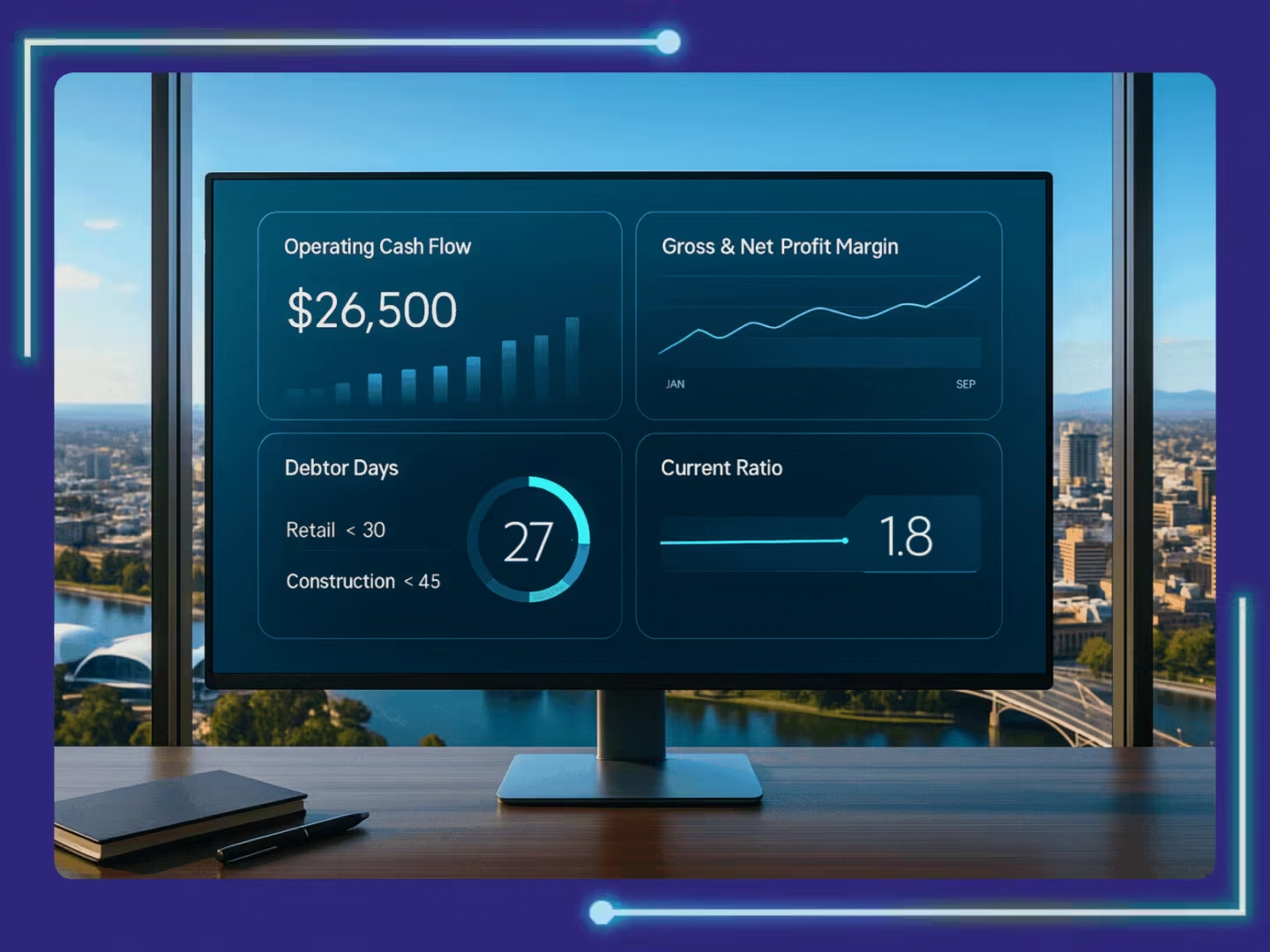
- Operating Cash Flow: This shows how much cash is generated from daily operations. A consistent positive cash flow indicates that the business is running smoothly and can sustain day-to-day needs.
- Gross and Net Profit Margin: Profit margins measure efficiency by showing how much income remains after covering all costs. Many SMEs aim for a net profit margin between 10% and 20%, while anything below 5% could signal financial stress.
- Debtor Days: Tracking how quickly customers settle invoices is crucial. Healthy cash management means aiming for less than 30 days in retail and under 45 days in construction.
- Current Ratio: This ratio compares current assets to current liabilities, revealing the company’s ability to pay short-term obligations. A stable business generally maintains a ratio between 1.5 and 2.0.
- Revenue Growth Rate: Growth in sales highlights business momentum, helping owners identify trends and forecast more accurately for budgeting and planning.
- Return on Investment (ROI): Indicates how effectively capital or resources invested are generating returns, helping businesses assess project or marketing efficacy.
- Inventory Turnover: For retail and hospitality businesses, a higher turnover reflects strong sales and efficient inventory management, while a lower turnover could indicate overstocking or sluggish movement.
- Customer Acquisition Cost (CAC): This metric captures how much is spent to gain each new customer, making it particularly valuable for service-based and product-focused businesses assessing their marketing effectiveness.

What are the popular tools for dashboard reporting?
Businesses today rely heavily on dashboard tools to make sense of financial and operational data. Tools like Fathom, Spotlight Reporting, Syft Analytics, Microsoft Power BI, and Tableau have become popular choices for accountants, CFOs, and business owners because they simplify reporting, provide real-time insights, and support better decision-making. Each tool has unique strengths that cater to different needs; here’s how:
Fathom
Fathom focuses on financial performance analysis and management reporting. It’s widely used by accountants and business advisors to turn accounting data into visual insights and track KPIs.
Spotlight Reporting
Spotlight Reporting provides in-depth financial and non-financial reports, with strong forecasting and budgeting features. It’s great for businesses that want scenario planning and consolidated group reporting.
Syft Analytics
Syft Analytics is known for its user-friendly dashboards and AI-driven insights. It connects with multiple accounting platforms to offer reports, benchmarking, and predictive analysis, making it useful for accountants managing several clients.
Microsoft Power BI
Power BI goes beyond accounting data, connecting with hundreds of data sources to deliver advanced data visualisation. It’s popular for its flexibility, interactive dashboards, and integration with Microsoft 365 tools.
Tableau
Tableau is a robust business intelligence platform designed for advanced analytics. It allows businesses to explore data visually, create custom dashboards, and handle large datasets effectively from any location.
How Outsourced Accounting Experts Enhance Dashboard Reporting for SMEs?
“Research by McKinsey shows that companies using real-time financial dashboards are 19 times more likely to be profitable and 23 times more likely to gain new customers through smarter, faster decisions.”
Outsourced accounting specialists in Australia elevate SME dashboard reporting. They unlock advanced tools for accurate, real-time financial visualisation, bring deep analysis and compliance expertise, and deliver tailored, insight-rich reports for proactive decisions, cost-efficiently and with the flexibility SMEs need.
Let’s delve deeper into the benefits of outsourced accounting services in Australia:

Access to Advanced Technology and Tools
Outsourced teams bring enterprise-grade, cloud accounting stacks with live dashboards, automated capture/reconciliation, and drill-down reporting that most SMEs won’t buy or maintain themselves.
Improved Accuracy and Reliability
Specialist firms run documented checks, exception rules, and reviewer sign-offs to keep numbers clean so that data is reconciled, audit-trailed, and ATO-ready, reducing misstatements across GST, PAYG, and super reporting.
Expert Analysis and Insights
You get access to advisors who explain budget vs actuals, cash drivers, cost leaks, and seasonality.
Customised Reporting
Dashboards are tailored to your operating model and industry, with KPI packs that can include GST position, BAS timelines, super due dates, payroll variance tiles, and STP status.
Proactive Decisions Backed by Timely Insights
Real-time feeds mean you spot margin slippage, debtor spikes, or payroll blowouts early, so you act before penalties or cash crunches hit.
Cost-Efficiency
Automation trims low-value tasks (bank recs, expense capture, payroll runs), while streamlined BAS/STP workflows cut admin hours and reduce rework.
Enhanced Compliance and Risk Management
Providers stay current on Australian standards and legislative changes such as GST, income tax, STP Phase 2, superannuation guarantee, payroll tax, and award updates, so reports remain compliant.
Scalability and Focus
As complexity grow capacity scales without a hiring scramble and keeps reporting consistently across the business.
Make Smarter Decisions with Customised Dashboard Reporting
Customised dashboard reporting turns scattered finance data into a clear command centre. With live feeds and the right KPIs up front, you spot cash squeezes, margin dips, and slow payers early, then drill into the reasons in seconds.
To run it smoothly, you need an expert accounting team that can build the stack, maintain the data pipelines, and keep KPIs audit-ready without adding headcount. And that is where Whiz Consulting prove to be a reliable partner.
Our accounting outsourcing services come with practical, real-time dashboard reporting, no guesswork, just the numbers that matter. We centralise data from QuickBooks, MYOB, NetSuite, and Zoho Books to track cash flow, AP/AR ageing, margins, BAS/GST, payroll, and job profitability. Get weekly snapshots, alerts on variances, and consolidated views across entities, configured for ATO compliance and audit trails, turning month-end into a daily view. Contact us and we’ll show your data in a clear, decision-ready dashboard.”

Get customized plan that supports your growth


Thousands of business owners trust Whiz to manage their account
Let us take care of your books and make this financial year a good one.