

Table of Content
Share This Article
- Last Updated: Jun 25, 2026
- 🔊 Listen
TL;DR
- Reconcile accounts, review invoices, and verify liabilities before EOFY to improve financial accuracy and tax readiness.
- Accurate records support compliance, maximise deductions, strengthen cash flow visibility, and improve business decision-making.
- Check payroll, superannuation, inventory, assets, and profit-versus-cash-flow performance to identify issues.
- An independent EOFY review can identify reporting errors, compliance risks, and valuable tax planning opportunities.
As the end of the financial year approaches, most Australian business owners turn their attention to tax returns, compliance deadlines, and meetings with their accountants. But before you focus on what needs to be lodged, there’s an even more important question to answer:
Can you trust the numbers you’re relying on to make business decisions?
Assessing business financial accuracy before EOFY Australia allows business owners to identify discrepancies early and approach year-end obligations with greater confidence.
Your financial reports influence everything from tax outcomes and cash flow planning to hiring decisions and future investments. If those reports contain errors, even minor ones, they can distort your understanding of how your business is performing.
Whether you’re a sole trader managing your own books, a growing business with employees, or an established organisation preparing for another EOFY, reviewing the accuracy of your financial records should be a priority.

Close the Financial Year with Confidence
Strengthen Accuracy, Meet Obligations, and Avoid Last-Minute Surprises
Why Accurate Financial Records Matter at EOFY
Accurate year-end accounting gives Australian businesses a clear and reliable picture of their financial position before EOFY. It helps ensure tax returns are prepared correctly, eligible deductions are identified, and compliance obligations are met with confidence. Reliable financial records also support better cash flow management, reveal true profitability, strengthen funding applications, and provide the insights needed to make informed business decisions for the year ahead.
- Lodge tax returns with confidence
- Identify and claim eligible deductions
- Understand true profitability
- Improve cash flow management
- Support funding applications and business growth plans
- Reduce the likelihood of costly corrections later
- Make informed strategic decisions
8 Ways to Check if Your Books Are Tax-Ready
To determine if your books are tax-ready, complete these essential year-end accounting checks before EOFY: reconcile bank accounts, review outstanding invoices and supplier bills, examine your profit and loss statement, verify payroll and super obligations, assess inventory and fixed assets, compare cash flow with profit, and consider an independent EOFY review. These steps help improve accuracy, support compliance, and ensure your business enters tax season with confidence.
1. Reconcile Your Bank Accounts
Bank reconciliation remains one of the simplest and most effective ways to assess the accuracy of your records. Compare the transactions recorded in your accounting software against your bank statements.
Look for:
- Missing deposits or payments
- Duplicate entries
- Transactions recorded incorrectly
- Unpresented cheques
- Bank fees that haven’t been entered
- Unexplained adjustments
If your books don’t match your bank accounts, it is difficult to rely on the reports generated from them.
2. Review Outstanding Customer Invoices
Many businesses assume that every outstanding invoice will eventually be paid.
Unfortunately, that’s not always the case. Review your accounts receivable report and assess:
- Which invoices remain unpaid
- How long they’ve been outstanding
- Whether follow-up action has been taken
- If any debts should be written off
- Whether duplicate invoices exist
This process provides a clearer picture of your expected cash inflows and helps prevent overstating your financial position.
3. Verify Supplier Bills and Outstanding Liabilities
EOFY reviews shouldn’t focus exclusively on income. Outstanding obligations also deserve attention. Review your accounts payable records and confirm that all liabilities have been accurately recorded, including:
- Supplier invoices
- Recurring subscriptions
- Loan repayments
- Accrued expenses
- Credit notes
- Unpaid professional fees
Underreporting liabilities can create an overly optimistic picture of your financial health and affect planning decisions for the year ahead.
4. Examine Your Profit and Loss Statement
Regular analysis of financial reports is an important part of improving business financial accuracy before EOFY Australia, particularly when identifying unusual trends or inconsistencies. However, the report is only as reliable as the information behind it. Review the statement carefully and ask:
- Have revenues increased or decreased as expected?
- Are there unusual fluctuations in expenses?
- Have margins changed significantly?
- Are expenses allocated to the correct categories?
- Do the numbers align with operational realities?
Comparing current results with previous years often highlights anomalies that warrant further investigation.
5. Check Payroll and Superannuation Obligations
For businesses with employees, payroll accuracy should never be overlooked. Review payroll records to ensure:
- Employee wages have been processed correctly
- PAYG withholding amounts are accurate
- Leave balances are up to date
- Superannuation contributions have been paid within required timeframes
- Employee and contractor classifications remain appropriate
Errors in payroll can affect both financial reporting and compliance obligations. Even businesses using automated payroll software should perform EOFY reviews to identify discrepancies before reporting deadlines arrive.
6. Assess Inventory and Fixed Assets
Businesses that hold inventory or own significant assets should ensure these records accurately reflect reality. Inventory reviews may involve:
- Conducting physical stocktakes
- Identifying obsolete inventory
- Recording damaged stock
- Reviewing valuation methods
Fixed asset reviews should include:
- Verifying recent purchases
- Recording disposals
- Updating depreciation schedules
- Removing assets no longer in use
These checks help ensure that your balance sheet presents an accurate snapshot of the resources your business controls.
7. Compare Cash Flow Against Profit
One of the most common concerns business owners raise is this:
“If we’re making a profit, why does cash still feel tight?”
Profit and cash flow measure different aspects of business performance. Comparing the two can uncover issues such as:
- Slow-paying customers
- Excess inventory levels
- Timing differences between income and expenses
- Overdue debts
- Recording inaccuracies
A business with strong profits, but poor cash flow may face operational challenges that require immediate attention. Understanding these differences can lead to more effective planning and better decision-making.
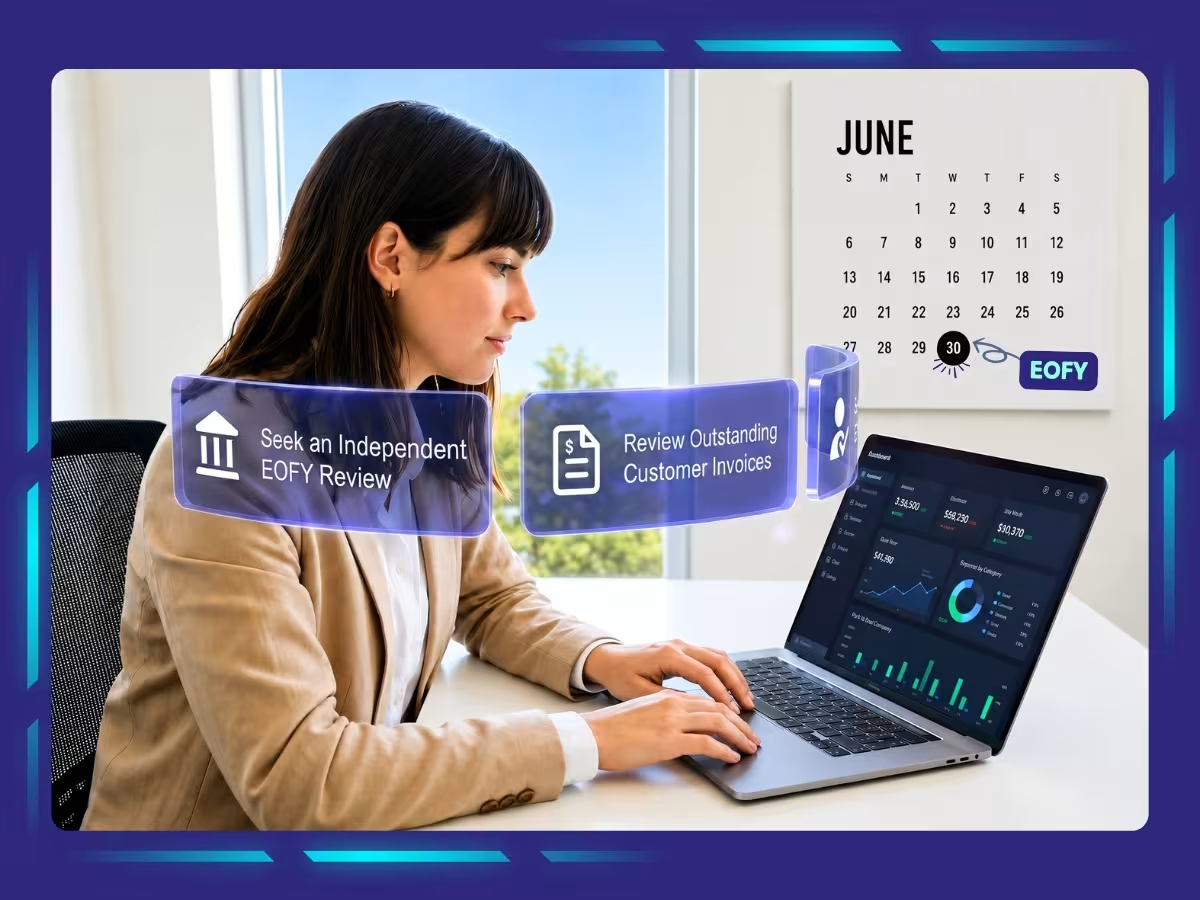
8. Seek an Independent EOFY Review
Even experienced business owners can overlook issues hidden within day-to-day transactions. An independent review by an accountant or bookkeeper can help identify:
- Reporting inconsistencies
- Potential compliance concerns
- Opportunities for tax planning
- Misclassified transactions
- Areas requiring stronger internal controls
Sometimes, an external perspective provides the confidence businesses need before lodging returns and finalising financial statements. EOFY reviews shouldn’t be viewed solely as a compliance exercise. They are also an investment in the quality of future decisions.
7 Warning Signs That Your Numbers May Need Attention
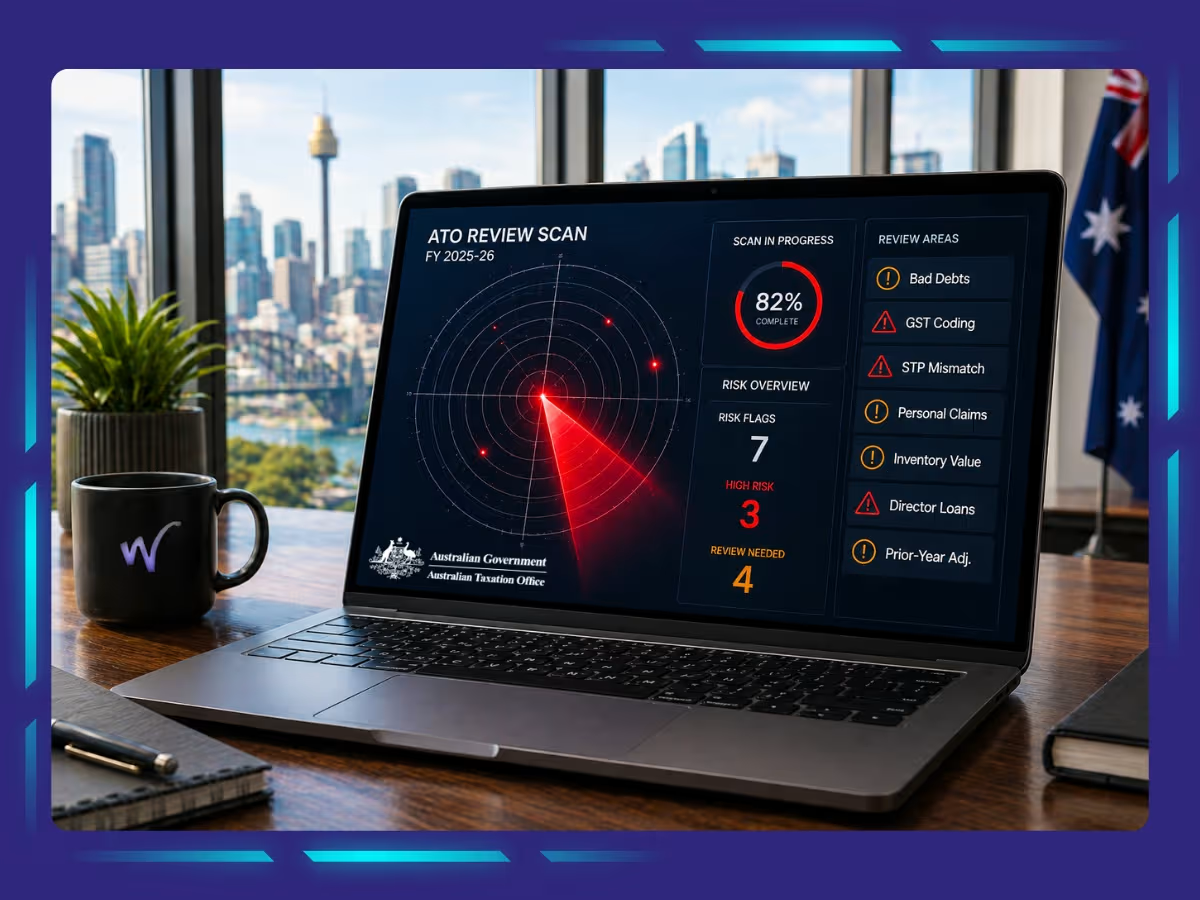
Before EOFY, reviewing your financial records for mistakes that could trigger ATO scrutiny can help identify reporting issues before they become compliance problems. Instead of waiting for errors to surface during tax preparation or an audit, compare your current financial records against what healthy, tax-ready books should look like.
| Financial Area | Warning Sign | What Healthy Books Should Look Like |
|---|---|---|
| Bank Reconciliation | Bank accounts haven’t been reconciled for several months. | All bank accounts are reconciled regularly, with outstanding items investigated promptly. |
| Suspense Accounts | Large or long-standing suspense account balances remain unresolved. | Suspense accounts contain minimal temporary entries that are cleared before EOFY. |
| Supporting Documents | Missing invoices, receipts, or other financial records. | Every transaction is backed by complete and organised supporting documentation. |
| Journal Entries | Frequent manual adjustments are required to correct financial records. | Most transactions flow automatically through established accounting processes, with only occasional justified adjustments. |
| Financial Performance | Significant year-on-year fluctuations without a clear business explanation. | Revenue, expenses, and profit movements can be supported by documented business events or operational changes. |
| Cash Flow | Negative cash flow despite reporting accounting profits. | Cash flow aligns reasonably with profitability, with any differences clearly understood and explained. |
| GST Accounts | Unexplained variances in GST balances or BAS reporting. | GST records reconcile accurately with sales, purchases, and lodged BAS returns. |
Why Every Business Needs a Year-End Accounting Checklist
A comprehensive year-end accounting checklist helps ensure that essential tasks are completed and reduces the likelihood of important details being overlooked.
An effective checklist typically includes:
- Reconciling bank accounts
- Reviewing debtor and creditor balances
- Confirming payroll obligations
- Verifying superannuation payments
- Reviewing inventory records
- Updating fixed asset registers
- Assessing GST accounts
- Organising supporting documentation
- Preparing reports for tax planning discussions
Before You Lodge, Make Sure Your Numbers Tell the Right Story
By reconciling accounts, reviewing reports, confirming obligations, addressing bookkeeping gaps, and seeking professional guidance where needed, Australian businesses can approach year-end accounting with greater confidence and clarity. Prioritising business financial accuracy before EOFY Australia not only supports smoother tax preparation and stronger compliance outcomes but also provides a more reliable foundation for future planning, growth, and strategic decision-making.
At Whiz Consulting, we help Australian businesses keep their books tax-ready at EOFY and beyond. Our team of 150+ virtual accountants support businesses across industries with end-to-end finance and accounting services, helping them maintain accurate records, strengthen compliance, and gain the financial clarity needed to make better business decisions throughout the year.

Get customized plan that supports your growth

Have questions in mind? Find answers here...
EOFY reviews help identify errors, improve reporting accuracy, support compliance obligations, and ensure business decisions are based on reliable information.
Monthly reconciliations are generally considered best practice. They improve visibility over financial performance and make EOFY preparation significantly easier.
Yes. Inaccurate records can result in incorrect deductions, understated income, overstated expenses, and the need to amend lodged information.
Although not mandatory, independent reviews often uncover issues that internal teams may overlook and can identify valuable tax planning opportunities.
Businesses should keep invoices, receipts, bank statements, payroll records, contracts, asset documentation, and any evidence supporting deductions or claims.
Thousands of business owners trust Whiz to manage their account
Let us take care of your books and make this financial year a good one.