

Table of Content
Share This Article
- Last Updated: Aug 12, 2026
- 🔊 Listen
TL;DR
- Manual AP processes, GST errors, and payment delays are major AP challenges for Australian businesses.
- Weak AP workflows increase ATO compliance risks, duplicate payments, and fraud exposure.
- AP automation and cloud accounting tools improve invoice accuracy and approval efficiency.
- Strong verification controls and real-time reporting improve cash flow visibility and compliance.
Accounts payable challenges for Australian businesses are becoming more difficult to ignore as compliance expectations tighten and invoice volumes continue to grow. AP problems Australian businesses face today span five key areas: ATO compliance, manual invoice processing, GST accounts payable problems, supplier payment delays, and poor cash flow visibility. Left unaddressed, these common AP challenges increase audit risks, trigger supplier disputes, and slow business growth.
From duplicate invoices that drain working capital to BAS AP errors that AU finance teams regularly encounter, weak AP processes continue to affect SMEs, retailers, construction firms, and healthcare providers across Australia. In this blog, you will learn the biggest AP problems Australian businesses face, why these issues are becoming more serious in 2026, and the practical ways businesses are fixing AP issues.

Smart AP Outsourcing
Structure meets support in every step
What Are the Biggest Accounts Payable Challenges for Australian Businesses?
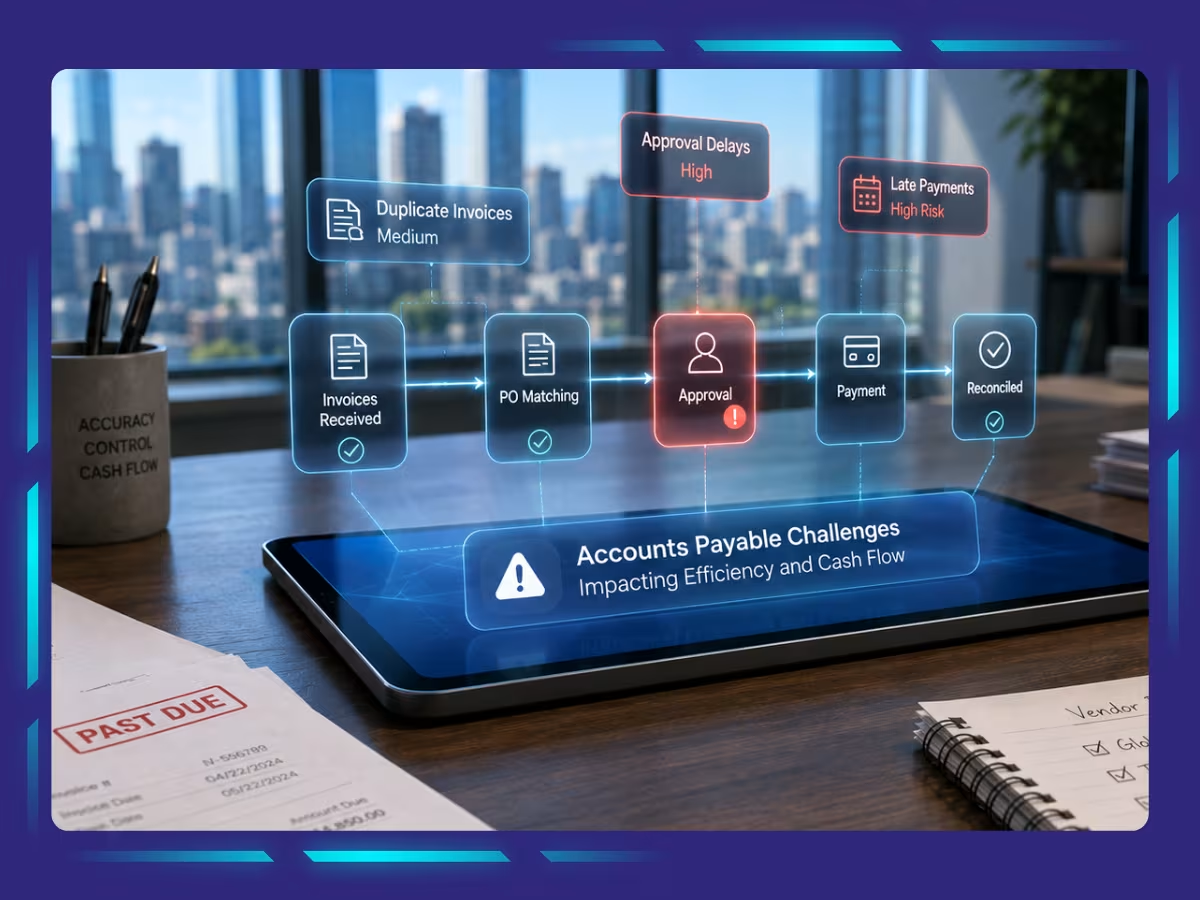
Some of the prominent AP challenges for Aussie firms include manual invoice processing, GST reconciliation errors, supplier payment delays, AP fraud risks, and poor cash flow visibility. These accounts payable problems often lead to ATO compliance issues, BAS reporting mistakes, and operational bottlenecks.

1. Manual Invoice Processing and AP Data Entry Errors
Many Australian businesses still rely on manual invoice handling, spreadsheet tracking, and email-based approvals within their accounts payable process. This often leads to duplicate invoices, incorrect supplier details, missed GST entries, and coding mistakes that affect reporting accuracy.
For growing businesses managing high invoice volumes, manual processing also creates approval delays and increases workload pressure on finance teams. These accounts payable challenges for Australian businesses become even more difficult during month-end close and BAS preparation periods, where even small AP data entry errors can create reconciliation issues later.
2. Late Supplier Payments and AP Bottlenecks
Delayed invoice approvals and inefficient workflows remain major AP problems Australian businesses continue facing across multiple industries. When invoices sit in inboxes waiting for approvals or missing documentation, supplier payments get delayed and operational relationships can suffer.
Late payments may also trigger supplier disputes, damage vendor trust, and affect access to favourable payment terms. Australian SMEs managing lean finance teams often experience AP bottlenecks during busy reporting cycles, staff shortages, or rapid business growth, making payment scheduling harder to manage consistently.
3. GST Reconciliation and BAS Reporting Errors
GST reconciliation remains one of the most common accounts payable issues Australian SMEs encounter, especially when invoice data is incomplete or incorrectly categorised. Incorrect GST coding, duplicate entries, and missing tax invoices can all create BAS reporting inaccuracies and increase ATO compliance risks.
Businesses operating across multiple entities, locations, or systems may also struggle with inconsistent AP records and reconciliation gaps. Without structured AP controls and regular reconciliation processes, GST accounts payable problems AU businesses face can quickly affect financial reporting accuracy and compliance confidence.
4. Supplier Scam Risks
Australian businesses are increasingly facing supplier fraud attempts, fake invoice scams, and unauthorised payment requests targeting accounts payable teams. Fraudsters often impersonate suppliers through email spoofing, altered bank details, or duplicate invoice submissions designed to bypass approval controls.
Weak verification processes, manual approvals, and limited segregation of duties can increase exposure to AP fraud Australia risks. Businesses without strong vendor verification controls or automated approval workflows may find it difficult to detect suspicious payment activity before funds are released.
5. Poor AP Cash Flow Visibility
Many businesses struggle to maintain clear visibility over outstanding liabilities, upcoming supplier payments, and short-term cash requirements because of disconnected AP systems and delayed reporting. This lack of visibility makes it harder to forecast working capital accurately and plan operational spending.
Poor AP reporting also limits cash flow management and it becomes difficult to identify overdue invoices, monitor supplier obligations, and optimise payment timing. Among the biggest common AP challenges Australia 2026 businesses are expected to face, cash flow visibility and real-time AP reporting remain critical concerns for finance leaders trying to improve financial control and decision-making.
How Do Australian Businesses Solve AP Challenges?
Australian businesses solve accounts payable challenges by automating invoice workflows, improving GST controls, strengthening fraud prevention, and increasing AP visibility. Modern AP systems help reduce payment delays, data entry errors, reconciliation issues, and supplier risks while improving overall financial control.
Automate Invoice Processing and Reduce Manual AP Work
Australian businesses are increasingly introducing AP automation tools to reduce manual invoice processing, minimise data entry errors, and improve approval speed. Automated invoice capture, OCR technology, and workflow routing help finance teams process invoices faster while improving accuracy across coding, GST allocation, and supplier records.
Many businesses also integrate their AP process with platforms like Xero, MYOB, and Microsoft Dynamics 365 to centralise invoice management and reduce spreadsheet dependency.
Standardise Approval Workflows to Remove AP Bottlenecks
Structured approval workflows help businesses reduce delayed supplier payments and approval confusion across departments. Australian finance teams are solving AP bottlenecks by introducing predefined approval hierarchies, automated notifications, and digital invoice tracking systems.
This improves accountability within the accounts payable process and helps businesses maintain faster payment cycles without losing financial control. Clear approval structures also reduce the risk of missed invoices and supplier disputes.
Strengthen GST Reconciliation and BAS Accuracy
To reduce GST reconciliation challenges and BAS reporting errors, many Australian businesses now perform regular AP reconciliations and maintain stricter invoice validation controls. Finance teams are increasingly reviewing supplier tax invoices before processing payments to ensure GST data remains accurate.
Businesses also use automated reconciliation tools and integrated accounting software to improve visibility between purchase records, supplier statements, and BAS reporting data. This helps reduce ATO compliance risks while improving reporting confidence.
Introduce Vendor Verification and Fraud Controls
Supplier scam prevention has become a major priority for Australian businesses managing large payment volumes. Many organisations now use multi-step vendor verification processes before updating supplier banking details or approving high-value payments.
Additional AP internal controls such as segregation of duties, approval tracking, duplicate invoice detection, and payment authentication help reduce exposure to supplier fraud and fake invoice scams. Businesses with automated audit trails also gain stronger visibility into suspicious AP activity.
Improve AP Reporting and Cash Flow Visibility
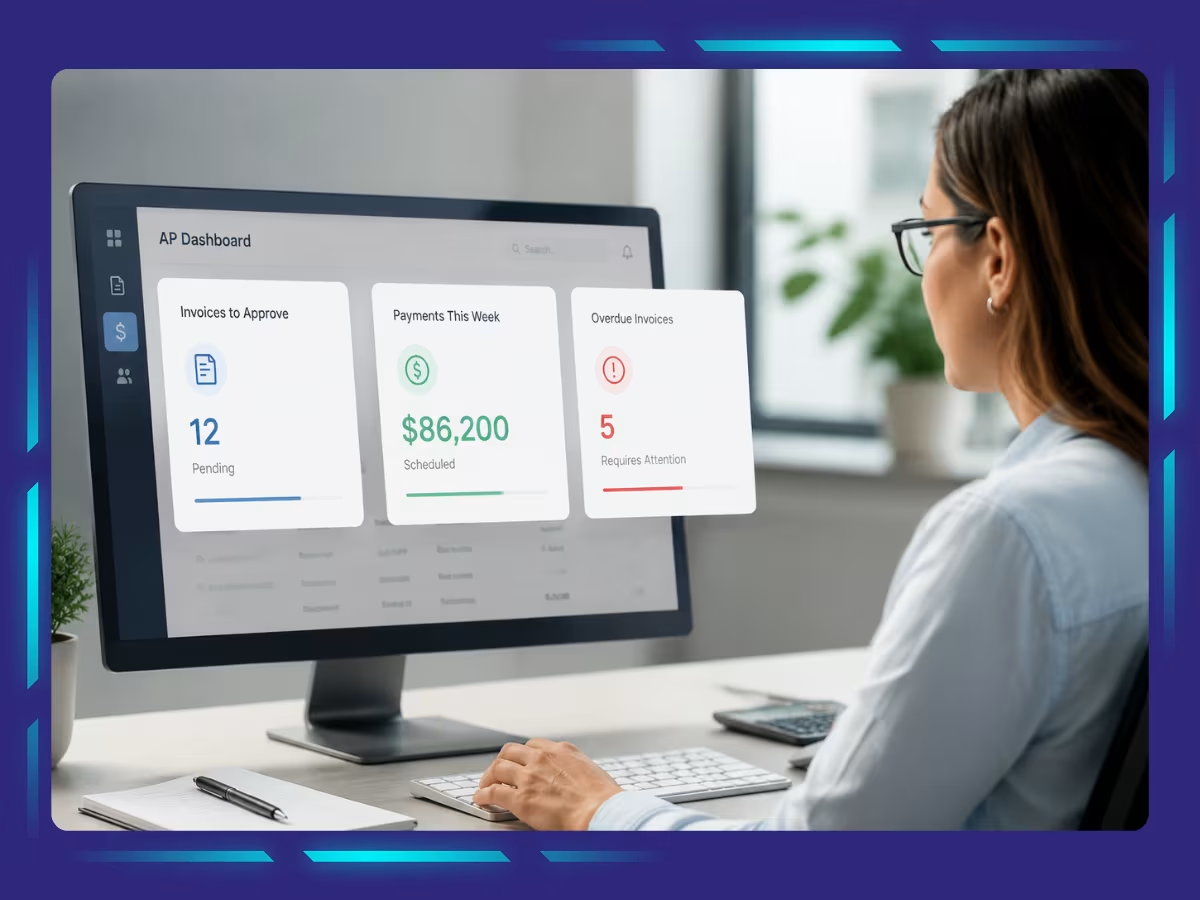
Australian businesses are improving AP cash flow visibility by adopting real-time dashboards, AP ageing reports, and automated payment forecasting tools. Better visibility into outstanding liabilities and upcoming supplier payments helps finance teams make more informed cash management decisions.
Integrated AP reporting also allows businesses to monitor overdue invoices, optimise payment timing, and reduce working capital pressure. As finance operations become more data-driven, stronger AP visibility is helping businesses improve financial planning and operational stability.
Solve AP challenges in Australia with Smarter Accounts Payable Services
When managed efficiently, accounts payable does more than process invoices. It improves cash flow visibility, strengthens supplier relationships, reduces compliance risks, and helps businesses stay prepared for ATO reporting requirements. Delayed approvals, GST errors, and manual AP workflows can quietly slow business growth and create unnecessary financial pressure.
At Whiz Consulting, we help Australian businesses overcome AP challenges with our streamlined accounts payable services, automation-driven workflows, accurate reconciliations, and proactive compliance support. Our team works as an extension of your finance function to reduce AP bottlenecks, improve reporting accuracy, and build a more scalable and audit-ready accounts payable process.

Get customized plan that supports your growth

Have questions in mind? Find answers here...
Many accounts payable issues come from limited finance resources, manual workflows, approval bottlenecks, and increasing ATO compliance requirements related to GST and BAS reporting.
ATO AP compliance challenges usually involve incorrect GST coding, missing invoice records, BAS reporting inconsistencies, duplicate claims, and weak audit documentation practices.
Construction, retail, healthcare, and ecommerce businesses often experience higher accounts payable challenges in Australia-wide because of large supplier volumes, complex approvals, and frequent invoice processing requirements.
Businesses are fixing AP issues Australia-wide through automation, stronger approval workflows, supplier verification procedures, real-time AP reporting, and outsourced accounts payable support.
Australian businesses commonly use Xero, MYOB, Wiise, and Reckon to automate invoice processing, improve GST tracking, reduce AP visibility gaps, and strengthen payment approvals.
Late payment can damage supplier relationships, create operational delays, reduce vendor trust, and increase cash flow pressure across the business.
An Australian AP outsourcing services helps businesses reduce manual workload, improve reporting accuracy, strengthen ATO compliance readiness, and create a more efficient and scalable AP process.
Thousands of business owners trust Whiz to manage their account
Let us take care of your books and make this financial year a good one.