


Table of Content
Share This Article
- Last Updated: Jul 28, 2026
- 🔊 Listen
TL;DR
- Automated invoice matching helps UK businesses stop duplicate supplier payments before approval.
- Duplicate payments can create VAT reclaim issues and increase HMRC audit risks.
- BACS payment delays often contribute to accidental repeat supplier payments.
- Supplier reconciliation and clean vendor records reduce AP processing errors significantly.
- Xero, Sage, and QuickBooks include duplicate detection features that improve AP accuracy.
AP duplicate payment prevention UK strategies have become essential for businesses managing high invoice volumes, supplier complexity, and rising compliance pressure. Duplicate payments not only damage cash flow but also create reconciliation issues, VAT reclaim errors, supplier disputes, and potential HMRC audit concerns.
UK businesses lose millions annually through duplicate supplier payments caused by manual entry errors, duplicate invoices, weak approval controls, and delayed BACS payment visibility. Finance teams using outdated AP workflows often struggle to identify duplicate invoices before payment processing.
Modern accounts payable controls now focus on automation, approval accuracy, supplier verification, and real-time invoice matching to reduce financial leakage. Businesses using stronger AP controls can improve compliance, maintain supplier trust, and reduce unnecessary financial losses.

Strengthening your AP process
Reduce costly payment errors through automation and smarter AP services
Top 8 Strategies to Prevent AP Payment Duplication
Top 8 strategies to avoid AP payment duplication include automating invoice matching to catch duplicates, standardising supplier invoice formats, strengthening approval workflows, reconciling supplier statements regularly, improving BACS payment tracking, maintaining accurate supplier master data, leveraging real-time AP reporting, and conducting regular internal audits. Together, these practices help finance teams enhance accuracy, efficiency, and compliance across accounts payable operations.
1. Automate Invoice Matching and Duplicate Detection
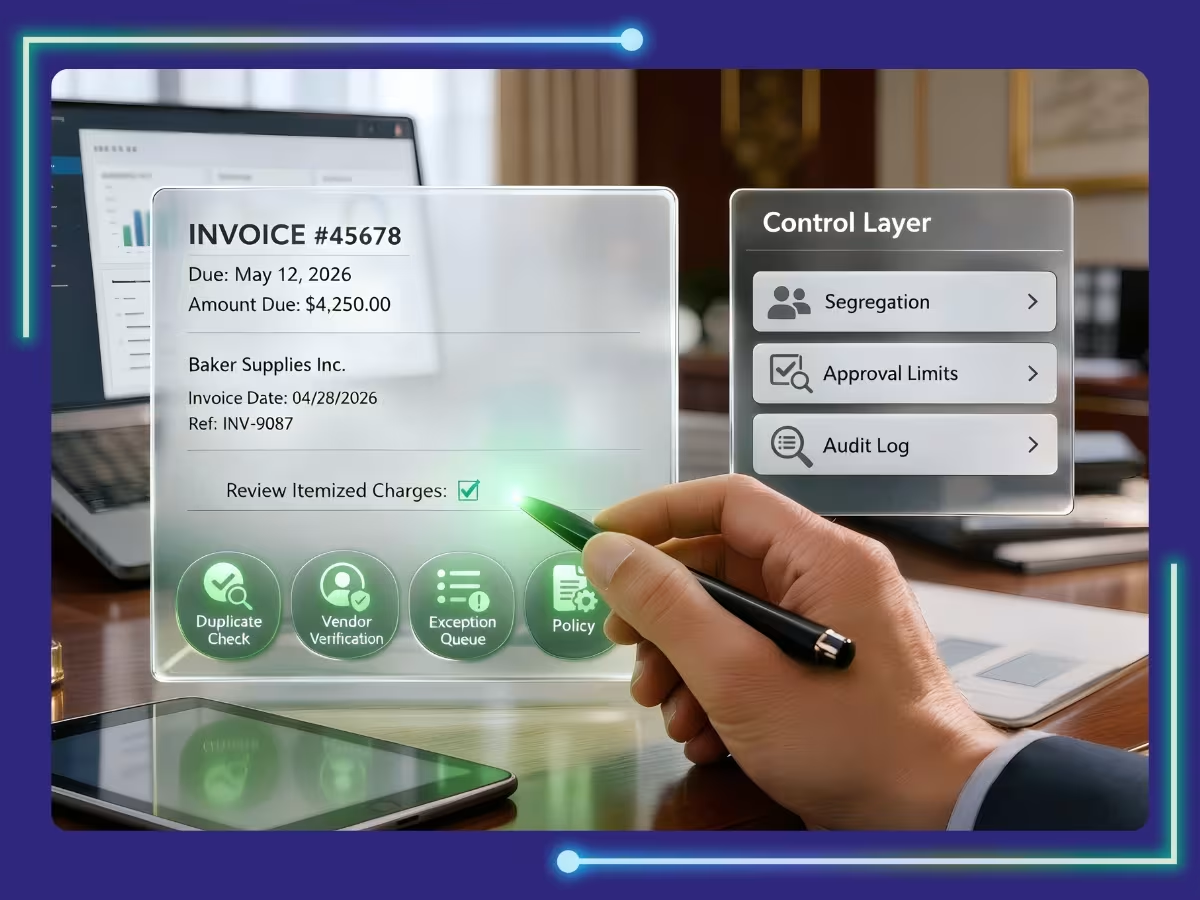
Automated invoice matching is one of the most effective ways to reduce duplicate supplier payments. Modern AP software can identify duplicate invoice numbers, repeated supplier references, identical payment amounts, and matching PO details before payment approval.
UK businesses managing large invoice volumes manually often miss duplicate entries during month-end pressure or multi-user processing environments. Automated systems reduce this risk significantly.
Accounting automation platforms such as Xero, Sage, and QuickBooks include duplicate detection features that flag suspicious invoices during processing. These systems help AP teams stop duplicate payments before they affect supplier ledgers and VAT records.
Automated matching also improves audit trails, supplier visibility, and reconciliation accuracy across finance operations.
2. Standardise Supplier Invoice Submission Formats
Duplicate payments often occur when suppliers submit invoices through multiple channels such as email, paper copies, PDFs, or portal uploads. Finance teams may end up duplicating invoice processing when faced with inconsistent invoice formats.
UK businesses should create a standard supplier invoicing policy that defines:
- Accepted invoice submission methods
- Mandatory invoice fields
- PO requirements
- Invoice numbering standards
- Submission deadlines
Consistent invoice formatting helps AP teams verify invoice legitimacy faster and reduces confusion during approval workflows.
This is particularly important for businesses processing invoices from international vendors, subcontractors, and recurring service providers where invoice duplication risks are higher.
3. Strengthen AP Approval Workflows
Weak approval structures are a major contributor to duplicate supplier payments. In many businesses, invoices move through multiple departments without centralised visibility, increasing the chance of repeated approvals.
A structured AP approval workflow should include:
- Segregation of duties
- Multi-level approvals for high-value invoices
- Automated approval tracking
- Duplicate payment alerts
- Centralised invoice visibility
Finance leaders should ensure no single employee controls invoice entry, approval, and payment release simultaneously. This reduces internal processing errors and strengthens fraud prevention controls.
Businesses aligned with the UK Prompt Payment Code should also maintain accurate payment reporting. Duplicate payments can distort payment performance metrics and supplier payment timelines, affecting compliance reporting.
4. Reconcile Supplier Statements Regularly
Regular supplier reconciliation helps finance teams identify duplicate invoices, unapplied credits, and payment mismatches before they become larger financial issues.
Many UK businesses only reconcile supplier accounts during month-end close, which allows duplicate payments to remain undetected for weeks or months. More frequent reconciliations improve AP visibility significantly.
Supplier statement reconciliation should compare:
- Supplier invoices
- Payment records
- Credit notes
- Outstanding balances
- Bank payment references
Frequent reconciliation also helps businesses recover duplicate payments faster and maintain stronger supplier relationships.
This process becomes especially important for industries with high transaction volumes such as retail, healthcare, logistics, and construction.
5. Improve BACS Payment Tracking and Visibility
BACS payment delays can create duplicate payment risks when finance teams assume a payment has failed or not been processed. This issue is common in UK businesses relying on manual payment tracking methods.
Since BACS payments typically take up to three working days to clear, duplicate payments may occur when suppliers request payment updates before settlement visibility is available.
To reduce this risk, businesses should:
- Use automated payment status tracking
- Integrate bank feeds with AP systems
- Maintain real-time payment dashboards
- Assign unique payment references
- Avoid manual reprocessing without verification
Improved BACS visibility helps AP teams confirm payment status before releasing replacement payments.
Businesses using integrated AP automation systems can reduce duplicate payment risks while improving supplier communication and payment confidence.
6. Maintain Accurate Supplier Master Data
Poor supplier data management increases the likelihood of duplicate supplier records and repeated invoice processing. Duplicate vendors often enter systems with minor naming differences, spelling variations, or outdated banking details.
Examples include:
- ABC Ltd
- ABC Limited
- ABC Services Ltd
Without strong supplier governance, finance teams may process the same invoice against different vendor profiles.
UK businesses should regularly audit supplier master data and remove inactive, duplicate, or incomplete vendor records. Strong supplier onboarding controls should also verify:
- VAT numbers
- Company registration details
- Bank account information
- Supplier contact records
Maintaining clean supplier data improves AP accuracy while reducing fraud and duplicate payment exposure.
7. Use Real-Time AP Reporting and Analytics
Real-time AP reporting helps businesses identify duplicate payment trends, recurring supplier issues, and process weaknesses earlier. Many duplicate payment problems remain hidden because finance teams lack visibility into payment patterns.
Modern AP dashboards can track:
- Duplicate invoice attempts
- Payment exception rates
- Repeated supplier references
- Invoice processing delays
- Unusual payment activity
Analytics also help businesses identify departments or workflows with higher duplication risk.
UK finance leaders increasingly leverage AI in accounting through AP reporting tools to strengthen internal controls and enhance financial governance across multi-entity operations.
Better reporting reduces operational blind spots and helps businesses maintain stronger compliance readiness during audits.
8. Conduct Regular AP Internal Audits
Routine AP audits help businesses uncover duplicate payment risks before they become significant financial losses. Internal audits review invoice workflows, supplier controls, approval structures, and payment records to identify process gaps.
Duplicate payments can also create VAT reclaim complications. If duplicate invoices are incorrectly included within VAT returns, businesses may face HMRC scrutiny during compliance reviews or financial audits.
Regular AP audits should review:
- Duplicate supplier payments
- Invoice approval controls
- VAT treatment accuracy
- Payment authorisation procedures
- Bank reconciliation records
- Supplier statement variances
According to industry estimates, duplicate payments cost UK businesses millions annually through overpayments, recovery costs, administrative inefficiencies, and compliance risks. Preventative AP audits help reduce these losses substantially.
Businesses with stronger audit controls also improve financial transparency and supplier trust.
Prevent Costly AP Errors with the Right AP Support Partner
Duplicate payment issues are becoming more common as UK businesses manage larger supplier networks, higher invoice volumes, and more complex approval processes. Weak invoice controls, manual reconciliation gaps, and poor vendor visibility can quickly lead to cash flow leakage, VAT complications, and unnecessary operational delays. Businesses that strengthen approval workflows, automate invoice matching, and maintain accurate supplier records are better positioned to reduce payment errors and improve overall AP efficiency.
At Whiz Consulting, we help UK businesses improve AP accuracy through structured accounts payable services, automation-driven workflows, invoice verification, reconciliation management, and stronger financial controls. Our experienced finance professionals work alongside your team to reduce duplicate payments, improve compliance visibility, and create a more reliable AP process that supports long-term operational efficiency.

Get customized plan that supports your growth

Have questions in mind? Find answers here...
Duplicate payments usually occur due to manual invoice entry errors, repeated invoice submissions, weak approval workflows, delayed payment visibility, or duplicate supplier records within the AP system.
Duplicate payments can create VAT reclaim inaccuracies if duplicate invoices are included in VAT submissions. This may increase the risk of HMRC audits and compliance reviews.
Popular AP systems such as Xero, Sage, and QuickBooks include duplicate invoice detection and automated AP controls that help reduce payment duplication risks.
BACS processing delays can cause finance teams to assume payments failed or were not released. Without real-time payment visibility, businesses may accidentally issue duplicate supplier payments.
Most UK businesses should conduct AP internal audits quarterly or biannually depending on invoice volume, supplier complexity, and compliance requirements.
Thousands of business owners trust Whiz to manage their account
Let us take care of your books and make this financial year a good one.




This website uses cookies to improve your experience. You can accept all or reject non-essential cookies.