



Table of Content
Share This Article
- Last Updated: Aug 12, 2026
- 🔊 Listen
TL;DR
- AP automation reduces invoice processing time and manual finance workload.
- Outsourcing repetitive AP tasks lowers staffing and operational costs.
- Frequent AP reconciliation helps prevent duplicate payments and reporting errors.
- Better supplier management improves cash flow and reduces payment disputes.
- Standardised approval workflows reduce delays and strengthen financial controls.
Businesses looking to reduce accounts payable costs UK wide are focusing on automation, faster approvals, stronger supplier management, and leaner finance operations. Rising labour costs, inflation, compliance pressure, and increasing invoice volumes are making traditional AP processes expensive and difficult to manage.
For many UK SMEs and mid sized businesses, inefficient accounts payable workflows create hidden costs through late payment penalties, duplicate invoices, manual processing errors, supplier disputes, and delayed approvals. These issues also affect cash flow visibility and operational efficiency.
This guide explains the top ways UK businesses can lower AP costs while improving supplier relationships, financial accuracy, and compliance with HMRC requirements.

Upgrade to a Smarter AP Process
Reduce accounts payable costs without increasing internal workload
Top 7 Ways to Reduce AP Costs for UK Businesses
The best ways to stop spending too much on AP process include automating invoice processing, reducing late payment penalties, outsourcing AP, standardising approval workflow, improving vendor management, reconciling regularly, and using AP analytics and reporting.
1. Automate Invoice Processing
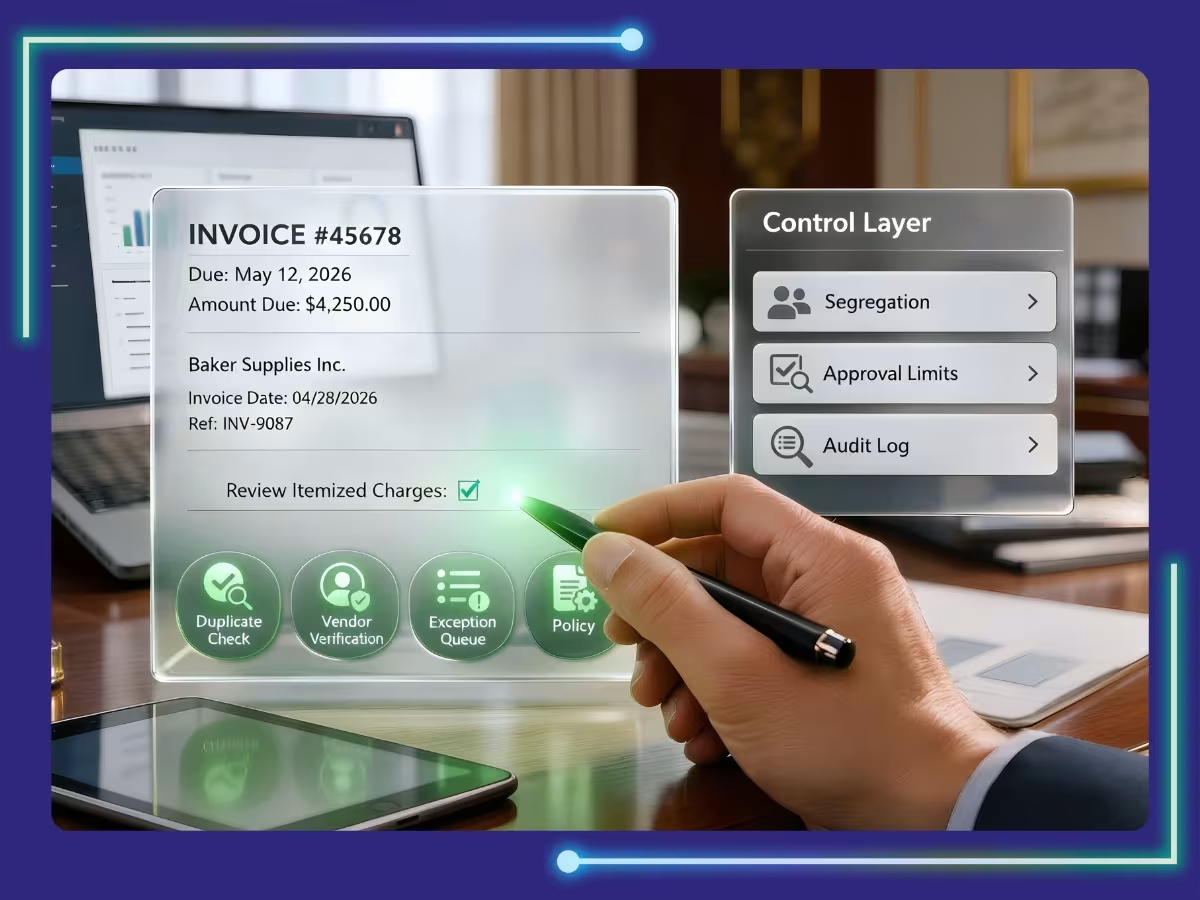
Manual invoice processing increases AP costs through data entry, approval delays, paper handling, and correction work. UK businesses can reduce these costs by using AP automation software to capture invoice data, route approvals, match purchase orders, and flag duplicate invoices. Automation also improves VAT coding accuracy, supports Making Tax Digital record keeping, and gives finance teams better visibility over pending supplier payments.
2. Reduce Late Payment Penalties
Late supplier payments can create unnecessary costs through interest charges, strained supplier relationships, and reduced negotiating power. UK businesses can control these costs by setting clear payment schedules, using approval reminders, and monitoring due dates through AP dashboards. A more structured payment process helps finance teams avoid missed deadlines, protect supplier trust, and maintain better cash flow discipline.
3. Outsource Repetitive AP Tasks
Outsourcing repetitive AP tasks can help UK SMEs reduce staffing, training, software, and overhead costs. Specialist accounts payable services can provide invoice processing, vendor onboarding, payment scheduling, reconciliation, and supplier statement matching support. This gives businesses access to experienced finance support without expanding internal headcount, while also improving turnaround times, consistency, and scalability during busy reporting periods.
4. Standardise Approval Workflows
Unstructured approval workflows increase AP costs because invoices sit in inboxes, approvals are missed, and finance teams spend time chasing departments. UK businesses can reduce this waste by creating approval rules based on invoice value, supplier type, department, and expense category. Standardised workflows improve accountability, reduce bottlenecks, strengthen internal controls, and help invoices move through the system faster.
5. Improve Vendor Management
Poor vendor management often leads to duplicate supplier records, payment errors, pricing disputes, and unnecessary administrative work. Businesses can reduce these costs by regularly reviewing supplier databases, removing inactive vendors, verifying bank details, and standardising payment terms. Stronger AP management also helps finance teams negotiate better supplier terms, capture early payment discounts, and reduce reconciliation issues.
6. Reconcile Accounts Payable Regularly
Delayed AP reconciliation can create costly errors that affect reporting accuracy, supplier payments, and month end close. Regular reconciliation helps UK businesses identify duplicate payments, missing invoices, incorrect VAT entries, and supplier statement mismatches before they become bigger problems. Weekly or rolling reconciliation gives finance teams clearer visibility over liabilities and reduces pressure during reporting periods.
7. Use AP Analytics and Reporting
AP analytics help businesses understand where money, time, and resources are being wasted. UK finance teams can track cost per invoice, approval time, overdue payments, supplier trends, and processing bottlenecks. These insights make it easier to reduce manual effort, improve payment planning, control supplier spend, and make smarter decisions by leveraging AI in accounting, automation, and process improvements.
Hire a Professional AP Specialist to Control AP Costs Better
Controlling AP costs has become a priority for UK businesses facing rising operational pressure, tighter cash flow, and growing compliance demands. Manual invoice handling, delayed approvals, and reconciliation issues often increase processing costs while slowing finance operations. Businesses that improve AP efficiency through automation, stronger controls, and outsourced support can reduce administrative workload, improve payment accuracy, and maintain better financial visibility as they scale.
Whiz Consulting provides customised accounts payable services that help UK businesses streamline invoice processing, improve payment accuracy, reduce approval bottlenecks, and strengthen financial control without increasing internal overhead. With experienced AP specialists, automation expertise, and scalable support models, Whiz Consulting helps businesses build more efficient and cost effective finance operations.

Get customized plan that supports your growth

Have questions in mind? Find answers here...
Yes. AP outsourcing is often more cost effective for UK SMEs because it reduces staffing, training, infrastructure, and software management costs. Businesses also gain access to experienced AP professionals and scalable support without increasing internal headcount.
AP automation reduces manual data entry, approval delays, invoice errors, and duplicate payments. It also speeds up invoice handling and improves operational efficiency across finance teams.
Common hidden AP costs include late payment penalties, duplicate invoices, manual processing time, supplier disputes, reconciliation errors, and inefficient approval workflows.
Most businesses perform monthly AP reconciliation, but weekly reconciliation is becoming more common because it improves accuracy, cash flow visibility, and fraud detection.
Popular AP and accounting platforms used by UK businesses include Xero, QuickBooks, Sage Intacct, and Microsoft Dynamics 365 Business Central.
Thousands of business owners trust Whiz to manage their account
Let us take care of your books and make this financial year a good one.




This website uses cookies to improve your experience. You can accept all or reject non-essential cookies.