



Table of Content
Share This Article
- Last Updated: Aug 4, 2026
- 🔊 Listen
TL;DR
- Late payments and manual invoice processing remain major AP challenges for UK businesses.
- Weak AP controls can increase fraud risks and HMRC compliance issues.
- AP automation improves invoice accuracy, reporting visibility, and payment efficiency.
- Real-time AP reporting helps businesses manage liabilities and supplier relationships better.
- Outsourcing AP operations can reduce workload, improve compliance, and strengthen cash flow management.
Accounts payable challenges UK businesses face today go far beyond invoice approvals and supplier payments. From rising late payment risks and HMRC VAT compliance pressure to manual invoice processing and weak approval workflows, AP teams across the UK are under constant operational strain. Poor AP management can lead to supplier disputes, missed VAT reclaims, cash flow issues, and compliance risks under frameworks like Making Tax Digital for VAT.
This guide explains the biggest AP problems UK businesses face, why they occur, and how businesses can solve them using stronger controls, automation, and modern AP software.

Smart Accounts Payable Management!
Get a fully customised plan that supports your business growth effectively.
What are the biggest AP challenges for UK businesses and how to solve them?
UK businesses face challenges in the accounts payable process, such as late supplier payments and cash flow disruption, manual invoice processing and errors in data entry, HMRC and VAT problems, invoice processing fraud risks, weak AP controls, and poor visibility.
1. Late Supplier Payments and Cash Flow Disruption
Late supplier payments remain one of the biggest accounts payable issues UK businesses face, particularly among SMEs dealing with high invoice volumes and manual approval systems. Delayed invoice approvals, inconsistent payment schedules, and poor communication between departments often create payment bottlenecks that affect supplier relationships and overall cash flow stability.
In the UK, payment delays can also create compliance and reputational concerns under the Late Payment of Commercial Debts Act 1998 and the Prompt Payment Code. Industries such as construction, retail, and NHS supplier networks are especially vulnerable because invoices often pass through multiple approval stages before payment is released.
Businesses can reduce these AP problems UK businesses face by implementing accounting automation for approval workflows, setting clear payment timelines, and using AP software such as Xero, Sage 50, or QuickBooks to monitor invoice status and overdue liabilities in real time.
2. Manual Invoice Processing and Data Entry Errors
Manual invoice processing continues to create serious accounts payable challenges UK finance teams struggle with daily. Many businesses still rely on spreadsheets, paper invoices, and email-based approvals, which increase the risk of duplicate payments, missing invoices, and data entry mistakes.
These inefficiencies slow down invoice processing times and place additional pressure on finance teams during month-end close activities. For UK retail and distribution businesses handling large supplier volumes, even small processing errors can affect supplier trust and disrupt cash flow planning. Manual processes can also delay input VAT recovery because invoice records are often incomplete or difficult to track.
Businesses can improve efficiency by adopting AP automation tools with OCR-based invoice capture, automated three-way matching, and integrated supplier workflows. Modern accounting platforms like Xero and QuickBooks help reduce manual intervention while improving accuracy and reporting visibility.
3. VAT Compliance and HMRC Reporting Issues
VAT compliance has become one of the most critical accounts payable issues UK businesses must manage carefully, especially with the continued expansion of Making Tax Digital for VAT requirements. Missing supplier invoices, incorrect VAT coding, and delayed reconciliations can create reporting inaccuracies that affect VAT reclaim timing and increase the risk of HMRC scrutiny.
Businesses operating across multiple suppliers or locations often struggle to maintain consistent VAT documentation standards. This is particularly common in industries such as healthcare, retail, and hospitality where invoice volumes are high, and tax treatment can vary between transactions.
To reduce compliance risks, businesses should maintain digital audit trails, reconcile supplier VAT records monthly, and use AP software with built-in MTD support. Platforms such as Sage 50 and QuickBooks can help automate VAT tracking, improve reporting accuracy, and simplify HMRC compliance processes.
4. Fraud Risks and Weak AP Controls
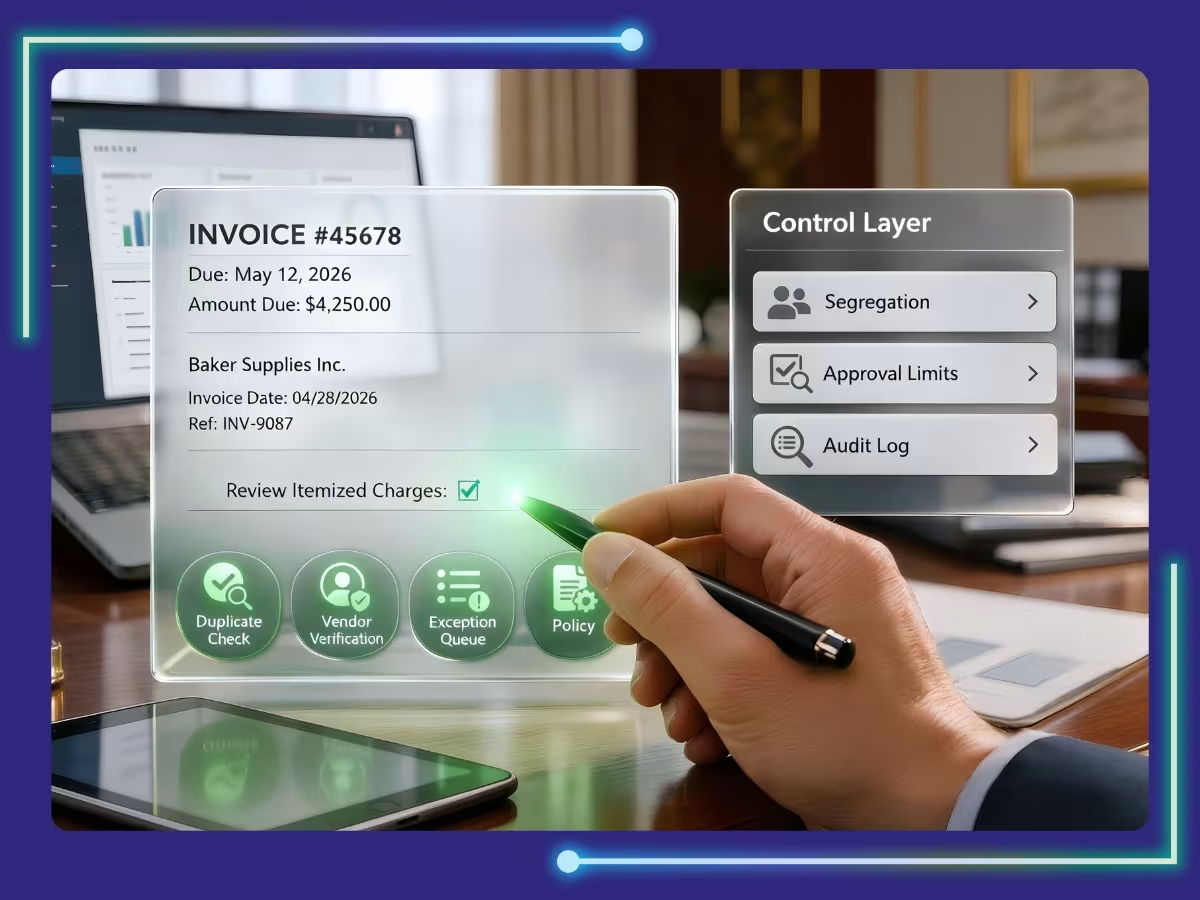
Weak internal controls continue to expose UK businesses to invoice fraud, duplicate payments, and unauthorised transactions. Many AP problems UK businesses face today are linked to poor vendor verification processes, lack of segregation of duties, and insufficient payment approval controls.
Fraud risks are particularly high in businesses managing multiple suppliers, subcontractors, or remote finance operations. UK construction and retail companies often face elevated exposure because of large transaction volumes and decentralised payment workflows. Without proper controls, businesses may struggle to detect suspicious supplier changes, duplicate invoices, or unauthorised payment requests.
Businesses can strengthen AP controls by separating invoice approval and payment responsibilities, introducing supplier verification checks, and maintaining detailed payment audit trails. Implementing AI in accounting through AP automation systems also improves security by enforcing approval hierarchies and restricting unauthorised payment access.
5. Poor Visibility into AP Performance and Liabilities
Lack of real-time visibility into accounts payable data remains a major operational challenge for UK businesses. Many finance teams struggle to track outstanding liabilities, supplier ageing, invoice approval delays, and payment commitments because of disconnected systems and inconsistent reporting practices.
Without accurate AP reporting, businesses find it difficult to forecast working capital requirements or identify payment bottlenecks early. This can create supplier disputes, inaccurate financial reporting, and delayed decision-making for finance leaders. SMEs using fragmented accounting systems are especially affected because AP data is often spread across spreadsheets, emails, and separate finance platforms.
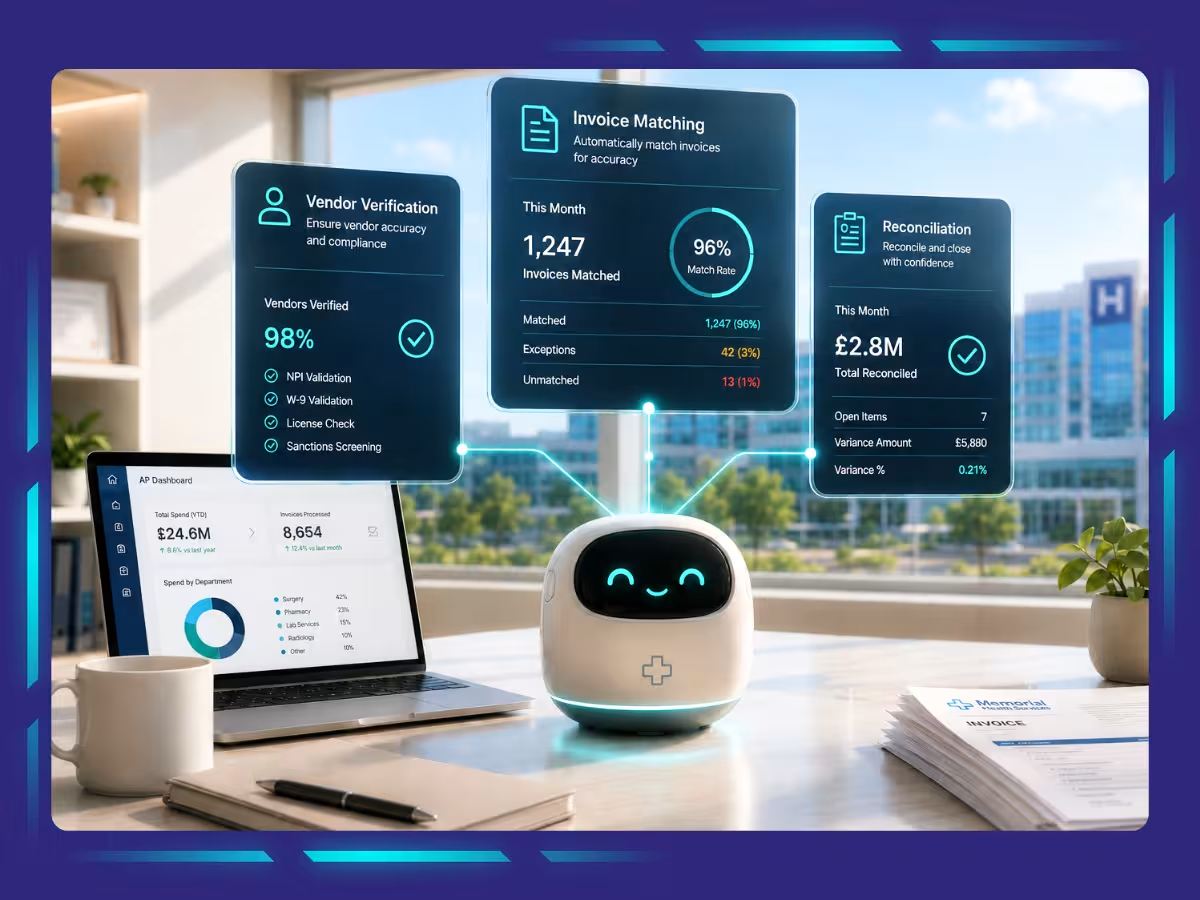
Businesses can improve AP visibility by implementing centralised reporting dashboards, tracking AP KPIs regularly, and integrating AP workflows with cloud accounting software. Real-time reporting tools help finance teams monitor invoice processing times, overdue invoices, and supplier liabilities more effectively.
Avoid Facing Challenges in AP by Hiring the Right Accounts Payable Specialist
Accounts payable challenges UK businesses face today go far beyond delayed invoice approvals or payment bottlenecks. Issues such as VAT reporting errors, limited cash flow visibility, fraud risks, and weak supplier communication can gradually affect financial stability, compliance, and operational efficiency. Businesses that strengthen their AP processes through automation, structured approval workflows, reconciliation practices, and stronger internal controls are better equipped to improve accuracy, maintain HMRC compliance, and build healthier supplier relationships while protecting working capital.
As AP operations become more complex, having the right accounts payable service provider behind your processes makes a measurable difference. Whiz Consulting helps UK businesses streamline accounts payable management through reliable outsourcing support, modern AP workflows, and experienced finance professionals who understand UK compliance requirements. From invoice processing and reconciliations to AP reporting and supplier management, the right support can help transform accounts payable into a more efficient and strategic finance function.

Get customized plan that supports your growth

Have questions in mind? Find answers here...
HMRC affects accounts payable through VAT compliance, invoice recordkeeping, supplier tax validation, and Making Tax Digital requirements. Poor AP processes can lead to VAT errors, compliance penalties, and inaccurate financial reporting.
Late payments in UK accounts payable are often caused by manual approvals, missing invoices, poor workflow visibility, staffing gaps, and inefficient invoice processing systems.
You can fix accounts payable problems by automating invoice processing, improving approval workflows, reconciling AP regularly, strengthening internal controls, and using clear vendor communication processes.
Many UK businesses outsource accounts payable services to reduce operational costs, improve invoice processing efficiency, strengthen compliance, and free internal teams from repetitive AP tasks.
Outsourcing accounts payable helps UK businesses improve payment accuracy, reduce processing delays, strengthen cash flow visibility, access AP technology expertise, and scale finance operations more efficiently.
Thousands of business owners trust Whiz to manage their account
Let us take care of your books and make this financial year a good one.


This website uses cookies to improve your experience. You can accept all or reject non-essential cookies.