


Table of Content
Share This Article
- Last Updated: Sep 2, 2026
- 🔊 Listen
TL;DR
- Accounts payable automation for healthcare in UK improves invoice processing, approvals, and supplier payment accuracy.
- AP automation strengthens financial visibility, compliance, audit readiness, and cash flow management.
- OCR invoice capture and automated workflows reduce duplicate payments and reconciliation errors.
- Legacy systems, integration issues, and supplier readiness remain common implementation challenges.
Managing supplier invoices manually has become increasingly difficult for UK healthcare providers handling growing procurement volumes and strict compliance requirements. Accounts payable automation for UK healthcare providers helps finance teams improve approval speed, reduce processing errors, strengthen financial visibility, and maintain better control over supplier payments and reporting workflows.
This blog explains how UK healthcare finance teams, GP practices, care homes, private hospitals, and independent healthcare providers are using AP automation to improve efficiency, reduce operational pressure, strengthen compliance, and build a more scalable healthcare finance process.

Automate Your AP Process Today
Cut Manual Errors, Duplicate Payments & Cash Flow Gaps Now
What is AP Automation?
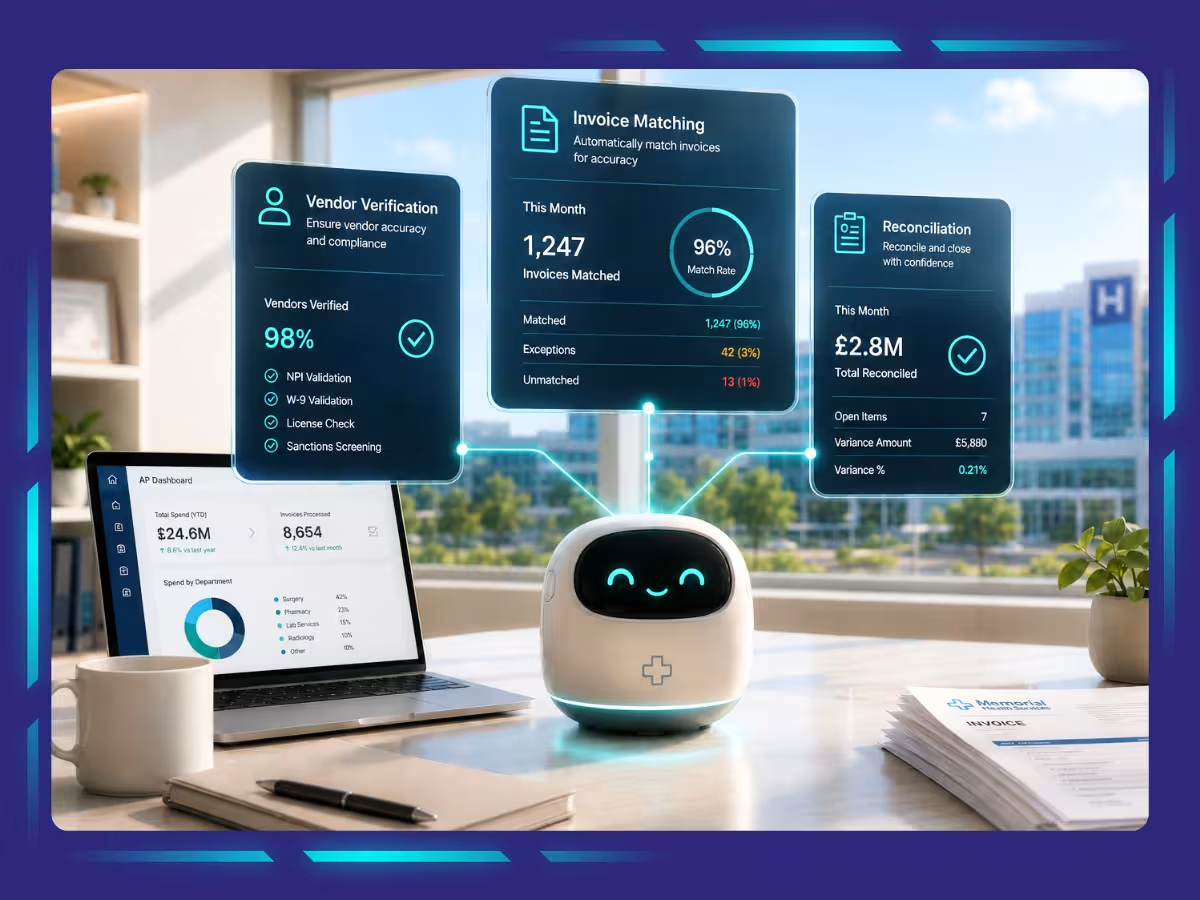
Accounts payable automation for healthcare in UK uses technology to automate invoice processing, approvals, payment workflows, reconciliations, and reporting within healthcare finance operations. It helps UK healthcare providers reduce manual errors, improve compliance, strengthen cash flow visibility, and speed up supplier payments through automated workflows and real-time financial tracking.
Manual AP processes often create approval delays, invoice mismatches, duplicate payments, and reporting inefficiencies across healthcare organisations. Accounts payable automation tools for healthcare in UK streamlines invoice capture, approval routing, payment scheduling, and audit tracking while improving VAT compliance and financial accuracy.
It also helps healthcare finance teams reduce administrative workload, strengthen internal controls, improve supplier relationships, and focus more on financial planning and operational efficiency instead of repetitive AP tasks.
How Does Accounts Payable Automation Benefit Healthcare Providers in the UK?

Accounts payable automation for healthcare in the UK helps organisations improve invoice processing speed, strengthen financial controls, reduce manual errors, and maintain better supplier payment visibility. As healthcare finance teams manage growing supplier networks and strict compliance expectations, automation is helping providers operate with greater efficiency and accuracy.
Improved Invoice Processing
Manual AP workflows often create approval delays and operational inefficiencies. Accounts payable automation for healthcare in the UK helps finance teams across hospitals, clinics, care homes, and GP practices automate invoice routing, approval hierarchies, and payment scheduling to process invoices much faster. This improves supplier payment timelines and reduces administrative backlogs across healthcare operations.
Better Financial Visibility Across Healthcare Operations
Healthcare organisations across the UK process large volumes of invoices related to medical supplies, procurement, maintenance, staffing, and operational expenses. Accounts payable automation for healthcare in the UK provides real-time dashboards that improve visibility into pending invoices, liabilities, supplier payments, and cash flow management.
Reduced Errors and Duplicate Payments
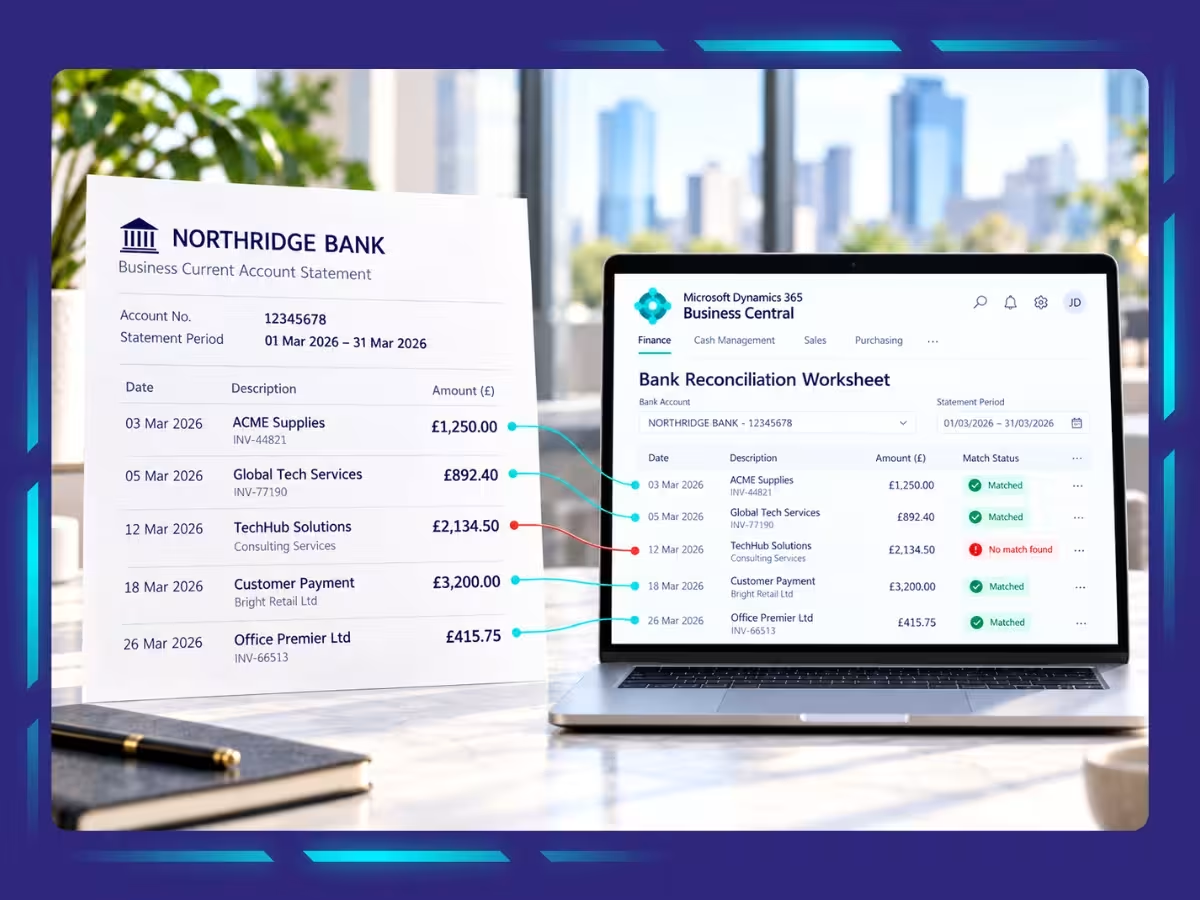
Manual invoice entry increases the risk of duplicate invoices, incorrect coding, and reconciliation inconsistencies. Accounts payable automation for healthcare in the UK helps providers reduce avoidable payment errors through OCR invoice capture, automated matching, and supplier validation controls.
Improved Supplier Relationships and Payment Accuracy
Late supplier payments often disrupt procurement workflows and vendor relationships. Automation helps UK healthcare providers, including private hospitals, care homes, and GP practices, improve approval turnaround times and maintain more reliable supplier payment schedules.
Stronger Compliance and Audit Readiness
Healthcare organisations in the UK operate under strict financial governance expectations. Accounts payable automation for healthcare in the UK strengthens audit trails, invoice tracking, and digital recordkeeping while supporting compliance expectations linked to Care Quality Commission (CQC) standards, NHS Trust financial governance frameworks, and HMRC reporting requirements.
Better Cash Flow Management
Automation improves visibility into upcoming liabilities and payment obligations. Healthcare providers across the UK can monitor cash flow more accurately while identifying opportunities to optimise payment timing and reduce operational inefficiencies.
Increased Security and Data Protection
Healthcare finance teams manage sensitive supplier and payment information daily. AP automation systems improve security through role-based access controls, encryption protocols, approval restrictions, and digital audit logs.
Manual vs Automated AP for Healthcare in the UK: Before vs After the Switch
As healthcare finance operations become more complex, many UK providers are moving away from manual AP workflows toward automation-driven systems for better efficiency, compliance, and financial visibility. The comparison below highlights how AP operations change before and after automation implementation.
| Area | Manual AP Process | Automated AP Process | Impact for UK Healthcare |
|---|---|---|---|
| Invoice processing time | Slow, often several days | Faster approvals and processing | Reduces supplier payment backlogs |
| Approval Visibility | Limited tracking visibility | Real-time approval tracking | Improves financial oversight |
| Error Rate | Higher manual entry errors | Reduced processing inaccuracies | Fewer reconciliation issues |
| Duplicate Payments | More common | Automated duplicate detection | Protects procurement budgets |
| Supplier Communication | Delayed and inconsistent | Faster payment communication | Strengthens vendor relationships |
| Audit Trails | Paper-based documentation | Digital audit-ready records | Supports CQC and HMRC compliance |
| Operational Cost | Higher administrative workload | Reduced processing costs | Frees up finance team capacity |
| Financial Visibility | Limited reporting visibility | Real-time AP dashboards | Improves cash flow planning |
| Compliance Tracking | Manual reconciliation processes | Automated compliance support | Reduces regulatory risk |
Healthcare organisations implementing accounts payable automation across the UK often improve workflow efficiency significantly while reducing operational workload across finance departments.
What Challenges Do Healthcare Providers Face When Implementing AP Automation?
Healthcare providers often face challenges with legacy finance systems, integration complexity, approval bottlenecks, supplier e-invoicing readiness, and data security when implementing AP automation. High implementation costs and resistance to workflow changes can also slow adoption, especially across multi-department healthcare organisations and NHS Trust environments.
Legacy Healthcare Systems and Integration Issues
Many UK healthcare organisations still rely on older finance systems and fragmented workflows. Integrating AP automation with systems like Oracle Financials or existing healthcare finance infrastructure can require significant planning and technical alignment.
High Initial Implementation Costs
Smaller healthcare providers and care homes may hesitate because of software licensing, integration, and training costs. However, long-term operational savings often outweigh the initial investment required for automation.
Resistance to Operational Change
Healthcare finance teams accustomed to manual workflows may initially resist automation adoption. Successful accounts payable automation implementations across UK healthcare often depend on clear employee training and operational transition planning.
Data Security and Compliance Risks
Healthcare providers in the UK handle highly sensitive financial and operational information. Accounts payable automation for healthcare in the UK must maintain strong cybersecurity measures, controlled access management, and secure supplier payment workflows.
Complex Procurement and Approval Structures
Large healthcare groups and organisations, including NHS Trusts, often operate across multiple departments, suppliers, and approval layers. Without structured workflows, automation implementation may create approval bottlenecks rather than solving them.
Supplier Adoption and E-Invoicing Readiness
Many UK healthcare suppliers are transitioning toward PEPPOL-based e-invoicing workflows supported by UK Government Digital Service initiatives. However, supplier readiness levels can vary significantly across healthcare networks.
What Are the Best Practices for Implementing AP Automation in Healthcare?
Successful AP automation in healthcare requires clear workflows, automated invoice processing, standardised approvals, strong supplier communication, and healthcare-focused platforms. UK healthcare providers also improve results through KPI monitoring, staff training, PEPPOL-ready invoicing, and outsourced AP services for process optimisation and compliance management.
Define and Document AP Workflow Requirements Clearly
Healthcare organisations should map invoice approvals, procurement workflows, supplier categories, and payment responsibilities before implementing automation. Clear documentation reduces workflow confusion and improves implementation success.
Select Healthcare-Focused Automation Platforms
Choose AP automation solutions designed for healthcare finance in the UK that support healthcare procurement workflows, VAT compliance, audit tracking, and integration with existing healthcare finance systems.
Standardise Approval Workflows Across Departments
Structured approval hierarchies reduce operational delays and improve invoice visibility across finance teams. Standardised workflows also strengthen accounts payable automation reporting consistency across UK healthcare organisations.
Automate Invoice Capture and Matching
OCR invoice capture and automated matching reduce manual workload while improving invoice accuracy. Automated workflows also help UK healthcare providers reduce duplicate payments and reconciliation issues significantly.
Train Finance Teams and Operational Staff Properly
Employee adoption is critical for successful AP automation. Healthcare finance teams should understand approval workflows, reporting systems, supplier communication procedures, and compliance responsibilities clearly.
Monitor KPIs and Operational Performance Continuously
Healthcare providers should regularly monitor AP KPIs such as invoice processing time, approval turnaround, duplicate payment rates, supplier disputes, and reconciliation accuracy to evaluate automation effectiveness.
Strengthen Supplier Communication and Digital Invoicing
Encouraging suppliers to adopt electronic invoicing and PEPPOL-supported workflows helps improve operational efficiency and payment accuracy across healthcare finance systems.
Use Outsourced AP Support When Needed
Many UK healthcare providers partner with outsourced healthcare accounting services to manage implementation, reconciliations, reporting workflows, and AP process optimisation more efficiently.
References from organisations like the Healthcare Financial Management Association continue to highlight the growing importance of digital finance transformation within UK healthcare operations.
Strengthen Healthcare AP Efficiency with Smarter Financial Workflows
Efficient accounts payable processes are critical for healthcare organisations managing supplier relationships, operational costs, VAT compliance, and financial reporting deadlines. Delayed approvals and manual AP systems often create unnecessary operational pressure and increase financial risks.
At Whiz Consulting, we help UK healthcare businesses modernise AP operations through accounting automation, invoice management, payment controls, reconciliation support, and real-time reporting workflows. Our scalable accounts payable services helps finance teams improve processing speed, strengthen compliance, and maintain more reliable financial operations.

Get customized plan that supports your growth

Have questions in mind? Find answers here...
AP automation helps UK healthcare providers reduce manual errors, speed up approvals, improve supplier payment accuracy, strengthen audit readiness, and maintain better financial visibility across healthcare operations.
Yes. AP automation improves invoice tracking, digital recordkeeping, and reconciliation accuracy, helping healthcare organisations maintain stronger VAT compliance and more accurate HMRC reporting.
Common challenges include legacy finance systems, integration complexity, approval bottlenecks, supplier e-invoicing readiness, implementation costs, and staff resistance to workflow changes.
AP automation provides real-time visibility into pending invoices, liabilities, supplier payments, and operational spending, helping finance teams manage cash flow more accurately.
Yes. Automated invoice matching, supplier validation, approval controls, and audit trails help healthcare organisations reduce duplicate payments, unauthorised transactions, and fraud risks.
Thousands of business owners trust Whiz to manage their account
Let us take care of your books and make this financial year a good one.




This website uses cookies to improve your experience. You can accept all or reject non-essential cookies.