


Table of Content
Share This Article
- Last Updated: Aug 21, 2026
- 🔊 Listen
TL;DR
- Enhances product recommendations, pricing, and marketing, boosting conversions.
- Predicts demand, prevents stockouts, and optimizes multi-channel inventory.
- Automates product descriptions, ads, and emails while maintaining brand consistency.
- AI helps sync sales and inventory data, improving financial tracking and decisions.
- Automation supports scaling, cost control, and strategic planning.
The UK ecommerce market in 2026 is evolving rapidly, driven by AI-powered personalization, social commerce expansion, and growing sustainability expectations. For online sellers, understanding these shifts is critical to staying competitive and meeting customer expectations effectively.
In this guide, we explore the top UK ecommerce trends for 2026, from technology adoption to environmental initiatives, and explain how businesses can leverage these trends to optimise operations, improve customer engagement, and drive profitability. By aligning strategies with emerging consumer behaviours and market forces, UK sellers can make informed decisions that sustain growth in this dynamic landscape.

Future-Proof Your Online Business
Stop Reactive Decisions, Cash Flow Gaps & Accounting Errors Now
Top E-Commerce Trends in 2026 for UK Businesses
UK ecommerce in 2026 is evolving at lightning speed. AI-driven personalization, social commerce, sustainability demands, and multi-channel selling are reshaping how customers shop and how businesses compete. Understanding these trends helps online sellers make smarter, faster, and more profitable decisions. Here are the key e-commerce trends in 2026 for UK businesses that every online seller needs to understand and prepare for.
1. AI-Powered Personalisation and Automation
AI is no longer a future investment it is a present-day competitive advantage. UK ecommerce brands are using AI to personalise product recommendations, automate customer service, optimise pricing in real time, and forecast demand with greater accuracy. Sellers who integrate AI into their operations are cutting costs, improving conversion rates, and scaling without proportionally growing their headcount.
2. Social Commerce and Live Shopping
TikTok Shop, Instagram Shopping, and YouTube Shopping have turned social media feeds into fully functional storefronts. UK consumers are discovering and purchasing products without ever leaving their favourite apps. Live shopping events, where sellers demonstrate products in real time are driving particularly strong engagement and conversion, making social commerce one of the most important new revenue channels for online sellers in 2026.
3. Sustainability as a Business Standard
Consumer expectations around sustainability have hardened into actual buying behaviour. UK shoppers are actively choosing brands that use minimal, recyclable packaging, operate transparently, and demonstrate genuine environmental responsibility. This is no longer a niche preference it is a mainstream expectation that directly influences purchase decisions, brand loyalty, and repeat business.
4. Extended Producer Responsibility (EPR) Compliance
EPR for packaging is one of the most significant regulatory developments affecting UK ecommerce sellers right now. Businesses that place packaged goods on the UK market are now financially responsible for the end-of-life cost of that packaging. Sellers meeting the relevant thresholds must register, report their packaging data, and pay compliance fees, making EPR a cost line that needs to be budgeted for explicitly in 2026.
5. Multi-Channel Selling as the New Default
UK online sellers are no longer relying on a single platform. Selling simultaneously across their own website, Amazon, TikTok Shop, eBay, and social platforms has become standard practice. While this expands reach and reduces dependency on any one channel, it also introduces complexity around inventory management, payout reconciliation, fee structures, and VAT reporting that needs to be carefully managed.
6. Mobile-First Shopping Experiences
The majority of UK ecommerce traffic now comes from mobile devices, and conversion rates on mobile continue to close the gap with desktop. Sellers who have not optimised their store for mobile, fast load times, streamlined checkout, one-tap payment options like Apple Pay and Google Pay, are leaving revenue on the table. Mobile-first is not a design trend; it is a commercial necessity.
7. Buy Now Pay Later (BNPL) Growth
BNPL services like Klarna, Clearpay, and Laybuy remain popular with UK shoppers, particularly for higher-value purchases. Offering flexible payment options at checkout reduces friction and increases average order values. However, sellers need to account for the associated fees, and slightly delayed settlement cycles these services introduce into their cash flow planning.
8. Same-Day and Next-Day Delivery Expectations
Fast fulfilment has shifted from a premium differentiator to a baseline expectation for UK online shoppers. Marketplaces like Amazon have set the standard, and independent sellers are under growing pressure to match it. Sellers investing in smarter warehouse locations, third-party logistics partnerships, and real-time inventory visibility are better positioned to meet delivery expectations without eroding margins.
9. Returns Management as a Competitive Edge
UK consumers return online purchases at a high rate, and how a brand handles returns has a direct impact on customer loyalty. Clear returns policies, easy processes, and fast refunds are now table stakes. At the same time, rising return rates create a real financial challenge, sellers need to track return costs by channel and product to understand their true profitability and reduce return rates on high-offender SKUs.
10. Cross-Border Ecommerce Expansion
UK sellers are increasingly looking beyond domestic borders to grow revenue, with European, North American, and Middle Eastern markets all presenting opportunities. However, cross-border selling in 2026 comes with complex VAT obligations, customs requirements, and currency considerations that can catch underprepared sellers off guard. Getting the compliance and financial infrastructure right before expanding internationally is essential.
How Is AI Reshaping UK Ecommerce in 2026?
AI is transforming UK ecommerce by personalising shopping, automating customer service, and improving inventory forecasting. These innovations are key highlights in the UK e-commerce trends for 2026, helping retailers boost efficiency, increase sales, and deliver tailored experiences at scale.
AI-Powered Personalisation
- Ecommerce platforms are now using AI to deliver hyper-personalised shopping experiences in real time, adjusting product recommendations, pricing, and even homepage layouts based on individual browsing behaviour, purchase history, and location.
- UK retailers using personalisation tools powered by AI report stronger average order values and lower cart abandonment rates, as shoppers are shown products that genuinely match their intent.
- Tools like dynamic pricing engines allow sellers to adjust prices automatically based on demand signals, competitor activity, and stock levels, reducing the need for manual intervention.
AI in Customer Service
- AI-powered chatbots and virtual assistants now handle a significant share of customer enquiries on UK ecommerce sites, covering order tracking, returns, product questions, and complaints around the clock.
- Beyond basic chatbots, conversational AI tools are being trained on brand-specific data, making interactions more accurate and reducing the volume of tickets that reach human agents.
- For smaller ecommerce sellers, this levels the playing field, offering enterprise-level customer service without the headcount.
AI for Inventory and Demand Forecasting
- One of the most commercially valuable applications of AI in UK ecommerce right now is smarter inventory management. Machine learning models analyse historical sales data, seasonality, promotional uplift, and supply chain signals to forecast demand with far greater accuracy than manual methods.
- This reduces overstocking costs, prevents stockouts during peak periods like Black Friday, and helps sellers make better purchasing decisions months in advance.
- For businesses selling across multiple channels, Shopify, Amazon, their own website, AI-driven inventory tools provide a single, intelligent view of stock levels and reorder needs.
Generative AI in Content and Marketing
- UK ecommerce brands are increasingly using generative AI tools to produce product descriptions, ad copy, email campaigns, and SEO content at scale, cutting production time significantly.
- While human oversight remains essential for brand consistency and accuracy, AI is accelerating the content pipeline for sellers competing in crowded categories.
AI in Ecommerce Accounting and Financial Management
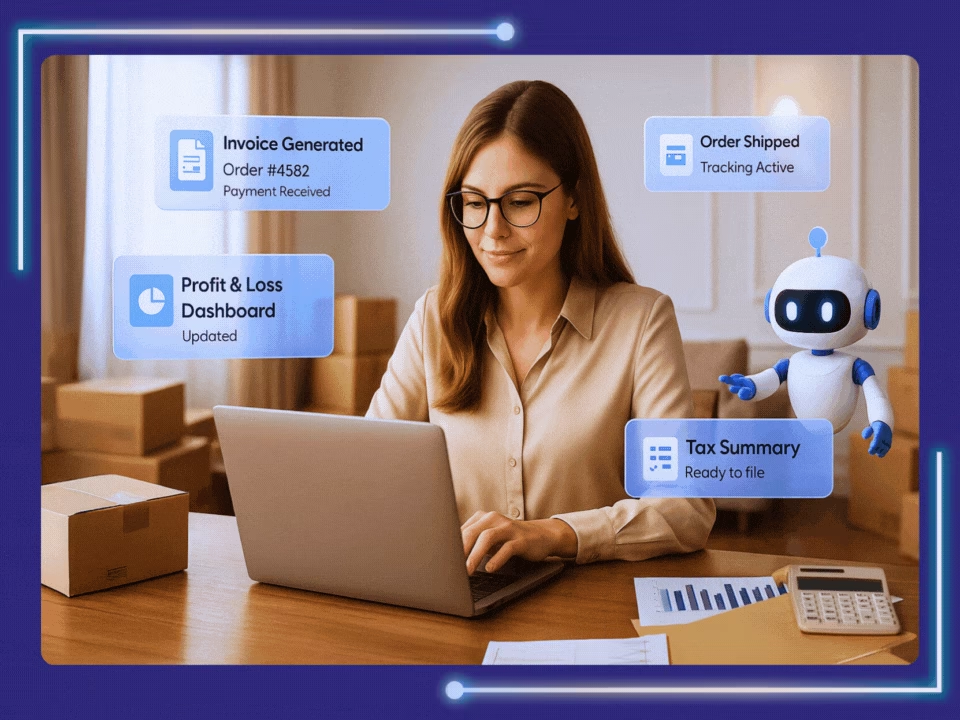
- The rise of AI in accounting is transforming how UK ecommerce sellers manage their finances, automating bank reconciliation, categorising transactions across multiple sales channels, and flagging anomalies in real time, tasks that previously took hours of manual effort every week.
- For sellers operating across platforms like Shopify, Amazon, and TikTok Shop, AI driven software can consolidate revenue, fees, refunds, and VAT data from all channels into a single accurate view, eliminating the errors that come with manual data entry.
- Cash flow forecasting is also being transformed by AI, with tools now able to predict shortfalls weeks in advance based on sales trends, upcoming supplier payments, and platform payout cycles, giving UK ecommerce sellers the financial visibility they need to make smarter decisions faster.
What Are the Financial Implications of UK E-Commerce Trends for 2026 on UK Businesses?
Understanding the financial implications of UK e-commerce trends in 2026 is essential for business planning and profitability. Rising tech costs, multi-channel complexity, VAT obligations, and rapid growth pressures all affect cash flow and operational efficiency. This section breaks down the key cost drivers and explains how outsourcing accounting to an ecommerce accountant can help UK online sellers manage these challenges effectively.
Rising Technology Costs
- Investing in AI tools, social commerce integrations, and multi-channel management platforms adds to the technology stack every year. Sellers need to evaluate the ROI of each tool carefully, ensuring that the cost of automation and intelligence is genuinely offset by efficiency gains or revenue uplift.
- Subscription costs across platforms, from ecommerce software to fulfilment tech to AI tools, can accumulate quickly. Regular audits of your tech spend are increasingly important as the stack grows.
EPR Fees and Packaging Costs
- EPR compliance fees represent a new and recurring cost line for UK ecommerce businesses. These need to be budgeted for explicitly, factored into product pricing, and tracked as part of your cost of goods or operational overheads.
- Businesses that have not yet modelled the impact of EPR fees on their margins risk being caught out, particularly in low-margin categories where even small cost increases can make products unprofitable.
Multi-Channel Financial Complexity
- Selling across your own website, Amazon, TikTok Shop, Instagram, and other platforms means managing multiple payout cycles, fee structures, currency considerations, and VAT treatments simultaneously.
- Each platform takes a different cut, pays out on different timescales, and categorises fees differently, making accurate revenue recognition and profit margin analysis genuinely complex without the right accounting setup.
- UK ecommerce sellers scaling across channels need accounting systems that can consolidate data from all platforms automatically, provide accurate per-channel profitability reports, and flag VAT liabilities in real time.
Cash Flow Management During Rapid Growth
- Social commerce virality, AI-driven personalisation, and peak season demand spikes all have the potential to create sudden, sharp increases in sales volume. While that sounds positive, rapid growth creates real cash flow strain, stock needs to be purchased before revenue arrives, fulfilment costs scale up immediately, and platform payouts often lag behind actual sales.
- UK online sellers navigating growth need rolling cash flow forecasts, clear working capital visibility, and ideally a relationship with a lender or credit facility they can draw on quickly if needed.
VAT and Cross-Border Considerations
- As UK ecommerce sellers expand into European and international markets, VAT registration requirements, customs documentation, and cross-border compliance add layers of financial complexity.
- The UK’s domestic VAT threshold, combined with EU OSS obligations for sellers shipping to European customers, means that fast-growing ecommerce businesses can find themselves with compliance obligations in multiple jurisdictions simultaneously.
- Getting VAT wrong is expensive, both in terms of penalties and the administrative cost of correction. Sellers expanding internationally in 2026 should ensure their accounting and compliance setup scales with them.
Leveraging Outsourced Accounting for Operational Efficiency
- For UK online sellers managing the combined complexity of AI tools, social commerce channels, EPR compliance, multi-platform fees, and international VAT, attempting to handle all of this with a basic bookkeeping setup or in-house resource is increasingly unrealistic.
- Outsourced e-commerce accounting gives sellers access to specialists who understand platform fee structures, VAT obligations, EPR cost tracking, and multi-channel reconciliation, without the overhead of a full-time finance team.
- The right accounting partner does not just keep your books tidy, they give you the financial visibility to make smarter decisions, protect your margins, and scale with confidence through a rapidly changing market.
Partner with an Expert E-commerce Service Provider to Stay Ahead
To thrive in the evolving UK e-commerce landscape, partnering with a knowledgeable e-commerce accounting service provider is essential. Experts can help sellers navigate emerging trends, optimize digital operations, and implement data-driven strategies for stronger sales, customer engagement, and sustainable growth.
Whiz Consulting delivers specialised solutions for UK e-commerce businesses. From accounting automation to strategic planning, we help online sellers stay compliant, improve operational efficiency, and boost profitability, ensuring they’re ready to lead in 2026 and beyond.

Get customized plan that supports your growth

Have questions in mind? Find answers here...
The UK ecommerce market is expected to see growth in mobile shopping, voice commerce, personalized experiences, AI-driven recommendations, and subscription-based models. Retailers are also increasingly adopting multi-channel strategies and enhanced delivery options like same-day shipping to meet consumer expectations.
AI is transforming ecommerce by enabling predictive analytics, personalized product recommendations, automated customer service chatbots, and dynamic pricing strategies. AI-driven insights help UK businesses optimize inventory, forecast demand, and improve the overall customer experience, leading to higher engagement and conversion rates.
Yes, social commerce is rapidly expanding, with platforms like Instagram, TikTok, and Facebook integrating buy-now features. UK consumers increasingly discover products via social media, making it a key channel for driving sales, enhancing brand visibility, and targeting younger demographics with influencer-led marketing.
Sustainability trends include eco-friendly packaging, carbon-neutral delivery options, and promoting ethical sourcing. UK consumers increasingly prefer brands that demonstrate environmental responsibility, encouraging retailers to adopt green logistics, reduce waste, and provide transparent sustainability information across their online channels.
These trends impact cash flow, operational costs, and investment priorities. Businesses must plan for technology upgrades, AI solutions, marketing spend on social commerce, and sustainable packaging. Strategic budgeting and real-time financial monitoring are critical to maximizing profitability and staying competitive in the evolving UK ecommerce landscape.
Thousands of business owners trust Whiz to manage their account
Let us take care of your books and make this financial year a good one.



This website uses cookies to improve your experience. You can accept all or reject non-essential cookies.