

Table of Content
Share This Article
- Last Updated: Sep 2, 2026
- 🔊 Listen
TL;DR
- STP Phase 2 requires employers to report detailed payroll data to the ATO using STP-enabled software on or before each payday.
- Employers must classify income into specific types like wages, allowances, and deductions instead of reporting only total payroll figures.
- Nearly all Australian employers must comply with STP rules, with limited exemptions and concessional reporting options for specific cases.
- STP finalisation must be completed by 14 July each year, so employees receive tax-ready income statements in myGov for lodging returns.
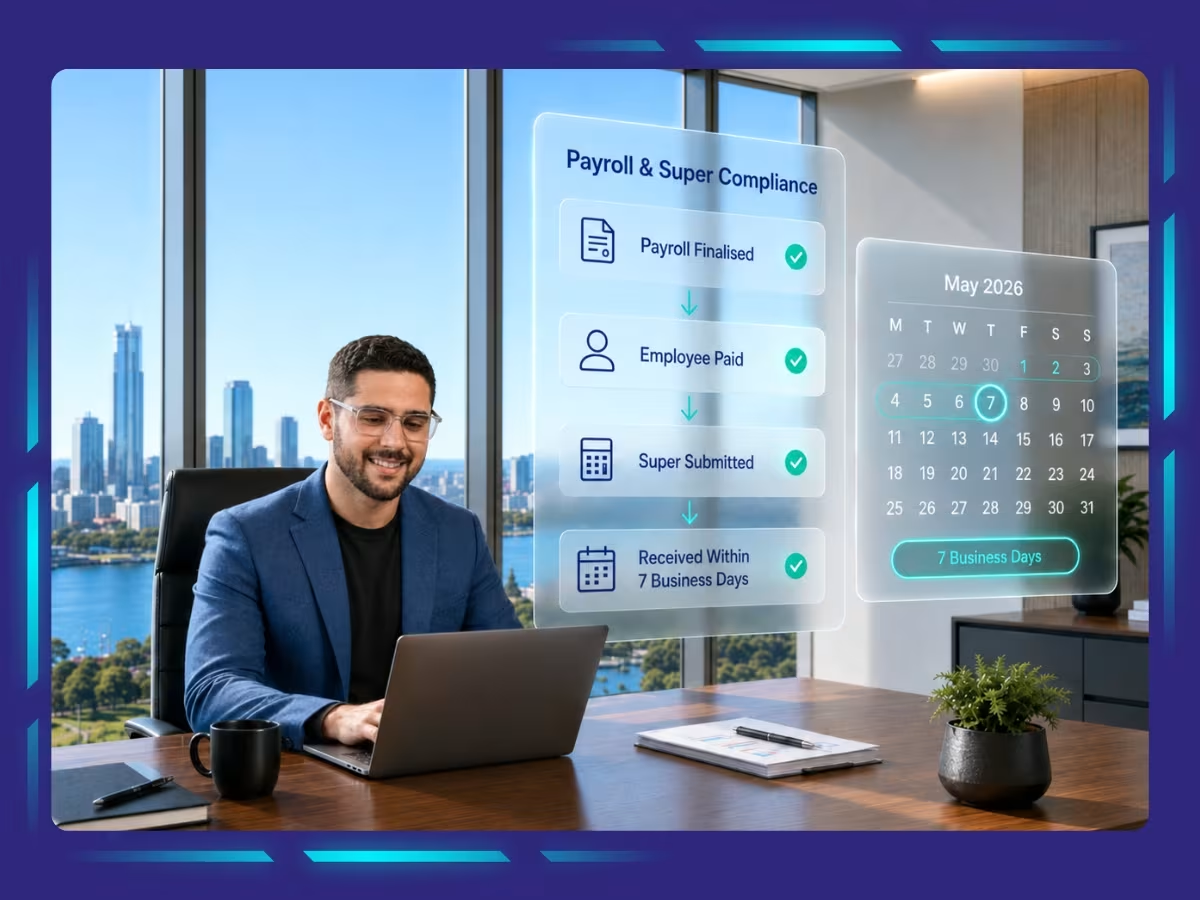
Single Touch Payroll (STP) is an ATO reporting system that requires Australian employers to send detailed payroll data. Unlike Phase 1, it breaks down income types, tax, allowances, and deductions in more detail, submitted through STP-enabled payroll software on or before payday.
This Single Touch Payroll guide explains what Phase 2 requirements mean in practice, how reporting works, and what has changed for businesses. You’ll also learn compliance rules, software setup, deadlines, and penalties so you can manage payroll correctly and stay ATO-compliant.

Simplified STP Reporting
Helping You Stay on Top of STP Reporting Requirements
What Is Single Touch Payroll (STP)?
Single Touch Payroll (STP) is an ATO reporting system where Australian employers send payroll information directly to the Australian Taxation Office. It includes wages, tax withholdings, and superannuation, submitted through STP-enabled payroll software on or before payday to ensure reporting accuracy. Australian businesses outsource payroll services to ensure STP is reported accurately.
How Does STP Phase 2 Differ from STP Phase 1 for Australian Employers?
STP Phase 2 expands Australia’s payroll reporting system by requiring more detailed breakdowns of employee payments compared to Phase 1. Employers now report disaggregated income types, extra employee details, and additional event data directly to the ATO using STP-enabled payroll software.
STP Phase 1 vs STP Phase 2 Comparison
Here’s a detailed comparison of STP Phase 1 and Phase 2.
| Feature | STP Phase 1 | STP Phase 2 |
|---|---|---|
| Reporting scope | Total wages, tax, super | Detailed breakdown of income types and components |
| Income classification | Limited | Disaggregated reporting (salary, allowances, etc.) |
| Employee data | Basic | Expanded (TFN, employment basis, tax treatments) |
| Termination reporting | Limited fields | Detailed cessation reason codes |
| Update events | Minimal | Mandatory update events (YTD corrections) |
| ATO visibility | Annual-style summaries | Real-time granular payroll data |
| Payroll systems | STP-enabled software | STP Phase 2-compliant software required |
| Reporting method | Pay event submissions | Pay event + update events + finalisation |
| Accuracy focus | Payroll totals | Payroll detail accuracy and classification |
| Closely held payees | Not detailed | Separate reporting rules introduced |
Who Must Use STP in Australia?
Single Touch Payroll is mandatory for almost all employers in Australia, meaning if you pay wages, you must report through STP-enabled payroll software to the ATO. Only a few specific groups qualify for exemptions or reduced reporting schedules under STP Phase 2 rules.
Employer STP obligations
All employers must use STP reporting to send pay event data, including wages, PAYG withholding, and superannuation, each time employees are paid. This applies regardless of business size once you have employees on payroll.
STP exemptions and special cases
STP exemptions are rare and typically apply to employers with no employees or very limited edge cases approved by the ATO. Closely held payees, such as family business owners, may report quarterly instead of per pay run under concessional arrangements.
How Does STP Phase 2 Work Through Income Types and Disaggregated Reporting?
STP Phase 2 works by breaking payroll into detailed income categories and sending them to the ATO through STP. Employers must report pay data on or before payday, including wages, allowances, deductions, and super, using STP-enabled payroll software.
STP Phase 2 Income Types
| Income Type | What It Includes | STP Reporting Example |
|---|---|---|
| Salary and wages | Regular employee pay | Base salary, hourly wages |
| Allowances | Extra payments for conditions | Travel, meal, tool allowances |
| Working holiday makers | Visa-based employees | Taxed under specific withholding rules |
| Lump sum payments | One-off or back pay | Lump Sum A, B, D, E payments |
On or before payday rule
Under STP rules, employers must submit payroll data on or before pay day, not after. This “real-time” requirement ensures the ATO receives accurate, up-to-date information for each pay event, reducing end-of-year corrections and compliance risks.
How Does STP Reporting Work Step-by-Step from Pay Run to ATO Submission?
STP reporting follows a fixed payroll-to-ATO workflow where each pay run is processed, validated, and sent electronically using STP-enabled payroll software. The goal is to ensure accurate reporting with no manual end-of-year consolidation.
1. Set up employee payroll details
Enter employee information including TFN declaration, withholding declaration, salary setup, super details, and employment basis. This ensures correct STP Phase 2 classification from the first pay run.
2. Process the pay run
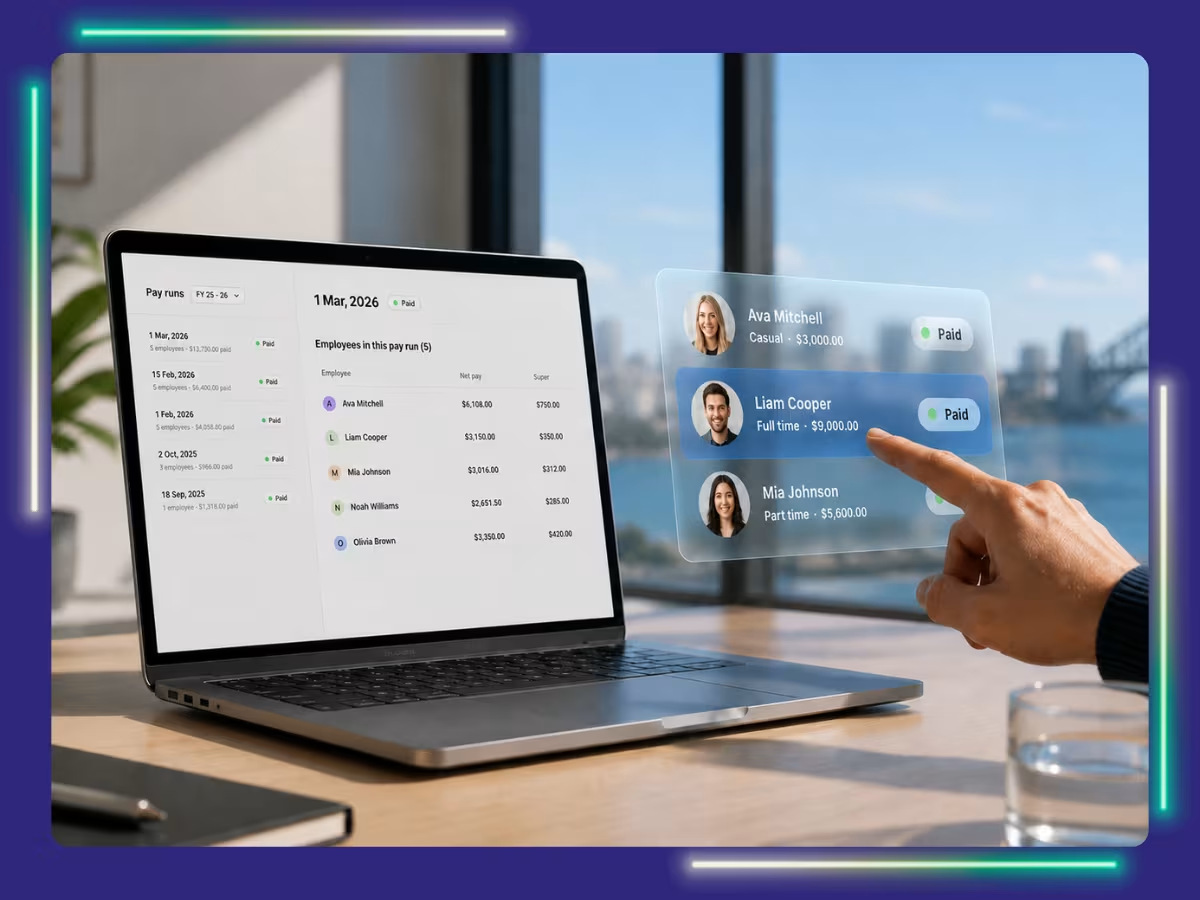
Run payroll as usual, including salary and wages, allowances, deductions, PAYG withholding, and super guarantee calculations. The system prepares STP-ready data automatically.
3. Validate STP data
Check for errors such as missing TFNs, incorrect income types, or mismatched super contributions. STP-enabled payroll software flags issues before submission to the ATO.
4. ATO processing and update events
The ATO receives and processes the submission, updating employee income records. If corrections are needed, an STP update event is sent to adjust year-to-date figures.
5. Finalise payroll data
At year-end, confirm all employee records through an STP finalisation event so income statements are marked “tax ready” in employees’ myGov accounts for tax return lodgement.
What Must Employers Do for STP Phase 2 Finalisation by 14 July Each Year?
STP Phase 2 finalisation is the year-end process where employers confirm employee payroll data is correct and mark it as “tax ready” in the ATO system. This must generally be completed by 14 July each year, so employees can access accurate income statements in their myGov accounts.
This step is essential because it locks year-to-date reporting, ensuring wages, PAYG withholding, and superannuation insights are finalised for tax return preparation and ATO prefill.
STP finalisation deadline (14 July rule)
Employers must complete the STP finalisation by 14 July for most employees. This confirms all payroll data for the financial year and ensures income statements are available for employees to lodge tax returns.
Income statement availability
Once finalised, employee records move from “year-to-date” reporting to “tax ready” status. This allows income statements to appear in myGov, enabling individuals to lodge returns using prefilled ATO data with wages, tax withheld, and super contributions.
Closely held payees finalisation rules
For closely held payees, such as family business owners, finalisation may follow different timing rules depending on reporting concessions. Employers must still ensure accurate STP Phase 2 reporting Australia obligations are met before finalisation.
Late finalisation corrections
If errors are found after finalisation, employers must submit an update event to correct year-to-date figures. The ATO uses updated data to adjust income statements and maintain reporting accuracy across payroll records.
What ATO Penalties Apply for STP Non-Compliance?
ATO penalties apply when employers fail to meet STP reporting obligations, including late or incorrect STP lodgements. These penalties are designed to enforce timely, accurate payroll reporting under STP Phase 2 requirements Australia. In practice, the ATO may apply penalty units, issue administrative warnings, or escalate enforcement depending on the severity, frequency, and intent of the non-compliance.
Penalty units for STP reporting failures
The ATO can apply penalty units for failures such as late STP reporting, incorrect data submissions, or repeated STP reporting errors penalties Australia. The total penalty depends on business size and how long the issue remains unresolved.
Late STP penalties
Late submission of the STP may trigger administrative penalties, especially if pay event data is consistently not reported on or before payday. Persistent delays increase compliance risk exposure.
Safe harbour provisions
Safe harbour rules may reduce or eliminate penalties if employers rely on a registered tax agent or BAS agent who fails to lodge on time. This applies only when the employer has provided correct and timely payroll information.
ATO deferral and concessional arrangements
Employers facing system issues or transition challenges may apply for ATO deferrals. Registered agents can also request additional time to implement STP Phase 2 requirements or fix reporting setup issues.
Which STP Phase 2 Software Is Best for Australian Businesses in 2026?
STP Phase 2 software helps Australian employers automate payroll reporting directly to the ATO, ensuring compliance with Single Touch Payroll Phase 2 requirements. Most businesses choose software based on ease of STP reporting, award compliance, integrations, and scalability rather than just price.
Top STP Phase 2 software options in Australia (2026)
| Software | STP Phase 2 Support | Key Strength | Limitations |
|---|---|---|---|
| Xero Payroll | Full STP Phase 2 compliant | Easy accounting + payroll integration | Limited advanced enterprise payroll features |
| MYOB Payroll | Full STP Phase 2 compliant | Strong accounting and reporting tools | Can feel complex for new users |
| QuickBooks Payroll (AU) | STP Phase 2 compliant via integration | Simple payroll linked to accounting | Less advanced AU payroll depth |
How Do You Choose an STP-Compliant Payroll Provider?
An STP-compliant payroll provider ensures your business meets Single Touch Payroll Phase 2 requirements by automatically sending accurate payroll data to the ATO. The right choice depends on compliance strength, automation quality, and how well the system handles STP and ongoing updates.
1. STP Phase 2 ATO registration and compliance
Ensure the provider is listed as STP-enabled and supports full STP Phase 2 requirements, including income type disaggregation and update events.
2. Full STP Phase 2 reporting capability
The system must handle salary, wages, allowances, deductions, and STP Phase 2 disaggregated reporting, not just basic totals from Phase 1.
3. Payroll accuracy and ATO alignment
Look for built-in validation for PAYG withholding, super guarantee, and TFN rules to reduce errors before submission to the ATO.
4. Integration with accounting and HR systems
Good STP software integrates payroll with accounting tools like Xero or MYOB to streamline reporting, reconciliation, and BAS preparation using STP data.
5. Support for business size and complexity
Choose software that fits your structure, simple systems for small businesses, or enterprise-grade tools for complex payroll environments.
Outsourcing STP Payroll Reporting: Benefits for Small Businesses
Outsourcing STP payroll reporting means a registered provider manages your Single Touch Payroll Phase 2 requirements, including STP, superannuation, and ATO reporting. It helps small businesses stay compliant payday rules while reducing the risk of reporting errors penalties.
At Whiz Consulting, we help businesses simplify STP Phase 2 compliance by handling payroll setup, reporting, and ongoing ATO submissions through STP-enabled systems. This ensures accuracy, reduces admin load, and keeps your business fully aligned with requirements without the operational stress.

Get customized plan that supports your growth

Have questions in mind? Find answers here...
STP Phase 2 is an ATO system requiring employers to report detailed payroll data through STP-enabled software.
Yes, STP is mandatory for all Australian employers with employees, except limited exemptions approved by the ATO.
Late or incorrect submissions may trigger ATO penalties, warnings, or compliance action depending on severity and frequency.
Yes, small businesses must use STP-enabled payroll software or an approved outsourced provider to stay compliant with ATO rules.
Thousands of business owners trust Whiz to manage their account
Let us take care of your books and make this financial year a good one.