

Table of Content
Share This Article
- Last Updated: Aug 4, 2026
- 🔊 Listen
TL;DR
- Growing businesses often outgrow entry-level accounting software without realising it.
- Frequent manual work, poor integrations, and reporting limitations are common warning signs.
- Performance issues and user restrictions can reduce productivity as operations expand.
- ERP systems provide greater scalability, automation, and financial visibility.
- Upgrading at the right time helps businesses avoid inefficiencies and compliance risks.
- Professional guidance can ensure a smoother software transition and stronger ROI.
The signs you have outgrown your accounting software often appear gradually. What starts as a few workarounds can eventually become reporting delays, operational bottlenecks, and increased compliance risks.
Knowing when to upgrade accounting software can help Australian businesses improve efficiency, strengthen financial controls, and support sustainable growth before existing systems begin holding them back.

Future-Proof Your Finance
Upgrade systems before inefficiencies slow your growth
Why Do Businesses Outgrow Their Accounting Software?
Businesses typically outgrow accounting software when growth introduces greater complexity than their existing systems can handle.
As organisations expand, they often experience:
- Higher transaction volumes
- Larger teams requiring access
- More sophisticated reporting requirements
- Additional operational systems needing integration
- Increased compliance obligations
- Greater reliance on real-time financial insights
When software can no longer adapt to these demands, productivity and decision-making suffer.
Have You Outgrown Your Accounting Software? Here’s How to Tell
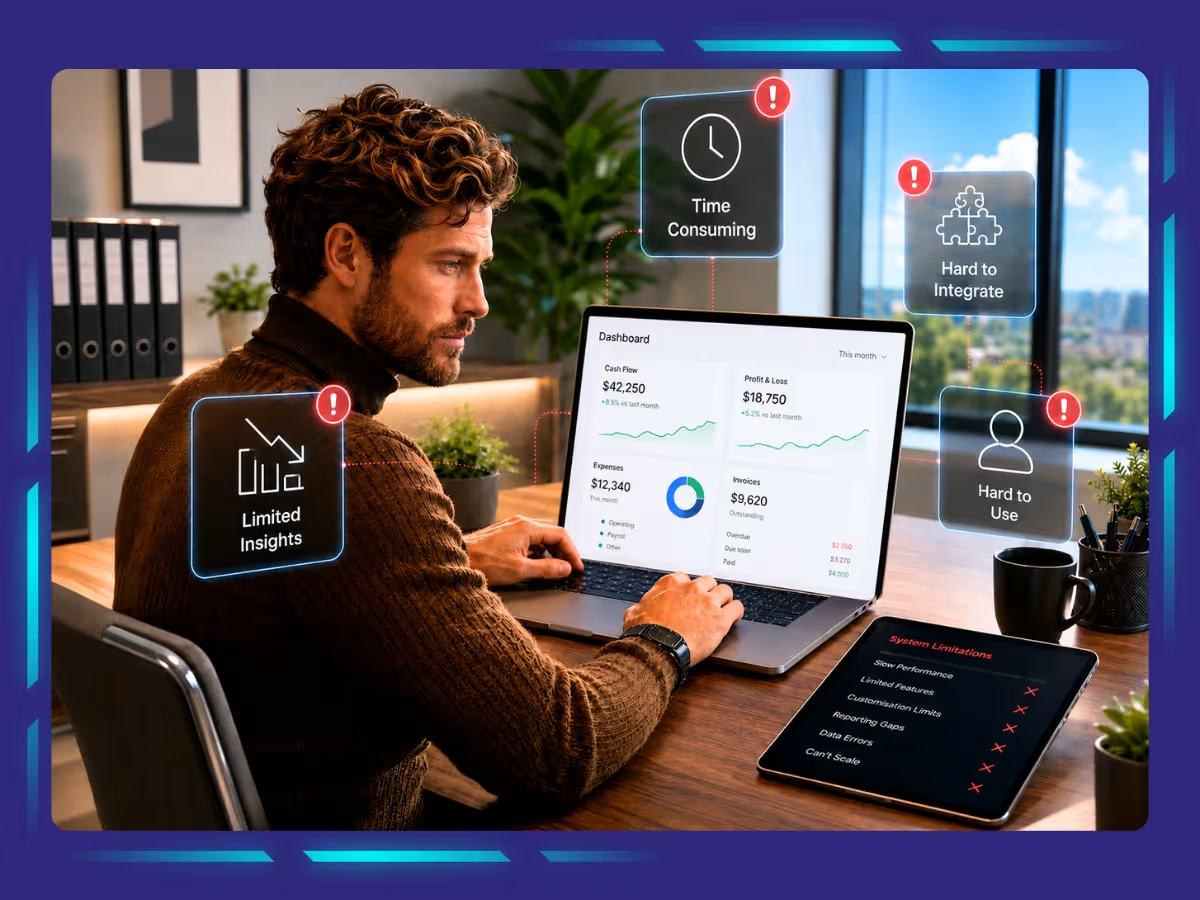
The following warning signs can help determine whether your current accounting platform still supports your business needs.
| Warning Sign | What It Means |
|---|---|
| Limited Scalability | System struggles with business growth |
| Need for Customisation | Existing tools cannot adapt to new requirements |
| Manual Workarounds | Employees rely heavily on spreadsheets |
| Integration Difficulties | Systems operate in silos |
| User Restrictions | Teams cannot collaborate effectively |
| Performance Issues | Slow processing impacts productivity |
| Data Storage Constraints | Historical information becomes difficult to manage |
| Poor Reporting | Limited visibility into performance |
| Security Concerns | Increased compliance and cyber risks |
| Lack of Strategic Insights | Decisions rely on outdated information |
1. Limited Scalability
Accounting software should grow alongside your business. If it cannot handle increasing demands, it may be time for an upgrade.
If transaction volumes, customer numbers, or operational complexity have increased significantly, your accounting system may struggle to keep pace.
Common symptoms include:
- Slow response times
- System errors
- Delayed processing
- Frequent downtime
Scalable systems should accommodate growth without sacrificing performance.
2. Your Business Needs Greater Customisation
Businesses evolve over time, and accounting systems should adapt accordingly. When existing software no longer reflects your workflows or reporting requirements, customisations often become costly and inefficient.
Advanced solutions provide:
- Configurable dashboards
- Flexible reporting structures
- Workflow automation
- Industry-specific functionality
3. You Rely on Manual Workarounds
Excessive spreadsheets and duplicate processes are major indicators that existing systems have reached their limits.
If staff regularly export data into spreadsheets or perform duplicate entries, productivity suffers.
Manual workarounds increase:
- Error rates
- Administrative workloads
- Reporting delays
- Operational inefficiencies
4. Integration Difficulties Are Becoming Common
Modern businesses depend on connected systems that share information seamlessly. Accounting software should integrate with systems such as:
- CRM platforms
- Inventory software
- E-commerce tools
- Payroll solutions
- Payment gateways
Poor integration creates data silos and duplication.
5. Limited User Access Is Affecting Collaboration
Growing teams require simultaneous access to accurate financial information. Many entry-level platforms restrict:
- User numbers
- Role permissions
- Concurrent access
These limitations hinder collaboration and reduce operational efficiency.
6. Performance Issues Are Slowing Your Team Down
Frequent delays and system crashes often signal that software infrastructure is no longer sufficient.
Performance problems may include:
- Slow report generation
- Freezing during peak periods
- Delayed transaction processing
- Increased downtime
These issues negatively impact productivity and customer service.
7. Data Storage Constraints Are Limiting Visibility
Businesses require reliable access to both current and historical financial information. Limited storage capacity can force businesses to:
- Archive important records
- Purge historical data
- Restrict reporting periods
This compromises analysis and audit readiness.
8. Reporting and Analysis Capabilities Are Inadequate
Better decisions require better insights. If your accounting software cannot generate meaningful reports, management may struggle to understand performance trends.
Businesses increasingly require:
- Custom reports
- Real-time dashboards
- KPI tracking
- Scenario analysis
- Forecasting tools
9. Security and Compliance Concerns Are Increasing
As businesses grow, stronger controls become essential. Outdated systems may lack:
- Data encryption
- User authentication controls
- Regular security updates
- Audit trails
- Compliance capabilities
This increases operational and regulatory risk.
10. You’re Missing Strategic Opportunities
Accounting systems should support growth, not simply record transactions. If decision-makers spend more time gathering information than analysing it, opportunities can be missed.
Modern systems support:
- Real-time visibility
- Faster decision-making
- Strategic planning
- Performance optimisation
When Should Australian Businesses Upgrade Their Accounting Software?
Businesses should consider upgrading when operational inefficiencies begin affecting productivity, reporting accuracy, or strategic decision-making. The following situations often signal when to upgrade accounting software:
| Business Trigger | Consider Upgrading If… |
|---|---|
| Rapid Growth | Transaction volumes continue increasing |
| Team Expansion | More users require access |
| Operational Complexity | Additional systems require integration |
| Reporting Needs | Existing reports no longer provide useful insights |
| Compliance Requirements | Security expectations increase |
| Strategic Planning | Real-time information becomes essential |
The Right Solution: ERP Software
ERP systems provide integrated solutions that support growing businesses through automation, visibility, and scalability.
Enterprise Resource Planning (ERP) systems extend beyond accounting to connect multiple business functions into a single platform.
ERP systems typically include:
- Financial management
- Inventory management
- Payroll
- Sales
- Procurement
- Reporting and analytics
- Human resources
- Workflow automation
By consolidating these functions, ERP solutions improve efficiency while providing leadership teams with real-time insights.
Why Professional Support Matters During ERP Implementation
Successful ERP implementations require both technical expertise and financial knowledge. Professional accounting experts help businesses:
- Select appropriate ERP platforms
- Clean and migrate data accurately
- Configure workflows
- Train internal teams
- Monitor implementation progress
- Maximise return on investment
This reduces disruption while improving adoption rates.
Choose the Right Technology Partner for Future Growth
Outgrowing your accounting software is often a sign of success rather than failure. It indicates that your business has evolved and requires stronger systems capable of supporting the next stage of growth.
At Whiz Consulting, we help Australian businesses navigate software transitions through expert guidance and accounting outsourcing services. By combining experienced professionals with modern financial technology, we support ERP implementation, improve financial visibility, and help organisations build efficient finance functions designed for long-term success.

Get customized plan that supports your growth

Have questions in mind? Find answers here...
You should consider moving beyond Xero when your business experiences rapid growth, increasing transaction volumes, complex reporting needs, multiple entity requirements, or relies heavily on spreadsheets and manual workarounds. These are common signs you have outgrown your accounting software.
While MYOB works well for many Australian SMEs, growing businesses may encounter limitations around scalability, advanced customisation, integrations, user access, and sophisticated reporting requirements. As operations become more complex, businesses often evaluate ERP solutions that offer broader functionality.
QuickBooks remains a strong option for small businesses seeking affordability and ease of use. However, if you need advanced reporting, seamless integrations, greater automation, or support for larger teams, it may be time to assess whether a more robust system better suits your needs.
Common signs include limited scalability, increased reliance on spreadsheets, integration difficulties, restricted user access, slow system performance, inadequate reporting capabilities, data storage constraints, and growing security or compliance concerns.
It is time to move to an ERP when your accounting software can no longer support your operational complexity. Businesses typically upgrade when they need integrated financial and operational systems, real-time reporting, stronger automation, improved collaboration, and greater scalability to support future growth.
Thousands of business owners trust Whiz to manage their account
Let us take care of your books and make this financial year a good one.