


Table of Content
Share This Article
- Last Updated: Aug 7, 2026
- 🔊 Listen
TL;DR
- Modern restaurant POS systems manage orders, payments, inventory, staff, reservations, and reporting from a single platform.
- POS systems that integrate with accounting software improve reporting accuracy and reduce manual bookkeeping.
- Key features include inventory management, menu management, staff scheduling, reporting, and cloud accessibility.
- The best POS system depends on your restaurant type, budget, operational complexity, and growth plans.
- Restaurants should prioritise systems that support both operational efficiency and financial visibility.
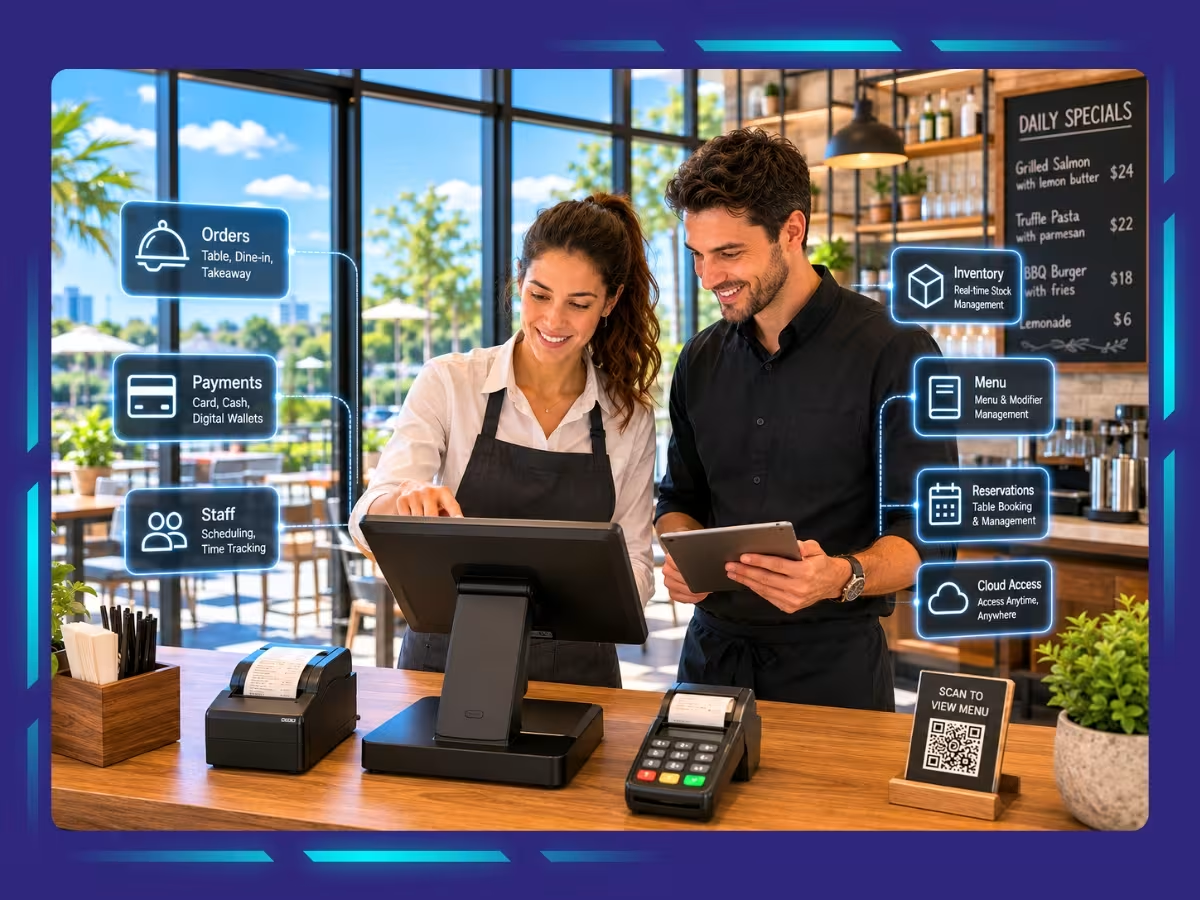
The best POS system for restaurants in Australia helps manage orders, payments, inventory, staff, and customer data from one platform.
In 2026, restaurants need POS software that is fast, cloud-based, easy to use, and built to support dine-in, takeaway, delivery, and multi-location operations while improving accuracy, speed, reporting, and customer experience.

Smarter Restaurant Tech
Choose a POS system built for growth
Why Restaurants Need a Modern POS System
Modern restaurant POS systems help automate operations, improve service delivery, enhance reporting, and provide the financial visibility needed to make better business decisions.
Restaurants manage hundreds or even thousands of transactions every week. A reliable POS system ensures these transactions are processed accurately while providing operational and financial data that helps owners monitor performance.
Benefits include:
- Faster order processing
- Improved payment management
- Better inventory visibility
- Enhanced customer experiences
- Reduced manual administration
- Improved reporting accuracy
- Easier accounting integration
As restaurants continue to adopt digital solutions, POS systems have become essential business tools rather than optional technology.
Key Features to Look for in a Restaurant POS System
The best restaurant POS systems combine operational functionality, inventory controls, reporting capabilities, and accounting integrations that support efficient restaurant management.
Before selecting a POS system, restaurant owners should evaluate the features that best align with their operational requirements.

Tableside Ordering
Tableside ordering improves service speed and reduces order errors by allowing staff to enter orders directly at the table using mobile devices.
Reservation Management
Integrated reservation systems help restaurants manage bookings efficiently, reduce no-shows, and optimise table utilisation.
Inventory Management
Real-time inventory tracking allows restaurants to monitor stock levels, reduce waste, and improve purchasing decisions.
Menu Management
Menu management features make it easy to update pricing, modify menu items, and manage seasonal offerings.
Food and Ingredient Cost Tracking
Advanced POS systems can track ingredient usage and provide valuable insights into food costs and menu profitability.
Kitchen and Front-of-House Communication
Kitchen Display Systems (KDS) improve communication between service staff and kitchen teams, helping reduce errors and improve service times.
Staff Management
Many POS platforms include scheduling, attendance tracking, and labour reporting tools that help optimise workforce management.
Detailed Reporting
Comprehensive reporting provides visibility into sales performance, customer behaviour, inventory usage, and profitability.
Digital Invoicing
Modern systems allow invoices and receipts to be delivered electronically via email or SMS.
Accounting Software Integration
Integration with accounting software automates financial reporting and reduces duplicate data entry.
How POS and Accounting Software Integration Benefits Restaurants
POS integration with accounting software improves reporting accuracy, reduces manual bookkeeping, improves restaurant cash flow through real-time transaction tracking, and gives restaurant owners greater financial visibility for faster, more informed decision-making.
One of the most valuable features of modern POS systems is seamless accounting integration.
Benefits include:
- Automated sales recording
- Faster bank reconciliations
- Reduced manual data entry
- Improved financial reporting
- Better cash flow visibility
- More accurate bookkeeping
Popular accounting software integrations include:
- Xero
- QuickBooks Online
- MYOB
- Sage
- Zoho Books
For growing restaurants, accounting integration can save significant administrative time while improving reporting accuracy.
The Best Restaurant POS Systems in Australia for 2026
The following restaurant POS systems offer strong hospitality functionality, cloud accessibility, and accounting integrations that support efficient restaurant management.
TouchBistro POS
TouchBistro is ideal for independent restaurants seeking hospitality-specific functionality and reliable offline capabilities.
TouchBistro is a Canadian-developed POS platform widely used by restaurants across Australia. The system operates locally and can continue functioning even when internet connectivity is interrupted.
Key strengths include:
- Tableside ordering
- Reservation management
- Inventory tracking
- Offline functionality
- Hospitality-focused workflows
Accounting Integrations: Xero, QuickBooks, Sage
Best For: Full-service restaurants and independent operators.
Toast POS
Toast provides an all-in-one restaurant management platform designed for growing hospitality businesses.
Built specifically for restaurants, Toast combines POS functionality with online ordering, loyalty programs, reporting, and payment processing.
Key strengths include:
- Cloud reporting
- Restaurant-specific workflows
- Mobile management
- Integrated payment processing
Accounting Integrations: QuickBooks
Best For: Growing restaurants and multi-location operators.
Square POS
Square is a popular solution for cafés, takeaway outlets, and smaller hospitality businesses seeking simplicity and affordability.
Square offers a flexible cloud-based POS platform with extensive integrations and a low barrier to entry.
Key strengths include:
- Easy setup
- Mobile accessibility
- Inventory tracking
- Customer management
Accounting Integrations: Xero, QuickBooks, Zoho Books
Best For: Small restaurants, cafés, and takeaway businesses.
Lightspeed POS
Lightspeed combines restaurant operations, inventory management, and reporting within a powerful cloud-based platform.
The platform is particularly strong in inventory management and multi-location operations.
Key strengths include:
- Advanced inventory controls
- Multi-site management
- Cloud accessibility
- Detailed reporting
Accounting Integrations: MYOB, Xero, QuickBooks
Best For: Growing hospitality businesses and restaurant groups.
Upserve POS
Upserve focuses on restaurant analytics and operational insights that help improve profitability and customer experience.
The platform provides strong reporting and customer intelligence capabilities.
Key strengths include:
- Customer analytics
- Sales reporting
- Online ordering
- Cloud-based management
Accounting Integrations: Multiple integrations available
Best For: Restaurants focused on data-driven decision-making.
ShopKeep POS
ShopKeep provides a user-friendly cl oud-based POS system suitable for quick-service and casual dining businesses.
The platform offers a balance of functionality and simplicity.
Key strengths include:
- Easy-to-use interface
- Mobile accessibility
- Reporting tools
- Inventory tracking
Accounting Integrations: QuickBooks
Best For: Small and mid-sized restaurant businesses.
PayPal Here
PayPal Here offers flexible mobile payment processing for hospitality businesses that prioritise payment convenience.
Although not built specifically for restaurants, it remains popular among smaller operators.
Key strengths include:
- Mobile payments
- Easy setup
- Flexible payment options
Accounting Integrations: Xero, QuickBooks
Best For: Small hospitality businesses requiring simple payment solutions.
Epos Now
Epos Now delivers cloud-based POS functionality designed specifically for hospitality and retail businesses.
The platform supports multi-device access and extensive integrations.
Key strengths include:
- Cloud accessibility
- Hospitality-specific features
- Broad integration ecosystem
Accounting Integrations: Xero, QuickBooks, Sage
Best For: Restaurants seeking cloud-based flexibility.
Revel POS
Revel offers highly customisable POS functionality suitable for complex restaurant operations.
The platform supports multiple restaurant formats, including food trucks, quick-service restaurants, and full-service venues.
Key strengths include:
- Customisation
- Multi-location support
- Kitchen display systems
- Advanced reporting
Accounting Integrations: Third-party integrations available
Best For: Larger or more complex hospitality operations.
How to Choose the Right Restaurant POS System
The right restaurant POS system should match your service model, budget, integrations, reporting needs, and growth plans. Comparing these factors helps avoid costly software mismatches.
| Selection Factor | What to Check | Why It Matters |
|---|---|---|
| Restaurant Type | Fine dining, casual dining, quick service, food trucks, cafés | Different service models need different POS workflows |
| Budget | Subscription fees, hardware costs, setup charges, add-ons | Helps avoid hidden costs and overspending |
| Integration Requirements | Accounting software, online ordering, payments, reservations | Reduces manual work and improves reporting accuracy |
| Reporting Needs | Sales reports, inventory reports, staff performance, customer insights | Supports better operational and financial decisions |
| Scalability | Multi-location support, advanced features, automation | Ensures the POS can grow with your restaurant |
Build a Smarter Restaurant Operation with the Right POS System
Restaurant POS systems have evolved into comprehensive business management platforms that support sales, inventory, staff management, customer service, and financial reporting. Selecting the right POS system can improve operational efficiency, strengthen reporting accuracy, and help restaurants make more informed business decisions.
At Whiz Consulting, we help restaurants across Australia implement accounting systems that integrate seamlessly with modern POS technology. Our hospitality accounting services specialists help businesses improve bookkeeping efficiency, gain financial visibility, and build stronger operational foundations for sustainable growth.

Get customized plan that supports your growth

Have questions in mind? Find answers here...
The best POS system depends on your restaurant type, budget, reporting needs, and required integrations with accounting software.
A POS system helps restaurants manage orders, payments, inventory, staff, reporting, and customer transactions more efficiently.
POS systems such as TouchBistro, Square, Lightspeed, PayPal Here, and Epos Now offer Xero integration.
Key features include tableside ordering, inventory tracking, menu management, staff management, reporting, reservations, and accounting software integration.
POS integration automates sales data transfer, reduces manual entry, improves reconciliations, and gives restaurant owners clearer financial visibility.
Thousands of business owners trust Whiz to manage their account
Let us take care of your books and make this financial year a good one.