


Table of Content
Share This Article
- Last Updated: Aug 6, 2026
- 🔊 Listen
TL;DR
- Efficient accounting processes improve accuracy, cash flow, and business decision-making.
- Understanding accounting basics helps business owners maintain stronger financial oversight.
- Automation reduces paperwork, minimises errors, and improves productivity.
- Effective receivables, payables, and payroll management strengthen financial stability.
- Regular reconciliations, forecasting, and financial reviews improve visibility and control.
- Businesses that optimise their accounting processes are better positioned for sustainable growth.
An efficient accounting process does more than keep records up to date. It helps businesses improve accuracy, maintain compliance, gain better financial visibility, and make confident decisions.
The following practical strategies can help Australian businesses streamline their accounting processes, reduce errors, and build a stronger finance function.

Improve Financial Efficiency
Create accounting processes that support growth.
Why Does an Efficient Accounting Process Matter for Australian Businesses?
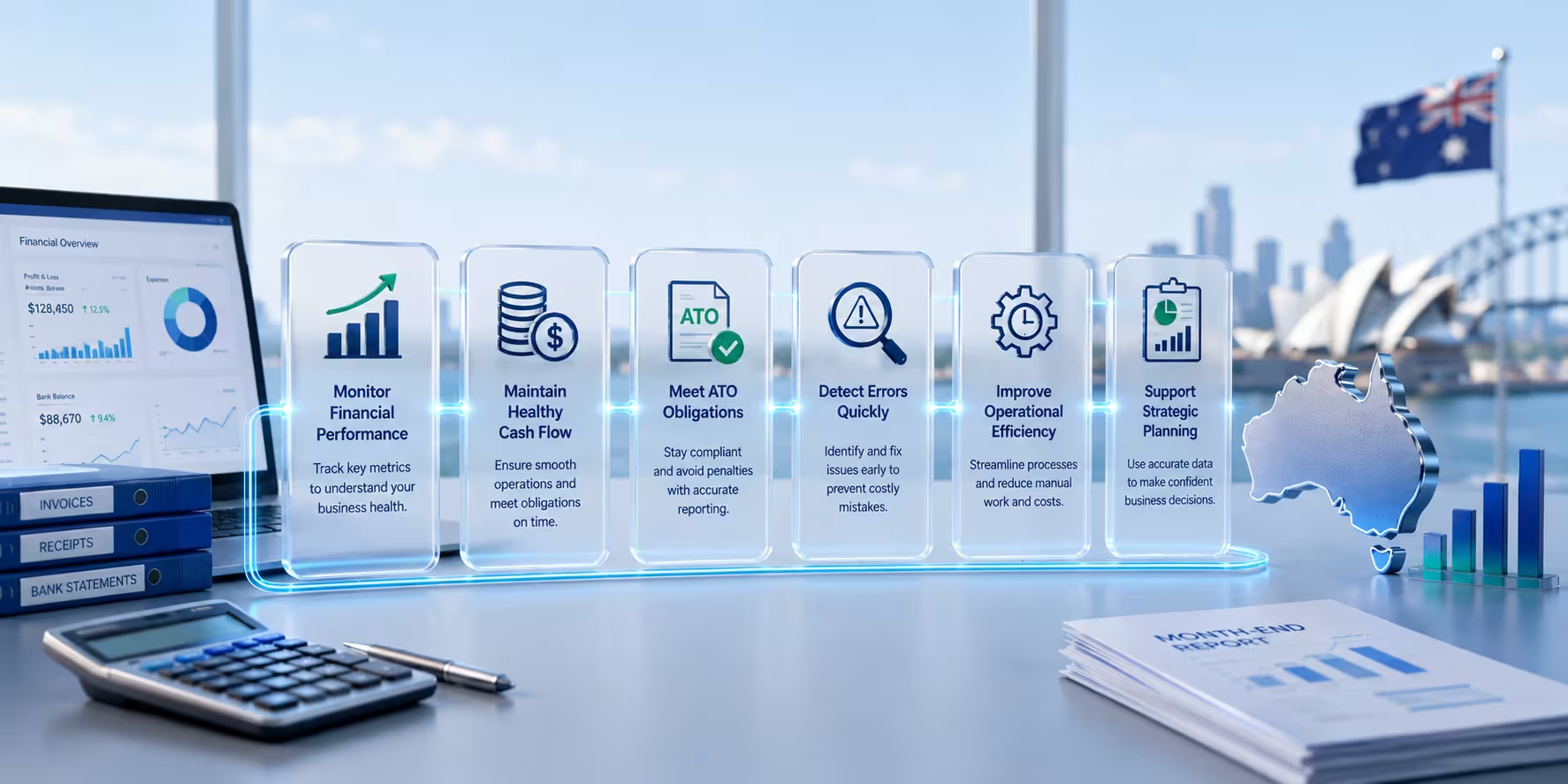
Efficient accounting processes improve financial accuracy, strengthen compliance, and support better business decisions. Strong accounting systems help businesses:
- Monitor financial performance
- Maintain healthy cash flow
- Meet ATO obligations
- Detect errors quickly
- Improve operational efficiency
- Support strategic planning
Accounting Improvements and Their Benefits
The following accounting improvements help Australian businesses enhance accuracy, efficiency, compliance, and overall financial performance.
| Accounting Practice | Business Benefit |
|---|---|
| Accounting knowledge | Better financial oversight |
| Separate bank accounts | Cleaner record-keeping |
| Accounting software | Reduced manual work |
| AR management | Improved cash flow |
| AP management | Stronger supplier relationships |
| Cash flow forecasting | Better liquidity planning |
| Payroll management | Improved compliance |
| Expense tracking | Greater cost control |
| Account reconciliation | Faster error detection |
| Cross-department collaboration | Improved efficiency |
| Tax preparation | Reduced compliance risk |
| Financial reviews | Better decision-making |
What Are the Most Effective Ways to Improve Your Accounting Process?
Small improvements across core accounting activities can significantly strengthen financial management.
Understand Basic Accounting Principles
Even if you employ accountants or bookkeepers, understanding accounting fundamentals improves decision-making and oversight. Basic knowledge helps business owners:
- Interpret reports confidently
- Ask better questions
- Identify unusual trends
- Strengthen internal controls
A strong foundation supports a more efficient accounting process.
Maintain Dedicated Business Bank Accounts
Separating personal and business finances simplifies bookkeeping and reporting. Dedicated accounts help businesses:
- Improve transaction tracking
- Reduce errors
- Simplify tax preparation
- Maintain clearer records
This is particularly important for sole traders and small businesses.
Use Accounting Software to Automate Processes
Modern accounting software reduces administrative workloads. Solutions such as Xero, MYOB, and QuickBooks automate:
- Invoicing
- Bank feeds
- Payment reminders
- Expense categorisation
- Tax calculations
Automation improves both efficiency and accuracy.
Strengthen Accounts Receivable Management
Accounts receivable directly affect cash flow. Businesses should establish systems to:
- Issue invoices promptly
- Monitor outstanding balances
- Follow up consistently
- Automate payment reminders
- Encourage faster payments
Reducing debtor days improves working capital.
Improve Accounts Payable Management
Managing supplier payments effectively supports financial stability. Strong accounts payable practices help businesses:
- Preserve cash flow
- Maintain supplier relationships
- Utilise credit terms
- Access early payment discounts
- Avoid missed payments
Payables deserve the same attention as receivables.
Conduct Regular Cash Flow Forecasting
Cash flow forecasting prepares businesses for future needs. Forecasting enables businesses to:
- Identify shortfalls early
- Plan investments
- Manage liquidity
- Support borrowing decisions
- Reduce uncertainty
Regular forecasts improve confidence and preparedness.
Optimise Payroll Management
Payroll is one of the largest operating expenses many businesses incur. Effective payroll management requires businesses to:
- Process payments accurately
- Meet compliance obligations
- Manage employee benefits
- Monitor labour costs
- Maintain accurate records
Payroll errors can negatively affect employee satisfaction and compliance.
Track and Categorise Expenses Properly
Expense management improves financial visibility. Businesses should categorise:
- Travel expenses
- Meals and entertainment
- Office supplies
- Software subscriptions
- Staff reimbursements
- Miscellaneous operating costs
Accurate categorisation supports budgeting and reporting.
Perform Regular Account Reconciliations
Account reconciliation helps identify discrepancies before they escalate. Businesses should reconcile:
- Bank accounts
- Credit cards
- Loan balances
- Clearing accounts
The frequency should reflect transaction volumes. High-volume businesses may require daily reconciliations.
Create Synergy Across Departments
Accounting efficiency depends on collaboration. Departments should understand:
- Documentation requirements
- Approval processes
- Reporting timelines
- Information responsibilities
Cross-functional cooperation reduces delays and confusion.
Prepare for Tax Throughout the Year
Tax preparation should not begin during tax season. Year-round preparation allows businesses to:
- Maintain organised records
- Track deductible expenses
- Prepare documentation early
- Meet deadlines confidently
- Reduce stress
Proactive planning simplifies compliance.
Review Financial Statements Regularly
Financial statements provide valuable insights into business performance. Businesses should regularly review:
- Profit and Loss Statements
- Balance Sheets
- Cash Flow Statements
- Budget comparisons
- Key performance indicators
Frequent reviews support informed decision-making.
Common Signs Your Accounting Process Needs Improvement
Recognising inefficiencies early prevents larger financial problems later. Warning signs include:
- Frequent reporting delays
- Cash flow surprises
- Increasing reconciliation issues
- Heavy reliance on spreadsheets
- Payroll inaccuracies
- Missed tax deadlines
- Poor visibility into performance
Addressing these issues promptly strengthens financial control.
Build Stronger Accounting Processes for Long-Term Success
Accounting is a continuous process that influences every aspect of business performance. Errors in one area often create problems elsewhere, making efficiency and accuracy essential.
At Whiz Consulting, our accounting outsourcing services help Australian businesses streamline financial management through experienced professionals, modern technology, and structured processes. From bookkeeping and reconciliations to payroll and reporting, we help businesses improve accuracy, reduce administrative burdens, and build stronger foundations for sustainable growth.
By implementing these practical improvements today, businesses can create accounting processes that support better decisions and long-term success.

Get customized plan that supports your growth

Have questions in mind? Find answers here...
You can improve your accounting process by understanding basic accounting principles, using accounting software, separating business finances, automating repetitive tasks, conducting regular reconciliations, reviewing financial statements frequently, and preparing for tax obligations throughout the year.
Australian businesses can improve efficiency by automating invoicing and bank feeds, strengthening accounts receivable and payable processes, standardising workflows across departments, tracking expenses accurately, and using cloud-based accounting systems to reduce manual work.
Businesses should consider automating invoice creation, payment reminders, bank reconciliations, expense categorisation, payroll processing, accounts payable approvals, and tax calculations using platforms such as Xero, MYOB, and QuickBooks.
Improving BAS preparation involves maintaining accurate records throughout the year, reconciling accounts regularly, categorising transactions correctly, tracking GST consistently, using accounting software with BAS reporting features, and reviewing supporting documentation before lodgement.
Faster month-end closes can be achieved by automating reconciliations, standardising closing procedures, recording transactions promptly, reviewing accounts regularly, improving communication between departments, and preparing financial statements on a consistent schedule.
Thousands of business owners trust Whiz to manage their account
Let us take care of your books and make this financial year a good one.