


Table of Content
Share This Article
- Published: Mar 13, 2026
- Last Updated: Mar 13, 2026
- 🔊 Listen
Quick Reads
- Regularly reviewing financial reports each month helps businesses clearly understand their profitability, financial position, and overall operational performance.
- The Profit and Loss statement provides insight into revenue, expenses, and profit margins, allowing businesses to monitor profitability trends and control costs effectively.
- The Balance Sheet offers a snapshot of the company’s financial position by showing its assets, liabilities, and equity, helping assess long-term financial stability.
- Conducting consistent cash flow analysis ensures that a business maintains sufficient liquidity to meet operational expenses, vendor payments, and other financial obligations.
- Monitoring accounts receivable and accounts payable ageing reports helps businesses manage collections and payments efficiently, improving working capital and supplier relationships.
- Comparing budget vs actual reports allows businesses to evaluate financial performance against their plans and make timely adjustments to improve financial outcomes.
Running a successful business requires more than tracking revenue or sales. Companies must understand their financial position, profitability, and liquidity to make informed decisions. This is where financial reports play an important role.
Monthly financial reporting provides a clear view of business performance, helping leadership teams control costs, manage cash, and identify financial risks early. Regular reviews can reveal issues such as declining margins or delayed receivables before they escalate.
Under UK standards aligned with GAAP and IFRS, consistent financial reporting supports transparency, accurate financial management, and stronger strategic planning. While businesses produce many reports, a few core financial reports deliver the most valuable insights each month, helping maintain liquidity and improve financial control.

Outsourcing Done Right!
Get Streamlined Processes, Expert Support, and Financial Clarity.
Five Essential Financial Reports Every Business Should Review Each Month
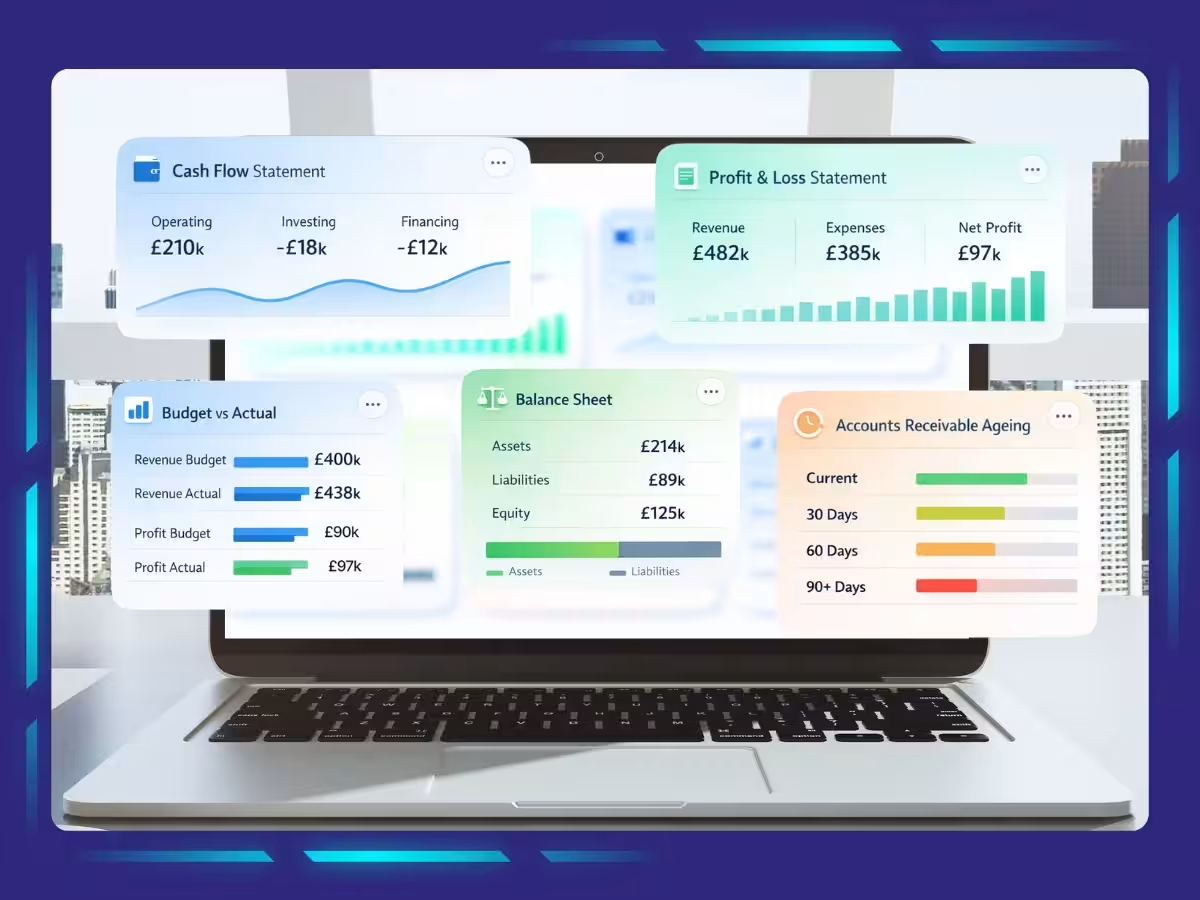
While businesses generate many reports, a few core financial reports offer the most useful insights into performance and financial health. Reviewing them monthly helps monitor profitability, assess financial position, and support effective financial reporting and cash flow analysis. Below, we explain the key financial reports every business should review each month and how they support better financial decisions.
Review Your Profit & Loss Statement to Understand Monthly Profitability
The Profit and Loss (P&L) statement, also known as the income statement, measures a company’s financial performance over a specific period. It summarises revenue, expenses, and profits generated during the month. This report answers a fundamental question: Is the business actually making money? A typical P&L statement includes:
- Revenue or sales generated during the period
- Cost of goods sold (COGS)
- Gross profit
- Operating expenses such as rent, salaries, and marketing
- Net profit or net loss
By reviewing the P&L each month, businesses can monitor changes in profit margins and identify cost increases quickly. For example, a rise in operating expenses without a corresponding increase in revenue can reduce profitability. Regular analysis of the P&L also helps businesses:
- Evaluate pricing strategies
- Monitor expense trends
- Assess operational efficiency
- Identify opportunities to improve margins
For many organisations, the P&L serves as the starting point for deeper financial reporting and performance evaluation.
Analyse the Balance Sheet to Monitor Financial Position
While the P&L shows profitability over time, the balance sheet provides a snapshot of a company’s financial position at a specific moment. It is built around the core accounting equation:
- Assets = Liabilities + Equity
The balance sheet typically includes:
| Category | Components |
|---|---|
| Assets | Cash and cash equivalents |
| Accounts receivable | |
| Inventory | |
| Property and equipment | |
| Liabilities | Accounts payable |
| Short-term debt | |
| Long-term loans | |
| Equity | Owner’s capital |
| Retained earnings |
Analysing the balance sheet monthly helps businesses understand whether they are financially stable. It shows how much the company owns, how much it owes, and the net value of the business.
Key insights gained from reviewing this report include:
- Liquidity levels
- Debt obligations
- Asset growth
- Changes in retained earnings
Strong balance sheet monitoring also supports accurate financial reporting and helps companies maintain financial discipline while planning expansion or investments.
Track the Cash Flow Statement to Maintain Liquidity and Operational Stability
Profit does not always mean available cash. Businesses can be profitable yet still face financial stress if they lack sufficient cash to cover daily expenses. This is why the cash flow statement is one of the most important financial reports to review monthly. The report tracks how money moves through the business and is generally divided into three sections:
- Operating Activities: Cash generated from core business operations, including customer payments and day-to-day operating expenses.
- Investing Activities: Cash used for purchasing or selling long-term assets, equipment, or investments.
- Financing Activities: Cash received from loans or equity funding, as well as payments made towards debt repayments.
Monthly cash flow analysis helps businesses determine whether they have enough liquidity to meet operational obligations such as payroll, supplier payments, and rent. By analysing cash flow trends, businesses can:
- Identify periods of cash shortages
- Plan future expenditures
- Improve working capital management
- Reduce reliance on external financing
Effective cash flow analysis is essential for maintaining financial stability and avoiding operational disruptions.

Monitor Accounts Payable and Accounts Receivable Ageing to Manage Payments and Collections
Accounts payable and accounts receivable ageing reports provide insight into how efficiently a company manages its incoming and outgoing payments.
Accounts Receivable Ageing
The accounts receivable ageing report categorises unpaid customer invoices based on how long they have been outstanding. Typical ageing categories include:
- Current
- 30 days overdue
- 60 days overdue
- 90 days or more overdue
This report allows businesses to monitor customer payment behaviour and identify delayed collections. If receivables remain outstanding for extended periods, they can significantly impact liquidity and disrupt cash flow analysis.
Accounts Payable Ageing
The accounts payable ageing report tracks the company’s obligations to suppliers and vendors. It shows upcoming payment deadlines and outstanding bills.
- Monitoring payables helps businesses:
- Maintain strong supplier relationships
- Avoid late payment penalties
- Optimise working capital
Together, receivable and payable ageing reports provide a clear view of cash movement and strengthen the accuracy of vital financial reporting.
Compare Budget vs Actual Reports to Evaluate Financial Performance
A budget vs actual report compares planned financial performance with actual results during a specific period. This report is widely used in management accounting to evaluate how effectively a business is executing its financial plan. The report typically compares:
- Planned revenue vs actual revenue
- Budgeted expenses vs actual expenses
- Forecasted profit vs actual profit
By reviewing this report monthly, businesses can identify variances and determine whether financial goals are being met.
Budget vs actual analysis strengthens financial reporting by linking strategic plans with real financial results. Comparing planned figures with actual performance helps businesses monitor progress, allocate resources effectively, and support long-term financial planning.
Turn Monthly Financial Reports into Better Decisions with the Right Accounting Partner
Effective financial reporting requires accurate records, timely analysis, and clear visibility into business performance. When managing financial reports and conducting regular cash flow analysis becomes difficult alongside daily operations, experienced accounting professionals can help maintain accuracy and consistency.
At Whiz Consulting, we support businesses with reliable financial reporting and structured accounting processes. With accurate financial reports and deeper cash flow analysis, businesses can strengthen financial control, make informed decisions, and plan for sustainable growth.

Get customized plan that supports your growth

Have questions in mind? Find answers here...
Profit is the money left after expenses are deducted from revenue in the Profit and Loss statement. Cash flow refers to the actual movement of money in and out of the business. A company can be profitable but still face cash shortages if payments are delayed or expenses occur earlier than incoming cash.
List expected cash inflows such as sales and receivables, then estimate outflows including rent, payroll, supplier payments, and taxes. Comparing inflows and outflows helps identify potential cash shortages and supports better cash flow analysis and planning.
Regularly exceeding the budget may indicate inaccurate forecasting or rising costs. Businesses should review expense categories, adjust the budget if necessary, and use financial reports to identify and control overspending.
While not legally required, formal budgets help small businesses plan revenue, control costs, and monitor performance. They also support better financial reporting and financial decision-making.
Budgeting helps businesses estimate future tax liabilities and manage VAT payments more effectively. It ensures funds are available for tax obligations and improves accuracy in financial reporting.
Thousands of business owners trust Whiz to manage their account
Let us take care of your books and make this financial year a good one.




This website uses cookies to improve your experience. You can accept all or reject non-essential cookies.