


Table of Content
Share This Article
- Last Updated: Jun 5, 2026
- 🔊 Listen
TL;DR
- Successful integration depends on shared workflows, clear responsibilities, and consistent communication.
- Offshore teams work best when treated as an extension of the in-house finance function.
- Cloud accounting platforms improve collaboration, visibility, and workflow efficiency.
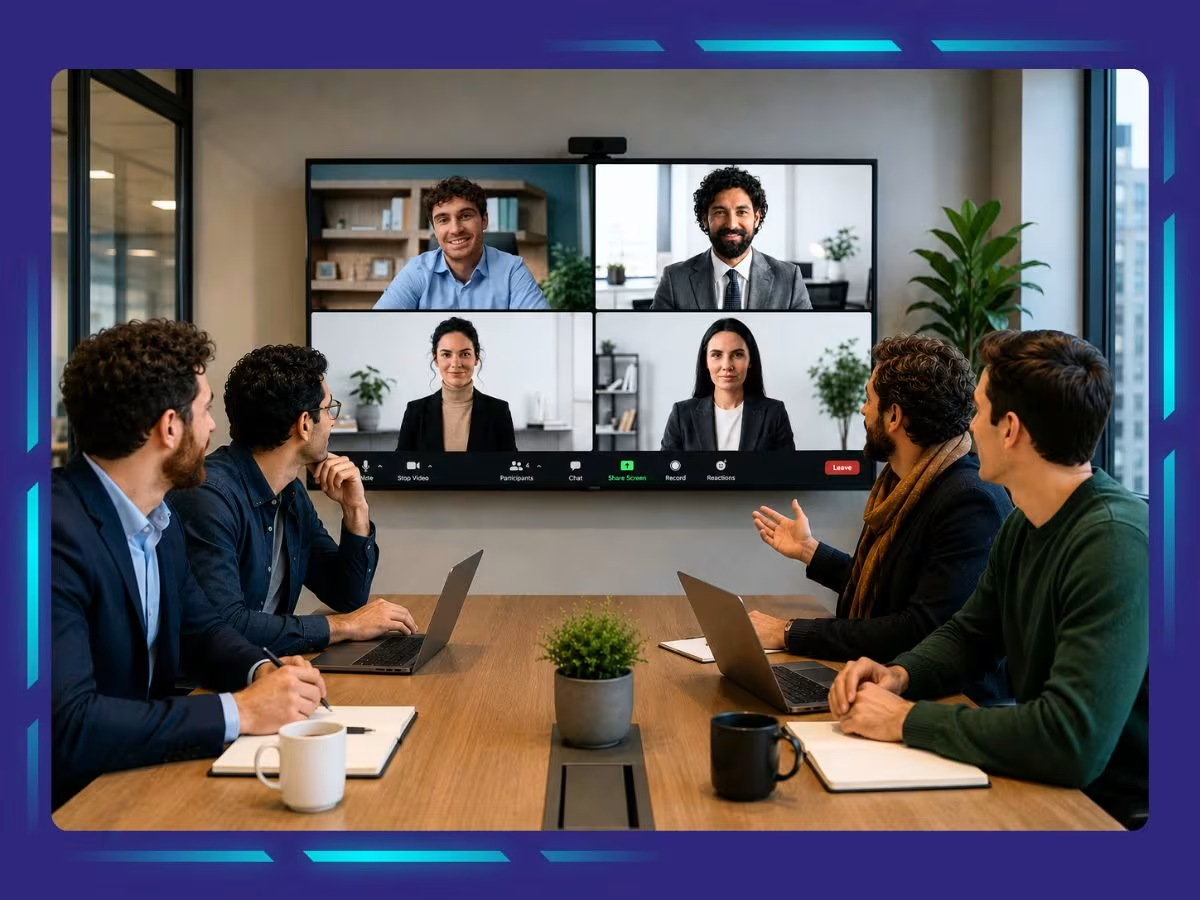
To integrate offshore accounting teams with UK in-house finance teams successfully, businesses need shared workflows, clearly defined responsibilities, cloud-based accounting systems, regular communication, and consistent performance reporting. The goal is to make the offshore team operate as an extension of the internal finance function rather than a separate support unit.
Concerns about data security, communication, and quality control are common reasons why UK businesses hesitate to offshore their accounting functions. This blog addresses these concerns and provides a practical framework for making offshore accounting a seamless part of your in-house accounting team.

Build a Seamless Finance Team
Support that feels like an extension of your in-house team
What are the Common Integration Mistakes UK Businesses Make?
Many integration challenges arise because the operating structure of the offshore and in-house teams is unclear. Without defined processes and communication standards, even highly capable teams can struggle to work efficiently together.
Some of the most common mistakes include:
- Moving tasks offshore without mapping existing workflows: Businesses often transition tasks without documenting how work currently moves through the finance team. This creates confusion, delays, and duplicated effort.
- Failing to define offshore and in-house responsibilities: In-house finance team leaders should clearly identify which activities remain in-house and which are handled by offshore accountants.
- Using disconnected systems and communication channels: Working across separate systems reduces visibility and makes workflow management more difficult.
- Overlooking onboarding and process training: Offshore team members should understand company policies, approval workflows, reporting expectations, and HMRC compliance requirements to integrate seamlessly.
- Ignoring time-zone planning: Businesses must establish communication windows, escalation procedures, and meeting schedules that work for both teams.
- Not tracking performance through measurable KPIs: Without defined service levels and reporting metrics, it becomes difficult to assess productivity, accuracy, turnaround times, or overall team performance.
- Treating offshore teams as external vendors: In-house teams should integrate offshore professionals into daily operations, team meetings, reporting cycles, and business objectives.
- Neglecting data security protocols: Sharing financial data across geographies without encryption standards, access controls, and clear data handling agreements creates significant compliance and legal risk.
- Skipping cultural alignment: Differences in communication style, working hours, and professional norms can create friction if not acknowledged and managed proactively.
How to Integrate Offshore Accounting Teams with In-House Finance Teams
A successful integration of offshore and in-house accounting teams requires a structured approach that aligns people, processes, technology, and performance expectations across both teams. The first step includes the evaluation of existing finance workflows, defining responsibilities, implementing shared cloud accounting systems, establishing reporting standards, and gathering feedback for streamlined operations.
The five steps below provide a practical framework for building a coordinated unit of offshore accountants and in-house teams.

Step 1: Map Your Current Finance Workflows
Before offshoring accounting services, document your existing finance processes to understand how work flows across the business. This helps identify dependencies, approval points, and tasks suitable for offshore support.
Typically, transactional and process-driven activities such as bookkeeping, reconciliations, accounts payable, and data entry can be moved offshore. Strategic finance activities and stakeholder-facing responsibilities are usually best retained in-house.
Step 2: Define Role Boundaries (Offshore vs In-House Responsibilities)
Clear role definitions prevent duplicated work, missed tasks, and accountability gaps. Every finance activity should have an identified owner, whether it sits with the offshore team or the in-house finance department.
Depending on your operational requirements, you can begin by offshoring day-to-day processing activities and, as your operations grow, gradually expand the scope of processes handled offshore.
Common functions that are often offshored are:
- Bookkeeping
- Ap/AR Management
- Bank Reconciliation
- Financial Reporting
- Cash Flow Forecasting
- Payroll Processing
Step 3: Choose the Right Cloud Accounting Tech Stack for Collaboration
Successful integration of offshore accounting and in-house finance teams depends on them working within the same systems and accessing real-time financial data. Cloud-based platforms create visibility, consistency, and smoother collaboration across locations.
Using a connected technology stack also reduces manual handoffs, improves workflow efficiency, and ensures offshore and in-house teams can work as a single finance function.
Use Advanced Accounting Software
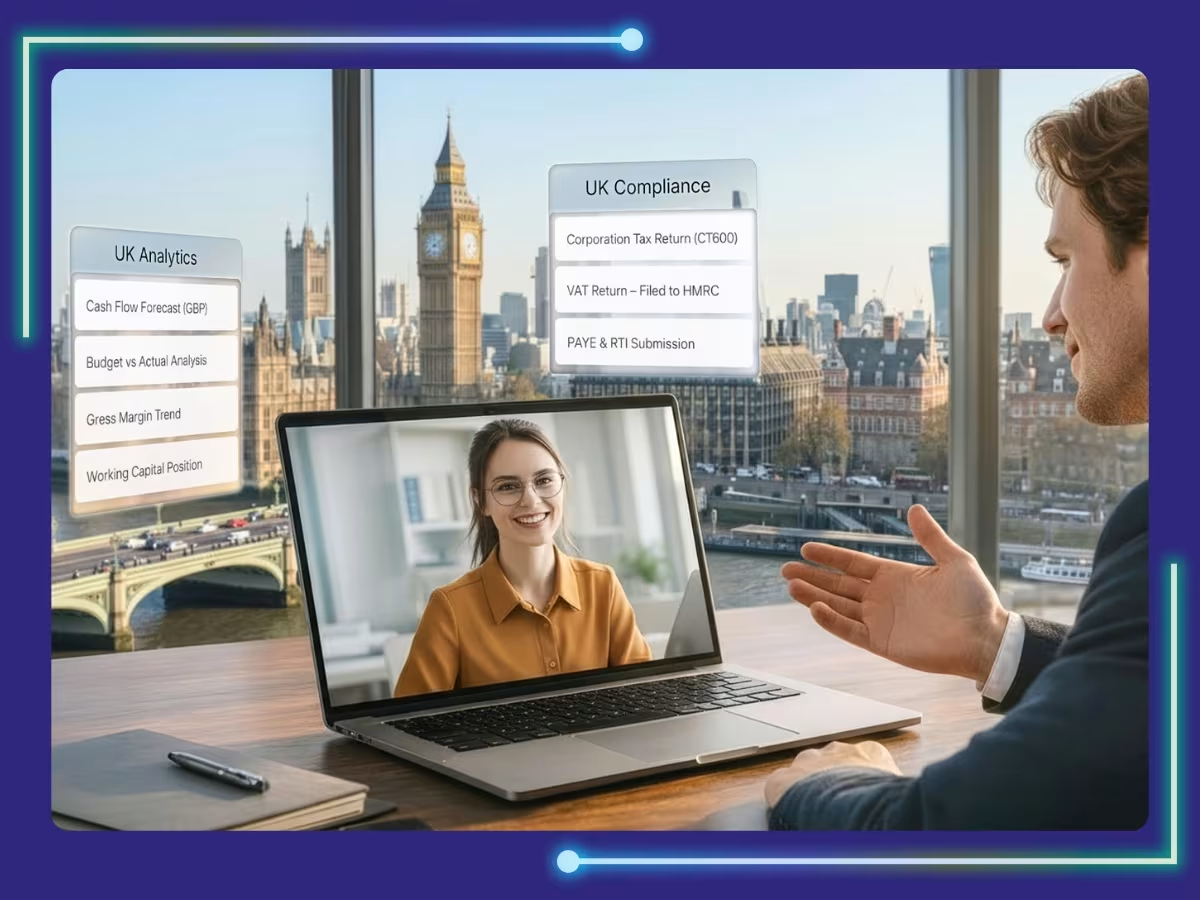
AI-powered accounting platforms, such as Xero, QuickBooks, NetSuite and MS Dynamics, allow multiple users to access financial data securely from different locations. This enables offshore and in-house teams to collaborate in real time without version-control issues.
Tools such as Xero and QuickBooks Online provide shared visibility into transactions, reconciliations, reporting, and month-end activities, improving coordination across teams.
Utilise Project Management Tools
Project management tools such as Asana, Trello, Monday.com, and ClickUp help accounting firms organise tasks, track deadlines, assign responsibilities, and improve team collaboration. This increases visibility across projects and helps ensure client work is completed on time.
By centralising financial documents, both offshore accountants and UK finance teams can access the same information, creating a more efficient workflow.
Leverage Communication Systems
Communication tools like Slack, Teams, Email, and Zoom help bridge geographical and time-zone differences between offshore accounting and in-house teams. They provide a central place for discussions, updates, approvals, and issue resolution.
Using structured communication channels also improves response times and helps maintain alignment across ongoing finance activities and reporting cycles.
Step 4: Gather Feedback and Continuously Improve
Successful integration requires regular feedback from both offshore accountants and in-house finance teams. Reviewing communication, workflows, and reporting processes helps identify inefficiencies before they affect performance.
Schedule periodic reviews to assess collaboration, address operational challenges, and refine processes. Continuous feedback ensures both teams remain aligned and supports long-term improvements in productivity.
Step 5: Addressing Data Security and Compliance Concerns
Data security is the most commonly cited concern among UK finance leaders when hiring offshore accountants. Key security measures to implement before any data is shared with an offshore team:
- Role-based access controls: Offshore team members should only access the systems and data required for their specific tasks.
- Data encryption: All data in transit and at rest should be encrypted. Cloud accounting platforms like Xero and QuickBooks use 256-bit AES encryption as standard.
- Non-Disclosure Agreements (NDAs): These should be in place before onboarding begins, clearly defining data ownership, retention, and destruction policies.
- Multi-factor authentication (MFA): MFA is required on all shared systems accessed by offshore team members.
- Regular access audits: Review user access permissions quarterly. Remove access promptly when team members rotate off the engagement.
- SOC 2-aligned processes: If your offshore provider holds a SOC 2 Type II certification, it means their data security controls have been independently assessed and tested over time.
Make the Best Out of Offshore Accounting with a Reliable Partner
Integrating offshore accounting and in-house finance teams successfully requires structured processes, clear accountability, and the right technology framework. Without a well-planned approach, businesses can face communication gaps, inefficiencies, and reporting challenges.
At Whiz Consulting, we have been providing accounting services since 2015 and have established an efficient onboarding process that cause no disruption to the existing operations. With us, you get a team of accountants who work dedicatedly towards providing you with the finance and accounting support you need while maintaining transparent communication and accountability throughout the journey. Ready to work with a reliable offshore accounting team? Get in touch with us today and let us help you streamline your finances.

Get customized plan that supports your growth

Have questions in mind? Find answers here...
Offshore and in-house finance teams collaborate through shared workflows, cloud accounting software, communication tools, and clearly defined responsibilities to ensure efficient financial operations and reporting.
Common tasks that UK businesses offshore are bookkeeping, accounts payable, accounts receivable, reconciliations, payroll support, and management accounts preparation.
UK businesses can manage offshore accountants by establishing clear roles, using collaborative cloud systems, scheduling regular reviews, tracking KPIs, and maintaining consistent communication across both teams.
Offshore accountants can support MTD-compliant processes using approved accounting automation software, while UK finance teams retain oversight of submissions and compliance requirements.
Yes. Trained offshore accountants can work with UK regulations, including FRS 102 requirements, provided they receive appropriate onboarding and guidance.
Thousands of business owners trust Whiz to manage their account
Let us take care of your books and make this financial year a good one.


This website uses cookies to improve your experience. You can accept all or reject non-essential cookies.