

Table of Content
Share This Article
- Last Updated: Aug 31, 2026
- 🔊 Listen
TL;DR
- An unreliable offshore accounting services provider can expose financial data through weak access controls and insecure data handling.
- Secure data transfers, restricted access, employee screening, and audit trails help reduce financial data security risks.
- Verify ISO 27001 certification, security controls, employee practices, and client references before selecting an offshore provider.
- A controlled pilot can help assess a provider’s security practices before granting broader access to financial systems.
Offshoring accounting functions to India can provide access to skilled professionals and cost-effective support. However, these benefits depend on how well the provider protects financial data, controls system access, secures data transfers, and monitors employees who handle sensitive information. An unreliable provider with weak security and employee access controls can expose bank feeds, GL data, payroll records, and other sensitive financial information.
This blog covers the major data security risks of choosing an unreliable offshore accounting provider and the security controls to evaluate before choosing an offshore accounting services provider in India.

Offshore Accounting, Built Securely
Partner with the Right Offshore Accounting Provider
Major Data Security Risks in Offshore Accounting
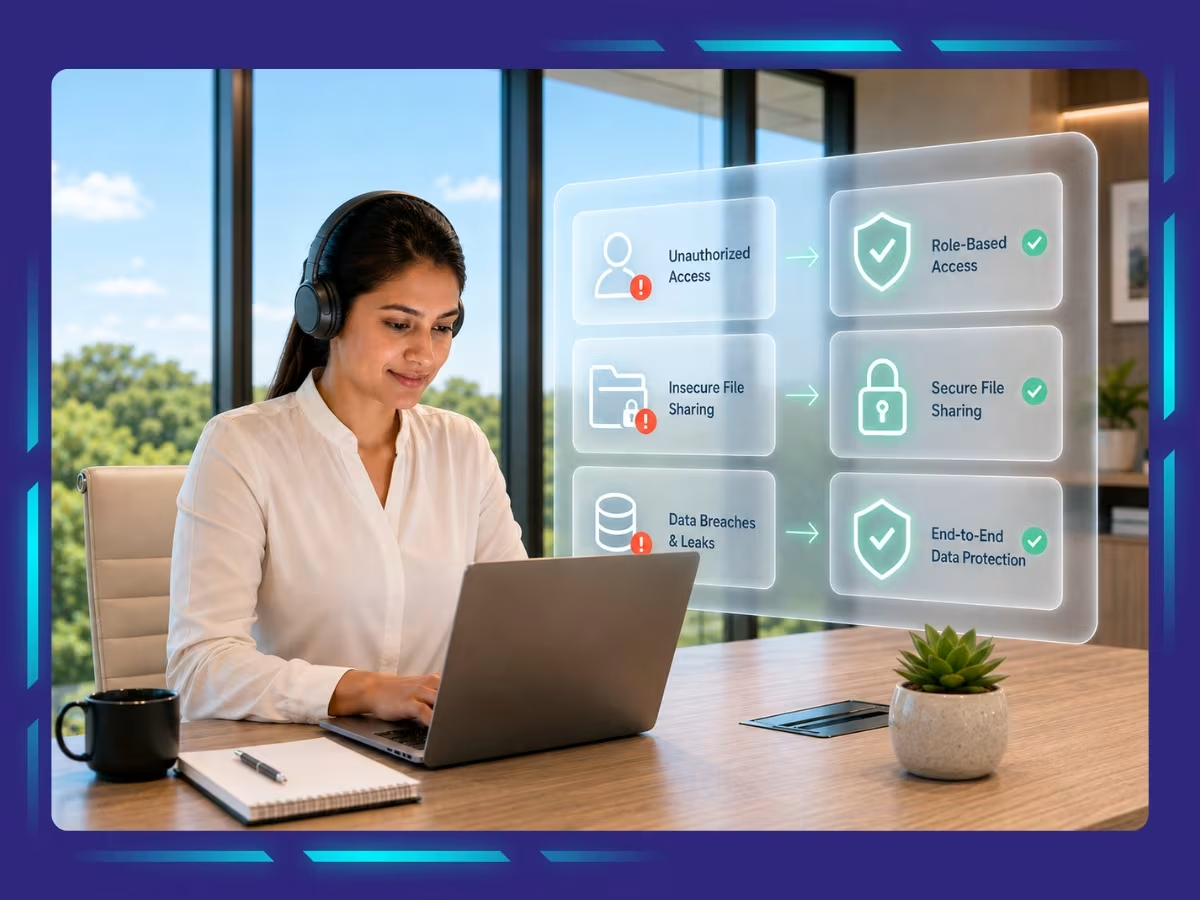
Working with an unreliable offshore accounting provider can increase data security risks through weak access controls, insecure data handling, employee errors, and limited audit visibility. These gaps can expose accounting, payroll, and bank details to unauthorised access.

Data Breaches & Unauthorised Access
Offshore accounting requires the provider’s staff to work with your accounting software, bank feeds, general ledger data, and payroll records. An unreliable provider that lacks strong security controls or recognised frameworks such as ISO 27001 can increase the risk of unauthorised access and exposure of data.
For example, weak access controls, shared credentials, or inadequate employee security practices could allow unauthorised users to access accounting software, or client financial records.
Insecure Data Transfers and Storage
A provider with weak data-handling practices may rely on email attachments, unrestricted Google Drive links, or outdated file-sharing portals to exchange bank statements, GL files, tax documents, and payroll reports. The risk also increases when employees download client records to personal or unmanaged devices.
Employee Errors and Insider Threats
An unreliable provider may not adequately screen, train, or monitor employees who handle client financial information. This increases the risk of phishing-related credential theft, accidental file sharing, credential compromise caused by weak password practices, or deliberate misuse of accounting data.
Limited Audit Visibility
An offshore accounting provider that does not maintain adequate access logs, review records, or system audit trails can increase the security risk. Inadequate audit trails make it difficult to determine who accessed a client file or changed a journal entry, vendor record, payroll detail, or bank records.
How to Choose the Right Offshore Accounting Service Provider in India
Choosing an offshore accounting service provider requires evaluating how they protect financial data before giving their team access to your accounting systems and records. Check their security certifications, access controls, employee screening practices, and client references before hiring them.
- Verify Security Certifications & Scope: Look for providers with ISO 27001 certification to verify that their security controls meet recognised standards for protecting data.
- Assess Security Controls: Ask how the provider uses role-based access control (RBAC), multi-factor authentication (MFA), and encryption to protect financial data.
- Review Employee Screening: Enquire about how employees are screened, whether confidentiality agreements are signed, how security training is conducted, and how promptly access is revoked.
- Check Client References: Ask for client references that can verify the provider’s security practices, reliability, and handling of sensitive financial data.
- Run a Controlled Pilot Project: Start with limited data and permissions to evaluate security practices, work quality, communication, and escalation procedures before expanding the engagement.
Build a Secure Offshore Accounting Partnership with the Right Provider
Offshoring accounting functions does not mean giving up control of your financial data. With the right safeguards in place, businesses can limit access, secure systems, monitor employee, and maintain reliable recovery processes. Choosing a qualified and reliable provider helps you gain the benefits of offshore accounting without compromising financial data security.
At Whiz Consulting, we provide offshore accounting services with documented processes and structured security controls designed to safeguard your financial data. As an ISO 27001-certified provider with a SOC 2 Type II report, we apply role-based access controls, secure data-handling practices, and security training to help protect our clients’ financial information.

Get customized plan that supports your growth

Have questions in mind? Find answers here...
Outsourcing accounting functions to India is safe when you choose a reputable provider with strong data security and compliance controls. Established firms use controlled access, secure systems, and encryption to protect their clients’ sensitive financial data.
Ask the provider to explain its pre-employment screening and access-approval process, including background checks, confidentiality requirements, and when employees receive system access. Contracts can also require evidence that these controls are being followed.
Businesses can protect financial data when outsourcing accounting by vetting providers, limiting system access, enforcing security controls, and monitoring data activity. Verify these safeguards before granting an external team access to financial systems.
Outsourcing accounting to India does not transfer your compliance responsibilities. Your business is still responsible for tax, financial reporting, and other applicable legal obligations, even when an offshore provider handles accounting work.
When an offshore contract ends, your provider should transfer your financial data, revoke all access credentials, and securely delete any remaining copies according to the agreed data-processing terms.
Thousands of business owners trust Whiz to manage their account
Let us take care of your books and make this financial year a good one.