


Table of Content
Share This Article
- Last Updated: Jul 30, 2026
- 🔊 Listen
TL;DR
- Annual budgets set fixed yearly targets, while rolling forecasts update expected performance using the latest financial and operational data.
- Budgets support accountability and spending control, while forecasts improve flexibility, scenario planning, and timely decision-making.
- Most growing businesses benefit from a hybrid approach that keeps the annual budget fixed and updates the rolling forecast regularly.
- Effective forecasts should focus on key business drivers and connect profit, cash flow, and balance sheet movements.
- Outsourced accounting support can improve forecasting accuracy and reporting, while management retains control over strategic assumptions.
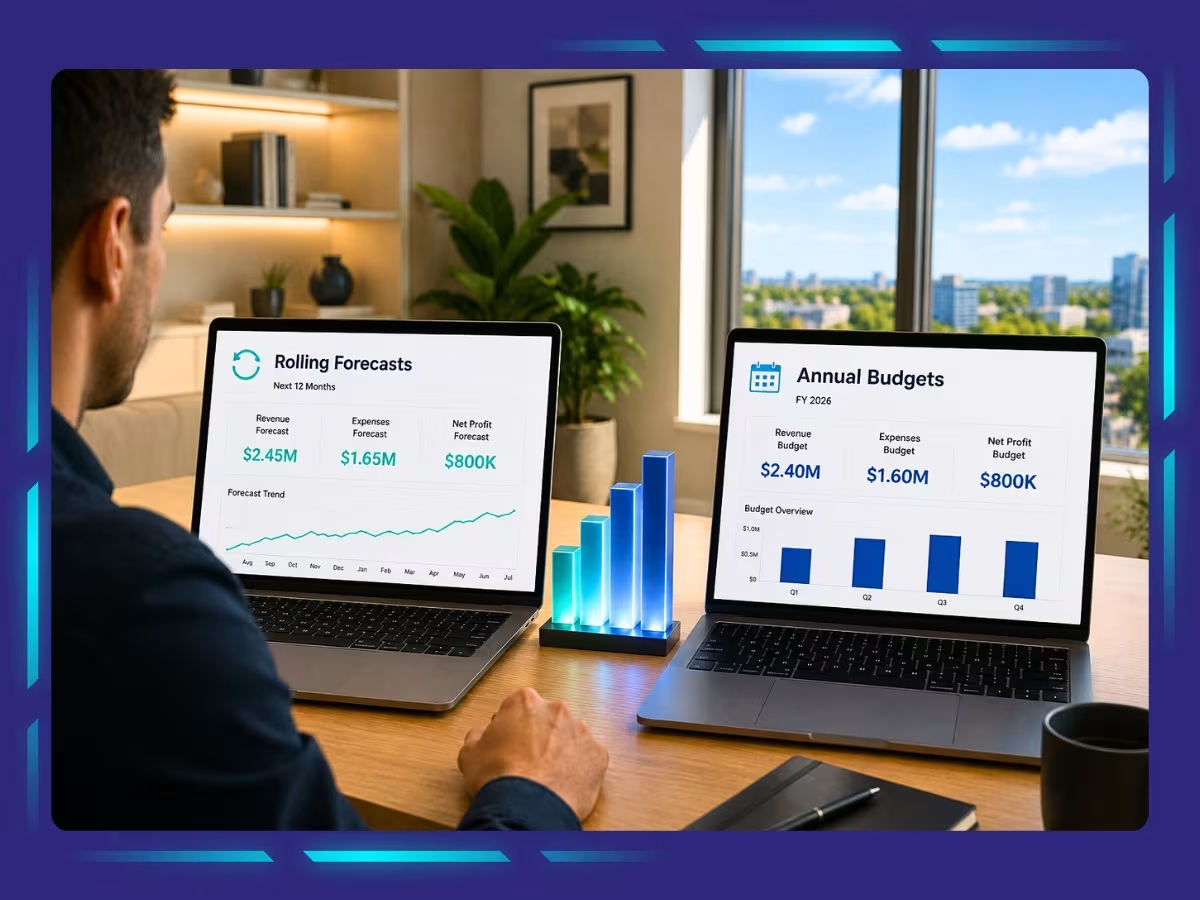
The debate around a rolling forecast vs annual budget is not simply about choosing a modern method over a traditional one. Both tools serve different purposes. An annual budget sets financial targets and spending limits, while a rolling forecast updates management’s view of what the business is likely to achieve based on current information.
This blog explains how each method works, where they differ, and how businesses can choose a planning structure that matches their growth, cash flow requirements, and operating environment.

Ready to Improve Financial Planning?
Build Smarter Budgets and Forecasts with Expert Support
Understanding Annual Budgets and Rolling Forecasts
Annual budgets and rolling forecasts are both financial planning tools, but they serve different purposes. An annual budget outlines what the business aims to achieve during a fixed financial year, while a rolling forecast estimates what the business is now likely to achieve based on its latest results and assumptions. This distinction matters because an annual budget may become outdated as market conditions, costs, customer demand, or business priorities change.
What Is an Annual Budget?
An annual budget is a fixed financial plan prepared for a specific 12-month period. It usually includes projected revenue, operating expenses, payroll, capital expenditure, cash flow, and profit targets. Management typically prepares it before the financial year begins by reviewing previous performance, estimating future sales, approving departmental spending, and setting financial goals. Once approved, the budget becomes a benchmark against which actual results are measured throughout the year.
The main advantage of annual budgeting is that it gives departments clear spending limits and provides management, investors, and lenders with a structured financial plan. However, because it remains fixed, it may no longer reflect the business’s expected financial position when conditions change significantly.
What Is a Rolling Forecast?
A rolling forecast is a financial projection that is updated regularly, usually monthly or quarterly, using the latest actual results and revised assumptions. Instead of ending at the close of the financial year, it continuously adds a new future period as each current period ends, giving management an ongoing view of the next 12 months or another chosen timeframe.
Rolling forecasts often use operational drivers such as customer numbers, selling prices, employee headcount, utilisation rates, material costs, and payment collection periods to estimate future performance. As these drivers change, the forecast changes with them, making it particularly useful for businesses operating in uncertain, competitive, or fast-changing conditions.
Rolling Forecast vs Annual Budget: Key Differences
The difference between annual budgeting vs rolling forecasting goes beyond how often financial figures are updated. The two methods differ in purpose, planning horizon, assumptions, level of detail, accountability, adaptability, and resource allocation. Annual budgeting provides fixed targets for the financial year, while rolling forecasting updates expected performance using the latest business information. The comparison table at the end summarises the main differences.
Time Horizon and Forward Visibility
Annual budgeting:
An annual budget provides a fixed 12-month financial plan at the beginning of the year. However, its forward visibility reduces as the year progresses. By October, a calendar-year budget may contain only three months of remaining financial information, which can limit its usefulness for decisions that extend into the following year.
Rolling forecasting:
A rolling forecast maintains a consistent forward-looking period. For example, a 12-month rolling forecast prepared in October would continue through September of the following year. This gives management better visibility when planning recruitment, inventory purchases, technology investments, contracts, or business expansion.
Assumptions
Annual budgeting:
Annual budgets are often based on assumptions made several months before the financial year begins. These assumptions may cover sales growth, supplier costs, employee expenses, customer retention, inflation, and interest rates. As conditions change, some assumptions may become outdated.
Rolling forecasting:
Rolling forecasts replace outdated assumptions with the latest actual results and revised expectations. If material costs rise, recruitment is delayed, or customer demand changes, future revenue, margins, payroll, and cash flow projections can be updated accordingly.
Level of Detail
Annual budgeting:
Annual budgets are usually detailed because they are used to approve expenditure across departments, cost centres, and account categories. This level of detail supports financial control and departmental planning.
Rolling forecasting:
Rolling forecasts are generally more effective when they focus on major business drivers. A professional services firm may forecast revenue using billable hours, utilisation, employee numbers, and billing rates. A retailer may use store traffic, conversion rates, average order value, and inventory availability.
Accountability
Annual budgeting:
Annual budgeting creates a stable benchmark against which actual performance can be measured. Departments can be assessed based on whether they achieved agreed revenue targets, cost limits, and operational commitments.
Rolling forecasting:
Rolling forecasting should not replace the original performance benchmark. If targets are continually changed whenever results fall behind plan, accountability may weaken. The forecast should update expected outcomes while the approved budget remains fixed for performance measurement.
Adaptability
Annual budgeting:
Annual budgets offer limited flexibility because targets and spending plans are normally approved before the financial year begins. They provide discipline but may become less relevant when market conditions, costs, or operational priorities change.
Rolling forecasting:
Rolling forecasts allow management to respond to new information. Expected revenue, expenses, hiring plans, cash requirements, and investment decisions can be revised as business conditions change. This makes rolling forecasting more useful for ongoing decision-making.
Resource Allocation
Annual budgeting:
Annual budgets allocate resources at the beginning of the year. This supports spending control but may keep funds committed to projects, departments, or markets that are no longer delivering the expected results.
Rolling forecasting:
Rolling forecasts allow management to reassess how resources are being used. If one region, product, or campaign performs below expectations while another produces stronger results, the forecast can show the financial effect of reallocating funds.
Scenario Planning
Annual budgeting:
An annual budget usually reflects one approved financial plan. It may include contingency amounts, but it is not normally updated regularly to reflect multiple possible outcomes.
Rolling forecasting:
Rolling forecasting supports base-case, upside, and downside scenarios. Management can assess how stronger sales, higher costs, delayed payments, pricing changes, or weaker demand may affect profit, cash flow, and funding requirements.
Management Use
Annual budgeting:
Annual budgeting is mainly used to set targets, approve spending, assign responsibility, and measure performance across the financial year.
Rolling forecasting:
Rolling forecasting is mainly used to update expected results, assess financial risks, test scenarios, and support operational and strategic decisions.
The following table provides a quick summary of annual budgeting vs rolling forecasting.
| Area | Annual Budgeting | Rolling Forecasting |
|---|---|---|
| Main purpose | Sets targets and spending limits | Updates expected performance |
| Planning period | Fixed financial year | Continuous forward-looking period |
| Data used | Historical data and future assumptions | Latest actuals and revised assumptions |
| Level of detail | Detailed by department and account | Focused on major business drivers |
| Management use | Performance control and accountability | Decisions, scenarios, and resource changes |
| Year-end visibility | Reduces as the year progresses | Continues beyond the financial year |
| Flexibility | Limited | High |
Which Planning Method Should Growing Businesses Use?
Choosing between a rolling forecast vs annual budgeting depends on how your business operates, how quickly conditions change, and how often management needs updated financial information. Annual budgets provide a fixed financial plan for the year, while rolling forecasts continuously extend the planning horizon by updating assumptions with the latest business data. Many growing businesses now combine both approaches by using an annual budget for strategic direction and rolling forecasts for ongoing financial decisions.
The following sections explain when an annual budget works best, when rolling forecasts offer greater value, and how businesses can use both together for stronger financial planning.
Annual Budgeting Works Best for Stable Operations
Annual budgeting provides a structured financial plan for the upcoming financial year. It helps businesses set revenue targets, allocate spending, manage departments, and measure performance against predefined goals. Companies operating in stable industries with predictable sales cycles often benefit from annual budgets because significant changes are less frequent.
However, once approved, annual budgets can quickly become outdated if market conditions, customer demand, or operating costs shift during the year.
Rolling Forecasts Improve Agility
When comparing rolling forecast vs annual budgeting, rolling forecasts offer greater flexibility. Instead of preparing one fixed budget each year, businesses regularly update forecasts by adding a new month or quarter as each period ends.
This approach allows management to respond more quickly to changing sales trends, labour costs, supply chain disruptions, inflation, or cash flow pressures. Rolling forecasts support more accurate financial decisions because they are based on current business performance rather than assumptions made many months earlier.
Many Growing Businesses Use Both
For many growing organisations, the best solution is not choosing one method over the other. An annual budget provides long-term financial targets, while rolling forecasts keep those plans relevant throughout the year.
Using both methods together allows businesses to maintain strategic direction while adapting to changing conditions, leading to more informed decisions, improved cash flow planning, and stronger financial control.
How to Build an Effective Forecasting and Budgeting Process
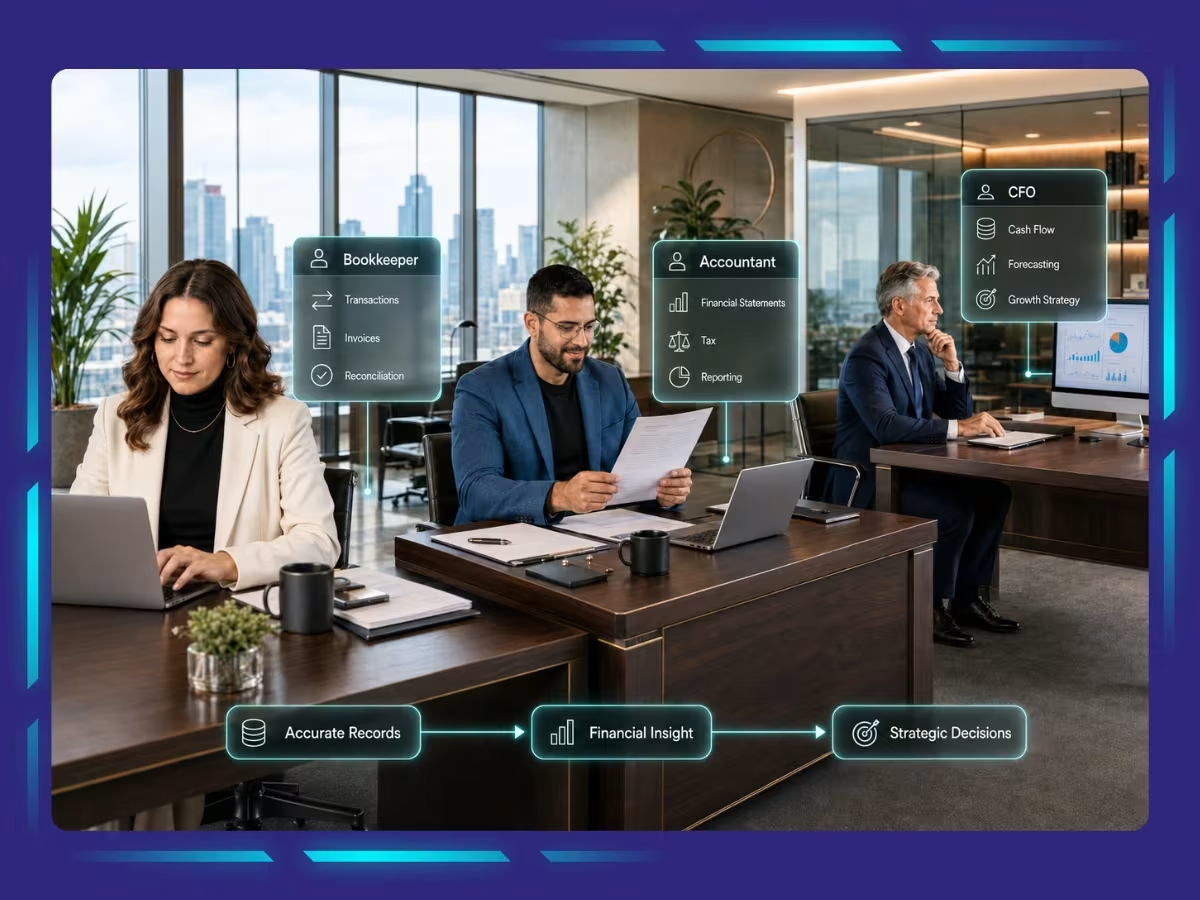
An effective forecasting and budgeting process should be easy to update, based on reliable data, and connected to business decisions. It involves choosing the right forecast period, focusing on key business drivers, linking profit with cash flow and the balance sheet, updating projections with actual results, using forecasts to guide decisions, and considering outsourced budgeting services when internal resources are limited.
Choose the Right Forecast Period
The forecast period should match the decisions the business needs to make. A 12-month forecast is suitable for general planning, while an 18-month forecast may support recruitment, expansion, or long-term contracts. Businesses with tighter liquidity can also use a 13-week cash flow forecast to track short-term cash movements.
Focus on the Business Drivers That Matter
Forecasts should be based on the factors that have the greatest impact on revenue, costs, and cash flow. These may include customer growth, pricing, staffing, utilisation, production volumes, inventory, or supplier costs. Each assumption should have a reliable data source and a clear owner within the business.
Connect Profit, Cash Flow, and the Balance Sheet
A useful forecast should cover more than revenue and expenses. It should also include receivables, payables, inventory, debt, tax liabilities, capital expenditure, and cash balances. Connecting these areas helps management understand how growth affects both profitability and liquidity, particularly where customers pay slowly or upfront investment is required.
Update the Forecast with Actual Results
Forecast figures should be replaced with actual accounting results at the end of each month or quarter. Management can then compare performance against the budget and previous forecast. The review should focus on material variances and identify whether changes resulted from sales, pricing, staffing, supplier costs, or customer payment delays.
Keep the Process Connected to Decisions
Forecasting should directly support decisions about hiring, pricing, marketing, purchasing, expansion, and funding. If cash is expected to fall below a safe level, management can act early. If demand is likely to exceed capacity, the business can recruit sooner, increase supplier orders, or adjust its operating plans.
Consider Outsourcing Forecasting Support
Businesses without an internal financial planning team can outsource parts of the forecasting and budgeting process. External specialists can prepare historical data, build financial models, update cash flow projections, analyse variances, and produce management reports. Strategic assumptions should still come from business leaders who understand operational priorities and acceptable risks.
Hire Accounting Experts for a Better Financial Future
An annual budget and a rolling forecast serve different but complementary purposes. The budget sets fixed targets, controls spending, and creates accountability, while the forecast updates expectations as business conditions change. For growing companies, combining both provides a stronger planning process, helping management track performance, test scenarios, and make informed decisions throughout the year.
Whiz Consulting can help you build practical budgets, rolling forecasts, and financial reports tailored to your business goals. Our accounting experts turn financial data into clear insights, so you can manage cash flow, control costs, and plan with greater confidence at every stage of growth. Partner with Whiz Consulting to create a more reliable financial future.

Get customized plan that supports your growth

Have questions in mind? Find answers here...
An annual budget is a fixed financial plan prepared for a specific financial year. A rolling forecast is updated regularly and extends the planning horizon beyond the current year.
The annual budget shows what the business planned to achieve, while the rolling forecast shows what the business is currently likely to achieve.
A rolling forecast can replace an annual budget in some businesses, but this is not always practical.
Companies may still need annual budgets for spending approval, performance targets, bank reporting, or investor requirements. Many growing businesses benefit more from using the annual budget and rolling forecast together.
Most businesses update rolling forecasts monthly or quarterly.
Monthly updates are more suitable for companies experiencing rapid growth, changing demand, or tight cash flow. Quarterly updates may be sufficient for businesses with more predictable revenue and costs.
A rolling forecast commonly covers 12 or 18 months.
Businesses with short-term cash concerns may also use a 13-week cash forecast, while companies making major investments may extend their forecast to 24 months.
The appropriate period depends on how far ahead management needs to make operational and financial decisions.
Outsourcing can be useful when a business lacks the internal resources or technical expertise to maintain accurate financial models.
An outsourced accounting or FP&A team can prepare forecasts, analyse variances, create scenarios, and monitor cash flow. Management should still retain control over strategic assumptions such as pricing, recruitment, expansion, and investment.
Thousands of business owners trust Whiz to manage their account
Let us take care of your books and make this financial year a good one.





This website uses cookies to improve your experience. You can accept all or reject non-essential cookies.