


Table of Content
Share This Article
- Last Updated: May 29, 2026
- 🔊 Listen
TL;DR
- Online bookkeeping helps businesses maintain accurate records, improve cash flow visibility, and reduce tax-time stress through real-time financial management.
- Signs you need online bookkeeping include outdated books, scaling challenges, audit concerns, excessive manual work, and unreliable financial reporting systems.
- Cloud-based bookkeeping solutions automate reconciliations, reporting, invoicing, and compliance tasks while improving financial accuracy and operational efficiency.
- Outsourced online bookkeeping provides scalable, secure, and cost-effective financial support without the expense of hiring full-time in-house staff.
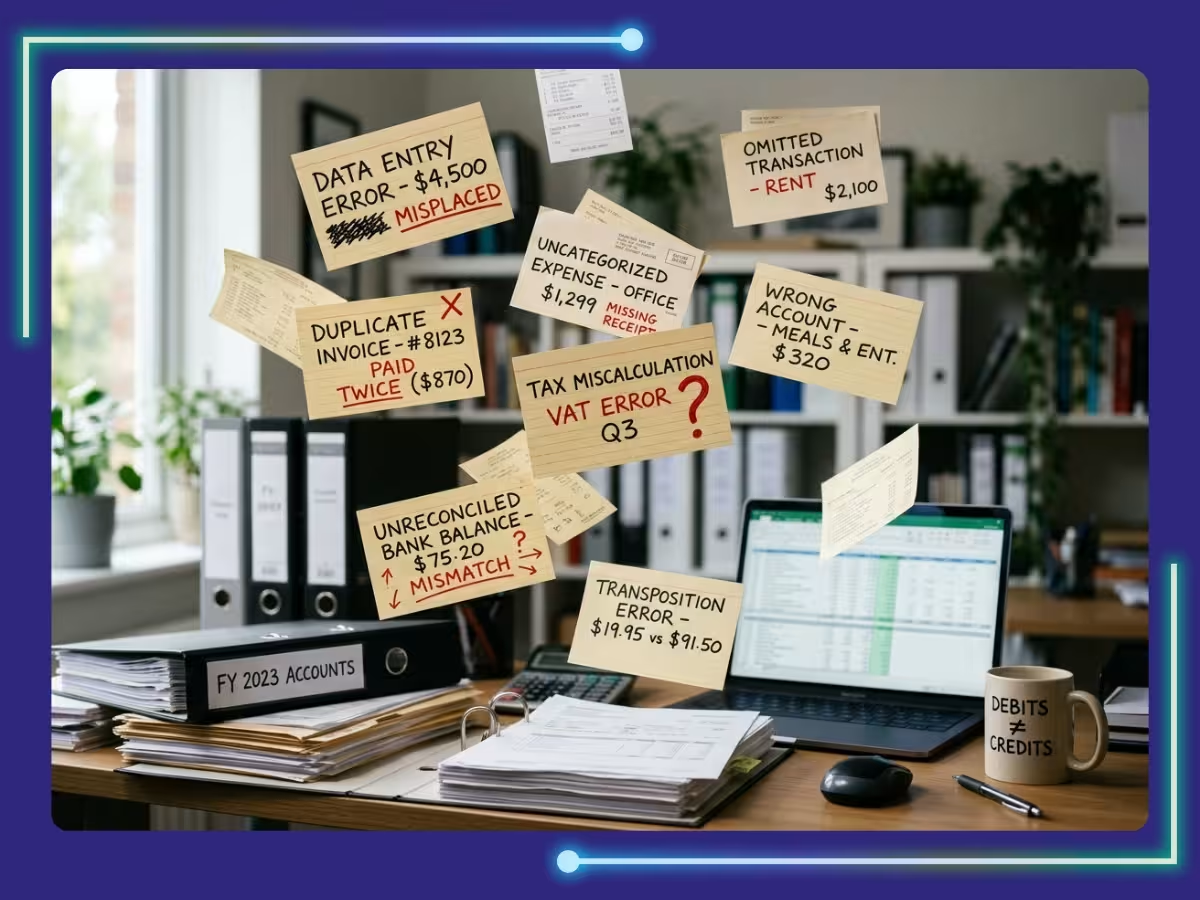
The signs your business needs online bookkeeping are patterns of financial strain, inefficiency, or risk that consistently emerge when a growing business lacks professional bookkeeping support. Online bookkeeping services are cloud-based solutions, giving business owners access to professional bookkeepers, real-time reporting, automated data syncing, and secure document storage, without requiring an in-house hire. In this guide, we’ll explore seven key signs that indicate your business needs online bookkeeping services, along with practical strategies, examples, and the measurable benefits that adopting these services can provide.

Take Control of Your Finances
Streamline your bookkeeping, reduce errors, and get real-time insights
Top Signs Your Business Needs Online Bookkeeping Services
If you’re struggling with inaccurate records, tax-time stress, cash flow uncertainty, or financial processes that can’t keep up with growth, it may be time to consider professional online bookkeeping services. Below are the top signs that indicate your business could benefit from a modern, cloud-based bookkeeping solution.
Sign #1: Your Books Are Behind or Inaccurate
Financial data is only useful when it’s accurate. If your books are outdated, filled with errors, or reconciliations lag behind, you’re essentially making decisions in the dark. Inaccurate records can lead to:
- Overpaying or underpaying taxes
- Mismanaging cash flow
- Missing early warning signs of financial stress
Example: Imagine a small e-commerce business that sells across multiple platforms. They use spreadsheets to track sales, but due to delayed entries, they miss reconciling some PayPal payments. As a result, revenue appears lower than it actually is, leading them to take on unnecessary short-term loans.
How online bookkeeping helps:
Cloud-based bookkeepers automate data entry, reconcile accounts daily, and flag inconsistencies. This ensures your financial statements are always reliable, giving you the confidence to make strategic business decisions. Real-time updates also allow for scenario planning and budgeting with accurate numbers.
Sign #2: Tax Season Feels Like a Crisis
Many business owners experience tax season as a stressful scramble. If you’re gathering receipts, running to your CPA at the last minute, or paying extra corrections, it’s a clear signal your bookkeeping system isn’t working year-round.
Consequences of poor tax preparation:
- Missed deductions
- Penalties or interest for late filings
- Audit risk due to incomplete documentation
Example: A consulting firm realizes in March that several client invoices weren’t accounted for properly. They have to pay a professional service to catch up, costing $2,500 in cleanup fees, and delaying their tax filing.
Online bookkeeping advantage:
A dedicated online bookkeeper categorizes and reconciles transactions continuously, prepares year-round reports, and ensures all relevant deductions are captured. Cloud integration with tax software allows easy access for your CPA, reducing filing stress and audit risks.
Sign #3: Low Cash Flow Visibility
Cash flow is the lifeblood of any business. Without clear visibility, you risk running out of funds unexpectedly, relying on personal savings, or overextending credit.
Red flags:
- Revenue doesn’t match bank balances
- Difficulty forecasting 30–90 day cash availability
- Reliance on personal funds to cover shortfalls
Case in point: A subscription-based service tracks payments manually and realizes too late that several clients’ payments were delayed. Without proper tracking, they are forced to cover payroll from personal accounts.
How online bookkeeping helps:
Online bookkeeping platforms provide dashboards showing cash flow in real time, project future inflows/outflows, and generate alerts for potential shortfalls. This allows proactive financial management and supports growth decisions with accurate data.
Sign #4: Spending Excessive Time on Finances
Time is one of the most valuable resources for a business owner. Spending hours on manual bookkeeping takes away from strategy, sales, and customer growth.
Hidden costs include:
- Opportunity cost of not focusing on growth
- Stress and decision fatigue
- Increased likelihood of errors from manual entry
Example: A boutique agency has the founder spending 10 hours per week entering invoices, reconciling accounts, and chasing missing payments. These are hours that could be spent acquiring new clients or developing new services.
Online bookkeeping solution:
Online bookkeepers automate transaction capture, provide regular reports, and handle reconciliation tasks. Leaders can then review high-level reports instead of manually entering every transaction, freeing time to focus on business expansion.
Sign #5: Your Financial Systems Aren’t Scaling
As businesses grow, simple spreadsheets or basic accounting tools can no longer handle the volume or complexity of operations.
Scalability challenges:
- Multi-currency transactions
- Multiple employees and payroll structures
- Inventory tracking across multiple sales channels
Example: A retailer expands from one physical store to three online marketplaces. Their spreadsheet system cannot handle multi-currency sales and inventory, causing frequent errors in revenue reporting.
How online bookkeeping helps:
Online bookkeeping platforms integrate across sales channels, payroll, and inventory systems. Automation handles bulk transactions, generates real-time reports, and supports multi-currency or multi-entity accounting without adding headcounts. This scalability ensures that growth doesn’t compromise financial accuracy.
Sign #6: Audits Cause Anxiety
Audits are a reality for many businesses, and poor bookkeeping significantly increases stress. If audits make you anxious or past audits revealed errors, it’s time to consider online bookkeeping.
Risks of poor recordkeeping:
- Audit penalties
- Legal complications
- Reputation damage
Online bookkeeping solution:
Professional online bookkeeping services maintain accurate records, complete audit trails, and ensure compliance. You gain confidence knowing that, if audited, every transaction is documented and verifiable.
Sign #7: Hiring a Full-Time In-House Bookkeeper Isn’t Feasible
Hiring an in-house bookkeeper can be expensive and inflexible. Salaries, benefits, and training costs add up, particularly for small businesses that don’t need full-time support.
Cost considerations:
- Average salary + benefits = $45,000–$70,000/year
- Training and software licenses
- Limited flexibility during growth spikes
Online bookkeeping solution:
Outsourced online bookkeepers provide expert-level support with flexible hours and scalable output. Businesses often save up to 60% on overhead costs while gaining access to certified professionals familiar with various accounting platforms.
How to Choose the Right Online Bookkeeping Service
When choosing a virtual bookkeeper, consider your transaction volume, any industry-specific needs, and your long-term business objectives. Prioritize providers that offer secure cloud-based integration, clear and transparent pricing, and scalable solutions that can adapt as your business grows.
- Industry Experience: Choose a bookkeeper familiar with your sector, ensuring compliance and accurate deductions.
- Credentials: Look for Certified Bookkeepers, QuickBooks ProAdvisors, or Xero-certified experts.
- Scope of Services: Determine whether you need full payroll, AR management, or CFO-level insights.
- Taxation Knowledge: Choose a bookkeeping service with strong knowledge of tax regulations, sales tax, GST, and VAT requirements, deductions, and compliance standards (GAAP, IFRS, & AAS) to help ensure accurate filings and reduce the risk of penalties.
- Turnaround & Communication: Timely reports and clear support channels are critical.
- Data Security: Bank-level encryption, two-factor authentication, and SOC 2 compliance ensure data safety.
- Scalability & Pricing: Transparent, flexible pricing allows the service to grow with your business.
- Software Compatibility: Ensure integration with your current accounting, banking, payroll, and e-commerce platforms.
Streamline Your Books with the Right Online Bookkeeping Services
Recognizing even a few of these signs indicates it’s time to act. Online bookkeeping offers scalable, secure, and real-time financial management that saves time, reduces costs, and mitigates risks.
At Whiz Consulting, we have been helping firms across the globe manage their books since 2014. With over a team of 150+ experts on board, we offer a wide range of accounting services, including bookkeeping, AP/AR management, reconciliation, financial reporting, and more. Moreover, we can work within your preferred software, be it ZohoBooks, QuickBooks, MS Dynamics, or NetSuite. Partner with Whiz Consulting to gain clarity, control, and confidence in your financial operations, no matter the size or complexity of your business.

Get customized plan that supports your growth

Have questions in mind? Find answers here...
An online bookkeeper records, categorises, and reconciles all of your business’s financial transactions on a regular basis. This includes matching bank and credit card transactions, tracking invoices and bills, managing payroll data, and producing financial statements such as profit and loss reports, balance sheets, and cash flow statements.
Most online bookkeeping services are priced between $200 and $800 per month for small businesses, depending on the volume of monthly transactions, the scope of services included, and whether additional features like payroll, accounts receivable management, or CFO-level reporting are part of the package.
Reputable online bookkeeping services use bank-level encryption (AES-256), two-factor authentication, and role-based access controls to protect your financial data. Look for providers who maintain SOC 2 Type II compliance, which means their security controls have been independently audited. You should also confirm in your service agreement exactly who has access to your accounts and under what circumstances data can be shared or used.
Yes, and in most cases your existing accounting software is an asset. The majority of online bookkeeping services are certified in major platforms such as QuickBooks Online, Xero, and FreshBooks, and can work directly within your existing account. This means no data migration, no relearning new software, and no disruption to your existing workflows.
Most providers can onboard a new client within one to two weeks. The process typically involves a discovery call to understand your business structure and needs, connecting your bank accounts and existing accounting software via read-only integration, reviewing any backlog or catch-up bookkeeping required, and establishing the regular reporting schedule.
Thousands of business owners trust Whiz to manage their account
Let us take care of your books and make this financial year a good one.