



Table of Content
Share This Article
- Last Updated: Oct 16, 2026
- 🔊 Listen
TL;DR
- Accounts receivable (AR) management is the process of tracking customer invoices, collecting outstanding payments, and managing credit risk to maintain healthy business cash flow.
- A structured AR workflow covers credit approval, invoicing, payment tracking, collections, dispute resolution, and reconciliation.
- Track DSO, receivables turnover, and AR ageing reports to identify overdue invoices and prioritise collections.
- Consider outsourced accounts receivable services to manage collections consistently and free internal teams to focus on cash flow planning.
Accounts receivable management is the process of monitoring customer invoices, collecting outstanding payments, and managing credit sales to maintain predictable cash flow. Effective AR management helps identify overdue accounts, resolve billing disputes, and prioritise collections based on payment risk.
In this guide, we cover everything that you need to know about accounts receivable, including the process, metrics to track, and best practices to reduce payment delays. The objective is to provide you comprehensive information to pave the way for stronger AR management.

Need Better AR Management?
Get Expert Help to Manage Receivables More Efficiently!
How does the accounts receivable process work?
The accounts receivable process involves eight key steps, from approving customer credit and issuing invoices to collecting payments, resolving disputes, and reconciling balances. Each step helps businesses maintain accurate records, reduce payment delays, and improve cash flow visibility.

Credit Approval
Review the customer’s credit history, financial position, and payment history before approving credit sales. Also, set credit limits and payment terms, such as Net 15, 30 or 45, based on the customer’s risk profile.
Invoice Creation
Issue an invoice with accurate charges, payment terms, and due dates, and send it promptly through the customer’s preferred channel to prevent avoidable delays.
Transaction Recording
Record the credit sale in the general ledger by debiting accounts receivable and crediting revenue. This entry recognises the sale and records the amount the customer owes.
Payment Tracking
Use an AR ageing report to group unpaid invoices by how long they have remained outstanding. Track current, 1–30, 31–60, 61–90, and balances over 90 days to identify collection priorities.
Collections and Follow-Ups
Send payment reminders before due dates and follow up promptly when invoices become overdue. Escalate larger or repeatedly delayed balances based on their age, value, and the customer’s payment history.
Dispute Resolution
Investigate billing errors, pricing differences, missing purchase orders, and other issues that prevent payment. Assign each dispute to the responsible team and track its resolution so valid outstanding amounts can still be collected.
Cash Application
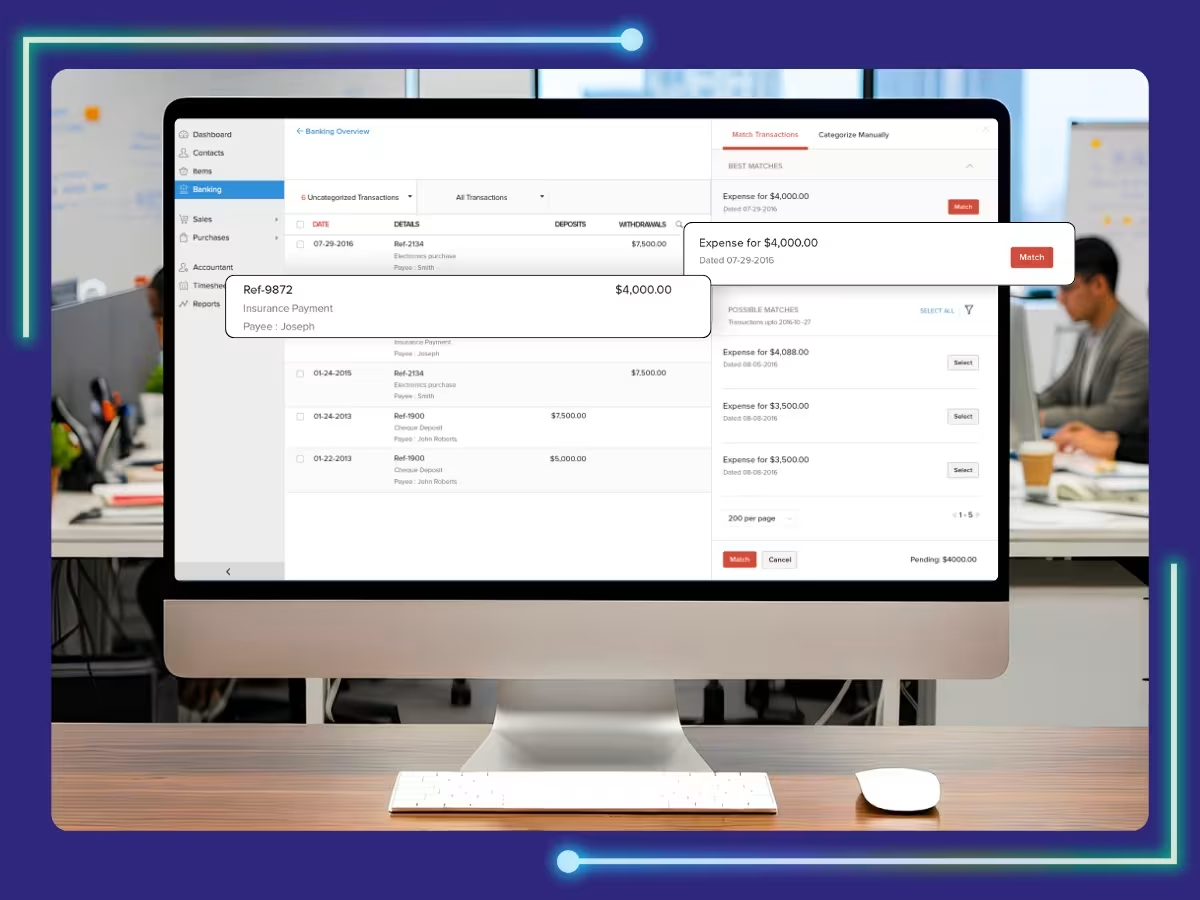
Match incoming payments from ACH transfers, wires, checks, or cards against the relevant invoices. Investigate unmatched receipts, partial payments, and short payments before updating customer balances.
Reconciliation and Reporting
Reconcile the accounts receivable subledger with the general ledger and investigate any differences. Track metrics such as Days Sales Outstanding (DSO) and monitor overdue balances to assess collection performance and identify recurring delays.
What are the key accounts receivable metrics to track?
The key accounts receivable metrics to track are Days Sales Outstanding (DSO), Collection Effectiveness Index (CEI), receivables turnover ratio, and AR ageing report. These metrics help finance teams assess payment patterns, reduce bad debts, and make evidence-based decisions.
-
Days Sales Outstanding (DSO)
Days Sales Outstanding (DSO) measures the average number of days a business takes to collect payment after making credit sales. A rising DSO can indicate slower collections, extended payment terms, or unresolved invoice disputes.
Formula: (Average Accounts Receivable ÷ Net Credit Sales) × Number of Days
-
Collection Effectiveness Index (CEI)
CEI measures the percentage of receivables available for collection during a period that the business actually collects. Unlike DSO, CEI focuses on collection effectiveness within a defined timeframe.
Formula: [(Beginning AR + Credit Sales – Ending Total AR) ÷ (Beginning AR + Credit Sales – Ending Current AR)] x 100
-
Accounts Receivable Turnover Ratio
The receivables turnover ratio measures how many times a business collects its average accounts receivable balance during a given period. A higher ratio generally indicates faster cash collections.
Formula: Net Credit Sales ÷ Average Accounts Receivable
-
Average Days Delinquent (ADD)
Average Days Delinquent (ADD) measures how many days customers typically take to pay beyond the period in which invoices could ideally be collected. It helps businesses distinguish overall collection time from delays specifically caused by overdue payments.
Formula: Days Sales Outstanding − Best Possible DSO
-
Bad DebtRatio
The bad debt ratio measures the proportion of receivables that is expected to go unpaid. Monitoring this metric helps finance teams assess credit risk and identify whether customer screening or collection practices need revision.
Formula: (Bad Debt Expense ÷ Total Accounts Receivable) × 100
-
Accounts Receivable Ageing
An AR ageing report groups outstanding invoices by their age or days past due. Common categories include current, 1–30 days, 31–60 days, 61–90 days, and over 90 days.
What are accounts receivable management best practices?
Effective accounts receivable (AR) management helps stabilise cash flow, reduce bad debt, and speed up payment collection. To achieve this stability, you need to include practices such as setting risk-based credit limits, issuing accurate invoices promptly, simplifying payments, following up on overdue invoices, prioritising high-risk balances, resolving disputes, and outsourcing routine AR tasks when needed.
- Set Credit Limits Based on Risk: Review credit reports, payment history, and financial capacity before approving customers. Reassess limits when customers repeatedly pay late or accumulate overdue balances.
- Prevent Invoice-Related Delays: Send invoices as soon as goods or services are delivered. Verify contract pricing, purchase order numbers, billing contacts, and payment terms before sending to avoid rejections and resubmissions.
- Offer Multiple Payment Options: Offer ACH transfers and online payment links. Use early-payment discounts only when the discount cost is justified by faster cash collection.
- Use a Defined Follow-up Schedule: Send reminders before the due date and contact customers as soon as invoices become overdue. Escalate repeated delays to the account manager and review further credit sales where policy permits.
- Prioritise High-Risk Receivables: Review the AR ageing report weekly and flag large balances, overdue invoices, and customers whose payment patterns have deteriorated. Assign collection actions and deadlines to each priority account.
- Track Disputes: Record each disputed invoice, the amount withheld, the reason, the responsible team, and the resolution deadline. This helps identify recurring pricing or fulfilment errors while keeping undisputed balances moving through collections.
- Consider Outsourcing AR: Choosing an outsourced accounts receivable service provider can give internal finance teams more capacity to investigate exceptions, monitor collection performance, and focus on cash flow planning.
Strengthen accounts receivable management with expert support
Faster collections and fewer overdue invoices can improve cash flow and give your business greater control over working capital. At Whiz Consulting, we provide AI-powered outsourced accounts receivable services for invoice tracking, payment follow-ups, cash application, and much more. Partner with our experts to streamline collections, improve visibility into outstanding balances, and free your finance team to focus on strategic priorities.

Get customized plan that supports your growth

Have questions in mind? Find answers here...
The accounts receivable workflow starts with assessing customer creditworthiness and setting payment terms. It then covers invoicing, recording transactions, tracking due dates, following up on overdue payments, resolving disputes, applying received cash, and reconciling customer balances to maintain accurate financial records.
The 5 C’s of accounts receivable management are Character, Capacity, Capital, Collateral, and Conditions. They help businesses assess a customer’s creditworthiness before extending credit. Reviewing these factors helps finance teams set appropriate credit limits, establish payment terms, and reduce the risk of overdue invoices or bad debts.
A good accounts receivable turnover ratio depends on your industry, payment terms, and customer base. A higher ratio generally indicates faster collections, but an unusually high ratio may reflect overly restrictive credit policies. Compare your accounts receivable turnover ratio with previous periods and similar businesses for meaningful insights.
Calculate accounts receivable turnover by dividing net credit sales by average accounts receivable for the same period. Average accounts receivable is typically calculated by adding beginning and ending balances and dividing by two. The result shows how many times your business collects its average receivables during that period.
To reduce outstanding receivables, send invoices promptly, set clear payment terms, and automate reminders before due dates. Follow up quickly on overdue invoices, resolve billing disputes, and review AR ageing reports weekly. For persistent delays, reassess customer credit limits and consider outsourced accounts receivable support.
Thousands of business owners trust Whiz to manage their account
Let us take care of your books and make this financial year a good one.





This website uses cookies to improve your experience. You can accept all or reject non-essential cookies.